
Understanding What’s Actually Blocking Your Drain
Before you reach for a plunger or a bottle of aggressive chemicals, it’s worth taking a moment to figure out what you’re actually dealing with. Knowing your enemy is half the battle won when learning how to unclog a drain pipe. Randomly trying different solutions is like trying to fix a car by kicking the tires—it’s a great way to get frustrated and waste money. The location of the clog and how it’s behaving are your biggest clues.
Decoding Your Drain’s Distress Signals
Often, the evidence points directly to the source of the problem. A kitchen sink that gurgles and drains at a snail’s pace right after you’ve cleaned greasy pans is basically telling you it’s a grease and food debris clog. These materials cool and solidify inside your pipes, creating a sticky trap that catches everything else that goes down.
The situation in your bathroom is usually a completely different story. The blockages here are typically formed by a nasty combination of a few common culprits:
- Hair: This is the number one nemesis of shower and tub drains, where it weaves itself into stubborn, dense knots.
- Soap Scum: If you use traditional bar soap, the residue it leaves behind can build up into a thick, waxy paste that gradually narrows your pipes.
- Toothpaste and Cosmetics: These everyday products can harden over time, adding to the slow-moving sludge in your pipes.
Is It a Simple Fix or a Deeper Problem?
Next, you need to figure out how deep the problem goes. Is it a small, localized issue or a warning sign of something much bigger? If only one fixture is giving you trouble—like just the bathroom sink—you’re probably looking at a surface-level blockage. This is often found in the P-trap, the curved pipe right under the sink, and is usually a 20-minute fix.
However, if flushing the toilet causes a backup in the shower, or multiple drains across your house are slow, you’re likely facing a blockage in your main sewer line. Guesswork here can be expensive and cause serious damage. It’s no wonder the global drain cleaner market was valued at USD 2.18 billion in 2023; it thrives on these moments of panic. The industry’s projected growth shows how often people opt for a quick fix over a real diagnosis. Correctly identifying the problem’s scope is the first step to saving yourself time, money, and a major headache.
Building Your Drain-Fighting Toolkit on Any Budget
When you’re staring down a stubborn clog, it’s easy to get lured in by flashy infomercials promising a miracle in a bottle. The truth is, learning how to unclog a drain pipe effectively relies on simple, dependable tools. Assembling a go-to kit isn’t about spending a fortune; it’s about having the right gear on hand to tackle clogs with confidence.
Essential Tools for Every Homeowner
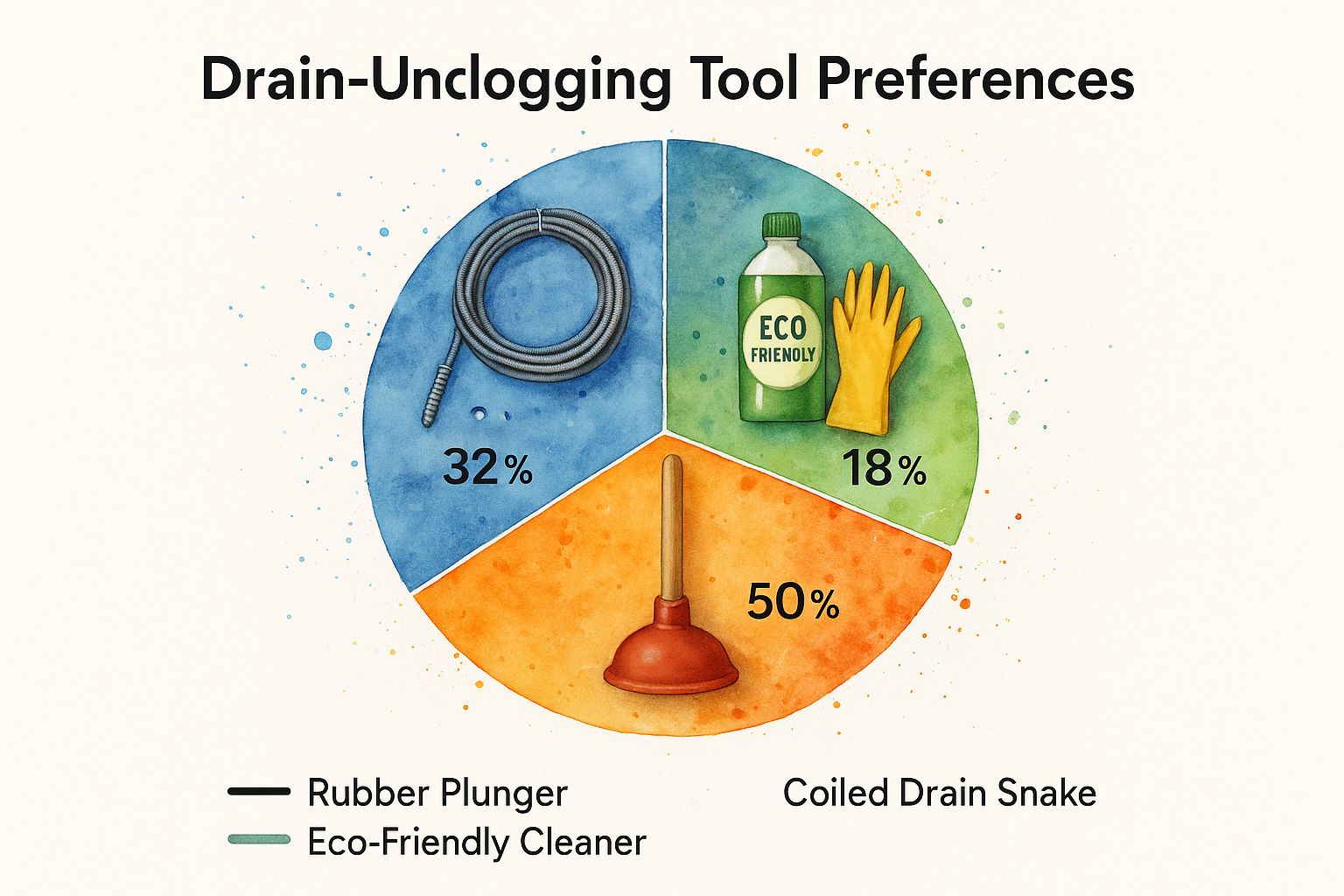
Your first line of defense should always be a good plunger, but it’s crucial to know that not all plungers are the same. A standard cup plunger is what you need for flat surfaces like sinks and tubs. For toilets, a flange plunger, with its extra rubber flap, creates the necessary seal to apply powerful pressure.
For blockages that a plunger just can’t budge, a drain snake is a must-have. This flexible tool can wiggle its way down the pipe to physically break up or pull out clumps of hair and gunk. These tools are so fundamental that their global market is projected to hit USD 1.2 billion by 2032, a sign of their importance in homes everywhere. You can explore more about this market growth here.
This infographic gives you a quick visual of what a well-rounded, budget-friendly drain-clearing kit looks like.
To help you decide which tool is right for your situation, let’s break down the most common options in this comparison table.
| Tool Type | Effectiveness | Cost Range | Best For | Difficulty Level |
|---|---|---|---|---|
| Cup Plunger | Moderate | $5 – $15 | Minor clogs in sinks, showers, and tubs | Easy |
| Flange Plunger | High (for toilets) | $10 – $20 | Toilet clogs | Easy |
| Drain Snake | High | $15 – $50 | Hair, grease, and deeper clogs in drains | Moderate |
| Enzymatic Cleaner | Preventative/Slow | $10 – $25 | Organic waste, soap scum, and slow drains | Easy |
As you can see, a couple of inexpensive plungers and a reliable drain snake can handle most common issues you’ll face, offering a huge return on a small investment.
Safety and Smarter Choices
Before you dive in, let’s talk about safety. It might not seem like a big deal, but always wear sturdy gloves and eye protection. You never know what gunk might splash back while you’re working.
It’s also smart to think twice before pouring harsh chemicals down the drain. They can be tough on your pipes over time. Instead, consider an eco-friendly enzymatic cleaner. These products use beneficial bacteria to eat away at organic material, clearing slow drains without the corrosive side effects.
Wondering if it’s worth buying a tool you might only use occasionally? Think about the alternative. A single emergency call to Professional Plumbers Denver can be expensive. When you get a sense of how to price handyman jobs, you’ll see that a $25 drain snake that fixes a recurring problem is an incredible bargain.
Gentle Methods That Actually Clear Clogs
It’s tempting to reach for a bottle of harsh chemical drain cleaner at the first sign of a slow drain. But before you do, let’s talk about some smarter, gentler approaches. For many common blockages caused by things like grease or soap scum, these methods are not only effective but also much safer for your pipes in the long run.
The Power of Hot Water and Soap
Think about what clogs a kitchen sink—it’s often a buildup of grease and food residue. The same dish soap that cuts through grease on your plates can do wonders for your drain. Just pour a good squirt of liquid dish soap down the affected drain, and let it sit for a few minutes.
Follow that up with a kettle full of boiling water. The soap helps break down the greasy clog, and the hot water flushes it all away. A quick but important heads-up: if you have delicate PVC pipes, skip the boiling water. It can be too intense and potentially cause costly damage. In that case, very hot water from your tap is the safer bet.
Baking Soda and Vinegar: Beyond the Volcano
We all remember the baking soda and vinegar volcano from school, right? When you’re trying to unclog a drain pipe, the goal is to harness that reaction, not just watch it bubble over. The secret is trapping the pressure it creates to push the blockage out.
Start by pouring about half a cup of baking soda directly into the drain. Follow it with an equal amount of white vinegar, and immediately plug the drain opening with a stopper or a heavy, wet rag. This is the crucial step that traps the carbon dioxide gas, forcing it to work against the clog. Let it sit for at least an hour, or even overnight for really stubborn clogs, before flushing it out with hot water. For a deeper dive, you can explore our complete guide to natural drain cleaners.
Walk down the cleaning aisle, and you’ll be faced with dozens of chemical drain cleaners, all promising a quick fix.
The problem is that these products are often incredibly harsh. They typically use either strong acidic or alkaline formulas to dissolve clogs, and if you use the wrong one for your pipe material, you can cause corrosion. This is a big reason why starting with a gentler approach is always the smarter first move.
Mastering the Plunge
If the kitchen chemistry didn’t do the trick, it’s time for some old-fashioned muscle with a plunger. But there’s a right way and a wrong way to do it. The key to success is creating a tight seal to maximize the force.
Here’s a tip most people miss: block the sink’s overflow hole (that little slit near the top of the basin) with a wet rag. This ensures all the pressure you generate goes directly toward the clog, not out the escape hatch. Use firm, steady pumps rather than frantic splashing. If a few solid attempts don’t work, it’s time to stop. If you hear gurgling from other drains, that’s another signal to put the plunger down. These are signs the problem is deeper in your plumbing system, and knowing when to call for backup is essential. Having a reliable contact, like a plumbing virtual receptionist, can make scheduling professional help for those bigger problems much less stressful.
Tackling Stubborn Clogs With Advanced Techniques
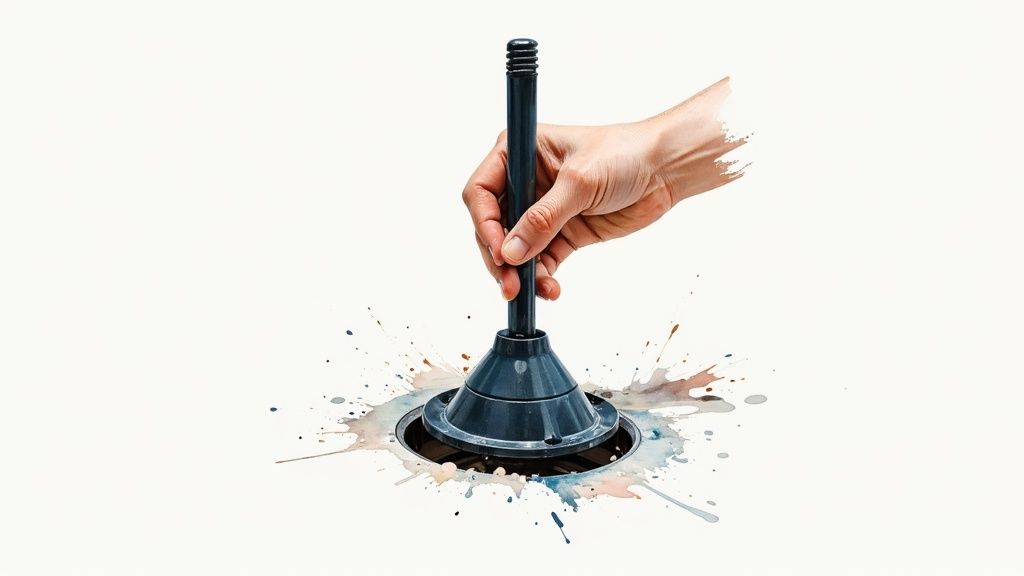
When the gentler methods don’t work, it doesn’t mean you have to throw in the towel. Before you start looking up Professional Plumbers Denver, there are more powerful techniques for learning how to unclog a drain pipe yourself. This is where we move past simple household remedies and into the realm of actual plumbing tools built for tough jobs.
Getting the Hang of a Drain Snake
For physical blockages like a stubborn wad of hair or a lost bottle cap, the drain snake (also called an auger) is your go-to tool. The secret to using it well isn’t about raw power; it’s about having a gentle touch. Carefully feed the snake down the drain until you feel it stop—that’s your clog. Instead of trying to plow through it, begin turning the handle clockwise. This motion helps the tip of the snake either break the blockage apart or hook into it so you can pull the whole mess out.
A frequent mistake is trying to force the snake, which can make it bend back on itself or, worse, damage your pipes, especially around a sharp turn. If you hit a really solid point that doesn’t budge, you might just be at a pipe joint. Don’t force it. Simply pull the snake back a few inches and try advancing it again.
Knowing When to Use Chemical Cleaners
Chemical drain cleaners are often seen as a last resort for a reason, but they can be useful if you’re cautious. They work best on slow drains where the culprit is organic buildup like grease and soap scum. However, they can be harsh on older pipes and create serious safety issues if not handled properly.
- Pick the Right Product: Look for a formula that is specifically made for your type of pipes (like PVC or copper).
- Get Some Airflow: Make sure the room is well-ventilated by opening a window or turning on a fan to avoid breathing in the fumes.
- Safety First: Never mix different types of chemical cleaners, and don’t pour them down the drain right after trying a baking soda and vinegar mix. The resulting chemical reaction can be incredibly dangerous.
It’s clear that more people are feeling confident in their DIY skills. In fact, the market for drain cleaning equipment was valued at USD 2.14 billion in 2024 and is expected to grow. This trend makes professional-grade tools, like powerful mechanical augers, easier for homeowners to rent. For a really deep or persistent clog, renting one of these tools for a day can be a smart move, saving you money compared to buying one or making an immediate call to a plumber. You can explore the full market analysis for more details.
Staying Safe While Fighting Drain Clogs
Tackling a clogged drain yourself can feel empowering, but it’s not a risk-free job. A DIY drain cleaning project can go wrong quickly, leading to chemical burns from splash-back or breathing in nasty fumes. Getting the water flowing again is the goal, but doing it without damaging your pipes—or yourself—is what really counts as a win.
Navigating Chemical Hazards
The biggest dangers often come from a bottle. Let’s cover the most important rule first: never mix different chemical products. It’s a common mistake to try one product, and when it doesn’t work, pour another one down the drain. This can cause a violent chemical reaction. Even worse, combining a cleaner that has bleach with one that has ammonia creates toxic chloramine gas, which is seriously dangerous to inhale.
Always make sure the area is well-ventilated. Open up any windows and get a fan running to help move the air around. Remember that these harsh chemicals can be tough on your plumbing, too. If you live in an older home, your cast iron pipes could be brittle and crack under the stress of a chemical reaction. Even modern PVC pipes can soften or warp, turning a simple clog into a major plumbing emergency.
Physical Protection and Smart Decisions
This is not the time to skimp on safety gear. Forget the thin yellow gloves you use for dishes. You need to protect yourself with a pair of thick, chemical-resistant gloves and a pair of splash-proof safety goggles. You’re guarding your skin and eyes against not just corrosive chemicals, but also the significant amount of bacteria that’s been festering in that standing water.
Finally, the most valuable skill in any DIY project is knowing when to throw in the towel. If you’re putting a lot of force into a drain snake and it’s not budging, you risk damaging the pipe itself. When a clog just won’t cooperate after a few solid attempts, the safest move is to step back. For those really stubborn blockages, learning about the benefits of professional drain cleaning is your best bet to resolve the issue safely.
When Nothing Seems to Work: Advanced Troubleshooting
You’ve tried the plunger, wrestled with a drain snake, and maybe even poured a “guaranteed” solution down the sink, but that water is still standing. We’ve all been there. This is the point where you have to stop fighting the symptom and start investigating the root cause.
A stubborn clog often means the problem isn’t just a simple wad of hair. It could be a sign of a blocked plumbing vent—the pipe that lets air into your system to keep things flowing smoothly. Or, it could point to a more serious blockage deep in your main sewer line. Knowing what to look for can save you a ton of time and prevent a minor headache from turning into a major disaster.
Pinpointing the Real Problem
Before you reach for a more powerful tool or chemical, pause and play detective. Your plumbing system is giving you clues about what’s wrong. To help you figure it out, we’ve put together a quick guide to diagnose the issue based on the symptoms you’re seeing.
To help you decode what your pipes are telling you, here’s a quick diagnosis guide. Think of it as a cheat sheet for your plumbing problems.
| Symptoms | Likely Cause | Recommended Action | Success Rate | Time Required |
|---|---|---|---|---|
| A single drain is slow, but others are fine. | P-Trap Blockage | Clean the U-shaped pipe under the sink or use a small drain auger. | High | 30-60 Minutes |
| You hear gurgling sounds from drains; faint sewer smell. | Clogged Vent Stack | Inspect and clear the vent on your roof. Use extreme caution. | Moderate | 1-2 Hours |
| All drains in the house are slow; water backs up in the lowest point (like a basement drain). | Main Sewer Line Clog | Call a professional immediately. This is not a DIY job. | Very Low | N/A (Pro Job) |
As you can see, a simple P-trap clog is a great weekend warrior win. But if the signs point to a clogged vent or, worse, the main sewer line, it’s time to be realistic. Attempting to fix a main line clog yourself can lead to a sewage backup inside your home—a messy and expensive situation nobody wants.
This is exactly when making a call to Professional Plumbers Denver is the smartest and most cost-effective move. And while you’re focused on keeping your home physically safe from water damage, it’s always a good idea to keep your digital life secure, too; you can brush up on some general online security tips to stay protected all around.
Preventing Future Clogs: Maintenance That Actually Works
So, you’ve wrestled with a stubborn clog and come out on top. Congratulations! Now, let’s make sure you don’t have a rematch anytime soon. The best plumbing work you can do is the kind that prevents clogs from ever forming. This isn’t about complex tasks, but rather simple, smart habits that keep your pipes clear.
Daily Habits With a Big Payoff
Preventative care really boils down to being mindful of what you let go down the drain. One of the most effective tools in your arsenal is a simple drain strainer for your kitchen sink and shower. These inexpensive gadgets are fantastic at catching the biggest culprits: hair and large food particles.
Grease is another major offender. Even small amounts from rinsing a frying pan can coat the inside of your pipes, creating a sticky trap for everything else. A good rule of thumb is to pour any cooled grease into a disposable container and throw it in the trash. Getting everyone in the house to scrape their plates into the compost or garbage before rinsing makes a world of difference.
Easy Monthly Maintenance
A little bit of monthly attention can save you from a major headache down the road. Once a month, try flushing your drains with very hot water to dissolve any grease or soap scum that’s beginning to accumulate.
For a little extra cleaning power, you can use the trusty baking soda and vinegar method. Pour a cup of baking soda down the drain, follow it with a cup of vinegar, and let the mixture bubble away for an hour. Then, flush it all out with hot water. This isn’t just for active clogs; it’s a great way to keep your system fresh and clear. You can find more helpful advice in our library of expert drain cleaning tips.
When prevention isn’t quite enough, or you’d rather have a professional check on your system’s health, we’re here to help. The team at Professional Plumbers Denver can perform a thorough drain cleaning and inspection to ensure your home’s plumbing stays in top shape.