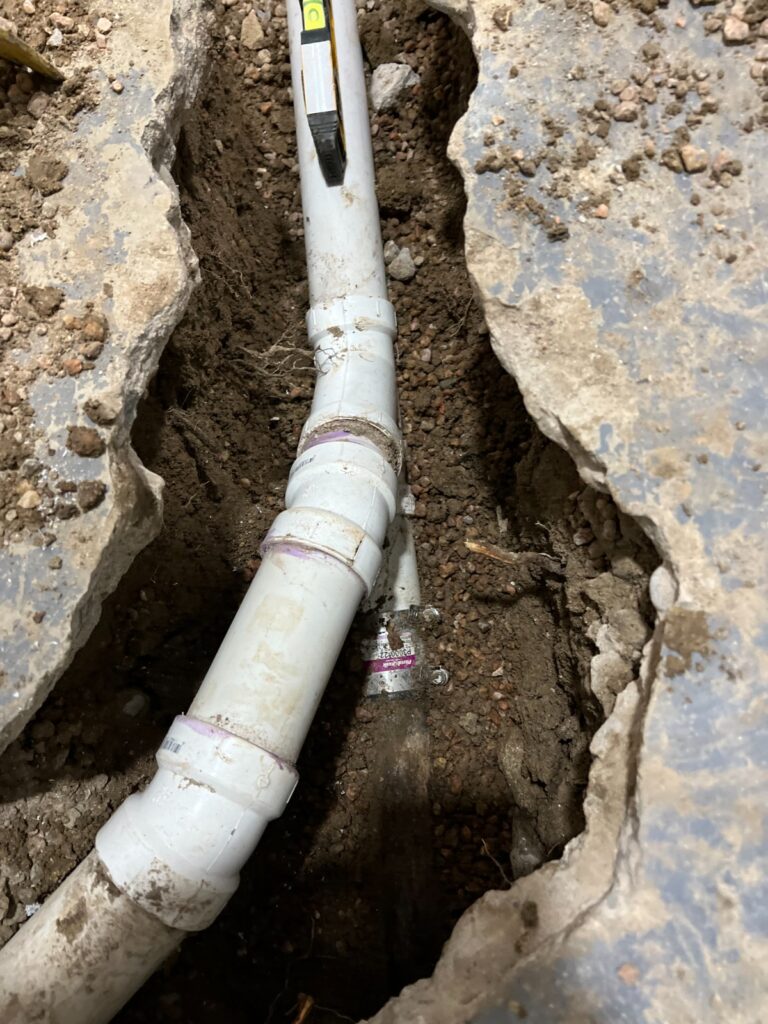


Repiping Services in Denver, CO
Pipes do not last forever. If your Denver home has repeated leaks, discolored water, low water pressure, or pipes that are decades old, repiping may be the most cost-effective way to stop chasing repairs. Professional Plumbers Denver provides whole-house repiping in Denver, replacing aging, failing, or problem piping with modern, code-compliant copper or PEX.
We start with an on-site inspection, explain what is wrong and why, and give you a clear written estimate before any work begins.
Enter your contact details here
What Is Whole-House Repiping?
Whole-house repiping means replacing the water supply piping inside your home, the lines that carry hot and cold water to your faucets, showers, toilets, appliances, and water heater. Instead of patching one leak at a time, we install a new supply system throughout the house.
Repiping is different from other pipe work:
- Repair: fixing one leaking section or joint
- Spot replacement: replacing a short run of failed pipe
- Repiping: replacing most or all of the home’s supply piping
- Drain and sewer work: a separate system that carries waste out of the house, replaced or repaired on its own
- Water service line: the underground line from the city main to your home, which is also separate from your interior piping
If we find problems with your drain lines or service line during the inspection, we will tell you so you can plan for them.
Signs Your Denver Home Needs Repiping
One symptom does not always mean you need new pipes, but several together usually do. Common warning signs include:
- Repeated pinhole leaks or leaks in different parts of the house
- Brown, yellow, or rusty water, especially when water has sat unused
- Low water pressure throughout the house, not just at one fixture
- Metallic taste or odor in your water
- Visible corrosion, green or white buildup, or flaking on exposed pipes
- Pipes that rattle, bang, or whistle
- Unexplained increases in your water bill
- Water stains on ceilings, walls, or floors
- Polybutylene (gray plastic) or galvanized steel pipes in the home
If you notice a sudden leak, shut off your main water valve and call us. We provide 24/7 emergency plumbing in Denver.
Pipe Materials That Often Need Replacement
The piping in your home depends largely on when it was built. These are the materials we most often replace in the Denver area.
Galvanized Steel Pipe
Common in older homes, galvanized pipe is steel coated with zinc. Over decades, the coating wears away and the pipe corrodes from the inside. Mineral buildup narrows the opening, which causes low water pressure, and rust can discolor your water. Galvanized pipe is a common reason for whole-house repiping in older Denver neighborhoods.
Polybutylene (PB) Pipe
Polybutylene is gray plastic piping that was installed in many homes from the late 1970s through the mid-1990s. It is known for failing, often at the fittings, and it can degrade over time. Many homeowners and insurers want it replaced. If you have gray plastic pipe, especially with plastic or copper fittings at the water heater and under sinks, have it inspected.
Old or Failing Copper Pipe
Copper is a durable material, but it can still develop pinhole leaks, pitting, and corrosion, depending on water chemistry, installation quality, and age. If your copper pipes are leaking in multiple places, repiping can be more economical than repeated repairs.
Other Problem Piping
We also replace older plastic, mixed-material, and poorly done DIY or patchwork plumbing. During the inspection we identify what you have and recommend the right fix.
Copper vs. PEX Repiping: Which Is Better for Your Home?
We install both copper and PEX, and either can be a good choice. The best option depends on your home, budget, and priorities. Here is how they compare.
| Factor | Copper | PEX |
|---|---|---|
| Material | Rigid metal pipe with soldered or mechanical joints | Flexible cross-linked polyethylene tubing with crimp, clamp, or expansion fittings |
| Typical cost | Higher material and labor cost | Usually lower material cost and faster to install |
| Installation | Rigid, so more cutting and joints; can require more wall access | Flexible, so it can often be routed through walls with less demolition |
| Lifespan | Long track record, often 50 years or more when conditions are right | Newer material with a good record; commonly rated for several decades |
| Corrosion | Can corrode or pit in some water conditions | Does not corrode or pit |
| Freeze tolerance | Can burst when frozen | More flexible and tolerant of freezing, but not freeze-proof; insulate exposed lines |
| Heat and sunlight | Handles heat well; no UV concerns | Must not be exposed to sunlight; use in approved applications |
| Recycling and resale | Valuable and recyclable; often seen as a premium feature | Widely accepted by code and buyers |
| Water taste and noise | Can be slightly quieter in some installs | Quiet, with fewer joints |
When We Often Recommend PEX
- You want the most cost-effective whole-house repipe
- Walls are finished and you want less drywall removal and repair
- You live in a home where minimizing demolition matters
- You want a material that does not corrode
When We Often Recommend Copper
- You prefer a traditional, long-proven material
- Piping will be exposed in an unfinished space where it needs to be rigid
- Your insurer, HOA, or personal preference leans toward metal
- You are looking for a premium, long-lasting finish
Not sure which is right for your home? We will walk you through both options during your estimate and give you a written price for each.
Our Denver Whole-House Repiping Process
- Inspection and diagnosis. We check your existing pipes, water pressure, fixtures, and water heater connections to confirm repiping is needed and identify any related issues.
- Clear written estimate. You receive upfront pricing and a recommended material, with options where it makes sense.
- Permits and scheduling. We handle required permits and schedule the work to minimize disruption.
- Protection and shutoff. We protect floors and furniture, shut off the water, and set up a work plan.
- Pipe replacement. We install new supply lines, shutoff valves, and connections to fixtures and appliances, opening only the wall and ceiling access needed.
- Testing and inspection. We pressure test the system and complete any required inspections.
- Cleanup and walkthrough. We clean the work area, turn the water back on, and walk you through the finished job.
Most repiping projects take a few days, depending on the size of the home, the access, and the material. We will give you a timeline during your estimate.
What to Expect During Repiping
- Water shutoff: Your water will be off for part of each work day. We plan for this and tell you in advance.
- Wall access: Some small openings in drywall may be needed. PEX often requires fewer than copper.
- Permits and inspections: Repiping typically requires permits and inspections, and our team handles them.
- Living at home: Many families stay in the home during repiping. We will discuss your options.
Why Choose Professional Plumbers Denver for Repiping?
- Licensed Denver plumbers.
- Honest recommendations. If repair is enough, we will tell you. We recommend repiping only when it makes sense.
- Both copper and PEX. You get an unbiased comparison, not a one-size-fits-all pitch.
- Upfront pricing. A written estimate before work begins, with no surprises.
- Experienced with Denver homes. From older neighborhoods to newer builds, we know the common pipe problems here.
- Highly rated. 4.8 stars from 240 Google reviews.
- 24/7 emergency service. Burst pipes and major leaks do not wait.
- Workmanship warranty.
Repiping Service Areas
We provide repiping services throughout Denver, CO and nearby communities, including Arvada, Aurora, Castle Rock, Centennial, Cherry Hills Village, Commerce City, the Denver Tech Center, Englewood, Glendale, Greenwood Village, Highlands Ranch, Lakewood, Littleton, Lone Tree, Louisville, Morrison, Parker, Sheridan, Thornton, Westminster, and Wheat Ridge.
Frequently Asked Questions About Repiping in Denver
The cost depends on the size of your home, the number of fixtures, the pipe material, how accessible the pipes are, and any wall repair needed. PEX is generally less expensive than copper. Because every home is different, we provide a free on-site estimate with a written price.
Many homes take a few days, though larger or more complex homes can take longer. We will give you a schedule during your estimate.
Usually not. Water is shut off for part of the day, and we plan around your needs. We will discuss options during your estimate.
If your home has widespread corrosion, repeated leaks, or polybutylene or galvanized pipe, repiping can protect your home from water damage, restore water pressure, and avoid costly emergency repairs. It can also give you peace of mind and may be attractive to buyers and insurers.
Both are approved, reliable materials. PEX usually costs less and requires less demolition. Copper has a longer track record and is preferred by some homeowners. We help you choose based on your home and budget.
Repiping generally requires a plumbing permit and inspection. We handle the permit process for our work.
Yes. Sometimes a partial repipe, such as one bathroom, one floor, or a problem section, is the right solution. We will recommend the best approach during the inspection.
If corrosion or mineral buildup inside your pipes is the cause, repiping often restores pressure. We also check for other causes, such as a failing pressure regulator or a partially closed valve, so you do not pay for a fix you do not need.
It is a good time to evaluate it. Replacing the water heater while the lines are open can save labor, especially if the unit is near the end of its life.
Schedule Your Free Repiping Estimate in Denver
Ready to stop leaks and replace aging pipes with a system you can count on? Professional Plumbers Denver will inspect your home, explain your options in plain language, and give you a clear written estimate.