


Sewer Repair in Denver, CO
Fast and reliable sewer repair services in Denver. Trust our expert team to handle all your sewer line repairs, replacements, and inspections with precision.
Enter your contact details here
A damaged sewer line does not fix itself. Slow drains, gurgling fixtures, sewage odors, and backups are warning signs that something is wrong underground, and the longer it goes, the more it can cost you. Professional Plumbers Denver provides sewer repair in Denver, CO, including sewer line repair, sewer line replacement, trenchless sewer repair, and emergency sewer service.
We start with a camera inspection so we can show you exactly what is wrong, then recommend the least invasive fix that will last. If a repair is enough, we will say so. If you need sewer line replacement in Denver, we will explain why and give you a clear written estimate before work begins.
Request a Free Sewer Repair Estimate | Call (720) 390-2652 (24/7 emergency service)
Signs You Need Sewer Line Repair or Replacement in Denver
One clogged drain is usually a drain problem. Several problems at once usually point to the main sewer line. Call us if you notice:
- Multiple drains backing up or draining slowly at the same time
- Gurgling sounds from toilets, tubs, or drains
- Sewage smells inside the house or in the yard
- Wet, soggy, or unusually green patches in the lawn
- Sewage backing up into a basement floor drain, tub, or shower
- Repeated clogs that come back after drain cleaning
- Cracks, sinkholes, or sunken areas over the sewer line
- Mice, rats, or insects coming from drains or the yard
- Foundation cracks or settling near the sewer line
If sewage is backing up into your home, stop using water, keep people and pets away from the affected area, and call us right away.
Our Denver Sewer Repair Services
Sewer Line Repair
If damage is limited to one section of pipe, such as a crack, offset joint, or root intrusion, a targeted repair can solve the problem without replacing the whole line. We locate the damage with a camera and recommend the most practical repair.
Sewer Line Replacement
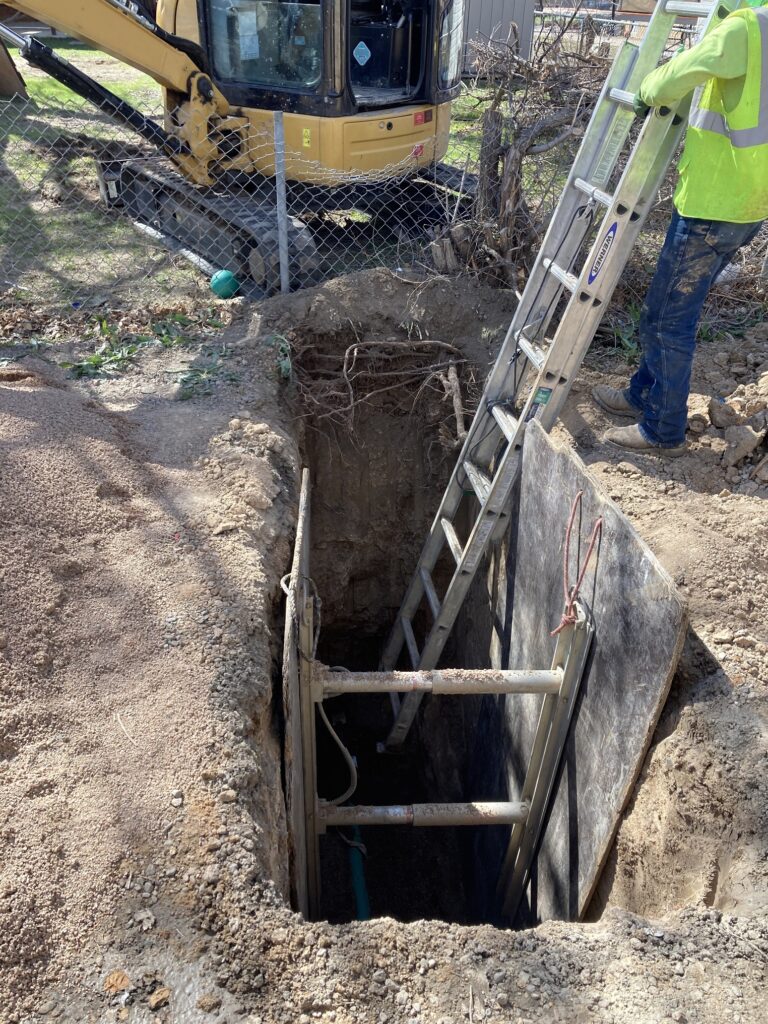
When a line is collapsed, badly cracked, severely bellied, or deteriorated along most of its length, replacement is the reliable long-term fix. We replace failed sections or the full line from the house to the connection point, using traditional or trenchless methods depending on your property.
Trenchless Sewer Repair
Trenchless methods repair or replace pipe with little digging, which helps protect driveways, patios, trees, and landscaping. Common options include pipe lining and pipe bursting. They are not right for every situation, so we confirm with a camera inspection first.
Sewer Pipe Lining
Pipe lining installs a new, seamless pipe inside your existing sewer line, sealing cracks and joints and blocking root entry. It works best when the existing pipe is still in place and reasonably intact.
Sewer Camera Inspection
A video inspection shows the condition of your sewer line, the location of damage, root intrusion, belly sections, and pipe material. It also gives you a record to review and keep, which helps if you are buying or selling a home.
Root Removal and Sewer Cleaning
Tree roots are a common cause of sewer backups. We can clear roots and buildup with professional equipment, then use the camera to see whether the pipe needs repair to stop the problem from returning.
Emergency Sewer Repair
Sewer backups do not wait for business hours. Professional Plumbers Denver offers 24/7 emergency service for sewer backups, major leaks, and urgent line failures.
Common Causes of Sewer Line Damage in Denver
- Aging pipe: Older Denver homes may have clay, cast iron, or other older sewer materials that crack, corrode, or separate at joints over time.
- Tree roots: Roots enter small cracks and joints, then grow and block or break the pipe.
- Shifting or settling soil: Ground movement can offset joints, crack pipe, or create low spots called bellies that hold waste.
- Heavy loads: Vehicles, construction, or heavy equipment over a shallow line can crush or crack it.
- Grease and debris buildup: Over time, buildup narrows the pipe and causes clogs.
- Poor past repairs: Patchwork, improper slope, or mismatched materials can cause repeat problems.
Traditional vs. Trenchless Sewer Repair: What Is Right for Your Home?
| Factor | Traditional (open trench) | Pipe lining (trenchless) | Pipe bursting (trenchless) |
|---|---|---|---|
| What it does | Digs up and replaces the damaged pipe | Installs a new liner inside the existing pipe | Pulls new pipe through while breaking up the old pipe |
| Best for | Collapsed pipe, severe bellies, or lines needing slope correction | Cracks, leaks, and root intrusion in a pipe that is still in place | Failed or deteriorated pipe that needs full replacement |
| Digging | Full trench along the line | Small access points | Small entry and exit pits |
| Landscape impact | Highest | Lowest | Low |
| Limits | More restoration needed | Not suitable for collapsed or badly misaligned pipe | Needs suitable soil and access; not right for every line |
The right method depends on your pipe’s condition, material, depth, and location. We recommend based on what the camera shows, not on what is easiest for us.
Our Sewer Repair Process
- Call or request an estimate. Describe what you are seeing. For active backups, we respond right away.
- Camera inspection. We inspect the line, locate the problem, and show you what we find.
- Clear options and written estimate. You get repair and replacement options with pricing before any work begins.
- Permits and utility locates. We handle required permits and coordinate underground utility locates before digging.
- Repair or replacement. Our licensed team completes the work using the method we recommended.
- Testing and cleanup. We test the line, restore the work area as agreed, and complete required inspections.
- Final walkthrough. We review the work with you and answer your questions.
Why Choose Professional Plumbers Denver for Sewer Repair?
- Camera-first diagnosis. We show you the problem before recommending the solution.
- Honest repair-or-replace advice. We recommend replacement only when repair will not hold up.
- Repair and replacement under one roof. Traditional and trenchless options, with an unbiased recommendation.
- Upfront pricing. A written estimate before work begins.
- 24/7 emergency response. Sewer backups cannot wait.
- Highly rated. 4.8 stars from 240 Google reviews.
Sewer Repair Service Areas
We provide sewer repair throughout Denver, CO and nearby communities, including Arvada, Aurora, Castle Rock, Centennial, Cherry Hills Village, Commerce City, the Denver Tech Center, Englewood, Glendale, Greenwood Village, Highlands Ranch, Lakewood, Littleton, Lone Tree, Louisville, Morrison, Parker, Sheridan, Thornton, Westminster, and Wheat Ridge.
Frequently Asked Questions About Sewer Repair in Denver
Multiple slow drains, gurgling fixtures, sewage odors, backups, and wet spots in the yard are the most common signs. A camera inspection is the only way to confirm what is happening inside the pipe and whether you need a repair, replacement, or cleaning.
The most common causes are aging pipe, tree roots, shifting soil, heavy loads over the line, grease and debris buildup, and poor past repairs. Older pipe materials are more likely to crack or separate at the joints.
Repair fixes a limited section of damaged pipe. Replacement installs new pipe over a longer run or the whole line. Repair costs less up front, but replacement is the better choice when the pipe is failing along most of its length.
Cost depends on the pipe's depth, length, material, access, the repair method, and permit needs. A spot repair costs much less than a full replacement. We give you a written estimate after a camera inspection so you know the price before work begins.
Spot repairs can often be completed in a day. Full sewer line replacement can take a few days, depending on the length of the line, access, and method. We give you a timeline with your estimate.
Trenchless sewer repair fixes or replaces a sewer line with little digging, usually through small access points. It helps protect landscaping, driveways, and hardscape. Pipe lining and pipe bursting are the most common trenchless methods.
It depends on your pipe's condition, material, depth, and layout. Trenchless methods work well for many lines, but a collapsed or badly misaligned pipe may need traditional repair. A camera inspection tells us which method fits.
Pipe lining places a new, seamless pipe inside your existing line. It seals cracks and joints and helps keep roots out. It is best when the existing pipe is still in place and structurally sound enough to hold the liner.
Pipe bursting pulls a new pipe through the old one while breaking up the old pipe. It replaces the entire section with minimal digging. It needs suitable soil conditions and access points, so we evaluate your property first.
In most cases, yes. A camera shows the pipe material, cracks, roots, belly sections, and the exact location of damage. It prevents guessing, helps you avoid unnecessary digging, and gives you a record of the line's condition.
In general, the property owner is responsible for the private sewer service line that runs from the house toward the main, while the utility maintains the public main. The exact point where responsibility changes can vary, so confirm with your local wastewater utility. We can help you identify where the problem is located.
Sewer line repair and replacement typically require permits and inspections, and the work must be done by a licensed professional. We handle the permit process for our work.
Yes. We offer 24/7 emergency service for sewer backups, major leaks, and urgent sewer line failures. Call (720) 390-2652 anytime.
Often, yes. Roots can be cleared with professional equipment, and then a camera shows whether the pipe is damaged. If roots keep returning because of cracks or open joints, repair or lining may be needed to stop them for good.
Stop using water, including toilets, sinks, showers, and laundry. Keep people and pets away from affected areas, avoid contact with the sewage, and call a plumber right away. Do not run chemical drain cleaners, which can damage pipes and are unsafe for the people who work on them.
Standard policies often exclude damage caused by wear, age, or roots, though some cover resulting damage or offer service line endorsements. Coverage varies, so check your policy or ask your agent. We can provide documentation, such as camera footage, to support a claim.
Lifespan depends on the material, installation quality, soil, and tree roots. Some older materials fail after several decades, while modern pipe can last much longer. A camera inspection is the best way to judge the condition of your line.
We do not recommend it. Sewer work involves underground utilities, code and slope requirements, permits, and health hazards. Improper repairs often fail and can cost more to fix later.
Traditional replacement requires a trench, which affects the lawn, plants, or hardscape along the line. Trenchless options usually disturb much less. We discuss the impact and restoration during your estimate so there are no surprises.
Yes. We offer free on-site estimates with upfront written pricing. If a camera inspection is needed to diagnose the problem, we explain that before you commit.
Not always. If the pipe is still functioning, a repair or lining may be enough. If it is collapsed, severely cracked, or failing along most of its length, replacement is usually the better long-term solution. The camera inspection shows which applies.
Yes, especially for older homes or properties with mature trees. A sewer scope can reveal hidden damage before closing, giving you leverage to negotiate repairs or plan for future costs.
We can assess problems at the connection point and the private line leading to it. Work at or near the public main may involve the utility and extra permits, so we confirm what is allowed and coordinate as needed.
A belly is a low spot where the pipe has sagged, so waste collects instead of flowing away. It causes repeated clogs and backups. Fixing it usually requires replacing the affected section so the pipe has the correct slope.
Sewer line work should be performed by a licensed plumber, with required permits and inspections. Ask any contractor for license and insurance details before you hire.
Schedule Your Sewer Repair in Denver Today
Don’t wait for a small problem to become a sewage backup. Professional Plumbers Denver will inspect your line, show you what is wrong, and give you clear options and a written estimate.
Request a Free Sewer Repair Estimate | Call (720) 390-2652 (24/7 emergency service)