
What That Awful Smell Really Means (And Why You Should Care)
Walking into your home only to be hit by a foul sewer odor is more than just unpleasant—it’s your plumbing system sending out an SOS. Think of it as a smoke detector for your drains. That distinct, rotten-egg sewer smell in house settings isn’t just an airborne nuisance you can hide with air freshener. It’s a clear signal that something in your home’s complex network of pipes has gone wrong. Ignoring it is like ignoring a weird clanking from your car’s engine; it almost never fixes itself and usually leads to bigger, more expensive problems.
The smell itself comes from gases like hydrogen sulfide, which creates that signature rotten egg odor, and methane. While you might just feel a headache or nausea from low-level exposure, these are not gases you want building up inside your home. A persistent sewer smell seriously affects your indoor air quality, which can have real consequences for your family’s health and comfort. Getting a handle on your home’s air is crucial, and you can learn more about general strategies for improving indoor air quality to see the bigger picture of keeping your home safe.
Distinguishing Between a Simple Fix and a Serious Flaw
So, what is your house actually trying to tell you? The source of a sewer smell can be anything from a surprisingly simple issue to a major structural problem. It’s important to understand the potential culprits so you can figure out what you’re dealing with. We’ve seen homeowners panic, thinking they need a huge repair, only to find the problem was a cheap and easy fix—and unfortunately, we’ve seen the opposite happen, too.
For instance, a family in Denver noticed a faint sewer smell in their guest bathroom that they had been ignoring for weeks. The cause? A dried-out P-trap in the floor drain, a common problem in bathrooms that don’t get much use. The fix cost them nothing more than pouring a pitcher of water down the drain. On the other hand, another couple brushed off a growing odor in their basement for months. By the time they called for help, they had a cracked main sewer line that had been slowly seeping under their foundation. This required digging up their yard and a repair bill that ran into the thousands.
The key thing to remember is that the intensity of the smell doesn’t always match the seriousness of the problem. A faint, on-and-off odor could point to a cracked vent pipe inside a wall, while a powerful stench might just be from a buildup of gunk in a shower drain. Your job as a homeowner is to play detective. Use the location and type of smell to narrow down the suspects and decide if this is a weekend DIY project or a job that needs a professional right away. This guide will walk you through exactly how to do that.
The Hidden Culprit Behind Most Sewer Smells
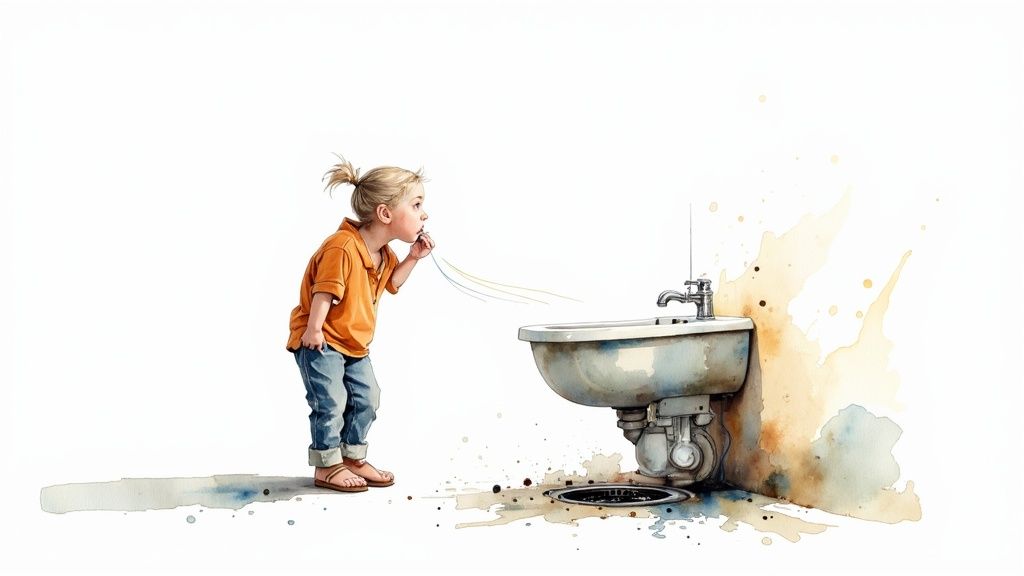
When you catch that unmistakable sewer smell in your house, it’s natural to think the worst—a broken pipe or a major backup. But more often than not, the real issue isn’t a catastrophe. It’s something much simpler: a problem with your plumbing’s unsung hero, the P-trap. This humble U-shaped pipe lives under every sink, shower, and floor drain, and its job is to hold a small amount of water. This water creates a seal, a physical barrier that stops gross sewer gases from creeping into your home.
When that water barrier disappears, so does your protection. One of the most common reasons a P-trap fails is simply because it has dried out. The water evaporates over time, breaking the seal and giving gases like methane and hydrogen sulfide a direct path into your living spaces. It’s a surprisingly frequent issue that many homeowners miss, causing a lot of unnecessary worry. For a closer look at this common problem, you can learn more about the causes of sewage smells from the plumbing pros at Mr. Rooter.
Which Drains Are Most at Risk?
The drains you use the least are usually the biggest offenders. Think about that guest bathroom shower that’s been untouched for months, the floor drain tucked away in the laundry room, or that utility sink in the basement. These are all prime spots for evaporation. I’ve seen homeowners search high and low for a mysterious smell, only to find it was coming from a basement floor drain they hadn’t given a second thought to in years.
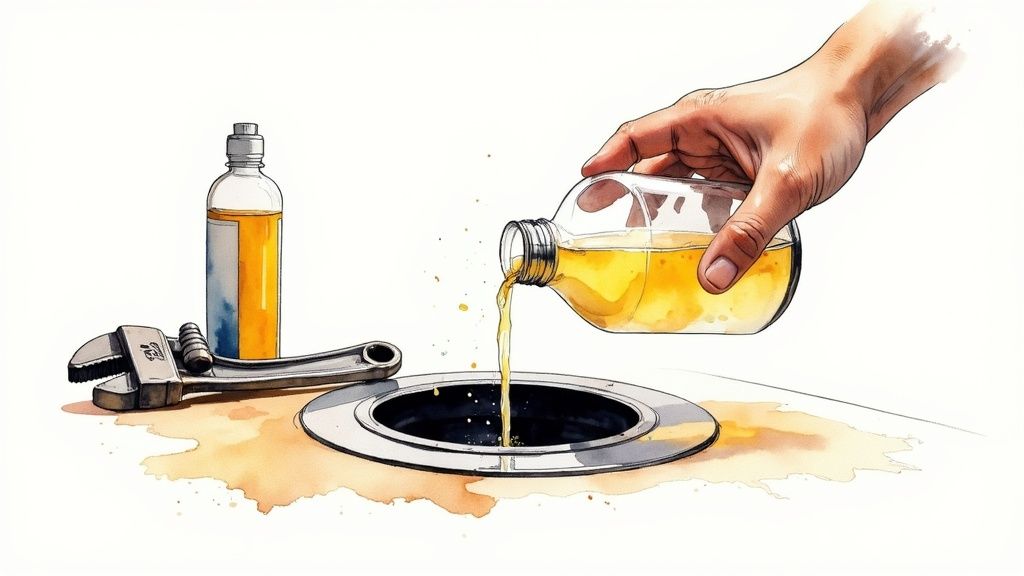
The fix is often incredibly simple: pour about a quart of water down the drain to refill the trap and restore the water seal. For extra credit, add a tablespoon of mineral oil on top of the water. The oil creates a film that slows down future evaporation, keeping the seal intact for longer.
To stay on top of this, it helps to have a routine. Here’s a quick guide to help you keep those P-traps full and functional.
P-Trap Maintenance Schedule by Fixture Type
A practical guide showing how often different fixtures need attention to prevent dry P-traps
| Fixture Type | Usage Level | Check Frequency | Maintenance Action |
|---|---|---|---|
| Guest Bathroom Sink/Shower | Low (Used < monthly) | Every 4-6 weeks | Run water for 60 seconds |
| Basement Floor Drain | Very Low (Seasonal use) | Every 2 months | Pour 1 quart of water, add mineral oil |
| Utility Sink | Intermittent (Used occasionally) | Every 1-2 months | Run water for 30 seconds |
| Main Bathroom Sink/Shower | High (Daily use) | No action needed | Normal usage maintains water level |
| Kitchen Sink | High (Daily use) | No action needed | Normal usage maintains water level |
This simple schedule can be the key to keeping your home smelling fresh. However, if you’ve refilled all the traps and the odor sticks around, it might be a sign of a deeper issue. For homeowners in our area facing persistent plumbing mysteries, getting familiar with other potential problems is a good next step. You can learn more about sewer line issues and repairs in Denver to understand what else could be going on. A dry P-trap is the first place to check, but knowing what to investigate next is crucial if the easy fix doesn’t work.
When Your Plumbing Can’t Breathe Properly
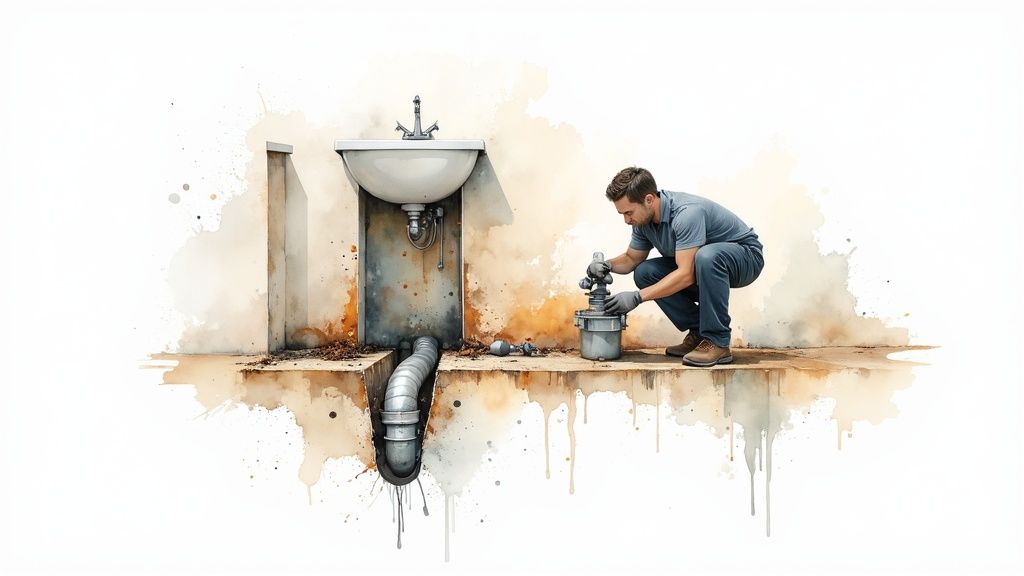
If you’ve checked your P-traps and they’re full of water, but you’re still getting that unmistakable sewer smell in your house, it might be time to look up—at your roof. Your home’s plumbing system has its own set of lungs, which plumbers call the vent stack. This pipe, usually sticking up from the roofline, is critical for letting foul sewer gases escape and, just as importantly, allowing air to enter the drain lines.
Without that incoming air, your plumbing can’t drain properly. It creates a vacuum effect that can literally suck the water right out of your P-traps every time you flush a toilet or empty a sink. This is how you end up in a frustrating cycle. You might find yourself constantly refilling the P-trap in a guest bathroom, only to have the smell creep back a few days later. It’s not evaporating; it’s being siphoned out.
Think about what happens when a toilet flushes. A large volume of water rushes down the drain. If the system can’t get air from the vent stack on the roof, it will pull it from the closest source it can find. Often, that’s the water seal in a nearby sink or shower drain, leaving an open invitation for sewer gas to enter your home.
Spotting Vent System Failures
A blocked vent is a tricky problem to diagnose because the cause is outside, but the symptom—that awful sewer smell—is all inside. The blockages can be anything from fallen leaves and bird nests to a thick layer of ice during a cold Denver winter. Standardized venting has been a part of plumbing for decades, specifically to equalize pressure and ensure gases vent outside, not inside. You can learn more about the role of vent systems in buildings to see how crucial this design is.
So, how can you figure this out without making a risky trip up to your roof? Just listen to what your plumbing is telling you.
- Gurgling Drains: Do your sinks or toilets make a loud, gurgling sound after use? That’s the sound of air being pulled forcefully through the water in your P-traps because it can’t get in from the roof vent.
- Slow Drains: Is more than one drain in your house running slow? A single sluggish drain usually means a local clog, but widespread slowness often points to a ventilation problem affecting the whole system.
- Phantom Flushes: Have you ever heard your toilet bubble on its own or noticed the water level drop for no reason? This weird behavior can be caused by pressure shifts from a blocked vent.
These signs are your best clues that the sewer smell in house isn’t just an isolated issue but a system-wide problem of a plumbing system that’s struggling to breathe. While clearing a vent stack is definitely a job for a professional—working on a roof is no joke—identifying these symptoms yourself is a huge first step toward getting a quick and accurate fix.
Immediate Fixes That Actually Solve Problems
When a nasty sewer smell in house settings hits, you want it gone—fast. Forget about lighting candles or spraying air freshener; that’s just a temporary cover-up. We need to get to the real source of the problem. Let’s walk through some proven fixes that often work, starting with the easiest ones.
Refresh and Clean the Simple Stuff
Before you jump to conclusions about a major plumbing disaster, check the most common culprits: your drains. Often, the smell isn’t coming from deep within the sewer line but from right under your nose. A slimy buildup called biofilm, made of soap scum, hair, and bacteria, can form inside your drain pipes and give off a foul odor that smells a lot like sewer gas.
A simple but surprisingly effective first move is to give your drain a good cleaning:
- Pour about a half-cup of baking soda down the drain.
- Follow it with a half-cup of white vinegar. You’ll see it fizz and bubble—that’s the chemical reaction breaking down the gunk. Let it sit for about 15 minutes.
- Finally, pour a pot of very hot (not boiling) water down the drain to flush everything out.
This little trick can often clear up odors from sinks and showers. If you suspect a more stubborn clog is trapping smelly debris, you might need a more direct approach. For more detailed and safe techniques, our guide on how to unclog a drain pipe offers some great tips. A clean drain is usually an odor-free drain.
To help you decide whether to tackle this yourself, here’s a quick look at how successful DIY fixes tend to be for various common issues.
| Problem Type | DIY Solution | Success Rate | Time Required | Cost |
|---|---|---|---|---|
| P-Trap is dry | Run water in the drain | 99% | 1 minute | $0 |
| Drain biofilm | Baking soda & vinegar flush | 80% | 20 minutes | < $2 |
| Loose toilet | Check for wobble, tighten bolts | 50% | 15 minutes | $0 |
| Broken wax ring | Replace wax ring | 25% (for beginners) | 1-2 hours | $10-$20 |
| Clogged vent stack | Flush with a garden hose | 40% | 30-60 minutes | $0 |
| Main sewer line clog | N/A (Pro job) | 0% | N/A | Call a plumber |
Table: Quick Fix Success Rate by Problem Type
Comparison of DIY solutions and their effectiveness for different sewer smell causes
As you can see, simple issues like dry P-traps and biofilm are easy wins for homeowners. However, problems like a broken wax ring or a clogged vent stack have a lower success rate for DIY attempts and often require a professional touch for a permanent solution.
Check the Toilet’s Foundation
If the sewer smell is strongest in the bathroom, your toilet could be the source. Every toilet is sealed to the floor with a wax ring, which is designed to create an airtight barrier against sewer gases. This ring can wear out, dry up, or get knocked out of place if the toilet becomes wobbly. Once that seal is broken, gas can escape from the base.
You can do a quick check yourself. Gently push on the side of the toilet bowl and see if it rocks. Any movement or wobbling is a red flag that the wax ring has failed and needs to be replaced. While replacing a wax ring is a task some handy homeowners can do, it requires lifting the entire toilet. For that reason, many people prefer to call in a professional to ensure it’s done right. The ring itself is cheap, but a flawless installation is crucial to making the sewer smell in house problem disappear for good.
That awful smell is more than just annoying; long-term exposure to sewer gas can lead to real physical symptoms. This infographic breaks down the most common health issues people report.
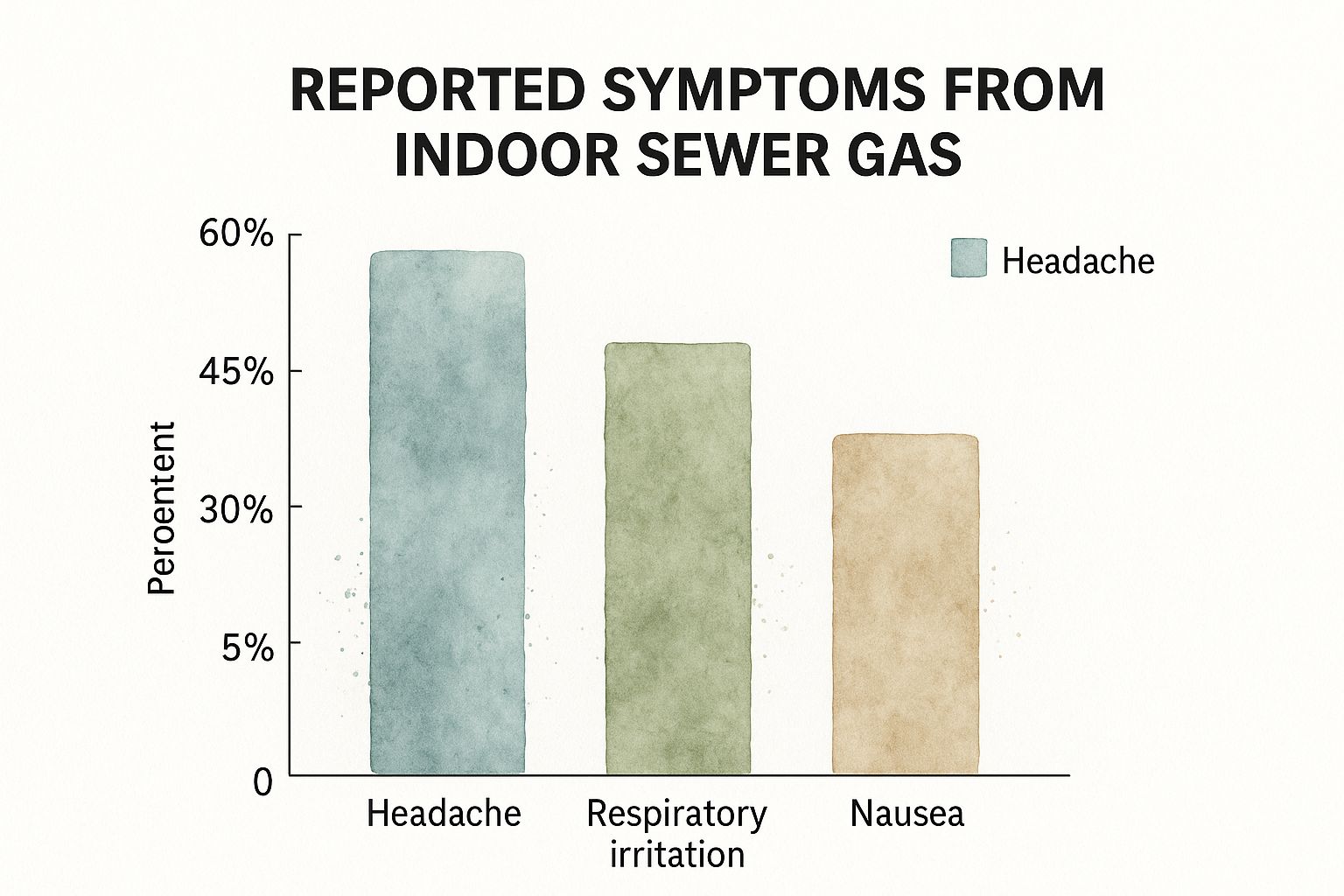
It’s clear that headaches are a major issue, affecting 60% of people exposed. This really underscores why it’s so important to solve these odor problems quickly for the health and comfort of everyone in your home.
Advanced Troubleshooting for Stubborn Odor Problems
So, you’ve cleaned the drains, made sure the P-traps have water, and even listened for gurgling vent pipes, but that awful sewer smell in house settings just won’t quit. When the easy solutions don’t work, it’s a sign that you need to shift from simple fixes to some real detective work. Lingering, stubborn odors are often a symptom of a deeper, less obvious issue in your main sewer line or a structural problem with the plumbing itself.
A great first move is to start documenting what you’re noticing. Keep a simple log of where and when the smell is most potent. Does it get worse after doing a load of laundry or running the dishwasher? Is it more noticeable during a heavy downpour? These patterns are crucial clues that can help a professional diagnose the problem much faster. An odor that gets stronger with water usage often hints at a partial blockage or a break in the main line somewhere downstream.
Pinpointing Complex Sewer Line and Structural Issues
Sometimes, the culprit isn’t a clog but the actual pipe. Older homes, especially in places like Denver, might have clay or cast iron pipes. Over time, these materials can crack, collapse, or get choked by invasive tree roots. When that happens, sewage can seep into the soil around your foundation. The sewer gas then finds its way into your home through the smallest cracks in the foundation or gaps where utility lines enter. This often creates a faint but persistent smell that’s incredibly hard to trace.
If you suspect this is what’s happening, it’s time for professional-grade tools. A sewer camera inspection is the only way to get a definitive look inside your pipes. A plumber will guide a high-resolution camera down the line, giving you a live video feed of any cracks, root intrusions, or blockages. While you could rent one of these cameras, hiring a pro is usually the better bet. They know how to interpret what they’re seeing and can pinpoint the exact location of the damage, turning a frustrating guessing game into a precise diagnosis.
While many problems are buried underground, don’t forget about issues caused by simple human error. I once worked with a homeowner who couldn’t get rid of a sewer smell in their brand-new bathroom. After checking everything else, we discovered the contractor had installed a fixture without a proper P-trap. The fix was easy once we found it, but it took a methodical process to rule out the more serious possibilities first.
For anyone facing these bigger plumbing challenges, knowing when you’re in over your head is key. If your basic troubleshooting has failed, it’s time to call for backup. To help you prepare for that conversation, our detailed guide explains the signs you need a sewer line replacement in Denver.
Prevention That Fits Your Real Life
The best way to handle a sewer smell in the house is to stop it from ever happening. But let’s be real—life is busy, and no one has the time or energy for a complex plumbing maintenance schedule. Real prevention isn’t about marathon plumbing sessions on your weekends. It’s about building small, consistent habits that deliver the most bang for your buck.
The idea is to be proactive in a way that feels natural, creating a plumbing system that’s simply more resilient. This begins with paying attention to your home’s specific usage patterns. For example, a household with five people is going to put a lot more strain on its drains than a couple who travels often.
Creating Maintenance Routines That Stick
You’ve heard it before: an ounce of prevention is worth a pound of cure. This is especially true when the “cure” means an expensive, late-night call to an emergency plumber. The secret is to make your maintenance routine so straightforward that it becomes second nature.
- The Seasonal Drain Flush: Add a recurring event to your phone’s calendar for the first day of every season. When it pops up, simply pour a pot of hot (not boiling) water down every drain. For sinks and showers, follow it up with a classic baking soda and vinegar mix. This quick 10-minute task is your number one defense against smelly biofilm buildup.
- A “Welcome Home” Habit: If you have a guest bathroom that doesn’t see much action, get into the habit of running the sink and shower for about a minute after you return from a trip. This simple act refills the P-traps, keeping them from drying out and letting sewer gas seep in.
- Be Nice to Your Drains: The most effective maintenance is being mindful every day. Make it a rule to never pour grease down the kitchen sink and always use a hair catcher in the shower. These two actions alone prevent the most common clogs that are notorious for causing foul odors.
Build a Relationship Before You Need One
The worst time to look for a good plumber is when water is gushing across your basement floor. One of the smartest preventative moves is to find and establish a relationship with a local professional before there’s a crisis.
Book a non-urgent service, like a water heater inspection or a routine drain cleaning. It’s a low-pressure way to gauge their professionalism, see how they work, and have them lay an expert eye on your system to catch minor issues. Having a plumber you trust on speed dial offers incredible peace of mind when a real sewer smell issue arises and can save you from making a hasty, and often costly, decision in a panic.
Knowing When to Call in the Pros (And Choosing Wisely)
You’ve tried all the DIY fixes and played detective, but that stubborn sewer smell in house just won’t go away. Knowing when you’ve hit your limit is a crucial part of solving the problem. Calling a professional isn’t giving up; it’s a smart move to prevent a small issue from spiraling into a costly nightmare. If you’ve cleaned the drains, checked the P-traps, and can still smell that foul odor, it’s time to call for backup. This is especially true if you’re also dealing with slow drains in multiple rooms or hearing strange gurgling sounds from your pipes. Those are tell-tale signs of a bigger issue, like a clog in the main line or a blocked vent stack.
Finding a Reliable Partner
Not all plumbers have the same level of expertise, particularly when it comes to tracking down a mysterious sewer odor. When you make the call, be ready. Have your notes handy—tell them where the smell is, when it’s at its worst, and everything you’ve already done to fix it. This information helps them move from a general service call to a focused diagnostic mission.
Don’t be afraid to ask specific questions before you hire someone. Try asking things like, “What’s your process for finding a hard-to-trace sewer odor?” or “Do you use camera inspections, and what is the cost for that service?” The quality of their answers will give you a good sense of their experience.
When you’re dealing with a persistent sewer smell, choosing the right professional plumbing and HVAC services is key. A trustworthy company will give you a clear, itemized quote, not just a verbal estimate. They should also stand by their work with a guarantee or warranty. A plumber who offers a warranty on their repair for at least 30-90 days is showing confidence that they’ve actually fixed the root cause.
For any plumbing challenge, from a strange smell to a full-blown emergency, having a trusted expert you can rely on makes all the difference. The team at Professional Plumber Denver has spent years solving the unique plumbing problems that pop up in local homes. We’re available 24/7 to provide solutions that last. Contact us today to book an inspection and finally get your home smelling fresh and clean again.