
That jarring thump you hear every time the dishwasher finishes a cycle? It’s more than just an old-house quirk. That sound is a sign of stress on your entire plumbing system, a phenomenon we call water hammer.
Fortunately, the fixes for water hammer range from simple adjustments you can make yourself to professional installations that solve the problem for good. The key is figuring out what’s causing it in the first place—high water pressure, a quick-shutting valve, or something else entirely.
What Is Water Hammer and How Do You Fix It?
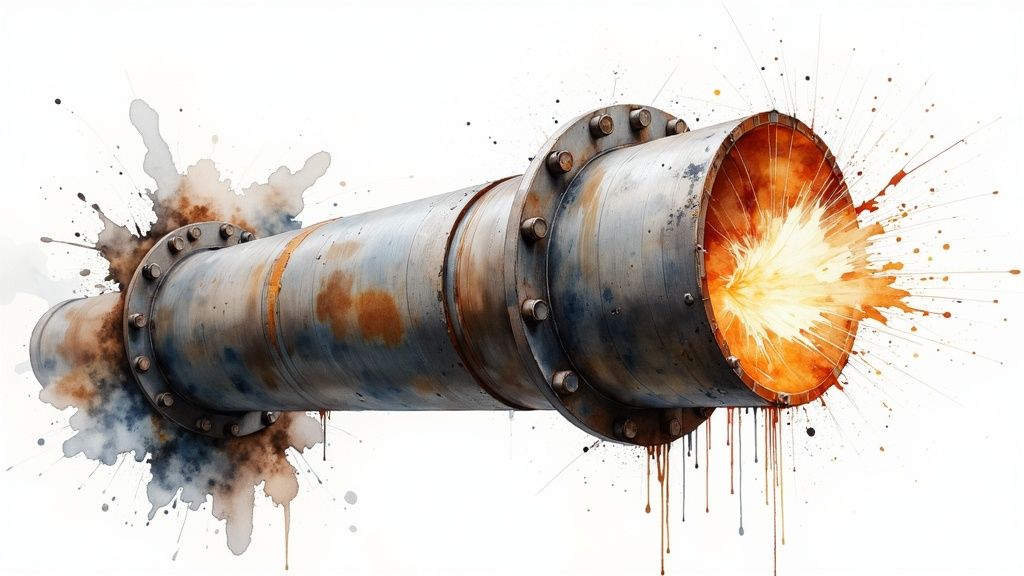
Think about a full-speed freight train suddenly hitting a dead end. The immense force has to go somewhere, right? That’s exactly what happens inside your pipes. When water is flowing quickly and a valve slams shut, all that momentum crashes to a halt, sending a powerful shockwave—or hydraulic shock—rattling through your plumbing.
This is why you often hear the banging after an appliance finishes its cycle. Modern dishwashers, washing machines, and even some ice makers use solenoid valves that snap shut in a fraction of a second, creating the perfect conditions for water hammer.
Identifying the Common Causes
Before you can quiet those pipes, you need to play detective. In my experience, the problem almost always comes down to one of these three things:
- High Water Pressure: This is a big one here in the Denver area. Depending on your home’s elevation, the city’s water pressure can easily climb above the recommended 80 PSI, dramatically increasing the force of the hydraulic shock.
- Fast-Closing Valves: Those efficient, modern appliances are the most frequent offenders. The quicker the valve closes, the louder the bang.
- Waterlogged Air Chambers: If you have an older home, it might have built-in air chambers—short, vertical sections of pipe designed to cushion the water. Over years, they can fill with water, rendering them useless.
A Plumber’s Perspective: That banging sound is your plumbing’s cry for help. The real problem isn’t the noise; it’s the hidden damage. Each shockwave can be more than ten times your normal water pressure, slowly but surely weakening pipe joints and valves. I’ve seen it lead to everything from pinhole leaks to a full-blown pipe burst.
An Overview of Solutions
Fixing water hammer is all about either cushioning that shockwave or tackling the root of the problem head-on. A common and highly effective solution is installing a water hammer arrestor right at the source—a small device that acts like a shock absorber for your plumbing. Their importance is reflected in a global market valued at around $92 million and growing, driven by modern construction and water conservation efforts.
If the problem is system-wide, the best long-term fix might be a pressure-reducing valve (PRV) to bring your home’s entire water pressure down to a safe level. Knowing how to react to plumbing issues is crucial, so it’s also a good idea to learn how to handle common plumbing emergencies before they happen.
Let’s break down some of the most common solutions to see which one might be right for your home.
Quick Guide to Water Hammer Solutions
To help you get a better handle on the options, this table summarizes the most effective ways to stop water hammer, what situations they’re best for, and what to expect.
| Solution Type | Best For | Complexity Level | Key Benefit |
|---|---|---|---|
| Water Hammer Arrestor | A single noisy appliance (e.g., washing machine) | DIY to Moderate | Directly absorbs the shockwave at the source. |
| Pressure-Reducing Valve (PRV) | System-wide high water pressure (>80 PSI) | Professional Install | Protects the entire plumbing system from stress. |
| Secure Loose Pipes | Rattling noises accompanying the main “bang” | DIY | Prevents secondary damage and reduces noise. |
| Drain & Refill Air Chambers | Older homes with existing (waterlogged) chambers | DIY | Restores the original cushioning effect, but is temporary. |
Each of these solutions has its place. Sometimes, simply strapping a loose pipe is all it takes. Other times, a combination of a PRV and an arrestor is the only way to truly silence the bang and protect your pipes for the long haul.
How to Pinpoint the Source of Banging Pipes
Before you can fix that racket in your walls, you have to play detective. That sudden BANG isn’t just random noise; it’s a distress signal from your plumbing. Finding out exactly where and when it happens is the first real step toward a permanent solution, saving you from a cycle of guesswork and frustration.
Start by just listening. Seriously. The timing of the noise tells you almost everything you need to know. Does it happen the split second your washing machine stops filling? Or maybe it’s that one sprinkler zone in the backyard that causes the thump when it shuts off. Pay close attention to which faucet or appliance was just used right before the bang.
This simple bit of observation can often point you straight to the source. If the noise is clearly tied to the dishwasher and nothing else, you know the problem is isolated to that one water line.
Check Your Home’s Water Pressure
Over the years, I’ve seen firsthand how high water pressure is a major culprit behind severe water hammer, especially here in the Denver area. When the pressure is cranked up too high, water moves with more force. When it stops suddenly, that force has nowhere to go, creating a much more violent shockwave.
You can easily check this yourself. Grab a simple water pressure gauge from any local hardware store—they just screw onto an outdoor hose bib. Make sure no water is running anywhere in the house, turn the spigot on, and you’ll get an instant reading.
Anything above 80 PSI (pounds per square inch) is a red flag for a home’s plumbing system. That kind of pressure dramatically increases the risk of water hammer and can damage pipes and fixtures over time. It’s a clear sign the problem affects your whole house.
If your gauge shows high pressure, you’ve found a critical clue. For a complete walkthrough, check out our guide on how to test water pressure in your home.
Distinguishing Between Different Causes
Once you know the timing and the pressure, you can start to connect the dots. The fix for a noisy washing machine is completely different from a problem that makes your whole house shudder.
Here’s how to narrow it down based on what I’ve seen in the field:
- Single-Appliance Noise: If the banging is exclusive to one fixture, like a washing machine or dishwasher, the problem is almost always its fast-closing solenoid valve. This is the most common and straightforward issue to fix.
- System-Wide Noise: Do you hear the bang when you flush a toilet, turn off the shower, and use the kitchen sink? This points to a systemic issue. It’s likely either the high water pressure we just discussed or failing air chambers.
- Failing Air Chambers: If your house was built before the 1990s, you probably have air chambers. These are short, vertical sections of pipe near your fixtures that are supposed to hold a cushion of air. Over time, that air gets absorbed into the water, and the chamber becomes useless. If the noise seems to come from inside the wall right next to a faucet, this is a strong possibility.
Taking the time to diagnose the problem properly means you can choose the right fix. It’s the difference between putting a bandage on the problem and actually curing it. Homeowners are getting smarter about this, which is why the global water hammer arrestor market is projected to hit $550 million as more people look for lasting solutions. You can see the data behind this trend and the tech involved by reviewing reports on the global water hammer arrestor market. By getting the diagnosis right, you ensure your money is well spent.
Simple DIY Fixes You Can Try This Weekend
Before you dial up a plumber, take a breath. Many common water hammer solutions are perfect for a weekend DIY project, and you might be surprised at what you can accomplish yourself. Silencing that disruptive banging noise doesn’t always require a professional, and a little bit of your own time can bring the peace and quiet back to your home.
One of the most common issues I see, especially in older Denver homes built before the 1990s, is a waterlogged air chamber. Think of these as built-in shock absorbers in your plumbing. Over the years, that essential pocket of air gets absorbed by the water, leaving your pipes unprotected. Luckily, getting that air cushion back is a pretty straightforward job.
How to Recharge Waterlogged Air Chambers
So, how do you get that air back in? It sounds complicated, but you’re really just draining the system to let air in and then refilling it to trap that air right where it’s needed.
Here’s a safe way to tackle it:
- Turn Off the Main Water Supply: First things first, you need to find your home’s main water valve. Look in the basement, a crawl space, or near your water meter. Once you find it, shut it off completely.
- Open Every Faucet: Now, you need to let the air in. Start at the highest faucet in your house—maybe a second-floor shower or sink—and turn it on. From there, work your way down, opening every single faucet, including tubs, sinks, and even the outdoor spigots.
- Drain the System: Find the lowest point in your plumbing, which is usually a utility sink in the basement or an outdoor hose bib. Let all the water drain out from there. As the water leaves, air gets pulled into the empty pipes and, most importantly, into those waterlogged air chambers.
- Turn the Water Back On: Once the draining stops, close that lowest faucet you opened. Then, go back to the main valve and slowly turn the water back on. As the pipes refill, the water will compress that fresh air into the chambers, creating that needed cushion. You’ll hear sputtering from the open faucets; just close them one by one as the water starts to flow smoothly.
This is a fantastic first step, but be aware that it can be a temporary fix. If that banging noise creeps back in a few weeks or months, it’s a sign that the air has been absorbed again. This means you might need to look at a more permanent solution.
Secure Loose and Rattling Pipes
Sometimes, the root of the problem isn’t just the pressure surge—it’s that your pipes are literally loose. When a water hammer event happens, unsecured pipes can slam against wood framing or floor joists, making a terrible racket and putting a lot of stress on the fittings.
A quick visual check can work wonders. If you can get to your pipes in a basement or crawlspace, give them a gentle shake. If they move easily or you can see they aren’t properly anchored, you’ve found an easy and effective fix.
A trip to the hardware store is all you need. Grab some pipe clamps or straps—they only cost a few dollars. Use them to firmly secure the loose sections of pipe to a nearby joist or wall stud. While this won’t stop the pressure spike that causes water hammer, it will eliminate that loud, rattling sound and prevent potential damage to your pipes. It’s truly one of the simplest and most cost-effective water hammer solutions out there.
Installing Water Hammer Arrestors for a Permanent Fix
If you’ve tried securing loose pipes or draining old air chambers and that banging sound still comes back, it’s time to get serious. The most effective, long-term solution is to install a dedicated water hammer arrestor. This is how you stop the hydraulic shock right where it starts and finally get some peace and quiet.
Unlike the old-school air chambers that inevitably fill with water and stop working, a modern arrestor is a sealed, maintenance-free unit. Think of it as a sophisticated shock absorber for your water lines. Inside, there’s a piston backed by a pre-charged chamber of air or gas. When a valve slams shut and sends that pressure wave flying, the piston moves and compresses the air, neatly absorbing the impact before it can rattle your entire plumbing system.
Choosing the Right Arrestor for the Job
Now, this isn’t a one-size-fits-all situation. The key to getting this right is matching the arrestor to the specific problem you’re having. You’ll find different models designed for everything from a single misbehaving faucet to larger units that protect your whole house.
A classic example I see all the time is a noisy washing machine. The quick-closing valves on modern washers are notorious for causing water hammer. The perfect fix is a pair of small, screw-on arrestors. They usually come with hose tee fittings, making it a surprisingly easy DIY job you can knock out in about 15 minutes. Just shut off the water, unscrew the hot and cold hoses from the wall, install the arrestors, and reconnect the hoses. It’s that simple.
Tackling the washing machine is a great first step, as it’s one of the most common culprits.
But what if the banging comes from an entire bathroom? You’ll likely need an in-line arrestor that gets soldered or press-fitted directly onto the copper pipe supplying the area. And if you’ve discovered that high water pressure is a system-wide issue, a larger arrestor installed near your water heater or main shut-off can provide the broad protection you need.
My Pro Tip: Always install the arrestor as close as you possibly can to the problem valve. The less distance that shockwave travels, the better the arrestor can do its job. For a washing machine, that means putting it right on the spigots behind the machine, not ten feet away down the wall.
These little devices are becoming more and more crucial in modern homes. The market for these shock-absorbing components was valued at a surprising $600 million and is on the rise. This trend highlights how important it is to protect our increasingly efficient—and sensitive—plumbing and appliances. You can see more data on the water hammer arrestors market and its growth.
This visual guide lays out the basic approach to selecting and installing the right solution for your home.
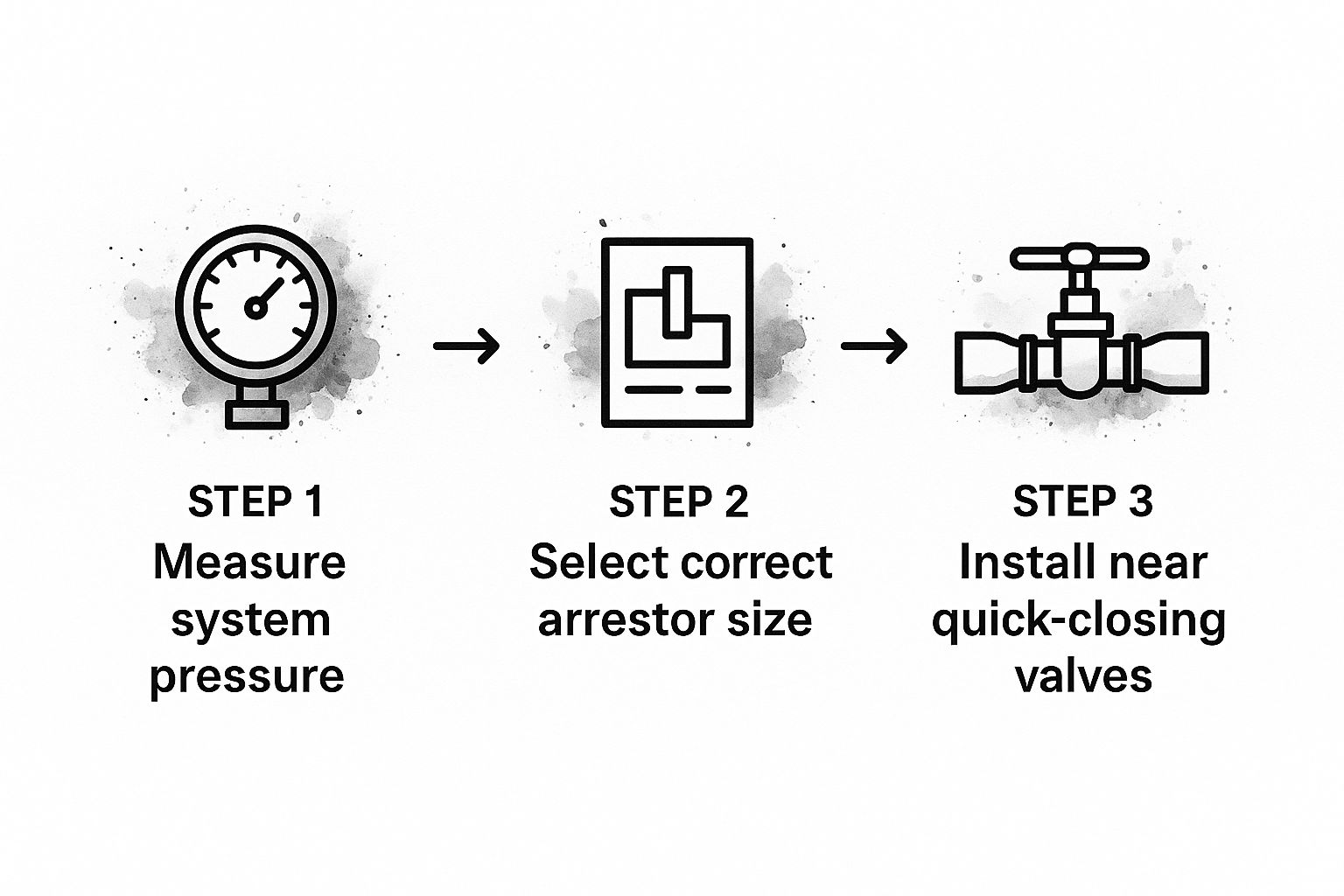
As you can see, a good fix starts with a proper diagnosis—like checking your water pressure—before you even think about buying parts. From there, it’s about picking the right device and placing it strategically near the problem valve for the best results.
Choosing the Right Water Hammer Arrestor
To help you narrow down the options, I’ve put together a quick comparison of the most common types of arrestors you’ll encounter. This table should give you a good idea of what might work best for your specific situation.
| Arrestor Type | Common Application | Installation Difficulty | Estimated Cost |
|---|---|---|---|
| Single-Fixture (Tee-fitting) | Washing machines, dishwashers, ice makers | Easy (DIY) – Screws on | $15 – $30 each |
| In-Line (Copper) | Isolating a single bathroom or kitchen | Moderate to Hard (Pro Recommended) – Requires soldering or press-fitting | $30 – $75 + labor |
| Whole-House (Large Capacity) | Protecting the entire system from high pressure | Hard (Pro Recommended) – Plumbed into the main line | $75 – $200 + labor |
| Stubby (Air Chamber Style) | Older homes, can be soldered onto pipe ends | Moderate – Requires soldering | $10 – $20 + labor |
Ultimately, the right choice balances the scale of your problem with your budget and comfort level with plumbing work. For anything beyond a simple screw-on model, calling a pro is almost always the smart move.
Installation Best Practices
While installing the screw-on models is very straightforward, I strongly recommend calling a licensed plumber for any arrestor that involves cutting pipes. We have the specialized tools for soldering and press-fittings to guarantee a job that’s not only leak-free but also up to local Denver plumbing codes.
Whether you’re tackling it yourself or hiring it out, stick to these fundamentals:
- Always shut off the water to the area you’re working on before you start. It seems obvious, but you’d be surprised.
- Use thread seal tape (often called Teflon tape) on any threaded connections to ensure a watertight seal.
- Carefully read the manufacturer’s instructions. Some arrestors have specific requirements for how they need to be oriented (vertically, horizontally, etc.) to work correctly.
By installing the right water hammer arrestor, you’re doing more than just stopping an annoying noise. You’re actively protecting your pipes, joints, and expensive appliances from the slow, steady damage that leads to leaks and bigger repair bills down the road. It’s a smart, proactive investment in your home’s health and your own peace of mind.
Knowing When to Call a Professional Plumber
While many water hammer solutions are perfect for a confident DIYer, there comes a time when putting down the wrench and picking up the phone is the smartest move you can make. It’s not about admitting defeat; it’s about knowing your limits and preventing a small plumbing headache from snowballing into a full-blown, expensive catastrophe.
The first big red flag? Persistence. You’ve gone through the trouble of installing water hammer arrestors right at the noisy appliance, but that awful banging sound just won’t quit. This is a classic sign that the problem is bigger than a single fixture and likely rooted deeper in your plumbing system.
When Professional Expertise Is Non-Negotiable
Another clear signal is when you check your water pressure and get a shocking result. If a pressure gauge shows your system is running well above 80 PSI, the right fix is a pressure-reducing valve (PRV). This isn’t a simple screw-on part; it involves cutting into your main water line and requires precise calibration to safeguard every pipe, valve, and appliance in your home. This is absolutely a job for a licensed professional.
You should also reach for the phone the moment you see signs of existing damage. Have you noticed water stains creeping across a ceiling, small drips near pipe fittings, or green corrosion on your copper lines? This means the water hammer’s violent shocks may have already taken their toll, and you need an expert to assess the damage before it gets worse.
A Critical Takeaway: Any job that involves pulling out a blowtorch and solder is a definite line in the sand. Modifying copper pipes to create a permanent, leak-proof joint is a true skill. A bad solder can fail spectacularly, causing thousands of dollars in water damage in minutes.
Scenarios Demanding a Pro
Knowing when to tag in an expert is crucial. Understanding the difference between a quick fix and a complex repair can save you a world of trouble. For more on this, our guide on DIY plumbing projects vs when to call a professional is a great resource.
Here are a few situations where calling us is your best bet:
- The Noise Won’t Stop: You’ve tried the common DIY solutions, but the banging just keeps coming back.
- Main Line Work: Any project involving your home’s main water supply, like installing a PRV, requires a pro. Period.
- Cutting or Soldering Pipes: Altering the physical layout of your plumbing is not a task for beginners.
- You’re Not Sure: If you can’t confidently locate the source of the noise, a plumber can diagnose it quickly and accurately, saving you time and guesswork.
In the end, calling a professional plumber isn’t just about getting a problem fixed; it’s about buying peace of mind. For those curious about the trade itself, there are some great plumbing and HVAC industry resources out there. An expert ensures the job is done right, protecting your home and your investment for the long haul.
Common Questions About Water Hammer
Even after you know what’s causing that racket in your walls, it’s normal to have a few more questions. Water hammer is a strange and often startling problem, so let’s clear up some of the most common concerns we hear from homeowners around Denver.
Most of the questions we get really boil down to a single, crucial point: Is this banging sound actually a big deal?
Can Water Hammer Damage My Pipes?
Yes, without a doubt. That loud bang isn’t just a harmless noise. It’s the sound of a powerful shockwave—what we call hydraulic shock—ripping through your pipes. A single “bang” probably won’t cause your plumbing to explode, but chronic, ongoing water hammer puts incredible stress on your entire system.
Imagine tapping a pipe joint over and over with a small hammer. It might not seem like much at first, but that repeated impact eventually causes real damage.
- Weakened Pipe Joints: The constant pressure spikes will eventually loosen fittings and connections, creating slow, hard-to-find leaks.
- Damaged Appliance Valves: The delicate internal valves in your dishwasher and washing machine were never built to handle these kinds of shocks.
- Burst Pipes: In the most severe cases, a particularly violent shockwave can be the final straw that ruptures a pipe, leading to catastrophic water damage.
Trust me, ignoring that sound is a risk you don’t want to take. It’s your plumbing’s way of screaming for help.
Why Did Water Hammer Suddenly Start?
If your pipes were quiet yesterday and are banging away today, it almost always points to a specific change in your system.
The most frequent trigger is that the old-style air chambers have filled with water. If your house was built with these, they can lose their air cushion over time, rendering them useless. Another common culprit is a brand-new appliance, especially a modern, water-efficient washing machine or dishwasher with a valve that snaps shut instantly.
It could also point to a recent change in the city’s water pressure. More seriously, it might signal that the pressure-reducing valve (PRV) for your entire house is starting to fail.
A Plumber’s Insight: If the noise starts out of the blue, don’t just assume it’s a new washing machine. Check your water pressure. A failing PRV is a silent problem that often first reveals itself through sudden and severe water hammer.
Are Water Hammer Arrestors a Permanent Solution?
For the most part, yes. Modern, piston-style water hammer arrestors are designed to be a permanent, “install-it-and-forget-it” fix. They are a massive improvement over the traditional air chambers that required you to drain your entire plumbing system just to “recharge” them with air.
These sealed devices contain a permanent cushion of air or nitrogen gas held behind a piston. They are built to absorb thousands upon thousands of pressure spikes for years without failing. Once one is installed correctly right near the problem valve, you can consider that specific water hammer issue solved for good.
These components are vital for a healthy plumbing system, much like understanding the purpose of other crucial parts; for example, many people are surprised to learn what an anode rod does for their water heater’s lifespan.