
When you start planning for a new basement bathroom, the first question on your mind is almost always, "How much is this going to cost?" In the Denver Metro area, the typical price range for a complete basement bathroom installation falls between $8,000 and $25,000.
Of course, that’s a pretty wide gap. Where your project lands on that spectrum depends on a few key factors: the complexity of the job, the quality of the materials and fixtures you choose, and, most importantly, whether you need to run all new plumbing.
What Does a Basement Bathroom Really Cost?
Think of it like buying a car. You have your base model, but the final price tag really gets shaped by all the options and upgrades you add. A simple, functional bathroom might stick to that lower $8,000 figure, but if you’re dreaming of a spa-like retreat with custom tile and high-end fixtures, your budget will naturally climb higher.
To get a clearer picture, let's break down the costs into three general tiers. This should help you figure out what you can realistically achieve with your budget.
Estimated Basement Bathroom Cost Tiers
We can generally group basement bathroom projects into three categories: basic, mid-range, and high-end. Each tier comes with a different set of features and, of course, a different price tag. Here’s a quick summary of what you can expect at each level.
| Tier | Estimated Cost Range | Key Features |
|---|---|---|
| Basic | $8,000 – $15,000 | A functional, no-frills setup. Includes standard fixtures like a prefab shower, a basic toilet and vanity, and simple flooring. Ideal if you have existing plumbing rough-ins. |
| Mid-Range | $15,000 – $20,000 | The most popular option. Features upgraded materials like a tiled shower with a glass door, a quality vanity with a stone top, and better lighting. Can accommodate more complex plumbing needs. |
| High-End | $20,000+ | A premium, custom-built space. Think walk-in steam showers, heated floors, custom cabinets, and designer fixtures. Costs can easily surpass $25,000. |
Looking at these tiers, you can see how quickly the budget can grow as you add more custom touches and higher-quality materials. The mid-range option is where most homeowners land, striking a great balance between quality, style, and cost.
Breaking Down the Major Expenses
So, where does all that money actually go? Labor, materials, and permits all play a part, but one area often dominates the budget: plumbing.
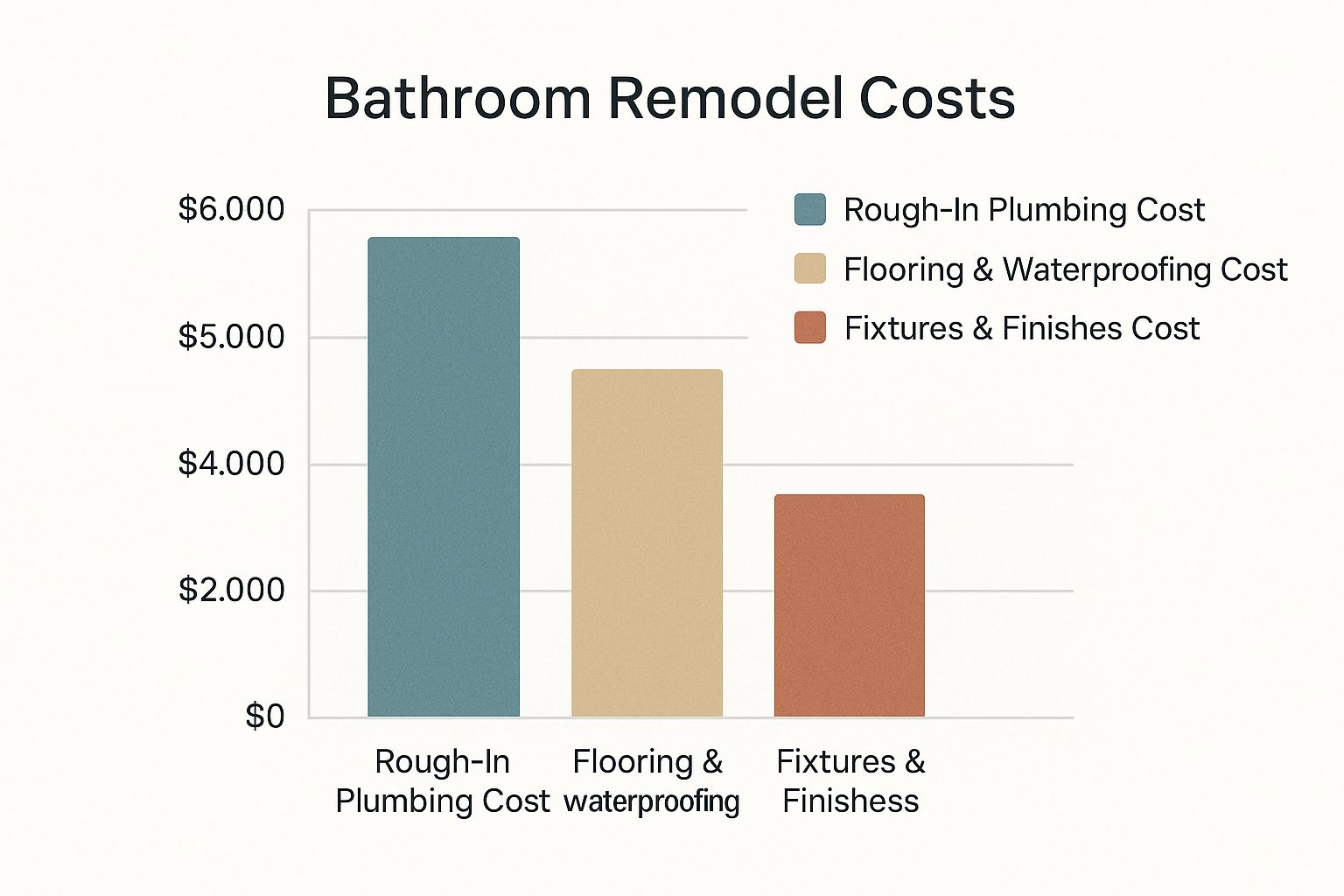
As you can see, the plumbing rough-in is frequently the single biggest line item. This is the work of cutting into the concrete slab to install drain lines and tie them into your home’s main sewer line—it’s labor-intensive and requires real skill. This is exactly why the existing state of your basement's pipes is so critical to the final price.
These price ranges aren't just guesses; they're a solid starting point for any project here in Denver. Recent industry data confirms that the cost to install a basement bathroom typically ranges from $8,000 to $25,000, which shows these tiers align perfectly with what homeowners are actually spending.
While this guide focuses on Denver, renovation costs share common principles everywhere. For a different perspective on budgeting and saving money on a bathroom project, this detailed Australian bathroom renovation cost guide is a fantastic resource.
The Key Factors Driving Your Final Price
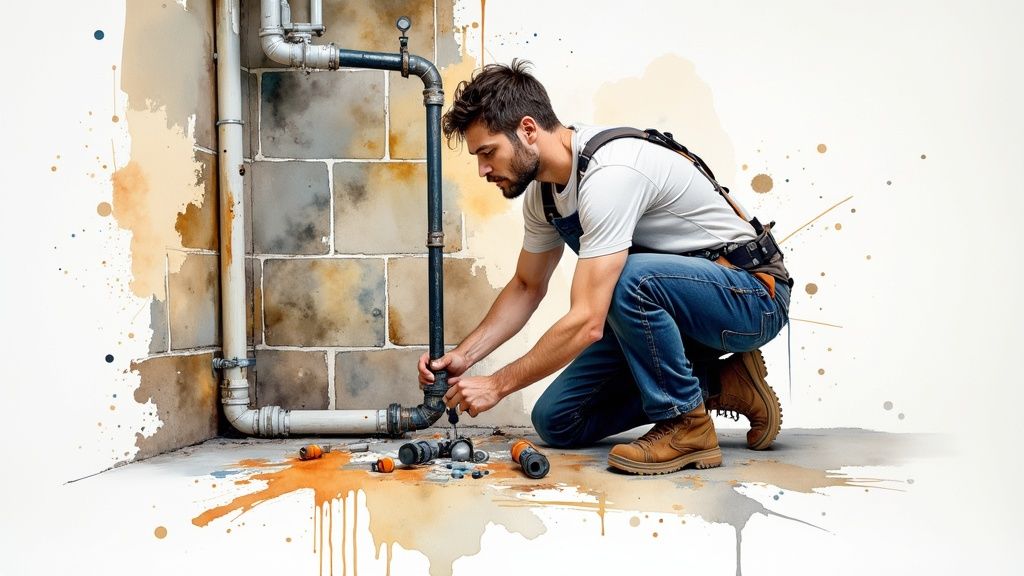
Seeing a wide price range is one thing, but truly understanding why a project costs what it does is what lets you make smart choices for your home and budget. The final cost for a basement bathroom isn't just one number; it's a combination of several critical pieces. Think of it like baking a cake—the final result (and its cost) depends entirely on the ingredients you choose.
The "big three" ingredients that shape your budget are plumbing, electrical, and labor. But in a basement, these elements bring a whole new set of challenges you just don't run into upstairs.
Plumbing: The Underground Challenge
Let’s be blunt: plumbing is the undisputed heavyweight champion of basement renovation costs. It's a completely different ballgame down there. Upstairs, a plumber might just tap into pipes in an adjacent wall. In the basement, they often have to build a brand-new drainage system from the ground up—literally.
This usually means a plumber has to break out the jackhammer and cut through your concrete foundation to lay new drain lines for the toilet, sink, and shower. It’s a demanding, messy, and precise job that has a massive impact on the budget.
Key Takeaway: For many basement bathroom projects, the single most expensive task is creating new plumbing lines below the concrete slab. If your basement already has "rough-in" plumbing from when the house was built, you've basically hit the jackpot and can save thousands right off the bat.
To get a clearer picture of what goes into this foundational step, our guide on what impacts rough-in plumbing cost breaks down the specific expenses involved. It's a great way to understand exactly what that line item on your contractor's quote really covers.
Electrical and Ventilation Needs
Next up is the electrical work. Every modern bathroom needs circuits for lights, outlets, and, most importantly, a fan. In a basement, this can get tricky. Sometimes it involves running entirely new circuits all the way from your main electrical panel, which might be on the other side of the house.
The most critical piece here is the ventilation fan. Because basements are below ground and lack natural airflow, a powerful, properly vented fan isn't just a nice feature—it's your number one defense against mold and moisture damage. The job isn't just wiring the fan itself; it's also running the ductwork all the way to the exterior of your home.
Labor and Your Basement's Current State
Finally, the condition of your basement plays a huge role in the labor costs. The amount of work required can vary wildly depending on your starting point.
- Unfinished "Blank Slate" Basements: If you're starting with bare concrete walls and exposed ceiling joists, it's a contractor's dream. While it means building everything from scratch (framing, drywall, etc.), working in a wide-open space is often much more efficient than navigating existing structures.
- Partially Finished Basements: This scenario can actually be more complex. A contractor might have to start with demolition—tearing out old walls, rerouting outdated wiring, or removing strange flooring choices before the new work can even begin. All that extra prep work adds directly to the labor time and your final bill.
Ultimately, your basement bathroom installation cost is a direct reflection of these core factors. A project with existing plumbing, straightforward electrical access, and a clean, unfinished space will always land on the lower end of the price spectrum compared to one needing heavy-duty concrete work and demolition.
Understanding the Toughest Part: Plumbing and Drainage
Let's talk about the hidden giant of your basement bathroom budget: the plumbing. While it’s easy to get excited about picking out tile and a new vanity, it's the unseen network of pipes and drains that truly makes everything work. This is almost always the most complex and expensive piece of the puzzle, and where a huge chunk of your basement bathroom installation cost will go.
The biggest factor influencing your plumbing cost is whether your basement already has "rough-ins." If it does, you've got a serious head start. A rough-in simply means the original builder stubbed out basic drain and water lines, planning for a future bathroom. Tying into these existing lines is far easier and cheaper than starting from zero.
But if there's no rough-in, the project gets a lot more involved. Your plumber will have to break open the concrete slab to install brand-new drain lines. This isn’t just about smashing up the floor; it's a precise excavation to ensure every single pipe has the perfect downward slope to connect with your home's main sewer line.
Why Your Waste Might Need an Elevator
Even with new drains, you can run into another classic basement problem: gravity. Your basement floor is the lowest point in your house, which often means it's below the main sewer line that exits your foundation. And as we all know, water and waste don't flow uphill.
This is where a sewage ejector pump becomes essential. Think of it as a small, specialized elevator just for your bathroom's wastewater.
- The toilet, sink, and shower all drain into a sealed pit set into the floor.
- Once the waste in the pit reaches a set level, a float switch kicks on the pump.
- The pump then forcefully sends the waste up and out to the main sewer line.
An ejector pump is a fantastic solution, but it definitely adds another layer of cost and mechanical complexity to the job.
Creating New Plumbing from Scratch
When your project requires breaking concrete, the process is incredibly methodical. A plumber has to carefully map out the exact placement for the toilet, sink, and shower drains to ensure everything functions perfectly once the fixtures are in. To get a better feel for this, our guide on standard bathroom rough-in dimensions shows just how critical these measurements are.
A study on basement additions really drives this point home. The cost of adding a basement bathroom can swing anywhere from $11,000 to $26,000, and that wide range is almost entirely due to the plumbing's complexity. A basement with no existing infrastructure will always be on the higher end of that scale.
Finally, don't forget about ventilation. A proper exhaust fan, ducted directly to the outdoors, is required by building codes. It's not just a suggestion—it's a critical system that pulls moisture out of the air to prevent mold and mildew from taking hold. Knowing about these essential components will help you have much smarter conversations with any plumber you hire.
Designing Your Space: Fixtures and Finishes
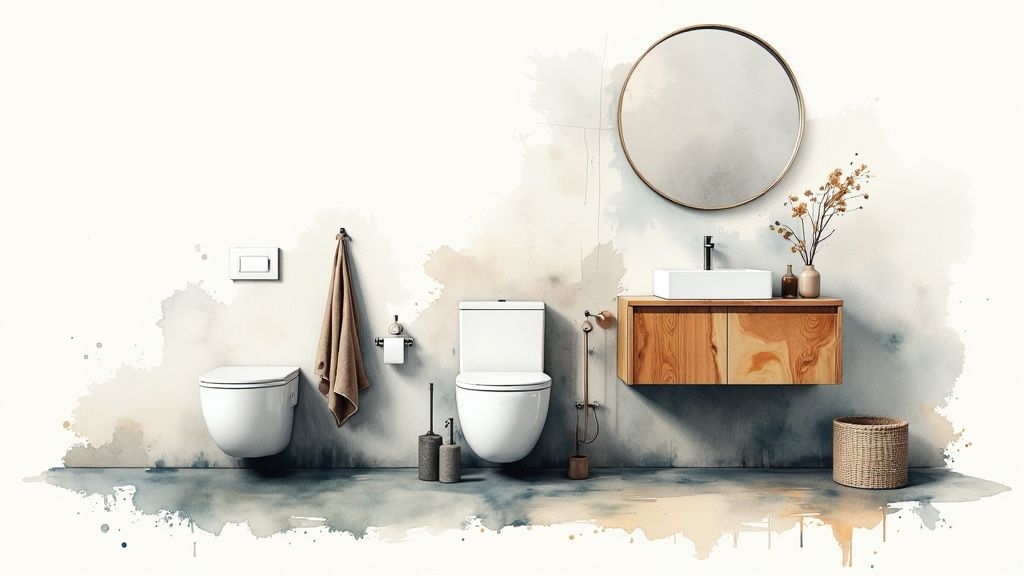
Okay, now for the fun part. Once the dusty work of plumbing and framing is done, you get to bring your vision to life by choosing the fixtures and finishes. This is where your bathroom’s personality really shines through. It's also the stage where you have the most direct control over the basement bathroom installation cost, with your choices potentially swinging the final price by thousands.
I always tell clients to think about this phase in terms of "good, better, and best." Just about every single item, from the toilet to the towel racks, falls into this spectrum. A basic, builder-grade toilet might run you $150, but a sleek, high-efficiency one-piece model can easily top $500. This same principle applies to everything else you'll be picking out.
Where to Splurge and Where to Save
Knowing where to put your money is the secret to a project that looks great and lasts. The trick is to invest in the hardworking, high-use items and be a little more frugal on the cosmetic touches that are easier to swap out down the road.
Here’s a quick breakdown I often share with homeowners:
- Splurge on Faucets and Shower Valves: Think of these as the engine of your bathroom. They get used every single day. Pouring a little extra into quality hardware from a trusted brand will save you from the headache of drips, leaks, and costly repairs later.
- Save on Lighting and Mirrors: You can find fantastic-looking and perfectly functional lights and mirrors without breaking the bank. Plus, if you decide you want a different style in five years, it's a relatively simple DIY swap.
- Splurge on the Shower Base or Tub: This is your first line of defense against water damage. A rock-solid, professionally installed shower pan or bathtub is absolutely critical. This is one corner you never, ever want to cut.
- Save on the Vanity: A fully custom vanity is beautiful, but a standard-size cabinet from a home improvement store can look just as good for a fraction of the cost. You can also hunt for deals on stone remnants for a high-end countertop look on a budget.
Here's a common trap I see people fall into: they get mesmerized by a fancy rain shower head but forget about the basics. While they look incredible in magazines, many homeowners find they aren't very practical if you don't want to wash your hair every single time you shower. A high-quality, standard shower head often delivers a much better day-to-day experience.
The Shower Decision
Your shower enclosure will be one of the biggest decisions you make, and it’s a perfect example of that "good, better, best" choice. Many people love the look of elegant glass shower doors, but there are several paths you can take here.
On the budget-friendly end, a standard fiberglass shower kit is your go-to, often coming in under $1,000 for the whole unit. On the other extreme, a custom-tiled, walk-in shower is a true luxury feature. When you add up the tile, complex waterproofing, skilled labor, and custom glass, the cost for just the shower can easily soar to $4,000 or more. It's a stunning centerpiece, but it’s an investment that will significantly move the needle on your final bill.
Why a Basement Bathroom Is Often the Smartest Choice
When you’re thinking about adding another bathroom, your mind might jump to building a whole new extension or maybe converting the garage. Those are certainly options, but they often come with a ton of disruption and a hefty price tag. That’s why a basement bathroom is such a savvy move for so many Denver homeowners—the basement bathroom installation cost is often a fraction of the alternatives.
Picture your main living area as a finished piece of art. If you want to add new pipes or wires, you’re essentially forced to cut into that finished canvas. It means tearing up walls, floors, and ceilings you've already paid for. It's messy, time-consuming, and the repair work alone can tack thousands onto your final bill.
Now, think of an unfinished basement. It’s like a blank canvas waiting for its first brushstroke. The frame is already there; you just need to fill it in.
The Advantage of Building Down Instead of Out
So, why is it so much more affordable? It all comes down to easy access to your home's existing guts. Your main plumbing lines, water supply, and electrical panel are usually sitting right there in the basement or are at least very easy to get to from there.
Tapping into these systems from below ground is a much more straightforward job than trying to snake them up through your finished living spaces. This direct access translates into real savings in a few key ways:
- Less Demolition: You’re not tearing out perfectly good drywall, flooring, and ceilings in the main part of your house.
- Lower Labor Costs: When contractors can work in an open, unfinished space, they get the job done faster. That means fewer billable hours for you.
- A Contained Mess: All the construction dust and debris stays down in the basement, keeping the disruption to your daily life to a minimum.
Building down leverages the infrastructure that’s already in place. Instead of engineering complicated new routes for pipes and wires, you're just taking the path of least resistance. That efficiency is the single biggest reason why the basement bathroom installation cost is so attractive.
A Smart Return on Your Investment
A basement bathroom isn't just about adding convenience; it's a solid investment that boosts your home's value. In many cases, adding that bathroom is what officially lets you market the space as a legal living suite or guest quarters, which can really make your property stand out. If you're curious about the numbers behind home improvements, it's worth understanding the key real estate investment metrics that drive value.
The deal gets even sweeter if your basement is already finished. In that scenario, the cost typically lands somewhere between $8,000 and $15,000. All the foundational work is done, making it an incredibly smart upgrade. It allows you to avoid the sky-high costs of a second-story addition or the nightmare of a major plumbing overhaul that cuts through your home.
If you want to get a better sense of what major plumbing work can entail, take a look at our article on the average cost of a sewer line replacement.
Common Questions About Basement Bathroom Projects
Even after you've mapped out a solid plan, a few questions always seem to pop up. It’s completely normal. Getting these common uncertainties cleared up beforehand is the best way to feel confident about the project and avoid any surprises down the road.
We’ve pulled together the most frequent questions we hear from homeowners to give you some clear, straightforward answers. This should help clarify the finer points of the basement bathroom installation cost and what the whole process really looks like.
Does a Basement Bathroom Increase My Home’s Value?
Absolutely. A new bathroom is a high-impact renovation that does two things at once: it makes your home more livable by increasing the usable square footage, and it boosts its overall appeal to future buyers. It’s one of those rare projects that adds both functional and financial value.
Here in the Denver area, adding a full or three-quarter bath is often the key to legally classifying a finished basement as a proper living suite or an extra bedroom. That simple change on paper can directly bump up your property's market value.
While the exact return on investment always depends on your specific neighborhood and the quality of the work, you can usually expect to recoup a substantial chunk of the installation cost when you sell. Homebuyers consistently rank bathrooms high on their wish lists, and having one ready to go in the basement is a huge selling point.
What Is an Upflush Toilet and Can It Save Me Money?
An upflush toilet, sometimes called a macerating toilet, is a really clever piece of plumbing. Instead of relying on gravity and a big drainpipe in the floor, it uses a built-in grinder and pump. This system turns waste into a slurry and then actively pumps it up to your home's main sewer line.
The biggest advantage here is that you don't have to break open your concrete foundation to run new drain lines. That's a total game-changer for the budget.
While the upflush toilet unit itself is pricier than a standard model, the savings on labor and concrete work can be massive—often saving you thousands of dollars. It’s a brilliant, cost-effective solution for many basement projects where tearing up the floor is the only other option.
Do I Need a Permit to Add a Basement Bathroom?
Yes. I can say with almost 100% certainty that you will need a permit. A basement bathroom involves significant plumbing, electrical, and sometimes even structural work. All of it has to meet strict local safety codes to be considered legal and, more importantly, safe.
Getting a permit from your local municipality isn't just about following the rules. It ensures that a professional inspector will check the work at critical stages, verifying that everything is installed correctly and up to code. It's a second set of expert eyes on your project.
Trying to skip the permit process is a huge gamble. You could face hefty fines, run into problems with your homeowner's insurance, and create major headaches when it's time to sell your house. A permit is your best protection for both your financial investment and your family’s safety.
How Can I Realistically Save Money on My Project?
You definitely have some good options for trimming the budget without cutting corners on quality. The trick is to be strategic about where you spend and where you save.
- Sweat Equity: If you’re handy, you can save a lot on labor by doing things like demolition, painting, or installing simple click-lock flooring yourself.
- Smart Layout: This is the big one. Designing the bathroom to be as close as possible to your existing plumbing and electrical lines will cut down your contractor’s time more than anything else.
- Strategic Finishes: You don't have to go top-of-the-line on everything. Opt for a standard-sized shower, pick a reliable but affordable toilet, and check out local stone yards for countertop remnants for your vanity. You can find some beautiful pieces for a fraction of the price.
- Get Multiple Quotes: Never go with the first offer. Always get at least three detailed, itemized quotes from reputable, licensed contractors. This lets you compare not just the price, but exactly what you're getting for your money.
By mixing and matching these strategies, you can make a noticeable dent in the overall basement bathroom installation cost and still end up with a fantastic new space.
When you're ready to turn your basement bathroom plans into a reality, trust the experts who know Denver's unique plumbing challenges inside and out. Contact Professional Plumbers Denver today for a detailed consultation and a quote you can count on. Visit us at https://professional-plumbers-denver.com to get started.