A clogged main drain isn’t just an inconvenience; it’s a full-blown plumbing emergency waiting to happen. This is where the primary sewer line for your entire home gets blocked, causing backups in multiple places at once. You’ll often hear strange gurgling sounds and notice some pretty unpleasant odors, too.
Unlike a simple clogged sink, this problem starts deep in your home’s main artery. Figuring out if you’re dealing with a main drain clog versus a minor, localized one is the critical first step to preventing a messy and expensive disaster.
Is It Really a Clogged Main Drain?
Before you even think about renting heavy-duty equipment or calling in a pro, you need to be absolutely sure the main drain is the culprit. I’ve seen countless homeowners waste time and energy trying to fix a single sink when the real problem was much bigger. The telltale signs of a main line blockage are systemic—they’ll pop up all over your house, not just in one spot.
A good way to visualize it is to think of your plumbing like a tree. Your kitchen sink, toilets, and showers are the smaller branches. They all feed into the main trunk—your sewer line—that runs out to the street. If a single branch gets clogged, only that one sink or tub is affected. But when the trunk gets blocked, everything backs up.
Key Symptoms to Watch For
A main drain clog produces a very specific—and very frustrating—set of symptoms. Once you know what to look for, they’re hard to miss.
- Multiple Fixtures Backing Up: This is the biggest giveaway. For instance, you flush the toilet, and water starts bubbling up into the nearby shower or bathtub drain. That’s a classic sign the wastewater has nowhere to go and is being forced back up through the lowest point it can find.
- Gurgling and Weird Noises: Listen closely to your pipes. Do you hear gurgling from a toilet when the washing machine is draining? That sound is trapped air being pushed around by the blockage, a clear indicator of a major clog.
- Foul Odors Coming From Drains: If you notice a persistent sewer gas smell wafting up from your drains, that’s a serious red flag. It means waste isn’t flowing away from your house as it should and is just sitting in the pipes.
Differentiating the Problem
Not all clogs are created equal. Sometimes it’s a main drain issue, and other times it’s just a single fixture. A simple way to tell them apart is to look at where the symptoms are showing up.
Here’s a quick comparison to help you accurately diagnose your plumbing issue based on common symptoms.
Main Drain Clog vs. Single Fixture Clog
| Symptom | Main Drain Clog Indicator | Single Fixture Clog Indicator |
|---|---|---|
| Location of Backup | Multiple fixtures are slow or stopped, especially on the ground floor. | Only one sink, tub, or toilet is affected. |
| Toilet Behavior | Toilets gurgle or bubble when you use a sink or run the washer. | The toilet clogs on its own, but other drains work fine. |
| Drain Noises | You hear gurgling sounds from various drains throughout the house. | Noises are isolated to the single clogged fixture. |
| Water Flow | Water from one fixture appears in another (e.g., shower drain). | Water simply drains slowly from the one affected fixture. |
| Odors | A widespread sewer gas smell comes from multiple drains. | Odors are contained to the area around the single clogged drain. |
Understanding these differences is key. A single fixture clog is often a simple DIY fix, but a main drain clog requires a completely different—and more serious—approach.
Pro Tip: A great way to test your theory is to run the washing machine. It dumps a large volume of water into the system all at once. If you have a main line clog, this will almost always trigger the symptoms immediately.
The distinction is critical because the tools and methods for fixing a single drain are much simpler than what’s needed for a main drain. These widespread blockages are also a huge issue on a larger scale. The sewer repair services market is projected to grow from $4.78 billion in 2021 to $6.35 billion in 2025, which really shows how common these problems are becoming. You can find more insights about the sewer repair services market on cognitivemarketresearch.com.
Your Essential Toolkit for Drain Cleaning
Let’s be blunt: trying to tackle a main drain clog without the right equipment is a recipe for a messy, frustrating disaster. It’s not just about getting the job done; it’s about doing it safely. You’re potentially dealing with raw sewage, so gearing up properly isn’t just a suggestion—it’s essential.
First things first, protect yourself. You absolutely need a pair of heavy-duty rubber gloves, the kind that go up to your elbows. You’ll also want a solid pair of safety goggles. When a clog finally gives way, wastewater can splash back with surprising force, and you don’t want any of that in your eyes.
Choosing Your Clog-Busting Tools
With your safety gear sorted, it’s time to pick your weapon. For a serious main drain clog, you’ve really got two main contenders: a plumbing auger (also known as a drain snake) or a drain bladder. They work in completely different ways, so knowing what you’re up against helps you choose the right one.
- Plumbing Auger (Snake): This is your best bet for physical, solid blockages. It’s a long, flexible steel cable that you feed into the drain until you hit the obstruction. The corkscrew tip is designed to either break up the clog or, better yet, hook onto it so you can pull the whole mess out. Think tree roots, wads of “flushable” wipes, or kids’ toys.
- Drain Bladder: This gadget is a champ against softer clogs, like a massive buildup of grease or sludge. It’s basically a tough rubber balloon that screws onto the end of a garden hose. You push it into the pipe, and when you turn on the water, it inflates to seal the drain. Then, it shoots high-pressure jets of water forward, blasting the clog apart.
A huge mistake I see people make is grabbing that small, handheld snake they use for the bathroom sink. That’s not going to cut it here. A main drain requires a heavy-duty, motorized auger—sometimes called a drum machine—with a cable that’s at least 50 to 100 feet long. You’ll almost certainly need to rent one.
Auger vs. Bladder: Making the Call
So, which one do you choose? It really depends on what you think is causing the problem.
If your yard has big, old trees anywhere near the sewer line, roots are a prime suspect. In that case, the cutting power of an auger is what you need. But if you suspect the issue is more from years of kitchen grease and gunk building up, the powerful flushing action of a drain bladder can work wonders.
Honestly, the most reliable first move for a stubborn main drain clog is renting a professional-grade mechanical auger. It gives you the raw physical power to chew through just about any blockage you’re likely to find down there.
How to Actually Clear Your Main Drain
Alright, you’ve got your tools and safety gear. It’s time to tackle that clogged main drain. This isn’t a five-minute job, so be patient and methodical, but you can absolutely get it done. The first hurdle, and one that trips up a lot of people, is just finding the main drain cleanout—this is your entry point to the home’s main sewer line.
You’re looking for a threaded cap, usually 3 to 4 inches across, on a short piece of pipe. I typically find them in basements, crawl spaces, or right outside near the foundation. Sometimes it’s flush with the floor, other times it pokes up a few inches.
Opening the Cleanout and Managing Backflow
Once you’ve spotted it, get ready for the messiest part. Nine times out of ten, there’s a nasty backup of wastewater sitting right behind that clog. The second you open that cap, it’s coming out.
Before you even think about putting a wrench on it, get a big, sturdy bucket and place it directly under the cleanout. Seriously, move anything you care about out of the immediate area. Now, slowly start loosening the cap with a pipe wrench. If water begins to seep out, stop what you’re doing. Let it drain into the bucket before you loosen it any further.
Be prepared to empty that bucket more than once. It’s far better to take your time managing the backflow than to have a sewage flood in your basement. You have to relieve this pressure before you can even begin to attack the clog itself.
Using a Mechanical Auger Like a Pro
With the initial gush of water contained, you can bring in the heavy machinery: the mechanical auger. For a main line clog, renting a professional-grade machine is the only way to go.
- Feed the Cable: Start by inserting the auger’s cable into the cleanout. Switch the machine on and feed the cable into the pipe at a slow, steady pace. Let the machine do the work; don’t try to force it.
- Feel for the Clog: Pay attention. You’ll feel a distinct change when the auger tip hits the blockage. The cable will get harder to push, and you might hear the motor’s pitch change. That’s your target.
- Work it Through: Let that rotating tip chew through the obstruction. I find a gentle push-and-pull motion—just a few inches back and forth—really helps the cutting head break things apart.
- Use Reverse Wisely: If the cable binds up, your first instinct might be to push harder. Don’t. Use the machine’s reverse function to back the cable out a little, then try advancing again. This is key to preventing the cable from kinking up inside your pipe.
This visual guide breaks down the essential tools for the job.
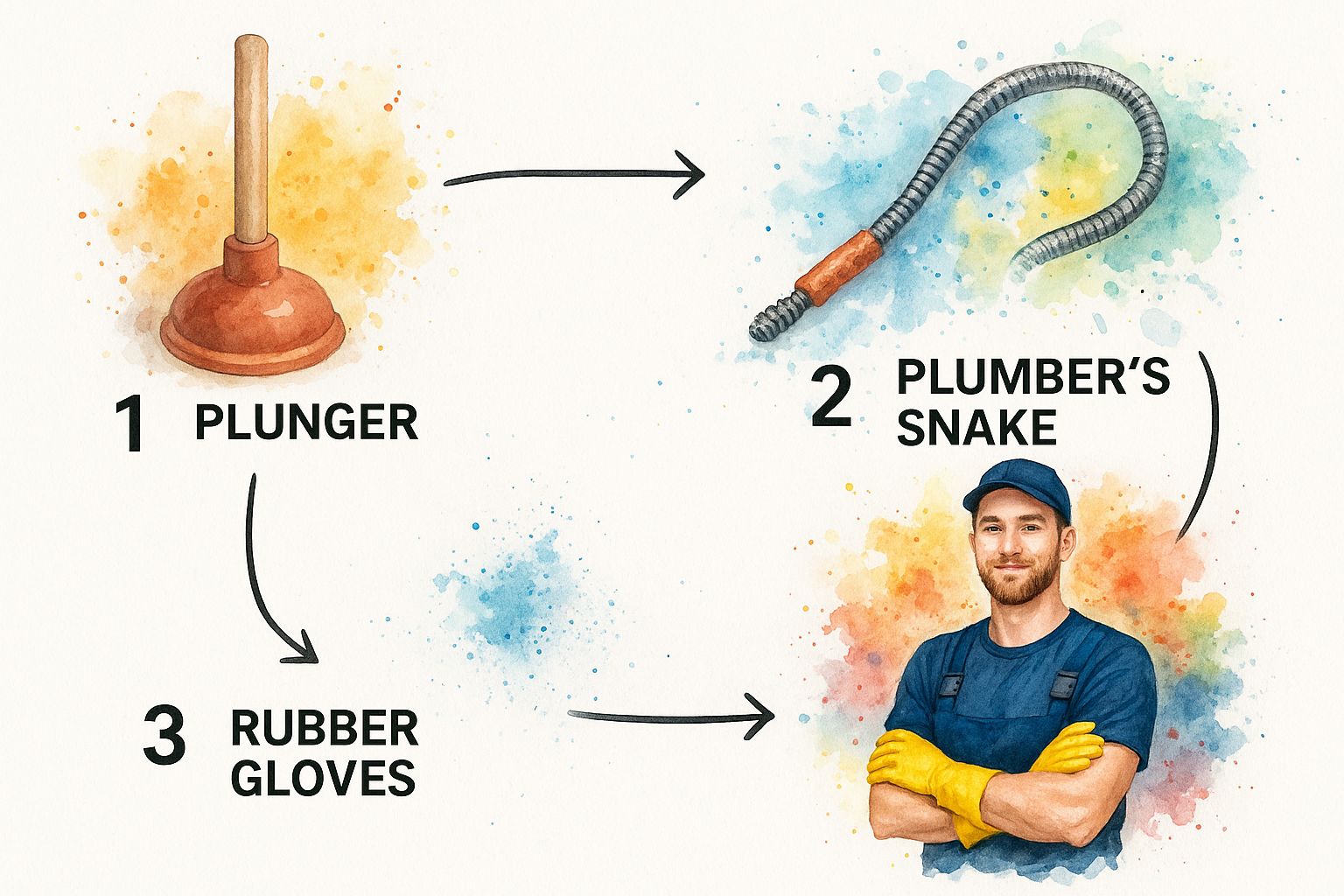
Having everything you need on hand, from gloves and goggles to the right auger, makes all the difference in getting this done safely and without a bigger mess.
An Alternative Method: The Drain Bladder
If you have a hunch the clog is mostly soft stuff like grease or sludge, a drain bladder can be a surprisingly effective tool. It essentially uses a high-pressure jet of water to obliterate the blockage.
Just attach the bladder to a standard garden hose and feed it a few feet into the cleanout. Then, turn the water on full blast. The bladder inflates, creating a tight seal against the pipe, and then shoots a powerful stream of water straight at the clog. The tell-tale sign of success is hearing the water suddenly start flowing freely down the drain.
Clearing a main drain is a big deal, and it’s a problem that’s only getting more common. In fact, the drain machines market is projected to reach $2.5 billion by 2025, growing at 6% annually, largely because our infrastructure is aging. This just shows how often homeowners and cities are battling these exact kinds of blockages.
At the end of the day, while these DIY methods work for many clogs, some are just too tough for rented equipment. If you’ve been at it for hours with an auger and are getting nowhere, it’s probably time to call in a pro. Knowing when to wave the white flag is just as important as knowing how to do the job yourself, and understanding the benefits of professional drain cleaning services in Denver could save you from a much bigger headache down the road.
Should You Use Chemical Cleaners?
When you’ve got water backing up, it’s tempting to grab that bottle of chemical drain cleaner from under the sink. It feels like a quick, powerful solution. But when you’re dealing with a clogged main drain, pouring chemicals down your pipes can be a big mistake—one that’s both ineffective and potentially dangerous.
Here’s the problem: a main line clog is usually a long way from your sink or toilet. By the time that liquid cleaner travels all the way down the pipe, it’s been so diluted by the standing water that it has almost no power left. It’s like trying to dissolve a giant boulder with a few drops of acid. It just won’t work.
Not All Cleaners Are Created Equal
It helps to know what you’re actually pouring into your plumbing. Drain cleaners aren’t a one-size-fits-all product; they typically fall into three distinct categories.
- Caustic Cleaners: These are the aggressive ones, usually containing lye (sodium hydroxide). They work by creating a chemical reaction that generates intense heat to dissolve grease and organic gunk. The downside? They’re extremely corrosive and can eat away at PVC pipes or cause older iron lines to fail.
- Oxidizing Cleaners: These products use ingredients like bleach (sodium hypochlorite) to break down organic material through oxidation. While effective on certain clogs, they are also highly corrosive and can create toxic fumes, especially if accidentally mixed with other household cleaners.
- Enzymatic Cleaners: This is the gentler approach. These cleaners use beneficial bacteria and enzymes to slowly digest organic waste. They are fantastic for regular maintenance and won’t harm your pipes, but they work far too slowly to clear a major main line blockage.
Pouring a harsh chemical cleaner into a completely blocked main drain creates a dangerous situation. Now you have a pipe full of standing, toxic water that a plumber will have to deal with, posing a significant safety risk.
Making a Smarter Choice
The drain cleaner market is huge—it’s projected to reach $9.24 billion by 2032—because people are always looking for an easy fix. While those thick, caustic gels are popular, they’re really meant for a simple clog right under a sink or in a shower drain.
Before you reach for a chemical solution, it’s crucial to understand what you’re up against. This table breaks down the different types of cleaners and what they’re truly good for.
Choosing The Right Drain Cleaning Solution
| Cleaner Type | How It Works | Best For Main Lines? | Key Risks |
|---|---|---|---|
| Caustic | Generates heat to dissolve organic matter. | No | Can damage PVC & older metal pipes; severe chemical burns. |
| Oxidizing | Breaks down clogs through oxidation. | No | Corrosive; can release toxic gas if mixed with other chemicals. |
| Enzymatic | Bacteria digest organic waste over time. | No | Too slow for active blockages; best for prevention only. |
The takeaway here is that when you’re facing a main line clog from things like invasive tree roots, collapsed pipes, or years of solid buildup, chemicals are the wrong tool for the job. They’re a temporary fix for a minor problem, not a solution for a major one. If you’re interested in safer methods for smaller issues, you can learn how to unclog a sink without chemicals.
At best, the chemicals won’t work. At worst, you could damage your plumbing and create a hazardous mess. For a serious main drain clog, your best bet is always a mechanical solution, like a professional-grade drain auger.
When It’s Time to Call a Plumber
Look, there’s a fine line between a successful DIY fix and a full-blown plumbing disaster that ends up costing thousands. Knowing when to put down the rental auger and pick up the phone is probably the most critical part of this whole process. While clearing a clog yourself is incredibly satisfying, some problems are just too big for the tools you can get at a hardware store.
Pushing forward when you really should be calling for help can turn a manageable issue into a catastrophic failure. Trust me, it’s a risk that’s almost never worth the reward.
Red Flags That Mean “Stop Now”
Some situations are immediate, non-negotiable signs that you’re in over your head. If you run into any of these, it’s time to call for backup.
- Your Auger Gets Stuck: This is a classic “uh-oh” moment. If your snake hits something it can’t push through—like a thick wad of tree roots or a section of collapsed pipe—forcing it is a terrible idea. You could easily break the cable off inside your line, and that’s a whole new, expensive headache to solve.
- The Clog Comes Right Back: You spend an afternoon fighting with the drain, finally get the water moving, and feel like a hero. Then, a day later, it’s all backing up again. This is a tell-tale sign you haven’t actually cleared the blockage. You’ve likely just poked a temporary hole in it, which gets plugged up almost immediately.
- You Can’t Even Find the Cleanout: Sometimes the battle is lost before it begins. If your main cleanout access is buried under landscaping, paved over, or just plain hidden, a pro has the know-how to find it without tearing up your property.
A professional plumber’s truck is loaded with gear that’s leagues beyond what you can rent. We’re talking high-powered hydro-jetters that can blast away years of gunk with 4,000 PSI of water pressure, plus sewer cameras that let us see exactly what we’re up against down there.
When the Problem Shows Up in Your Yard
Sometimes the most serious symptoms don’t even appear inside your house. If you see signs of trouble in your yard, it could point to a major issue with the sewer line itself. These are absolutely not DIY situations.
One of the most alarming red flags is finding soggy, marshy patches of grass or, even worse, sinkholes forming on your lawn when it hasn’t been raining. This is a strong indicator that the sewer line is broken and leaking raw sewage into the soil. A pro needs to get a camera in there immediately to assess the damage and figure out the next steps. Taking preventative measures can save you from these headaches, and you can find some great tips for the maintenance of your sewer to keep your system in good shape.
Don’t Let It Happen Again: Preventing Future Drain Clogs
Getting your main drain flowing again feels great, but the real victory is making sure you never have to repeat that messy ordeal. The good news? Preventing clogs is mostly about a few simple, smart habits that protect your entire plumbing system.
It really all starts in the kitchen. Grease, fats, and oils are, without a doubt, the number one enemy of your drains. They might pour down like a liquid when they’re hot, but as soon as they cool, they turn into a thick, sticky sludge inside your pipes. This gunk is like a magnet for other food particles and debris, slowly but surely building a stubborn blockage.
The fix is simple: Always let grease cool down, pour it into an old can or jar, and just toss it in the trash. Never, ever down the sink.
Smart Habits for a Healthy System
What goes down your other drains and toilets matters just as much. You’d be surprised how many common household products are just waiting to cause a main line backup.
- The “Flushable” Wipe Myth: I’ve seen it a thousand times. Despite what the package says, these wipes absolutely do not break down like toilet paper. They are a leading cause of massive sewer line clogs and should always go in the garbage can.
- Catch It at the Source: A cheap mesh strainer for your shower and tub drains is one of the best investments you can make. It’ll catch all that hair and soap scum before it has a chance to create a nasty blockage deep in the pipes.
- Stay Ahead of Buildup: Every few months, treat your drains with a high-quality enzymatic cleaner. Unlike harsh chemicals, these products use natural bacteria to eat away at organic gunk, keeping things clear without damaging your pipes.
If you have large, mature trees in your yard, I highly recommend a professional sewer camera inspection every couple of years. It’s the only way to know for sure if tree roots are starting to invade your pipes before they cause a complete and costly blockage.
Sticking to these habits will save you a world of stress and a lot of money in the long run. For a deeper dive, take a look at these excellent drain cleaning tips.
Your Top Questions About Main Drain Clogs Answered
Even after you’ve wrestled with a clog and won, you’re often left with a few lingering questions. It’s completely normal. Getting a handle on the bigger picture of main drain problems can make you feel a lot more confident the next time something goes wrong.
Let’s dive into a couple of the most common questions I hear from homeowners.
What’s the Bill for Professional Drain Cleaning?
This is usually the first thing people ask, and for good reason. While the final price tag can shift based on your location and the specifics of the job, you can generally expect a professional main line snaking to cost somewhere between $250 and $600.
If the clog is particularly nasty and needs the heavy-duty approach of hydro-jetting, the price will go up. For that kind of service, you’re likely looking at a range of $400 to $1,000, sometimes more if the line is hard to get to. It’s a chunk of change, for sure, but it’s often the only way to clear out those really stubborn blockages for good.
Will My Homeowners Insurance Cover Tree Root Damage?
This is where things get a bit complicated. The short answer is, probably not. Most standard homeowners insurance policies will not cover damage from tree roots growing into your sewer line.
Why? Insurance is designed for sudden, unexpected events. Root intrusion, on the other hand, is seen as a slow, gradual problem that falls under the umbrella of regular home maintenance. Some policies do offer an add-on or “endorsement” for service line coverage, so it never hurts to pull out your policy and read the fine print.
Here’s a piece of advice I always give: an ounce of prevention is worth a pound of cure—and a whole lot of cash. Spending a little on a camera inspection every few years can catch root problems early, long before they cause a major backup that your insurance company won’t cover.
Having these answers in your back pocket helps you make smarter choices, both in maintaining your home’s plumbing and in dealing with a crisis when it hits.
For any plumbing challenge you’re facing—from routine upkeep to an all-out main drain emergency—you can count on Professional Plumber Denver. Our team is on call 24/7 to bring expert solutions to homeowners all over the Denver Metro area. Don’t let a small issue turn into a disaster. Get in touch with us today and let’s get it sorted.