
That sinking feeling you get when you see a puddle of soapy water spreading out from your washing machine is something no homeowner wants to experience. But before you panic, know this: most of the time, a washing machine drain backup isn't a sign of a broken appliance. It's usually just a simple clog.
Think about all the gunk that goes down that drain cycle after cycle—lint, soap scum, dirt, and stray fibers. Over the years, that stuff builds up and creates a blockage in the drain hose or the standpipe it empties into. This guide will walk you through figuring out exactly what's causing the problem so you can get it fixed.
Figuring Out Why Your Washing Machine Is Backing Up
When your washer decides to send water back up the drain, it’s not just making a mess; it's your plumbing system trying to tell you something is wrong. The powerful gush of water released during the spin cycle is often too much for a drain that's been slowly narrowing over time.
It’s like trying to pour a whole gallon of water through a tiny funnel all at once. If there’s any restriction, it’s going to overflow.
This rarely happens out of the blue. You’ve probably heard the warning signs without even realizing it. That gurgling sound coming from the drain as the washer empties? That's a classic clue. It’s the sound of trapped air struggling to get past a partial blockage. It's easy to ignore, but that little noise is your plumbing's way of asking for help before a small issue becomes a full-blown flood.
To help you pinpoint the problem quickly, here’s a breakdown of the usual suspects.
Quick Guide to Common Backup Causes
| Observable Symptom | Most Likely Cause | What to Check First |
|---|---|---|
| Gurgling sounds during drain cycle | Partial clog in the standpipe or main line | The drain hose and the standpipe opening for visible debris. |
| Water backs up into a nearby sink or toilet | Clog in a shared sewer line | If other nearby drains are also slow or backing up. |
| Water pools only around the washer | Clog in the drain hose or standpipe | The connection between the drain hose and the standpipe. |
| Water drains very slowly, not backing up fully | Partial clog or a venting issue | For kinks in the drain hose or signs of a slow drain. |
This table should give you a good starting point. Most issues are pretty straightforward once you know what you're looking for.
Common Culprits Behind the Backup
The problem isn't always right there in the laundry room. Your home's plumbing is a complex network, and a backup in one spot can be caused by an issue further down the line.
Here’s what I see most often in the field:
- The usual gunk: The number one offender is just years of accumulated lint, detergent residue, and fabric softener scum hardening inside the drainpipe.
- Shared drain lines: In many homes, the laundry drain connects to the same line as a kitchen or utility sink. That means grease, food bits, and other junk can team up with lint to form a stubborn clog.
- Something that doesn't belong: It’s amazing what can end up in a drain. Small socks, coins, pet hair, or even a pen left in a pocket can get washed down the hose and create an instant, solid blockage.
A backup can also point to bigger issues like blocked vent pipes. Your plumbing system needs airflow to drain properly, and if that vent gets clogged (say, by a bird's nest), it creates a vacuum that slows drainage to a crawl and triggers overflows.
Key Takeaway: Remember, a washing machine drain backup is almost never a problem with the machine itself. It’s a plumbing issue, usually a clog that has been forming for a while and finally reached its breaking point.
This repeated pressure from backups and clogs puts a ton of stress on your pipes. Over time, that strain can weaken pipe joints and the pipe material itself, making you vulnerable to much bigger problems. This is just one of many factors that can eventually cause a catastrophic failure. If you're curious to learn more about this, take a look at our guide on what causes pipes to burst.
Pinpointing the Exact Location of the Clog
Before you can fix a washing machine drain backup, you have to play detective. Finding where the clog is hiding is the most important part of the job, and thankfully, it's usually easier than it sounds. The key is to start with the most obvious and accessible spots first—a little logic here can save you a ton of work later.
Your investigation starts right behind the washer. First things first: unplug the machine for safety. Then, gently pull it away from the wall just enough to see what’s going on back there. You're looking for that flexible, corrugated plastic drain hose that snakes from the back of the washer into a pipe in the wall.
Inspecting the Drain Hose
In my experience, this hose is the number one cause of a washing machine drain backup. It’s flexible, which is great for installation but also makes it incredibly easy to get kinked or squished behind the machine. A sharp bend can stop water flow just as effectively as a physical clog.
Here's what to look for:
- Obvious Kinks: Is the hose bent at a harsh 90-degree angle? Try to gently straighten it out to give the water a clear path.
- Visible Blockages: Grab a flashlight and peek into the end of the hose where it goes into the wall. You'd be surprised how often you can see a wad of lint stuck right at the opening.
- Loose Connections: Jiggle the clamps securing the hose to the machine and the standpipe. A loose connection won't cause a backup, but it can definitely create a messy puddle on your floor.
If you’re seeing water on the floor during the drain cycle, a compromised hose is almost always the culprit. Whether it's kinked, clogged up, or just old and cracked, it’s the main reason wastewater has nowhere to go but back where it came from. You can find more details on how hose issues lead to leaks and what to check for on Maytag's blog.
Pro Tip: Before you pull that drain hose out to check for an internal clog, stick a bucket under it. I guarantee there's trapped water in there, and this one simple step will save you from turning a small fix into a mopping session.
If the hose looks straight and clear, the blockage is hiding further down the line. Time to check the standpipe.
Checking the Standpipe and P-Trap
The standpipe is the vertical pipe sticking out of your wall—the one your washer's drain hose empties into. It’s usually white PVC or black ABS plastic. This pipe runs down into a U-shaped bend called a P-trap, which is cleverly designed to hold a bit of water to keep nasty sewer gases from creeping into your laundry room.
Unfortunately, that same U-bend is a perfect trap for all the lint, soap scum, and other gunk your washer flushes out. It settles at the bottom and eventually builds into a solid blockage. You can't see inside it, but you can run a quick test.
With the drain hose out of the way, slowly pour about a half-gallon of water down the standpipe. If the water goes down quickly with no gurgling or hesitation, your clog is probably much deeper in your home's main drain line. But if the water immediately backs up or drains like molasses, you've found your problem. The clog is right there in the standpipe or the P-trap. Now you know exactly where to focus your attack.
DIY Solutions for Clearing a Stubborn Clog
So you've figured out where the clog is. Now it’s time to roll up your sleeves and get that blockage cleared. The good news is you don't always need to call a pro for a simple washing machine drain backup. With the right approach, you can often knock this out yourself in under an hour.
Before we dive into the "how-to," let's quickly review the signs that got us here in the first place.
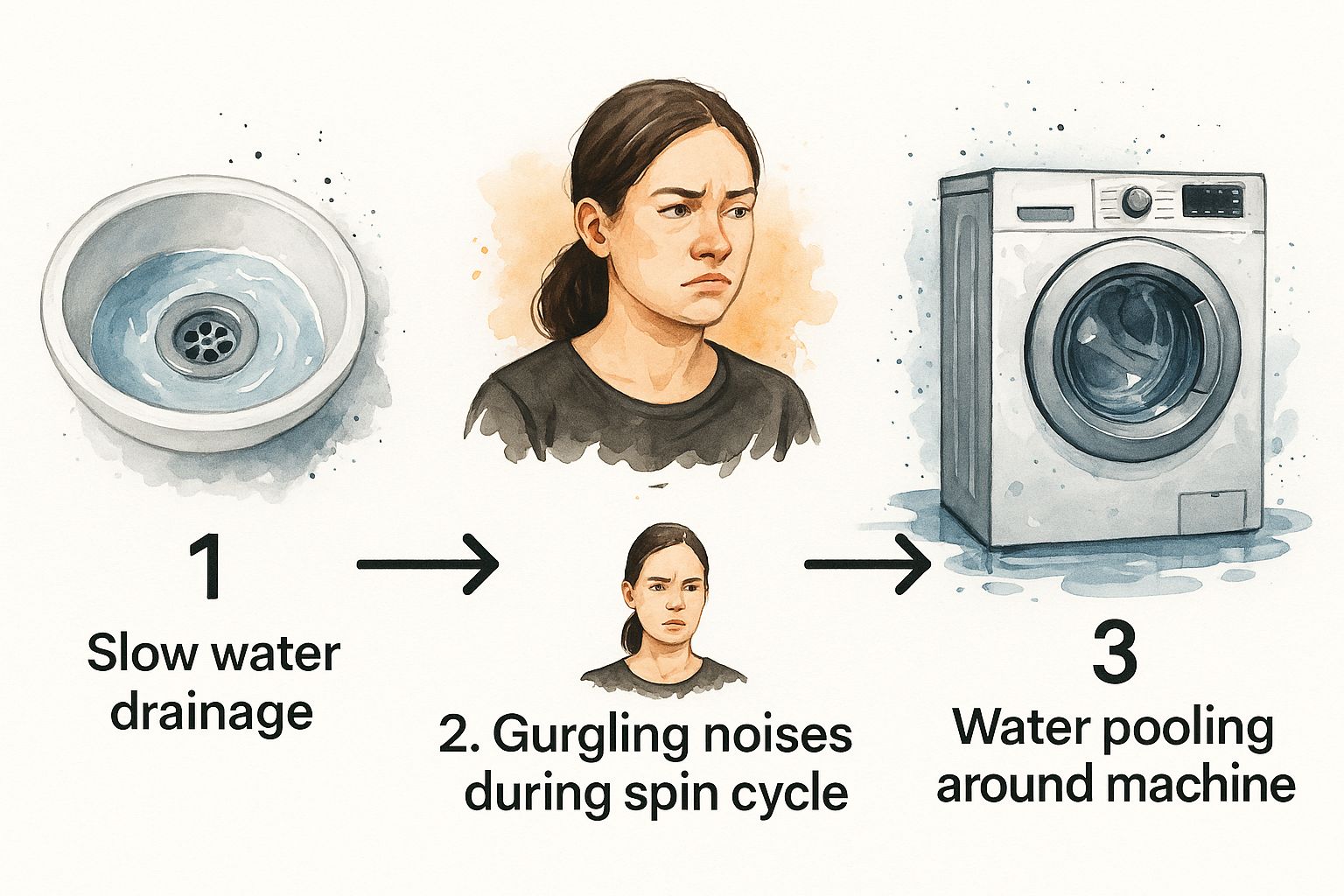
As you can see, slow draining, weird gurgling sounds, or water pooling around the machine are all classic signs of a blockage that needs to be dealt with sooner rather than later.
Taming the Clog With a Plumber's Snake
When you're dealing with a tough clog in the standpipe, your best friend is a plumber's snake (you'll also hear it called a drain auger). This is basically a long, flexible steel cable designed to navigate the twists and turns of your pipes to either break up or pull out whatever is causing the jam. A small, handheld drum auger around 25 feet long is usually perfect for this kind of job.
Here’s how to use it effectively:
- First, gently feed the cable's end into the standpipe until you feel it stop. That resistance is the clog.
- Next, start turning the handle clockwise while applying a bit of forward pressure. You want the auger's tip to work its way into the blockage.
- You might feel the cable suddenly push through, which means you've broken the clog apart. If it feels like you've snagged something solid, that’s your cue to pull the snake back and remove the gunk.
Remember, the goal isn't just to punch a small hole through the middle of the clog. You'll want to work the snake back and forth a few times to really scrape the pipe walls clean of any leftover lint and built-up soap scum.
What About Those Homemade Drain Cleaners?
I see it all the time online—people recommending a cocktail of baking soda and vinegar or a kettle of boiling water to clear drains. While these might work for a minor bit of grease in a kitchen sink, they just don't have the muscle for the dense, fibrous clogs we see in laundry drains.
Let’s be realistic:
- Boiling Water: This can help loosen some soap residue, but it's not going to do much against a tightly packed ball of lint and hair.
- Baking Soda & Vinegar: The fizzing action is a nice science experiment, but it simply lacks the power to eat through years of compacted laundry gunk.
Think of it like this: these home remedies are like a quick rinse for a dish, while a plumber's snake is the heavy-duty scrub brush you need for baked-on food.
A Quick But Important Warning: Please, never pour chemical drain cleaners down your laundry drain. These products are incredibly corrosive and can easily damage the plastic parts of your washing machine's drain hose. Plus, they're often useless against lint clogs and pose a serious safety hazard.
If you’ve tried snaking the drain and the water still isn't flowing, the clog is likely much deeper in your home's main plumbing lines. What starts as a laundry room headache can sometimes be the first sign of a much bigger problem. If you suspect that’s the case, our guide on how to fix a clogged main drain can shed more light on these serious blockages. A persistent clog that a small auger can't reach is a clear sign it's time to bring in a professional.
How to Prevent Future Drain Backups
Fixing a clog is a relief, but preventing the next one is where you truly win the battle against a washing machine drain backup. The best approach is a proactive one, built on simple habits that keep your plumbing flowing freely. The good news? You don't need to be a plumber—just a few minutes each month will do the trick.
One of the most effective and affordable things you can do is install a lint trap on the end of your washer's drain hose. This small mesh screen, which costs just a few dollars, slides right over the hose and is secured with a zip tie. You'd be shocked at how much lint, hair, and fabric debris these traps catch before it ever gets a chance to enter your pipes.
Build a Simple Monthly Maintenance Routine
Consistency is your best defense against buildup. A quick monthly check-up can stop clogs before they even start to form, and it's a small price to pay to avoid a future watery mess.
Here are a few easy habits to work into your schedule:
-
Run a Cleaning Cycle: Once a month, run an empty wash cycle on the hottest setting. Pour two cups of white vinegar directly into the drum to help dissolve soap scum and flush out any gunk starting to form inside the hose and standpipe.
-
Check Your Lint Trap: If you've installed a lint trap, check it every few weeks. Once it looks about 75% full, it's time to replace it (or clean it, if it's a reusable model). Letting it get completely clogged will just cause another backup.
-
Inspect the Hose: While you're checking the trap, give the drain hose a quick look. Make sure it isn’t kinked or squished against the wall, as a physical restriction can slow water flow just as much as a clog.
This simple proactive approach is a cornerstone of smart homeownership. Preventing a washing machine drain backup is just one piece of the puzzle, so it's worth exploring these comprehensive water damage prevention tips for the rest of your home.
Smart Laundry Habits That Protect Your Pipes
Believe it or not, what you do on laundry day has a direct impact on your plumbing's health. A few small tweaks to your routine can make a huge difference in stopping the debris that causes a washing machine drain backup in the first place.
Always check pockets for tissues, receipts, coins, or other stray items before loading clothes into the machine. These little objects are notorious for getting past filters and creating instant blockages.
It's also a good idea to avoid overloading the washer. An overstuffed machine doesn't just clean less effectively; it also produces more lint and puts a bigger strain on the drain system during that final spin.
Key Takeaway: A few minutes of prevention are worth hours of cleanup. By using a lint trap and adopting a simple monthly cleaning habit, you can dramatically reduce the odds of ever seeing water pool around your washer again.
These small habits are part of a larger picture of home care. Consistent upkeep is vital for your entire plumbing system, not just the laundry drain. You can learn more by reading about the importance of regular plumbing maintenance in Denver on our blog.
When Your New Washing Machine Overwhelms Old Pipes
It’s a scenario I’ve seen play out countless times. You finally upgrade to a new, high-efficiency washing machine, looking forward to cleaner clothes and smaller water bills. Then, during the very first drain cycle, you’re greeted with a washing machine drain backup, and your laundry room floor is covered in soapy water.
Your first thought is probably, "Did they sell me a lemon?" But more often than not, the machine is working exactly as it should. In fact, it might be working too well for your home's older plumbing.
Modern washers are built for efficiency and speed. Their pumps are incredibly powerful, designed to shoot a large volume of water out in a very short amount of time. This isn't a flaw; it's a feature. The problem is that this powerful gush of water can instantly reveal weaknesses in your drain system that your old, less forceful machine never exposed. A drain that has been slowly collecting years of lint, hair, and soap scum might have been just clear enough to handle the trickle from an older washer.
Why Your Old Pipes Can't Keep Up
The shift to these powerful new washing machines has led to a noticeable spike in drain backups, especially in homes built a few decades ago. These appliances can discharge water at a rate and volume that older drain lines simply weren't designed for, putting immense pressure on the entire system. You can get more details about why new washers often cause backups on rocketmanplumbing.com.
Think of it this way: for years, a quiet country lane handled local traffic just fine. Then, a new superhighway exit is built, suddenly funneling thousands of cars onto that same small road. The result? Instant gridlock. Your new washer is that superhighway, and your old plumbing is that unprepared country lane.
Is Your Home's Plumbing Ready for an Upgrade?
If a new machine immediately causes a backup, it's a flashing red light that your plumbing needs a serious look. The appliance isn't the real problem; it’s just the messenger. Here’s a breakdown of what’s likely going on behind the walls:
- Undersized Standpipe: Many older homes have a drain standpipe (the vertical pipe your washer's hose goes into) that's only 1.5 inches in diameter. Today, plumbing codes recommend a minimum 2-inch pipe to accommodate the powerful discharge from modern machines.
- The Clog Was Already There: A hidden, partial clog of soap scum and lint might have existed for years without you knowing. The sudden, high-pressure blast of water from your new washer can dislodge that gunk, pushing it down the line and creating a solid, impassable blockage.
- Poor Venting: Your plumbing system needs air to drain properly. If the vent stack is partially blocked by leaves or other debris, the water can't flow away fast enough. The high volume from a new washer will quickly overwhelm a poorly vented drain, causing it to back up.
Key Takeaway: If a brand-new washing machine causes an immediate drain backup, it’s not the machine's fault. It has simply exposed a pre-existing plumbing issue. Your drain lines likely can't handle the flow rate and need a thorough cleaning or even an upgrade to meet modern standards.
Knowing When to Call a Professional Plumber
It feels great to fix a clog yourself, I get it. But knowing your limits is just as important. A stubborn washing machine drain backup isn't always a simple laundry room issue; sometimes, it’s a symptom of a much bigger headache lurking deeper in your home's plumbing. Pushing a DIY fix too far can quickly turn a routine service call into a major, expensive repair.
The most obvious clue? A clog that just won't quit. If you've snaked the standpipe a few times but the drain keeps backing up every few weeks, the real problem is almost certainly beyond the reach of a standard handheld auger. This kind of recurring clog points to a serious buildup or an issue far down in your main sewer line.
Red Flags That Signal a Deeper Problem
When your washer is the only drain giving you grief, the problem is usually local and something you can handle. But when other fixtures start acting up, you're likely dealing with a system-wide blockage that needs a pro, and fast.
Keep a sharp eye out for these warning signs:
-
Widespread Backups: Does running the washing machine make your shower drain gurgle or, worse, send water backing up into the tub? This is a classic sign the clog is in your main sewer line—the large pipe that handles all of your home's wastewater. A blockage here is serious business.
-
Foul Odors: A persistent, nasty smell of raw sewage wafting up from your drains is more than just unpleasant; it's a clear indicator of a main line clog and a potential health hazard.
-
Multiple Slow Drains: If the sinks and tubs in other parts of the house are also draining like molasses, the issue is definitely not just in the laundry room.
These symptoms are your plumbing system's way of telling you that the problem is too big for a simple DIY fix.
Believe it or not, tree roots are a top offender for main sewer line damage. In fact, root intrusion is blamed for an estimated 50% of all sewer blockages. The roots hunt for moisture, work their way into tiny cracks in the pipes, and eventually create a massive, tangled clog.
When the Risk Outweighs the Reward
I've seen it happen too many times: a homeowner rents heavy-duty equipment to clear a main line clog and ends up cracking an old pipe. A professional plumber has specialized tools, like powerful hydro-jetters and sewer cameras, that can pinpoint the exact location of the clog and clear it safely without causing more damage.
So, if you’ve tried the basic fixes and the washing machine drain backup persists, it’s time to put down the tools. Calling a professional isn't giving up—it's making the smartest move to protect your home and your sanity.
Common Questions About Washing Machine Drain Backups
Even after clearing a clog, it's normal to have a few lingering questions. Let's tackle some of the most common things homeowners ask when they've just dealt with a sudsy mess in their laundry room.
Can I Just Pour a Chemical Drain Cleaner Down There?
This is probably the number one question we get, and the answer is always a hard "no." We get why it's tempting—it seems like an easy fix—but chemical drain cleaners are the wrong tool for this job.
Those harsh chemicals are formulated to eat through hair and organic gunk in a bathroom sink, not the dense, fibrous combination of lint, fabric softener, and soap scum that clogs a laundry line. They usually don't work, and worse, they can do a real number on your plumbing. The corrosive ingredients can eat away at the plastic drain hose and rubber seals inside your washing machine, causing leaks and much more expensive problems down the road. It’s far better to stick with a mechanical solution, like a drain snake.
What's That Gurgling Sound When the Washer Drains?
If you hear a gurgling or "glug-glug" sound when your washer is emptying, pay attention. That's your plumbing system's way of telling you there's a problem.
That sound is caused by trapped air being forced through the water because the pipe can't keep up with the flow. It’s a classic sign of a partial clog forming somewhere down the line or a potential venting issue. The water is still getting through, but just barely. Think of it as an early warning signal that a complete washing machine drain backup is on the horizon. Don't wait for it to get worse.
A gurgling drain is your first and best clue that a blockage is forming. Catching it early can be the difference between a quick fix and a flooded laundry room.
How Often Should I Be Cleaning the Drain to Prevent This?
A little proactive maintenance goes a long way. The easiest thing you can do is run an empty cycle with hot water and two cups of white vinegar about once a month. The vinegar does a great job of breaking down the soap scum and detergent residue that acts like glue for lint, helping to flush the system out.
And if you have a mesh lint trap on the end of your drain hose, get into the habit of checking it every couple of weeks. Cleaning or swapping it out is a simple, two-minute task that stops the bulk of the problem-causing material right at the source.
If you've tried everything and the water still isn't draining properly, the clog is likely deeper in your home's main plumbing lines. For anyone in the Denver Metro area dealing with a stubborn backup, the team at Professional Plumbers Denver has the tools and expertise to find and fix the problem fast. Don't let a backed-up washer throw your week off track—contact us today for help you can rely on.