
When you need to shut off your water, you usually don’t have time to waste searching. Start by checking the perimeter of your house, specifically where the main water line comes in from the street. In most Denver-area homes, you’ll find it in the basement or crawl space, often along the front-facing wall.
Other common spots are near your water heater or even outside your house. Look for a small metal or concrete lid in your yard or near the curb, which is often labeled “WATER.” A few minutes of searching now can turn a future disaster into a minor hiccup.
Why Knowing Where Your Main Water Shut-Off Is So Important
That sinking feeling you get when you hear the sound of gushing water is something no one wants. But if you know exactly where your home’s main water shut-off valve is, you can turn a potential catastrophe into a manageable problem. This isn’t just about a dripping faucet; it’s about preventing thousands of dollars in damage from a burst pipe during one of those sudden Denver cold snaps.
This one piece of information is your first and best defense. It gives you immediate control. Think about a washing machine hose letting go while you’re out, or a pipe freezing solid overnight. In those situations, every second counts. Being able to stop the water flow right away is absolutely critical.
It’s Your Best Defense Against Aging Infrastructure
It’s not just your own plumbing you have to worry about. The larger water infrastructure has its own set of problems. Across the U.S. and Canada, roughly 20 percent of the 400,000 miles of installed water mains are past their prime.
This results in an average of over 11 water main breaks per 100 miles of pipeline every year—adding up to about 260,000 pipe failures annually. When a major water main breaks in your neighborhood, it can send a surge of pressure into your home’s pipes, making your shut-off valve an essential tool for protecting your property. You can explore more about these infrastructure challenges and how they affect homeowners.
Knowing your shut-off valve’s location is like having a fire extinguisher for water damage. You hope you never need it, but when you do, it’s the most important tool you have.
Ultimately, this knowledge brings incredible peace of mind. Instead of feeling helpless in a water emergency, you’ll be ready to act. You can protect your home’s value, sidestep devastating water damage, and handle plumbing issues with confidence. Learning to find and use your main water shut-off is one of the most empowering things you can do as a homeowner.
When a pipe bursts and water is spraying everywhere, you don’t have time to search. Your fastest and best move is almost always shutting off the water from inside your home. But you need to know where to look before disaster strikes.
Start with a logical approach. The main water line almost always comes into your house through the foundation wall that faces the street. That’s your ground zero.
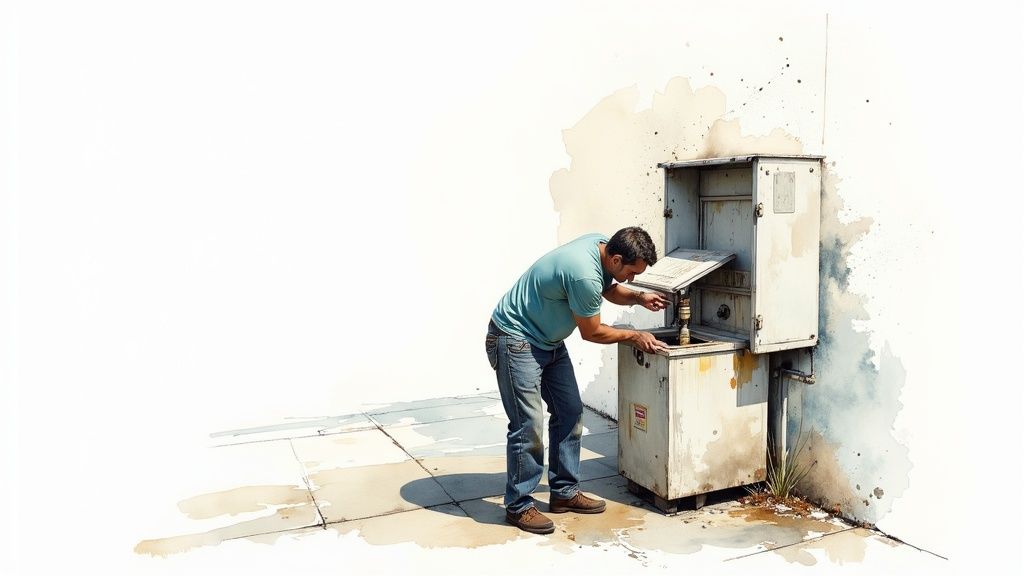
For most of us here in the Denver area, this means heading straight for the basement or crawl space. You’re looking for a thick pipe, typically copper or sometimes PVC, that comes out of the concrete floor or wall. More often than not, the shut-off valve will be located within 3 to 5 feet of where that pipe first enters your home.
This placement isn’t a coincidence. It’s the most direct route from the city’s water supply to your plumbing, giving you immediate control right at the source.
Identifying Your Indoor Valve
Okay, you’ve found the main pipe. Now, what does the valve look like? It’s often located near other major appliances like your water heater or furnace, since builders tend to group all the utilities together. You’re looking for one of two common types:
- A Gate Valve: This is the classic style with a round, wheel-like handle, much like you’d see on an outdoor spigot. You’ll need to turn it clockwise several times to fully close it.
- A Ball Valve: This is the more modern and, frankly, easier-to-use option. It has a simple straight lever handle. A quick quarter-turn is all it takes to stop the flow. When the handle is parallel to the pipe, water is on. When it’s perpendicular, it’s off.
Pro Tip: Look for the very first valve on the pipe after it enters your house. It’s easy to get confused by other valves further down the line, but those usually just control specific branches, like the supply to your water heater or an outdoor faucet.
Knowing where to find this valve is one of the most important things any homeowner can learn. I’ve put together a quick reference table to help you systematically check the most likely spots.
Common Interior Locations for Your Shut Off Valve
Use this quick reference guide to systematically check the most likely spots for your main water valve inside your home.
| Location | What to Look For | Pro Tip |
|---|---|---|
| Basement or Crawl Space | A large pipe coming through the front foundation wall. | This is the most common spot in colder climates like Denver. Always bring a good flashlight. |
| Utility Closet | The valve may be near your water heater or furnace. | Follow the main cold water inlet pipe that feeds your water heater; the main valve is often nearby. |
| Garage | Check along the walls, especially the one shared with the main part of your house. | In homes built on a slab foundation, the garage is another prime location for the water line entry point. |
Once you’ve found it, make sure everyone in the house knows its location. A little prep now can save you a world of headache and thousands in water damage later.
Looking for the Shut-Off Valve at the Street
If you’ve struck out finding the valve inside your home, or if it’s completely inaccessible, your next stop is the property line. Out near the street, you’ll find the exterior shut-off valve, which plumbers and utility workers often call the curb stop valve. This is the main connection between your home and the city’s water supply.
Look for a small, heavy lid, usually made of metal or sometimes concrete. It might be round or rectangular and should sit flush with your lawn, sidewalk, or even your driveway. Often, these lids are stamped with the word “WATER” or the initials of the local water authority. Don’t be surprised if you need to do a little digging—it’s amazing how quickly grass and dirt can hide them from view.
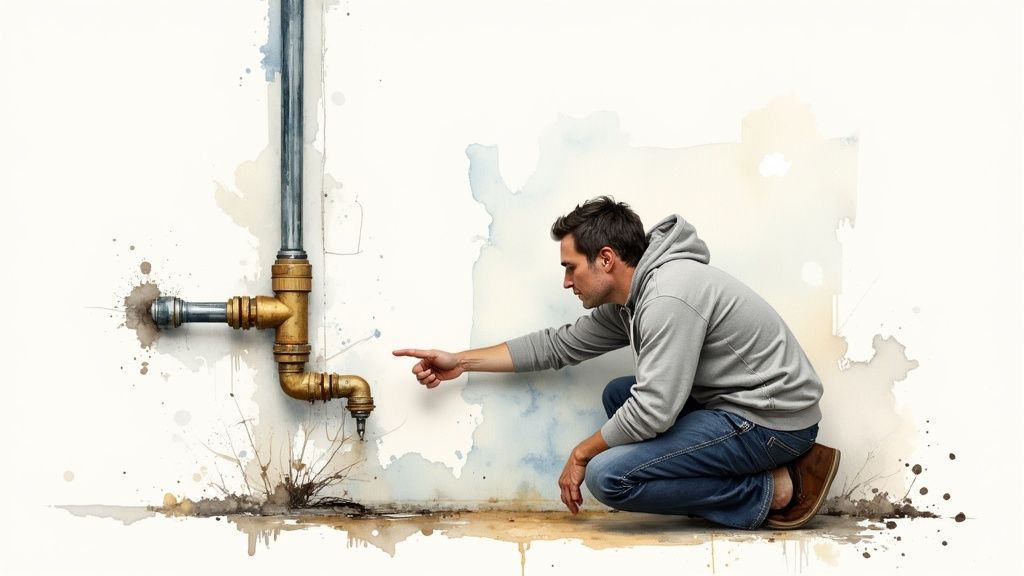
This valve is where the city can turn off your water for maintenance or other issues, but it also serves as your ultimate emergency backup if the indoor valve fails.
A Critical Word of Caution
Before you even think about turning this valve, you need to know a few things. First, this valve is technically the city’s property. Second, they are almost never designed to be turned by hand or with standard tools. You need a special long-handled tool called a curb key to operate it safely.
Trying to force it with a pair of pliers is a recipe for disaster. These valves can get stiff over the years, and you could easily snap it, turning a simple leak into a major geyser that you might be financially responsible for.
It’s a crucial distinction. Knowing where this valve is located is smart. Trying to operate it yourself is risky. Utility companies use these shutoffs all the time—a 2016 survey found that an average of 5 percent of households in the cities studied had their water shut off by the utility, which affects millions of people. You can find more information about this national issue and utility practices on foodandwaterwatch.org.
My advice? Find your curb stop valve now, before you have an emergency. Clear away any grass or dirt covering the lid so it’s easy to spot. But unless you’re facing a catastrophic flood and you have the correct tool, leave the turning to the pros. Your best move is to call your local Denver water department or a licensed plumber. They have the right equipment to do it quickly and without causing more damage.
How to Safely Operate Your Water Shut Off Valve
Once you’ve found your main water shut-off, the next step is knowing how to use it correctly. This isn’t something you want to guess at in a panic. Forcing a valve or turning it the wrong way can damage your plumbing and turn a small problem into a much bigger, more expensive one.
How you turn off the water depends entirely on the type of valve you have. Let’s break down the two most common ones you’ll find in Denver homes.
The Two Main Valve Types
The older, more traditional style is the gate valve. You’ll recognize it by its round, wheel-like handle. To close it, just remember the old saying: “righty-tighty, lefty-loosy.” You’ll need to turn it clockwise several times until it gently stops.
Whatever you do, don’t crank on it once you feel resistance. Forcing it can break the internal mechanism, leaving you with a valve that won’t open or close at all.
The more modern and frankly, much easier, valve is the ball valve. This one has a simple lever handle. It’s incredibly straightforward:
- When the handle is parallel to the pipe, the water is on.
- To shut it off, you give it a single quarter-turn (90 degrees) so the handle is perpendicular to the pipe. That’s it. Water off.
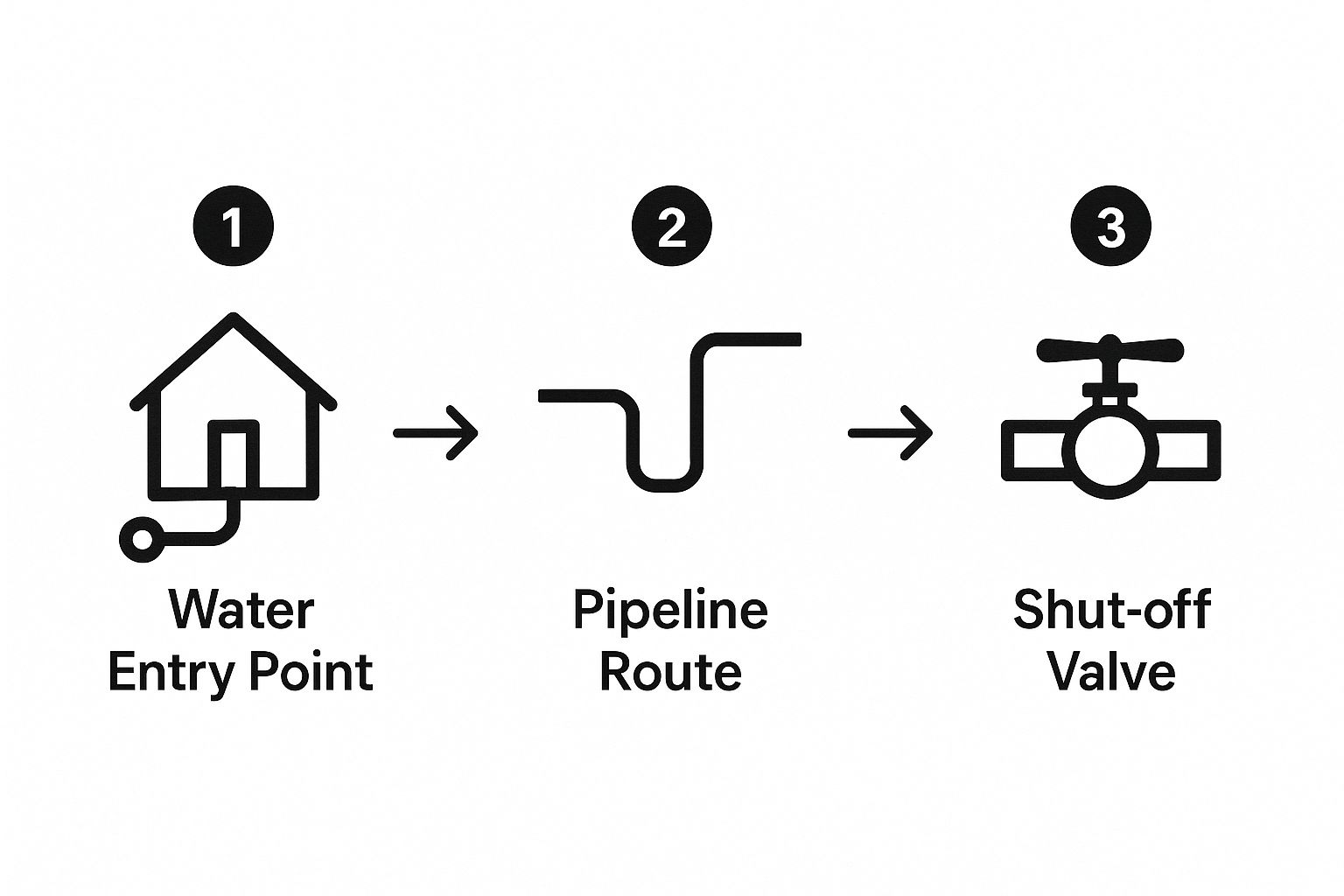
Regardless of the valve type, always operate it slowly and deliberately. If you slam it shut, you can create a pressure surge called a “water hammer.” This causes a loud banging noise and can seriously damage pipe joints and connections over time.
Crucial Tip: After you close the main valve, you need to drain the pipes. Open a faucet on the lowest level of your house (like a basement utility sink) and another on the highest level (like an upstairs shower). This relieves the remaining pressure and gets the water out of the system.
What if the handle won’t budge? If it’s stiff from rust or mineral buildup, don’t try to be a hero and force it. You could easily snap the valve stem, and then you’ve got a real plumbing emergency on your hands. If you run into a stuck valve, our guide on how to shut off water to your house has more detailed steps.
A little proactive maintenance goes a long way. I always tell homeowners to test their main valve once a year to make sure it moves freely. It’s the best way to ensure it will work when you need it most.
Upgrading Your Home With Smart Water Valve Technology
Knowing your way around a manual shut-off valve is essential, but what if technology could stop a disaster before it even starts? That’s exactly what smart water shut-off valves are designed to do. They can detect a leak and automatically stop the flow of water, often before you even realize there’s a problem.
Think of it as a smoke detector for your plumbing. These devices are installed right on your main water line, just after the manual valve. Using sophisticated flow sensors, they learn your home’s normal water usage patterns. If the system picks up on something unusual—maybe a pipe that burst or just a slow, steady drip from a faulty appliance—it jumps into action and closes the valve for you.
Peace of Mind at Your Fingertips
The real game-changer here is the connectivity. When a leak is detected, the system doesn’t just quietly shut off the water. It sends an alert straight to your smartphone, giving you immediate control and incredible peace of mind. This is invaluable whether you’re at work, on vacation, or managing a property from afar.
A smart valve shifts your emergency plan from reacting to a disaster to preventing one altogether. You gain the power to stop a flood from anywhere in the world with just a tap on your phone.
Homeowners are catching on fast. The market for these devices is booming, with North America making up about 40 million of the 150 million units sold globally each year. It’s a trend driven by people who want better protection and seamless smart home integration. You can read more about the growth of this technology and what’s fueling its popularity.
These systems are a fantastic complement to other modern plumbing upgrades. For instance, if you’re already looking into making your home more efficient, check out our guide on the pros and cons of tankless water heaters.
Your Top Questions About the Main Water Shut Off, Answered
Okay, so you’ve found your main water shut-off valve. That’s a huge step. But knowing what to do with it when things get real is a whole other ball game. Let’s tackle some of the most common questions I hear from Denver homeowners.
Getting confident now means you won’t hesitate when water is pouring through your ceiling.
Do I Need Special Tools?
For the valve inside your house, the answer is almost always no. You should be able to turn it by hand, whether it’s a lever-style ball valve or a round-handled gate valve.
The exterior curb valve buried near the street, however, is a different beast. You can’t just turn that one by hand. It sits deep in the ground and requires a long water meter key to operate.
Help! The Handle is Stuck and Won’t Turn.
You’ve found the valve, you go to turn it, and… nothing. It’s completely frozen in place. First thing’s first: do not force it. I’ve seen homeowners put a wrench on a gate valve and snap the handle right off, turning a manageable leak into a full-blown flood.
This happens a lot, especially with older, round-handled gate valves. Mineral deposits and corrosion build up over the years and effectively weld them shut. If it won’t budge with reasonable hand pressure, it’s time to call in a pro. A licensed plumber has the proper tools and experience to either free it up or, more likely, replace it with a modern ball valve that won’t give you trouble down the road.
My Pro Tip: Every six months, when you check your smoke detector batteries, go test your water shut-off valve. Just turn it all the way off and then all the way back on. This quick little check keeps it from seizing up and ensures it’ll work when you really need it.
What About My Water Heater?
This is a big one, and it’s super important. If you shut off the main water supply to your house, you absolutely need to deal with your water heater.
Why? Because if the tank drains or stops refilling, the heating mechanism can keep running on an empty tank, causing serious damage.
Here’s what you need to do:
- If you have an electric water heater: Go to your breaker box and switch off the breaker that powers it. Running the heating elements without water surrounding them will burn them out in a hurry.
- If you have a gas water heater: Look for the control dial on the unit and turn it to the “pilot” setting. This keeps the main burner from kicking on.
Taking this extra step can save you from a very expensive appliance repair. Understanding the domino effect of plumbing issues, like what leads to a burst pipe in the first place, is key to being prepared. For more on that, take a look at our guide on the common causes of bursting pipes in Denver.
When a plumbing problem feels like it’s over your head, don’t guess. Professional Plumber Denver is here with 24/7 emergency service to handle anything from a stubborn valve to a major leak. Give us a call for fast, expert help you can count on: https://professional-plumbers-denver.com