
When you start looking into replacing the polybutylene pipes in your Denver home, the first question is always about the cost. On average, you can expect a whole-home repipe to fall somewhere between $4,000 and $8,000.
That said, this is just a starting point. If the job requires significant drywall repair and a fresh coat of paint to get everything back to normal, that final invoice could easily climb to $15,000 or more.
What Is the Real Cost to Replace Polybutylene Pipes
Figuring out the true cost of a repipe project is a bit like planning a custom kitchen remodel—there’s no one-size-fits-all price tag. The final number is a direct reflection of your home’s unique layout and the specific challenges it presents. Because no two houses are exactly alike, no two repiping jobs will ever cost the same.
When a plumber gives you a quote, they’re piecing together a puzzle based on several key factors. Think of these as the building blocks of your total investment.
To give you a clearer picture, let’s break down the main elements that influence what you’ll pay.
Quick Look at Replacement Cost Factors
| Cost Factor | Average Impact on Total Price | Description |
|---|---|---|
| Home Size & Layout | High | A sprawling two-story home simply needs more pipe and more labor hours than a compact single-level ranch. The complexity of the plumbing layout is a major factor. |
| Pipe Accessibility | High | This is a big one. Pipes tucked away behind tile, concrete slabs, or finished ceilings are far more labor-intensive to get to and replace than those in an open basement. |
| Material Choice | Medium | The type of new pipe you install—PEX, copper, or CPVC—has a direct impact on the material costs. Each comes with its own price point and benefits. |
| Restoration Work | High | Replacing pipes almost always means cutting into drywall. The cost to expertly patch, texture, and paint these areas can add a significant amount to the final bill. |
Ultimately, these factors combine to create your unique project scope and final cost.
Understanding the Cost Spectrum
For the core plumbing work alone, a full repipe using modern PEX piping generally lands in that $4,000 to $8,000 range.
However, if your home needs extensive restoration by professional drywallers and painters to make it look like no one was ever there, the all-in cost can jump to between $15,000 and $20,000. You can learn more about how home size and repairs impact plumbing pipe costs to get a deeper understanding.
When you grasp these core components, you’re no longer just looking at a price—you’re understanding the value and scope of the job. This knowledge gives you the power to compare quotes intelligently and make a confident financial decision for your home’s long-term health.
Why Waiting to Replace Polybutylene Pipes Is a Gamble
There’s a reason plumbers and home inspectors call polybutylene pipes a “ticking time bomb.” Hailed as the future of plumbing back in the day, this material is now a known liability lurking in the walls of homes built from the late 1970s to the mid-1990s. Putting off a replacement isn’t just kicking a can down the road—it’s a high-stakes bet you’re making against your own home.
Imagine a pipe that’s corroding from the inside out, completely hidden from view. That’s precisely what happens to polybutylene. The very disinfectants in our public water supply, like chlorine, react with the plastic, making it brittle over time. The pipe slowly deteriorates until it’s fragile and ready to fail.
The scariest part? A polybutylene pipe can look perfectly fine on the outside while being dangerously thin on the inside. This is why they often burst without any warning signs, unleashing a flood that can destroy drywall, flooring, and priceless keepsakes in an instant.
The Financial Risk of Doing Nothing
Ignoring the problem is a bet you’re almost guaranteed to lose. Even a slow, pinhole leak behind a wall can go unnoticed for months, quietly cultivating a serious mold problem and rotting your home’s structural supports. A full-blown pipe burst, on the other hand, can cause tens of thousands of dollars in damage in a matter of minutes.
Think of it this way: replacing the pipes is a predictable, manageable expense. It’s an investment in your home’s safety and value. The cost of a catastrophic flood is a complete unknown, and it’s always far, far higher.
The financial fallout doesn’t stop at water damage, either. The presence of polybutylene piping casts a long shadow over your home’s value and marketability. During a real estate transaction, these pipes are a massive red flag for inspectors and buyers alike. Homes with polybutylene often sit on the market longer and sell for less. You can get more details on how polybutylene affects real estate deals at altairglobal.com.
Securing Your Home and Its Value
At the end of the day, every day you wait is another roll of the dice. By being proactive and replacing them, you head off a whole list of potential disasters.
- Sudden Flooding: You eliminate the risk of coming home to a devastating and costly indoor swimming pool.
- Hidden Mold Growth: You prevent those slow, sneaky leaks that lead to toxic mold and expensive remediation.
- Insurance Headaches: Many insurers are wary of covering homes with polybutylene, and filing a claim after a failure can turn into a nightmare.
- Devalued Property: You remove a major hurdle that could scare off potential buyers and complicate the sale of your home down the road.
Taking action now turns that ticking liability into a modern, reliable plumbing system you can trust. It’s the single best way to protect your biggest asset from a completely preventable catastrophe.
Breaking Down Your Polybutylene Repipe Estimate
Getting a quote for a whole-home repipe can be a real eye-opener. That final number looks big, but it’s not just one thing—it’s a mix of several crucial parts that all add up. Knowing exactly where your money is going is the best way to feel confident about the project ahead.
Think of it like getting an itemized bill for a car repair. You see the cost of the parts, the mechanic’s time, and any shop fees. A repipe estimate works the same way, breaking down the job into materials, labor, and the necessary extras. Let’s pull back the curtain on the four main components you’ll find in a professional quote.
This chart gives you a bird’s-eye view of how a typical polybutylene pipe replacement cost is split up.
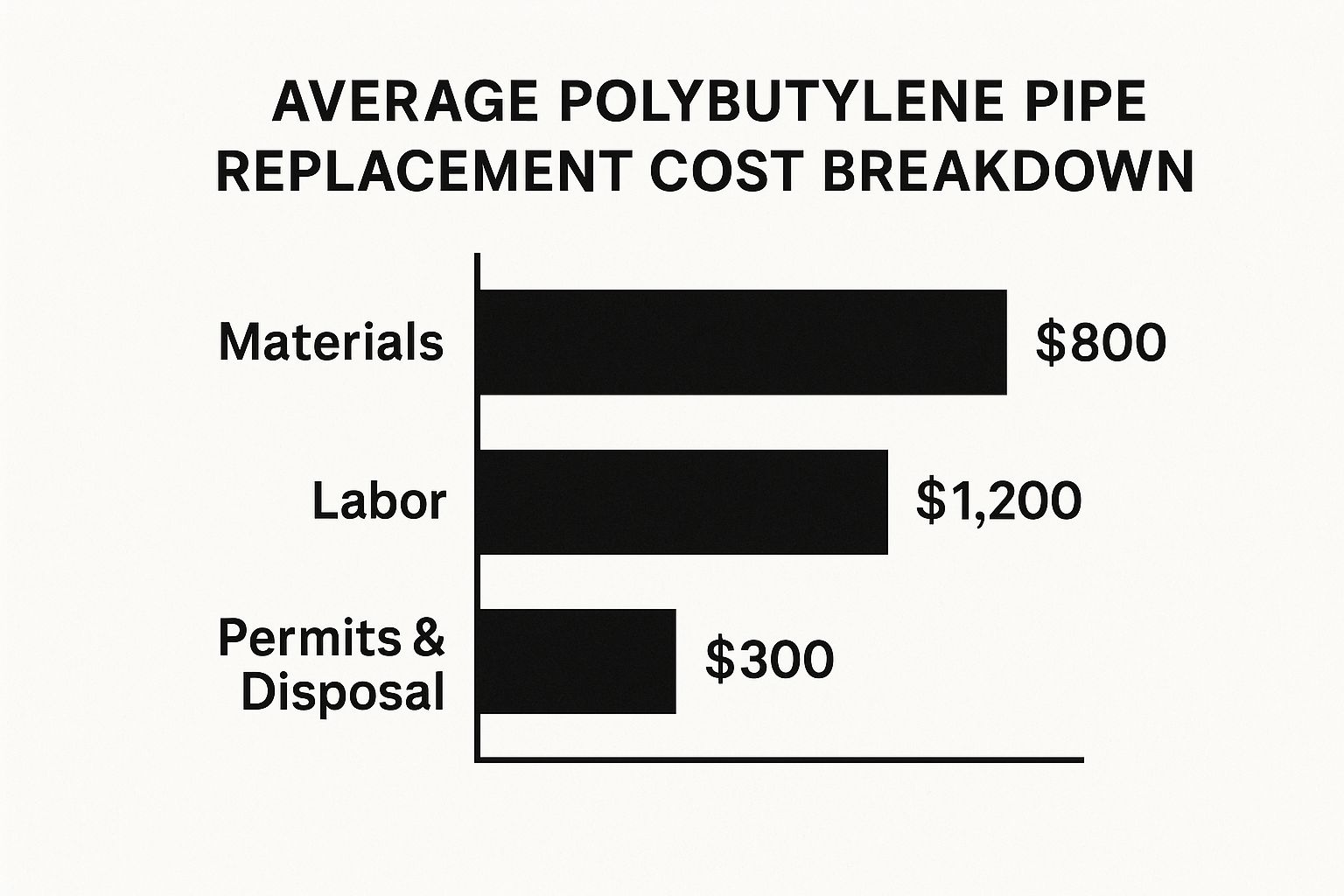
As you can see, labor is almost always the biggest piece of the pie. That tells you just how much skill and time goes into doing this job correctly.
New Pipe Materials: The Foundation of Your System
The first major cost component is the new pipe itself. This is the area where your choices can really move the needle on the final price. You’re typically choosing between three main options: PEX, copper, and CPVC, each with its own price tag and set of pros and cons.
- PEX (Cross-Linked Polyethylene): This flexible plastic tubing is the modern standard for a reason. It’s incredibly durable, resistant to corrosion, and much easier on the wallet than copper. Because it’s flexible, plumbers can run longer lines with fewer fittings, which often saves on labor time, too.
- Copper: For a long time, copper was the undisputed king of plumbing. It’s tough as nails and can last a lifetime, but that premium quality comes with a much higher cost for both the material and the skilled labor needed to install it. To learn more, check out our guide on what copper repiping entails and when it’s the right choice.
- CPVC (Chlorinated Polyvinyl Chloride): This is a rigid plastic pipe that falls somewhere between PEX and copper in price. While it’s a perfectly functional option, it can become brittle with age and may not be the best choice for all water types.
To help you visualize the differences, let’s lay them out side-by-side.
Comparing Pipe Replacement Materials PEX vs Copper vs CPVC
| Material | Average Cost per Foot | Estimated Lifespan | Key Advantages |
|---|---|---|---|
| PEX | $0.50 – $2.00 | 40-50+ years | Flexible, freeze-resistant, fewer connections, and lower installation cost. |
| Copper | $3.00 – $8.00 | 50-70+ years | Extremely durable, biostatic (inhibits bacteria), and proven longevity. |
| CPVC | $0.50 – $1.50 | 25-40 years | Corrosion-resistant and less expensive than copper, suitable for hot water lines. |
Ultimately, the right material for you depends on balancing your budget with your long-term goals for the home.
Labor: The Skill Behind the Scenes
Labor is almost always the biggest line item on a repipe estimate, and for very good reason. This isn’t just about paying someone to connect pipes; you’re paying for the expertise of licensed plumbers who know how to navigate the maze inside your walls without destroying your home.
The work involves precise cuts into drywall, working in cramped attics or crawlspaces, and ensuring every single connection is flawless. One bad joint can lead to a catastrophic leak down the road. This is where experience truly matters.
A repipe is a highly invasive job. The labor cost reflects not just the installation of new pipes, but the expertise required to protect your home throughout the process, from initial demolition to the final pressure test.
Permits and Disposal
Any major plumbing work requires a permit from your local city or county. This is non-negotiable. The permit ensures the job is done to current safety codes, which protects both you and the future value of your home. A professional plumber will handle this entire process, and the fee will be included in the quote.
You also have to account for getting rid of all that old, brittle polybutylene piping. The estimate includes the cost of properly removing and disposing of the old material, keeping the job site clean and compliant.
Restoration and Repairs: The Finishing Touches
Once the new pipes are in, the job isn’t finished. All those access holes cut into the drywall need to be patched, textured, and painted to match the rest of the wall. This is a “hidden cost” that less reputable quotes might leave out.
A complete, professional estimate will always include this final step. The goal is to leave your home as if the plumbers were never there, with a brand-new, reliable plumbing system hidden away behind perfectly finished walls.
What Factors Drive Your Final Replacement Cost
You could have two homes that look identical from the street, but the final bills to replace their plumbing could be thousands of dollars apart. When it comes to a full repipe, the devil is truly in the details. Getting a handle on the specific variables that shape your polybutylene pipe replacement cost is the first step toward setting a realistic budget and making sense of the quotes you get from Denver plumbers.
It’s about more than just the length of the pipes being replaced; it’s about the complexity of the entire project. Think of it like any other major home renovation—the more you know about what goes into the price, the better equipped you’ll be. For a broader perspective, you can find helpful information by understanding key factors that influence pricing. Armed with this knowledge, you can ask smarter questions and know a good, thorough quote when you see one.
So, let’s break down the main things that will move the needle on your estimate.
Your Home’s Size And Layout
This one’s the most straightforward: the bigger the house, the bigger the job. A sprawling, 3,000-square-foot two-story home is going to require more pipe, more fittings, and—most importantly—more labor than a tidy 1,200-square-foot ranch.
But it’s not just about square footage. The number of water fixtures plays a huge role. Every bathroom, kitchen sink, dishwasher, and laundry hookup is another endpoint the plumbers have to connect. Each one adds time and a bit more complexity to the project.
Accessibility Of The Existing Plumbing
Here’s where labor costs can really start to climb. Imagine replacing pipes in a wide-open, unfinished basement. Now, picture those same pipes hidden behind a beautifully tiled shower wall or buried beneath a concrete slab foundation. The first scenario is simple access; the second involves careful demolition and a whole lot more work.
These are some of the biggest accessibility challenges that add to the cost:
- Finished Basements and Ceilings: Plumbers will have to cut into drywall to get to the pipes, and that means repair work later.
- Crawl Spaces: Working on your back in a tight, dusty crawl space is tough and slows the whole process down.
- Concrete Slabs: Homes built on a slab are the most difficult. Accessing pipes often requires jackhammering through the concrete, which is a major undertaking.
The harder it is for plumbers to get their hands on your old polybutylene pipes, the more labor hours you’ll see on the final invoice. This factor alone can easily create a difference of thousands of dollars between two jobs that otherwise seem similar.
Choice Of New Pipe Material And Labor Rates
We’ve talked about the different materials, but it’s worth repeating their impact on the bottom line. Opting for premium copper will naturally increase your material costs compared to the more common and affordable PEX. Beyond that, the going rate for skilled plumbing labor right here in the Denver area is a significant piece of the puzzle.
It’s an interesting footnote that while polybutylene was a disaster for residential plumbing, it’s still used in other sectors. The global market for polybutylene pipes was valued at around USD 3.1 billion in 2023. It turns out that its flexibility and corrosion resistance are actually useful for certain industrial applications. It just goes to show what a complex history this material has.
How to Budget and Save Money on Your Repipe
Knowing what drives your polybutylene pipe replacement cost is the first step. The next, and arguably more important one, is figuring out how to manage that number without cutting corners. This is a major investment in your home, but with a bit of savvy planning, you can protect your property and your bank account.
The most powerful move you can make is to get multiple, detailed quotes from different plumbers. Don’t stop at one or two—aim for at least three estimates from licensed, reputable professionals here in Denver.
This isn’t just about hunting for the lowest bid. It’s about comparing what each quote truly includes. You’re looking at the scope of the work, the specific materials they plan to use, and even the overall professionalism of the contractor. A rock-bottom price that sounds too good to be true usually is, often hiding things like subpar materials or leaving you to foot the bill for drywall repair.
Smart Strategies for Cost Savings
Choosing a modern, durable material like PEX is one of the best ways to save money, both now and in the future. Because PEX is flexible, plumbers can often install it faster than rigid copper pipes, which trims down labor hours. Plus, its longevity means this is a project you won’t have to think about again for a very long time. To really get into the weeds on this, you can learn more about the material from experienced Denver PEX plumbers who work with it every day.
Here are a few other practical tips to keep your budget on track:
- Schedule During the Off-Season: Plumbers are slammed during the peak of summer and the dead of winter. If your pipes aren’t in immediate crisis mode, try scheduling the job for a slower period like spring or fall. You might find contractors are more willing to offer a competitive rate.
- Ask About Bundling Services: Thinking about a new water heater or other plumbing upgrades? Ask potential contractors if they offer a discount for tackling multiple jobs at once.
- Discuss the Finishing Work: Get crystal clear on who handles the drywall repair and painting. Some homeowners save a decent chunk of cash by taking on this cosmetic work themselves after the serious plumbing is done.
Explore Your Financing Options
Let’s be realistic—a full-home repipe is a huge expense, and it’s rarely one you see coming. If paying for it all out-of-pocket just isn’t in the cards, don’t let that stop you from fixing a critical problem.
Many homeowners find that looking into specialized renovation financing options like an FHA 203(k) Loan can turn an overwhelming expense into a manageable monthly payment.
The goal isn’t just to replace pipes; it’s to secure a safe, reliable plumbing system that enhances your home’s value and gives you peace of mind for decades. A well-planned budget makes that possible.
Finding a Repipe Specialist You Can Trust
Even the highest quality replacement pipes are only as good as the hands that install them. Honestly, the success of your entire project hinges on choosing the right plumbing professional. This decision is just as critical as picking the right materials when calculating your polybutylene pipe replacement cost.
Think of it like hiring a surgeon for a major operation. You wouldn’t just pick the first name you find; you’d want a specialist with a proven track record, steady hands, and the right credentials. A sloppy installation can quickly lead to slow leaks, failed connections, and the exact kind of water damage you were trying to prevent in the first place, completely wasting your investment.
Vetting Your Potential Plumber
To hire someone with real confidence, you need to know what to look for. Let’s start with the absolute non-negotiables—the things that protect you and guarantee a baseline level of quality.
- Verify License and Insurance: This is your first and most important step. A licensed plumber operates under state and local standards. More importantly, their insurance (both general liability and worker’s comp) protects you financially if an accident happens on your property. Don’t skip this.
- Check Reviews and References: Go deeper than the star rating. Read recent reviews to get a feel for how the company handles communication, cleanup, and any unexpected problems that pop up. A good plumber won’t hesitate to provide local references you can actually call.
- Request a Detailed, Itemized Quote: A true professional will give you a comprehensive quote that clearly breaks down the costs for materials, labor, permits, and any drywall repair. Vague, lump-sum estimates are a huge red flag.
If you want to dig into this crucial step even further, our complete guide on how to choose the right plumber in Denver has you covered.
Once you have a shortlist of qualified plumbers, it’s time to ask the questions that reveal their experience and professionalism.
Ask every potential contractor this: “What is your specific plan for minimizing wall damage, and is post-job cleanup and restoration included in this quote?” Their answer will tell you everything you need to know about their respect for your home.
Taking the time to vet your plumber properly ensures the job gets done right the first time, securing your home’s plumbing for decades to come.
Got Questions About Polybutylene Pipes? We’ve Got Answers.
When you’re facing a big project like a whole-home repipe, it’s natural to have a few lingering questions. Making sure you have all the facts is the best way to move forward with confidence. Here are some of the most common things we get asked by Denver homeowners wrestling with their old polybutylene plumbing.
How Can I Tell if I Have Polybutylene Pipes?
First things first, you need to know what you’re looking for. Polybutylene pipes are plastic and flexible, usually a distinctive light gray color, though sometimes you’ll see blue or even black ones.
The easiest places to spot them are often near your water heater, coming out of the wall to your toilets, or tucked under sinks. If you look closely, you might even find the letters “PB” stamped right onto the side of the pipe itself.
Is the Water From Polybutylene Pipes Safe to Drink?
This is a great question. The pipe material itself isn’t considered toxic, but that doesn’t tell the whole story. The real issue is how polybutylene reacts to the small amounts of chlorine commonly found in our municipal water supply. Over time, this exposure makes the pipes brittle from the inside out.
As the material degrades, there’s a potential for microplastics to enter your water. But honestly, the much bigger and more immediate threat is a different kind of safety risk.
The primary health and safety risk isn’t from drinking the water, but from the massive water damage and toxic mold growth that can result from a sudden pipe burst.
Do I Really Have to Replace All the Pipes at Once?
In a word, yes. We strongly recommend a complete, whole-home repipe, and for a very good reason. Patching one leak on a polybutylene system is like putting a single band-aid on a problem that affects the entire network.
If one section has failed, it’s a sure sign that the rest of the pipes—all the same age and made of the same vulnerable material—are not far behind. A full replacement is the only way to truly solve the problem for good and protect your home from future leaks.