
Ever hear a loud thump from your walls right after the washing machine stops filling? That’s not just your house settling—it’s a plumbing problem known as water hammer.
The simplest way to understand what causes water hammer in pipes is to think about the force of moving water. When that water is forced to stop on a dime, it creates a powerful shockwave.
What Is That Loud Banging Noise in Your Walls?
Picture the water flowing through your pipes as a freight train barreling down the tracks. Now, imagine a solid steel wall instantly popping up right in front of it. That’s essentially what happens when a modern appliance valve slams shut.
All that momentum has to go somewhere. The water, with nowhere to go, crashes into itself, sending a massive jolt—a hydraulic shockwave—reverberating back through your entire plumbing system. You hear it as a loud bang or clunk.
This sudden pressure surge can be several times greater than your home’s normal water pressure, putting immense stress on pipes, joints, and appliance connections with every bang.
Over time, this repeated stress can lead to serious damage. For a deeper dive into the physics and potential solutions, the experts at Flomatic.com offer some great insights.
Common Culprits Behind the Noise
So, what’s actually triggering this in your home? While the concept is straightforward, a few specific conditions are usually to blame, especially in Denver-area homes.
- Fast-Acting Valves: Modern dishwashers, washing machines, and even some refrigerators use solenoid valves. These shut off the water flow almost instantly, giving the water pressure no time to ease down.
- High Water Pressure: If your home’s water pressure is cranked up above 80 PSI, the water is moving with much more force. This makes the impact of a sudden stop far more violent and damaging.
- Poorly Secured Pipes: When pipes aren’t properly clamped down, that shockwave can cause them to physically shake and slam against the wooden framing inside your walls, amplifying the noise.
Figuring out exactly where the sound is coming from can be half the battle. This table can help you play detective and connect the sound to its likely source.
Decoding the Sounds from Your Pipes
| Sound Description | Most Common Cause | Appliance or Fixture |
|---|---|---|
| Single, loud THUD after a cycle ends | Fast-closing solenoid valve | Washing Machine, Dishwasher, Ice Maker |
| A rapid BANG-BANG-BANG noise | Faulty or worn-out valve | Toilet fill valve, Sprinkler system |
| A dull CLUNK when a faucet is shut off | High water pressure and loose pipes | Kitchen or Bathroom Sink, Bathtub/Shower |
By paying attention to when you hear the noise and what it sounds like, you can get a much better idea of what’s going on inside your walls and which fixture is causing the problem.
The Hidden Forces Behind a Water Hammer Shockwave
To really get what’s happening during a water hammer event, you have to stop thinking about water as just a gentle liquid. Instead, picture it as a freight train barreling through the narrow tunnels of your plumbing. It has mass, it has speed, and that combination creates a powerful momentum, or kinetic energy.
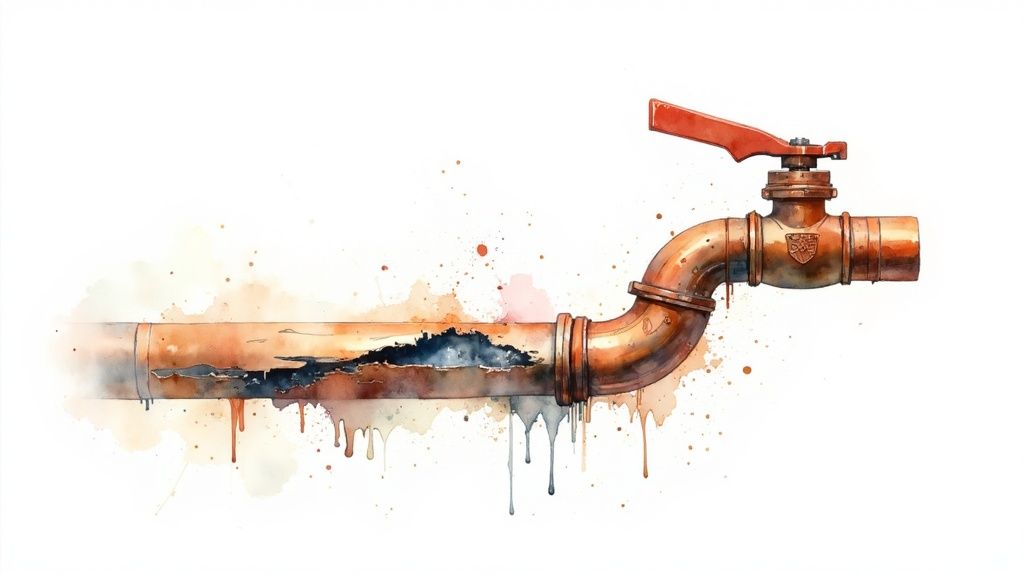
Now, imagine that freight train hitting a solid wall. That’s exactly what happens when a modern appliance valve—like the one in your washing machine or dishwasher—slams shut in a fraction of a second. All that forward energy has nowhere to go. It instantly converts into a massive pressure spike, a shockwave that blasts backward through the pipe at nearly the speed of sound. This is the “hammer” that gives the phenomenon its name.
The Echo Effect Inside Your Pipes
But the chaos is just getting started. That initial shockwave is only the first blow.
This high-pressure wave careens through your plumbing until it crashes into the nearest obstacle, whether it’s an elbow joint in the wall or another closed valve. When it hits, it doesn’t just stop; it reflects, ricocheting back in the opposite direction. This violent back-and-forth surge of pressure is what creates that series of bangs, clangs, or shudders you hear and feel.
The cycle of pressure spikes and reflections continues until the energy finally dissipates. Each “bang” you hear is another powerful assault on your pipes, joints, and fixtures, putting immense stress on the entire system.
This repeated stress is precisely what makes water hammer so destructive over time. It’s not a single impact. It’s a barrage of powerful internal blows, hammering your plumbing from the inside out.
Managing Pressure and Preventing Damage
Once you understand these forces, you can see why managing pressure is so critical for your plumbing’s health. Devices specifically designed to absorb these shocks are the key to protecting your system. For example, an expansion tank can help stabilize pressure, especially in hot water systems. You can learn more about how an expansion tank works in our detailed guide.
Without something to cushion the blow, that pressure wave is free to wreak havoc, weakening pipe joints and ultimately leading to leaks and failures. Properly installed components act like a safety net, absorbing the shockwave before it has a chance to cause real damage.
The Four Main Causes of Water Hammer in Your Home
That loud banging in your walls isn’t a ghost; it’s a very real plumbing problem called water hammer. It’s not just some random quirk, either. Specific conditions inside your pipes create this destructive force, and figuring out the root cause is the key to stopping it for good.
Usually, the problem comes down to one of four main culprits, or sometimes a combination of them.
The image below shows just how a water hammer event sends a damaging shockwave through your entire plumbing system.
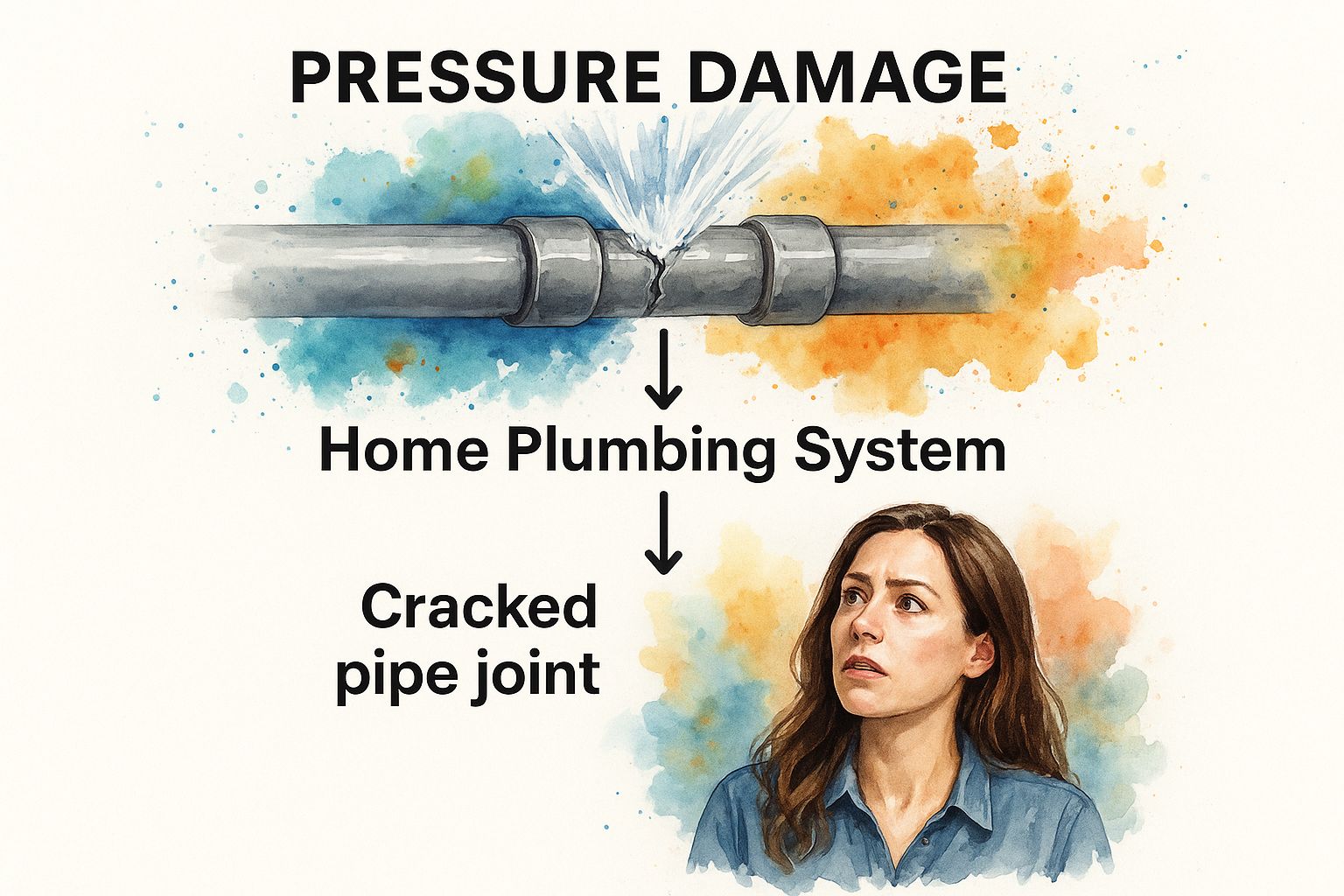
As you can see, that pressure wave radiates out from the source, putting a massive amount of strain on every pipe joint and connection along the way.
Fast-Acting Appliance Valves
The most common offender in modern homes is something called a solenoid valve. You’ll find these electronic, fast-acting valves in your washing machine, dishwasher, and even your refrigerator’s ice maker. They’re built for speed and efficiency, snapping shut almost instantly—sometimes in as little as 0.02 seconds—to cut off the water supply.
That sudden stop gives the moving water’s momentum nowhere to go. It’s like a car hitting a brick wall. The water has no choice but to slam backward, creating a powerful shockwave that rattles the pipes.
Excessive Household Water Pressure
High water pressure is like adding fuel to the fire. It dramatically multiplies the force of a water hammer event, turning a small shudder into a violent bang. Ideally, your home’s water pressure should sit comfortably between 40 and 60 PSI. Once it creeps over 80 PSI, it’s not just high—it’s dangerous for your plumbing.
Think of it like this: a car tapping its brakes at 20 mph barely causes a jolt. But a car slamming on its brakes at 80 mph is a catastrophic event. Higher pressure means the water is moving with more force, making the resulting shockwave far more destructive. If you think your pressure is too high, you might need to learn more about water pressure regulator adjustment to safeguard your pipes.
Air Pockets Trapped in Pipes
This one might seem a little backward, but having air trapped in your water lines can actually make water hammer much worse. These pockets of air can get stuck if your system was refilled too quickly after a repair or if the plumbing isn’t designed to vent air properly.
Unlike water, which can’t be compressed, air can be squeezed. When the pressure wave from a sudden valve closure hits an air pocket, it compresses the air like a spring. That spring then immediately expands with violent force, sending an even more chaotic pressure spike rebounding through the pipes.
This is what can turn a single “thud” into a series of rattling, shuddering bangs that sound like someone is hammering on your pipes from the inside.
Poorly Secured or Loose Pipes
Finally, the shockwave itself is silent. The noise you actually hear is your pipes physically moving. If your plumbing wasn’t properly secured to your home’s wood framing with the right clamps and straps, the pipes are free to vibrate and rattle around.
When that hydraulic shockwave travels through the system, it makes those loose pipes lurch and slam against the surrounding joists, studs, and floorboards. This is what creates that loud, alarming banging noise that echoes through the walls, making the problem sound every bit as serious as it is.
Don’t Ignore the Knock: How Water Hammer Turns into Costly Repairs
That loud bang you hear when the water shuts off isn’t just an annoying sound—it’s the sound of your plumbing system taking a punch. A single knock might not seem like a big deal, but when it happens day after day, those shockwaves add up, causing serious and expensive damage.
Imagine tapping a pipe with a small hammer, over and over again. Eventually, that constant stress will cause the metal to weaken and give way. That’s exactly what water hammer does, leading to pinhole leaks, burst pipes, and the kind of water damage you don’t discover until it’s too late.
Those intense, repetitive pressure spikes aren’t just loud. They weaken solder joints, cause tiny stress fractures in the pipes themselves, and destroy the delicate seals inside your fixtures and appliances. It turns a simple noise into a structural nightmare waiting to happen.
A Billion-Dollar Problem Hiding in Your Walls
This isn’t just a hypothetical problem; it’s a massive issue for homes and infrastructure across the country. Water hammer starts tiny cracks in pipes, which then lets moisture in and speeds up corrosion. It doesn’t matter if your pipes are copper, steel, or PVC—the effect is the same, contributing to what’s estimated as a billion-dollar-per-year problem in the U.S.
Here’s a breakdown of the specific damage you could be facing:
- Weakened Pipe Joints: The constant shaking and rattling puts immense strain on soldered and threaded connections, which are often the first points to fail.
- Appliance Damage: The internal valves in your washing machine, dishwasher, and even your refrigerator’s ice maker are not built for these violent pressure surges. This leads to them failing long before they should.
- Fixture Failure: The seals and cartridges in your faucets and toilets get worn down fast, causing those annoying drips that slowly turn into bigger leaks.
Keeping on top of your plumbing is one of the most important things you can do as a homeowner. Incorporating essential home maintenance tips can help you stay ahead of issues like water hammer. When you hear that knock, don’t ignore it. It’s a clear warning sign, and taking it seriously can save you a fortune in repairs down the road.
How to Find and Fix Water Hammer in Your Home
Alright, now that you know what’s happening inside your pipes, let’s get down to business and figure out how to stop that racket. Finding the source of water hammer is a bit like being a detective, but with a few simple steps, you can pinpoint the problem and bring some peace and quiet back to your house.
First things first, check your home’s water pressure. This is often the biggest piece of the puzzle. You can grab a cheap water pressure gauge from any hardware store, screw it onto an outside hose bib, and turn on the water. If that needle climbs past 80 PSI, your pressure is too high and almost certainly contributing to the banging.
Finding the Source of the Noise
With pressure checked, it’s time to hunt down the specific appliance or fixture that’s making all the noise. You need to listen closely as different things that use water in your house are turned on and off. Is it the washing machine that sets it off? Or maybe that one toilet in the guest bathroom?
Go through your house and test them one by one:
- Washing Machine: Run a quick cycle and pay attention right when the water shuts off.
- Dishwasher: The first few minutes are key, as the dishwasher fills with water in short bursts.
- Toilets: Flush every toilet and listen for that tell-tale “thump” just as the tank stops filling.
- Faucets: Head to your sinks and quickly open and close the taps, especially the single-handle ones.
Isolating the sound to a specific spot tells you exactly where you need to focus. It’s not usually a one-size-fits-all fix; you have to treat the problem where it starts.
Choosing the Right Fix
Once you’ve found the culprit, you’ve got a few ways to tackle it. If you noticed the pipes themselves are rattling around, the fix might be as simple as securing them. You can add pipe clamps or straps to anchor them tightly to the joists or studs, which stops the vibration.
For a more definitive fix, though, the best tool for the job is a water hammer arrestor. Think of it as a tiny shock absorber for your plumbing. Inside is a small piston or diaphragm that takes the hit from that wave of pressure, so your pipes don’t have to. For the best results, you’ll want to install it as close as possible to the valve causing the trouble.
Many DIY-savvy homeowners can easily install screw-on arrestors for their washing machine hoses. But if the job looks more involved or you’re dealing with stubbornly high pressure, looking into professional water hammer solutions in Denver is your best and safest move. And while you’re at it, following good hot water system maintenance tips can go a long way in preventing other plumbing headaches down the road.
Common Questions About Water Hammer
Even after you get the physics behind it, you probably still have a few nagging questions about that racket in your walls. Let’s walk through some of the most common things homeowners ask about this noisy—and surprisingly destructive—plumbing problem.
Can Water Hammer Suddenly Start in an Older Home?
You bet it can. In fact, it’s pretty common for water hammer to show up out of the blue in older homes, and there are a few usual suspects. A brand-new appliance, like a dishwasher or washing machine with a modern, fast-closing valve, is often the trigger.
Another culprit could be your local water supplier. If they decide to crank up the main line pressure for your neighborhood, that extra force can be all it takes to start the banging. It could also be that the original air chambers built into your plumbing have slowly filled with water over the years, rendering them useless as shock absorbers.
The key takeaway is that a change in your plumbing system or water supply is almost always the culprit when a quiet home suddenly develops a noisy water hammer problem.
So yes, a house that’s been perfectly quiet for decades can absolutely start banging and clanging seemingly overnight.
Is Installing a Water Hammer Arrestor a DIY Project?
That really depends on what kind of arrestor we’re talking about and how comfortable you are with plumbing work. For some situations, it’s definitely a manageable weekend project.
- DIY-Friendly: The small, screw-on arrestors made for washing machine supply lines are a fantastic starting point. They attach right onto the hot and cold water spigots behind your machine with no special tools needed.
- Best Left to a Pro: If the job involves cutting into your existing copper or PEX pipes, it’s time to call in a licensed plumber. The same goes for installing a whole-house pressure-reducing valve—that’s a job you want done right and up to code.
Will One Arrestor Fix My Whole House?
This is a big misconception, and it’s a source of a lot of frustration for homeowners. The answer is no—a water hammer arrestor is a point-of-use solution, not a magic bullet for the whole house.
Think of it like a tiny shock absorber that has to be right where the impact happens. An arrestor on your washing machine lines won’t do a thing to stop the bang from your dishwasher or a fast-flushing toilet. To really solve the problem, you have to pinpoint every single fixture causing a hammer and install an arrestor right at that fixture’s valve.
If you’re tired of that banging in your walls and want a professional diagnosis, Professional Plumbers Denver has the expertise to find the source and install the right solution. Stop letting water hammer damage your home’s plumbing—contact us today for a permanent fix.