
It can be tough to decide whether to keep nursing an old toilet along or just bite the bullet and get a new one. If you’re constantly dealing with clogs, noticing little hairline cracks, or seeing your water bill creep up for no good reason, your toilet is probably trying to tell you something.
While a single clog isn’t a death sentence, a string of problems usually means a replacement is the smarter, and ultimately cheaper, path forward.
Key Indicators That Signal a Toilet Replacement
Figuring out the right time to replace your toilet isn’t always a straightforward “aha!” moment. It’s usually less about one catastrophic failure and more about a pattern of annoying issues, declining performance, and repairs that start to feel like a part-time job.
Think of it this way: patching a single leak is one thing, but if your toilet is springing new leaks every few months, you’re not just fixing a part—you’re fighting a losing battle against a failing system.
The market for toilet repair services is a massive $8.5 billion industry, which tells you just how common these problems are. But here’s the thing: much of that spending goes toward fixing old, inefficient units. Most pros will tell you that after 15 to 20 years, a toilet is on borrowed time. Continuing to repair it often just leads to more headaches and wasted water.
This decision tree breaks down the main things to think about, like the toilet’s age, how often you’re fixing it, and how much water it’s guzzling.
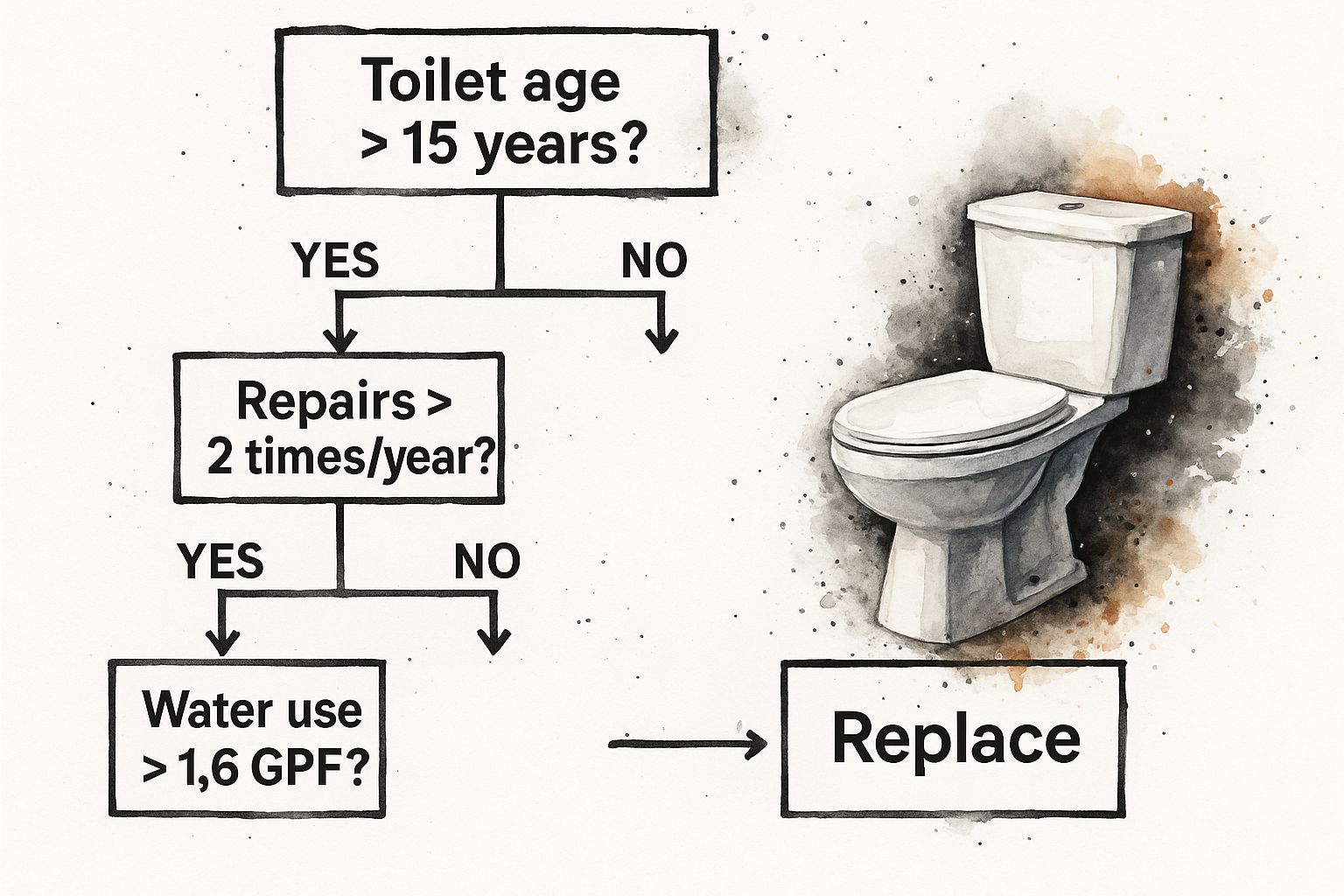
As you can see, if you find yourself nodding “yes” to even one or two of those questions, it’s a strong sign that a new toilet is in your future. This same logic applies to many things around the house. For a wider view, check out these general guidelines for replacing household items to get a feel for the typical lifespan of other home fixtures.
Spotting the Obvious Signs of Failure
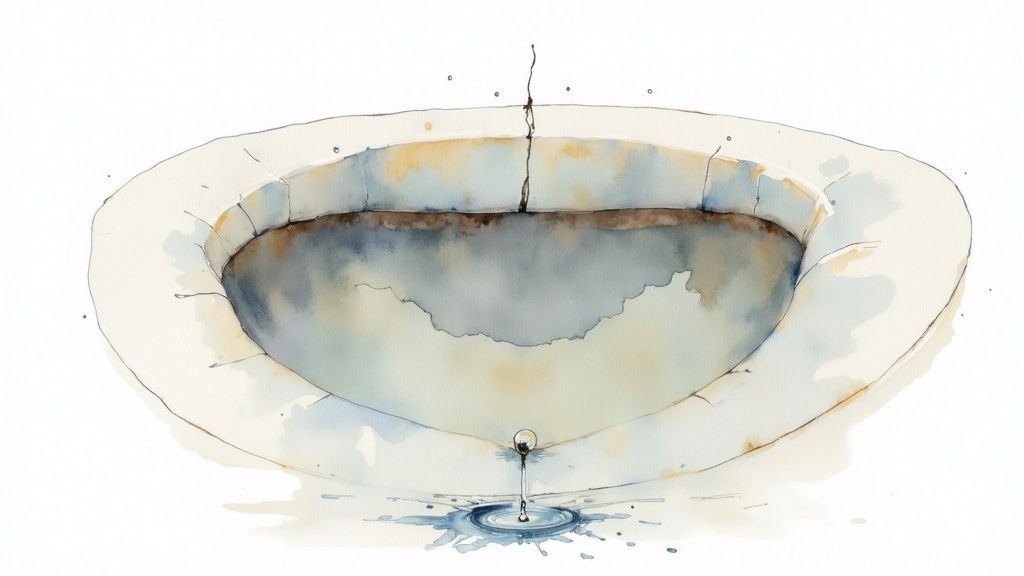
Sometimes, a toilet doesn’t just whisper that it has problems—it shouts. These are the undeniable red flags telling you a replacement is on the horizon. Trust me, ignoring them almost always leads to bigger, messier, and more expensive headaches down the road.
One of the most urgent signs is a visible crack in the porcelain, whether it’s on the tank or the bowl. Even a tiny, hairline fracture is a ticking time bomb. That crack compromises the toilet’s structure and can fail without warning, causing a catastrophic leak that will do serious damage to your floors and anything in the room below.
Another classic symptom is a toilet that seems to have a mind of its own, constantly running or refilling for no reason. This “phantom flush” is a clear sign that the internal parts, like the flapper or fill valve, are worn out and can’t create a proper seal anymore. While you can replace these parts, it’s often just the first domino to fall in an older toilet.
When the Problem Is at the Base
A wobbly or unstable toilet is another major concern that you should address immediately. When you sit down, that toilet should feel rock-solid. Any shifting or rocking at all is a clear signal that something is seriously wrong at the base.
This instability can point to a few different issues, ranging from a simple fix to a major repair:
- Loose Bolts: Best-case scenario, the bolts holding the toilet to the floor have just worked themselves loose and need a good tightening.
- Failed Wax Ring: The wax seal that sits between the toilet and the drainpipe can degrade over time, causing leaks and making the toilet feel unsteady. This is a more involved repair.
- Rotted Subfloor: This is the worst-case scenario. A slow, undetected leak from a bad wax ring can completely rot the wooden subfloor underneath, turning the foundation spongy and unsafe.
A rocking toilet is never just an annoyance; it’s a symptom of a deeper problem. If you ignore it, you’re risking sewer gas leaks and severe water damage that goes far beyond a simple plumbing fix.
While you might feel confident tackling a smaller issue like a loose handle, a wobbly base often needs a professional eye to determine if a full replacement is the smarter move. For those simpler fixes, you can learn more about how to fix a loose toilet handle in our guide.
The Hidden Costs of an Old Toilet
Sometimes, the best reasons to replace a toilet aren’t the obvious ones, like a cracked bowl. The real motivation can be the quiet, steady drain on your wallet. If your home was built before the mid-90s and you’re still using the original toilet, I can almost guarantee it’s costing you money every time you flush.
Those old toilets are incredibly thirsty. It’s not uncommon for models from that era to use a shocking 3.5 to 7 gallons per flush (GPF). To put that in perspective, modern high-efficiency toilets are federally mandated to use 1.28 GPF or even less.
Think of it this way: it’s like driving a gas-guzzling classic car for your daily commute instead of a modern hybrid. The difference at the pump—or in this case, on your water bill—is huge. Upgrading is an investment that truly pays for itself in water savings.
The Problem of Diminishing Power
It’s not just about wasting water, either. As a toilet gets older, its flushing power starts to fade. Over the years, hard water and mineral deposits build up inside the tiny, hidden passages of the bowl, like the siphon jet and the rim holes. This buildup slowly chokes off the water flow.
This gradual decline means you’re no longer getting that powerful, clean flush the toilet was designed for. Sound familiar? Here’s what usually happens next:
- You’re dealing with more clogs and keeping the plunger handy.
- You have to flush twice just to get the job done, which completely defeats the purpose of trying to save water.
- You feel a sense of frustration every time you use a toilet that just isn’t reliable anymore.
An old toilet isn’t just inefficient; it’s often ineffective. If you find yourself holding your breath and hoping for the best with every flush, that’s a clear signal that the internal components are past their prime.
This loss of flushing power, combined with the excessive water usage, is a frustrating and expensive mix. This is a totally different problem from a toilet that’s always running, which is another major source of wasted water. You can find more information about how a toilet won’t stop running in our detailed guide on that specific issue. Ultimately, deciding when to replace your toilet often comes down to weighing these hidden costs.
It’s a frustrating feeling, isn’t it? You call a plumber for one toilet problem, pay the bill, and a few months later, something else goes wrong. This constant cycle of repairs can feel like you’re just throwing money down the drain—literally.
We all fall into this trap. You’ve already invested in a few fixes, so what’s one more? But at some point, you have to ask yourself if you’re just pouring good money after bad.
When the Math Just Doesn’t Add Up
Here’s a simple rule I’ve learned over the years: if a single repair costs more than half the price of a brand-new toilet, it’s time to seriously consider an upgrade. With most new toilets running between $200 and $400, any repair bill that creeps into the $100-$200 range should be a major red flag.
A Look at the Numbers
Don’t just take my word for it. The global market for toilet repair is huge—it’s expected to hit $3.7 billion by 2025. That number tells a story: toilets are mechanical fixtures that wear out. Over a lifespan of 10 to 25 years, they will inevitably need significant work or a full replacement. You can read more about toilet repair market trends at archivemarketresearch.com.
Let’s break down what some common repairs cost compared to just buying a new unit:
- New fill valve: Expect to pay a pro anywhere from $75 to $150.
- New flapper: This is usually a quicker job, often around $50 to $100.
- Leak at the base: This is where costs can skyrocket. Fixing a leak that involves the toilet flange can easily run you $150 to $250 or more.
Think about it this way: the $120 you spent on a new fill valve last spring and another $100 for the flapper that just broke could have already paid for a brand-new, water-efficient toilet. A new model not only ends the headaches but also starts saving you money on your water bill from day one.
Swapping out an old toilet isn’t just about stopping the financial bleed from constant repairs. It’s a savvy long-term investment that saves money, conserves water, and gets rid of a whole lot of frustration.
Choosing Your Next Toilet Wisely
Okay, so you’ve decided it’s time to replace the old throne. The next step is picking its successor, and this decision is about more than just finding the cheapest option. Modern toilets have come a long way, offering features that can seriously upgrade your bathroom’s comfort, cleanliness, and efficiency. Making a smart choice now means you’ll be happy with your investment for years to come.
Your first big decision is usually between a one-piece and a two-piece model. The classic two-piece toilet, with its separate tank and bowl, is what most of us are used to. They’re typically more budget-friendly. On the other hand, a one-piece toilet combines the tank and bowl into a single, seamless unit. While they’re often heavier and cost a bit more, they have a sleek, modern look and are a dream to clean since there’s no grimy crevice between the tank and bowl.
Comfort and Fit in Your Space
Next up, let’s talk size and shape. This isn’t just about aesthetics; it’s crucial for making sure the toilet is comfortable and actually fits in your bathroom without feeling cramped.
- Bowl Shape: You’ve got two main options here. A round bowl is more compact, making it a great space-saver for smaller bathrooms or powder rooms. An elongated bowl is a few inches longer and is what most adults find more comfortable.
- Toilet Height: A standard toilet sits about 15 inches high (from the floor to the seat). But you’ll see a lot of “comfort height” or “right height” models on the market now. These are taller, at 17 to 19 inches, which is about the same height as a dining chair. This can make a huge difference for taller people or anyone with knee or back issues.
Unlocking Efficiency and Savings
This might be the most important part: water efficiency. Just like you’d look for energy-efficient home appliances, you should be looking for a toilet that doesn’t waste water with every flush. Your golden ticket here is the blue EPA WaterSense label.
A toilet with the WaterSense label is certified to use 1.28 gallons per flush (GPF) or less. That’s at least 20% less water than the current federal standard, which can save an average family nearly 13,000 gallons of water and around $140 in water costs every single year.
Picking a WaterSense-certified model is a win-win. You’ll shrink your environmental footprint and lower your water bill. Plus, many local water utilities even offer rebates for installing one, which means even more savings in your pocket.
What to Expect During a Toilet Replacement

Knowing you need a new toilet is one thing, but picturing the actual job is another. While it might seem like a huge undertaking, replacing a toilet is a straightforward process, whether you call in a pro or decide to DIY. Let’s walk through the steps so you know exactly what you’re getting into.
First things first, the water supply valve gets shut off. A final flush drains the tank and bowl as much as possible. Then, the old toilet is unbolted from the floor and carefully lifted away. This is often the trickiest part—toilets are surprisingly heavy and awkward to handle.
Once it’s out of the way, you get your first look at the flange. This is the mounting ring that secures the toilet to the floor and connects it to the drainpipe. Its condition is make-or-break for the rest of the installation.
The Critical Connection Point
With the old unit gone, the job pivots to the most important part of the entire project: creating a perfect, leak-proof seal for the new toilet. Getting this wrong can lead to nasty problems down the road, from slow water damage to sewer gas smells.
Here’s where the real precision comes in:
- Flange Inspection: The existing flange is checked for any cracks or damage. If it’s broken, it has to be repaired or replaced before anything else happens.
- Wax Ring Placement: A new wax ring is set onto the flange or the bottom of the new toilet. Think of this tacky, pliable ring as the gasket that will create an airtight and watertight connection.
- Setting the New Toilet: The new toilet is carefully lowered onto the bolts, lining it up perfectly. Then, it’s pressed down firmly and evenly to compress the wax ring, which forms that all-important seal.
A proper seal is non-negotiable. If the wax ring doesn’t compress just right, you could end up with a hidden, slow leak that rots the subfloor over years. That’s a repair job far more expensive than the toilet replacement itself.
After the toilet is set, it’s bolted down, the water supply is hooked back up, and everything is tested thoroughly for leaks. It’s a common job that’s part of a huge industry—in fact, the global market for toilet installation and repair was valued at $15 billion in 2025, fueled by new builds and homeowners upgrading older, less efficient models. You can read more about toilet installation market insights at archivemarketresearch.com.
Still Have Questions About Replacing Your Toilet?
Even when all the signs point to a new toilet, it’s normal to have a few last-minute questions. Getting the right answers can give you the confidence to make a smart call, so let’s clear up a few things we hear from homeowners all the time.
How Long Should a Toilet Really Last?
This is a great question. The porcelain bowl itself can last for decades—it’s incredibly durable. The moving parts inside the tank, however, are a completely different story. Things like the flapper, fill valve, and handle mechanism just don’t have the same staying power and usually need replacing every 5-7 years.
After about 15-20 years, you hit a point of diminishing returns. You could keep replacing the inner workings, but a full replacement makes more sense. You’ll get a more water-efficient model and sidestep the hassle of constantly fixing an old, outdated unit.
Is a Constantly Running Toilet That Big of a Deal?
Yes, it’s a huge deal. A running toilet is one of the biggest—and sneakiest—water wasters in any home. That quiet, constant hissing sound can be a silent leak that wastes over 200 gallons of water every single day.
Think about that for a second. That’s enough water to fill a bathtub multiple times over, every day. It can easily tack on hundreds of dollars to your water bills over the course of a year. Fixing it is always a sound investment.
Can I Just Replace the Toilet Myself?
If you have some solid DIY experience and the right tools, replacing a toilet is certainly possible. Just be prepared: toilets are heavy, awkward to move, and things can get messy if you’re not careful.
The real trouble starts if you pull up the old toilet and discover the flange is broken or the floor underneath is rotting. At that point, a simple swap becomes a much bigger job. Knowing the difference between DIY plumbing projects vs. when to call a professional is key to avoiding a weekend project turning into a major headache.
When you want the job done right with a guaranteed, leak-free installation, trust the experts. Professional Plumber Denver offers fast and reliable service across the entire Denver Metro area. Schedule your toilet replacement today!