
Your plumbing system has a gatekeeper, and its job is one of the most important in your home or business. It’s called a backflow prevention device, and it ensures that dirty water never flows backward into your clean drinking supply. Backflow prevention device testing is essentially an annual physical for this crucial component, a non-negotiable safety check required by law to protect public health.
Think of it this way: without this test, you’re leaving the safety of your water to chance.
What’s Really at Stake? The Hidden Dangers in Your Water Lines
It helps to imagine your plumbing as a one-way street. Clean water comes in from the city’s main supply, and wastewater goes out. It’s a simple, effective system—until the traffic suddenly reverses. That’s backflow. It’s a dangerous pile-up where contaminated water from irrigation systems, boilers, or other sources can mix with the fresh water you drink and use every day.
This isn’t just a hypothetical scenario. It’s a real-world problem caused by unexpected shifts in water pressure.
How Backflow Happens
There are two main culprits behind this hazardous reversal, and each one creates a different kind of threat to your water’s purity:
- Back-Siphonage: This is what happens when pressure in the main water line suddenly plummets, creating a powerful vacuum. Picture a straw in a glass—the suction pulls liquid up. In your plumbing, this same effect can pull contaminated water from a garden hose left in a puddle of fertilizer or a tub full of soapy water right back into your clean pipes.
- Back-Pressure: This occurs when a connected system, like a commercial boiler or a complex irrigation network, is operating at a higher pressure than the municipal water supply. This stronger force can literally shove contaminated water backward into the public water system, affecting not just your property but potentially your neighbors, too.
Backflow isn’t a simple plumbing hiccup; it’s a serious public health hazard. It can introduce everything from pesticides and industrial chemicals to harmful bacteria and raw sewage into the water used for drinking, cooking, and bathing.
Why Testing Is a Health and Safety Imperative
Regular backflow prevention device testing is the only way to ensure that mechanical gatekeeper is still up to the task. A certified plumber will run a series of diagnostic checks to make sure the device’s internal seals, springs, and check valves are functioning exactly as they should.
This isn’t just a suggestion; it’s a matter of compliance and community safety. Across North America, regulations have tightened significantly to prevent cross-contamination events. Major cities now mandate backflow preventers on all commercial properties, and organizations like the EPA and the American Water Works Association (AWWA) have established strict standards for annual testing. You can find more details on how these regulations are shaping the industry and driving market growth at straitsresearch.com.
Without this yearly verification, a faulty backflow preventer could fail silently, leaving your property—and the entire public water supply—exposed to contamination.
Decoding the Different Types of Backflow Preventers

When it comes to backflow preventers, one size definitely does not fit all. Each device is engineered to handle a specific level of risk, much like security systems for your water supply. You wouldn’t use a simple padlock to protect a bank vault, right? The same logic applies here; the device must match the potential danger.
The type of preventer your property needs is determined entirely by the “degree of hazard” it’s connected to. That’s why a residential sprinkler system will have a different setup than a high-risk commercial facility like a car wash or medical clinic.
High-Hazard and Low-Hazard Solutions
The core difference between these devices boils down to the level of risk they’re built to stop. In our world, we classify potential contaminants into two buckets: low-hazard, which might affect the water’s taste or smell, and high-hazard, which could make people seriously ill.
A Double Check Valve Assembly (DCVA) is the reliable workhorse for many low-to-medium hazard situations. It’s a clever design that uses two independent check valves, one right after the other. This redundancy means that if the first valve gets stuck or fails to seal, the second one is right there to stop any water from flowing backward.
- Where you’ll see it: DCVAs are very common on commercial fire sprinkler systems. The water in those pipes isn’t meant for drinking but also doesn’t contain highly toxic chemicals, making it a perfect fit.
On the other hand, a Pressure Vacuum Breaker (PVB) has a more specific job. It’s designed to stop back-siphonage, which is that “straw effect” that happens when the city water pressure suddenly drops. A key limitation, however, is that it offers no protection against back-pressure.
- Where you’ll see it: You’ll find PVBs on countless lawn irrigation systems. For them to work correctly, they have to be installed at a higher elevation than any of the sprinkler heads on that line.
The Gold Standard for High-Hazard Protection
When the risk of contamination is severe, you need the best protection available. That’s where the Reduced Pressure Zone (RPZ) Assembly enters the picture. Think of an RPZ as the Fort Knox of backflow prevention. It’s a sophisticated assembly with two independent check valves, but it adds a crucial third component: a pressure-monitored relief valve sandwiched in the middle.
If either of the check valves leaks even slightly, this relief valve automatically opens and dumps the captured water out. This provides a clear, physical signal that something is wrong, all while guaranteeing that no contaminated water can get through. It’s this failsafe design that makes it the mandatory choice for any high-hazard environment.
An RPZ is your system’s ultimate gatekeeper. Its ability to not just block backflow but also alert you to a problem by discharging water makes it indispensable for protecting against dangerous contaminants like chemicals or sewage.
To make things a bit clearer, here’s a quick comparison of the most common devices you’ll encounter.
Comparing Common Backflow Prevention Devices
This table gives you a quick-glance comparison of the most common backflow preventers, their hazard level suitability, and where you are most likely to find them.
| Device Type | Hazard Level Protection | Common Applications | Key Feature |
|---|---|---|---|
| Double Check Valve | Low to Medium | Fire Sprinklers, Large Boilers | Two redundant check valves |
| Pressure Vacuum Breaker | Back-siphonage only | Lawn Irrigation Systems | Air inlet prevents vacuum |
| Reduced Pressure Zone | High | Car Washes, Hospitals, Mortuaries | Relief valve for failsafe discharge |
As you can see, choosing the right device isn’t just a suggestion—it’s a critical safety decision based on a careful risk assessment. Regular backflow prevention device testing is what ensures these essential gatekeepers are always ready to do their specific jobs perfectly.
What Happens During a Professional Backflow Test
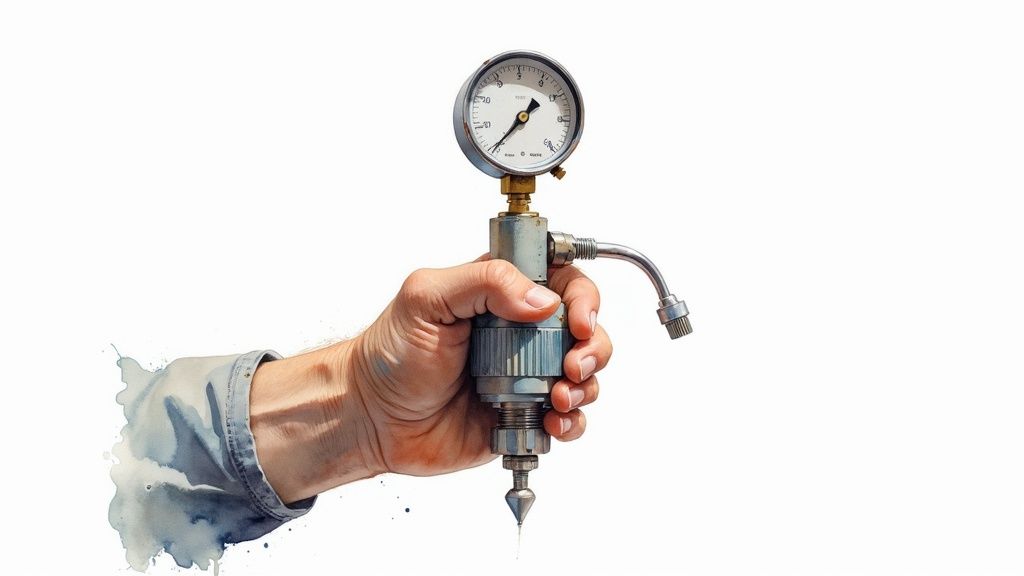
So, what actually goes on when a certified pro shows up to test your backflow preventer? It’s not just a quick glance. Think of it as a highly specific stress test for the guardian of your water supply. A technician uses a specialized, carefully calibrated gauge kit to make sure the internal guts of your device—the valves, the seals, the springs—are all working perfectly under pressure.
They follow a very specific, step-by-step procedure. Knowing what they’re doing helps you appreciate the skill involved and understand why this service is so critical for keeping your water safe.
The Initial Inspection and Setup
First things first, the tester will give the device and the pipes around it a good visual once-over. They’re looking for any red flags: rust, corrosion, active drips, or any other obvious signs of damage. If the device looks like it’s already failing, there’s no point in even starting the test. This initial check confirms the unit is in a testable state.
Once they’re satisfied, they’ll shut off the water flowing to the device. This is absolutely essential. It isolates the preventer from the rest of the system, creating a self-contained environment where they can get clean, accurate pressure readings.
Performing the Diagnostic Test
With the water off, the real work begins. The technician hooks up their backflow test kit—a fancy-looking set of precision gauges—to the small ports, or “test cocks,” on your device. The test itself is a carefully choreographed dance of opening and closing these ports and the main shut-off valves in a specific order. This process simulates the exact conditions of both back-siphonage and back-pressure.
At each stage, the technician is watching the gauges like a hawk and recording the pressure readings. They’re looking for a few key things:
- Are the check valves holding a tight seal against the water?
- Does the relief valve on an RPZ device pop open at the exact right pressure?
- Does the air inlet on a PVB assembly open correctly to break a vacuum?
The whole point of the test is to prove that the device’s internal mechanics are still working exactly as the manufacturer designed them to. Even a tiny pressure drop can signal wear and tear that might cause a total failure during a real-world backflow event.
This infographic breaks down the simple, yet vital, cycle of testing, reducing risk, and staying compliant.
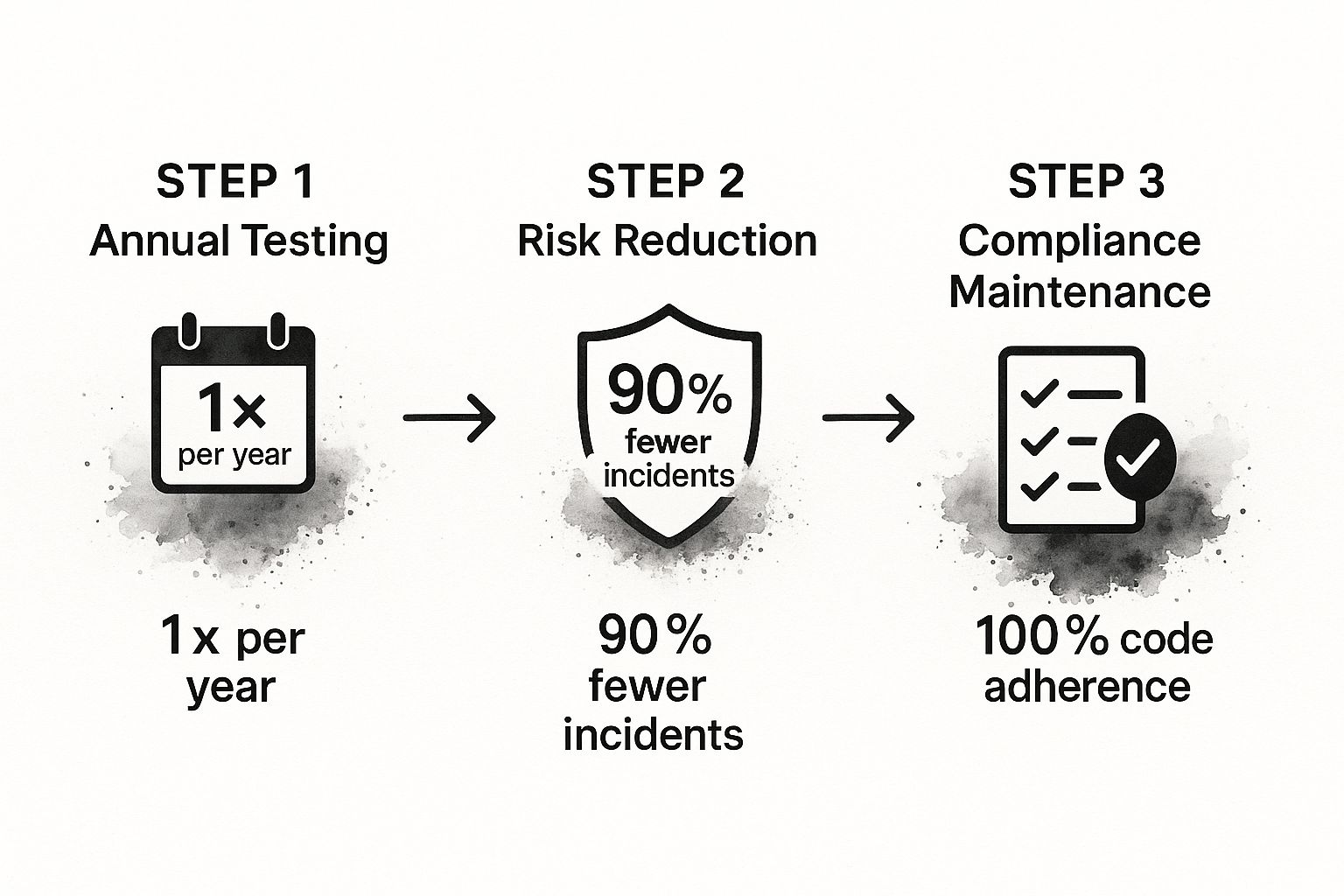
It’s a clear illustration of how doing this annually is the best way to lower your risk and keep the local water authority happy.
Finalizing the Test and Filing the Report
After the measurements are taken, the technician will turn your water back on. Assuming your device passed with flying colors, they’ll attach a new tag showing the date and their certification info. But the job isn’t done yet. The final, and most important, step is to fill out the official test report and send it over to your local water utility, like Denver Water, to keep your property in good standing.
This meticulous process is a big reason why the global market for these devices has seen steady growth, increasing at a rate of about 5.2% a year between 2020 and 2024. As water safety rules get stricter everywhere, professional testing becomes even more essential. You can learn more about these market trends over at futuremarketinsights.com.
Navigating Denver’s Backflow Testing Regulations
When it comes to backflow testing, understanding the local rules is the only way to avoid headaches and potential fines. Here in Denver, the regulations are managed by Denver Water, the utility tasked with keeping our city’s public water supply safe. These aren’t just suggestions—they’re legal requirements created to protect all of us.
As the property owner, the ball is in your court to get the annual test scheduled and completed. While Denver Water usually sends a reminder when your due date is approaching, it’s ultimately your responsibility to hire a certified pro and make sure the test results get filed on time. It helps to think of it like your annual car inspection; it’s a mandatory check-up to prove everything is working as it should.
Key Compliance Requirements in Denver
For property owners, staying compliant is all about knowing your obligations. Dropping the ball can lead to fines or even having your water shut off, so it pays to be proactive.
Here’s a quick rundown of what you absolutely need to know:
- Annual Testing is Mandatory: Almost every backflow prevention device in Denver has to be professionally tested at least once every 12 months.
- Certified Professionals Only: This is not a DIY job. The test must be performed by a plumber or technician who holds a current, state-recognized backflow assembly tester certification.
- Official Report Submission: Once your device passes, the certified tester handles submitting the official report directly to Denver Water’s Cross-Connection Control department. This is the final step that documents your compliance for the year.
Denver Water’s regulations are about more than just bureaucracy. They create a crucial barrier that stops contaminants at your property line, keeping a small problem from turning into a major public health issue.
Consequences of a Failed Test or Missed Deadline
What happens if your device fails its inspection? It needs to be repaired or replaced right away, and then re-tested to confirm it’s working correctly. Ignoring a failed test or blowing past your deadline is never the right move.
Denver Water takes these rules seriously. Non-compliance will trigger a formal violation notice, and if you don’t resolve the issue quickly, they have the authority to shut off your water service until you’re back in compliance. It’s also smart to be aware of our local water’s unique mineral content, which can affect plumbing components over time. To learn more, check out our guide on understanding Denver’s water quality and its impact on your plumbing.
How Much Does Backflow Testing and Repair Cost?
Property maintenance budgets are full of line items, and it’s easy to see backflow prevention device testing as just another one to check off the list. But that’s not the right way to look at it. This isn’t just an expense—it’s a critical investment in protecting your health, your property, and your wallet.
The cost for a professional backflow test around Denver isn’t one-size-fits-all. A few things will move the price up or down, like the size and type of your backflow device, how easy it is for a plumber to get to, and whether it’s for a house or a business. A simple test on an irrigation system for a home will cost less than testing a big, complicated unit tucked away in a commercial building.
The Cost of Action vs. Inaction
The real story here isn’t about the cost of the test itself. It’s about what the test saves you from. A routine annual inspection is a small, predictable cost. The price of doing nothing? That can be completely unpredictable and financially crippling.
Just one backflow incident can spiral into a nightmare of expenses:
- Emergency Plumbing Repairs: Decontaminating an entire water system is a massive job that needs to be done immediately, and it isn’t cheap.
- Major Property Damage: Water damage from a failed device can destroy floors, drywall, and expensive equipment, leading to a huge restoration bill.
- Steep Fines: Denver Water doesn’t mess around. If you don’t submit a passing test report on time, you can face some serious financial penalties.
Think of it this way: the annual fee for backflow testing is like a small insurance premium. You pay a little bit now to avoid a potential catastrophe later.
A Smart Investment in Your Property
At the end of the day, being proactive with maintenance is always cheaper than reacting to a disaster. The small fee for a certified test is nothing compared to the thousands you could be on the hook for in cleanup, repairs, and fines after a backflow event. To get a better feel for what services like this typically cost, check out our comparative pricing guide for plumbing services in Denver.
And this isn’t just a Denver thing. It’s a global standard. The Asia Pacific region, for example, is ramping up backflow prevention as cities grow and governments in places like China and India push for safer water. You can read more about the global backflow preventer market on straitsresearch.com. When you invest in regular testing, you’re not just complying with local rules—you’re part of a worldwide commitment to clean, safe water.
Hiring a Certified Backflow Testing Professional
When it comes to backflow prevention device testing, the technician you hire is every bit as important as the test itself. Handing this critical safety check over to someone who isn’t properly qualified is a gamble you don’t want to take. The right pro doesn’t just run a test; they ensure your property is compliant and give you genuine peace of mind.
Think about it: a certified expert has gone through specialized training. They know the ins and outs of these devices, understand the specific testing protocols, and can spot potential failure points a mile away. They show up with properly calibrated equipment and know exactly how to read the results, leaving no stone unturned.
Vetting Your Backflow Pro
Before you even think about scheduling a service, a little homework can save you a world of trouble. Taking a few minutes to check some basic credentials ensures you’re dealing with a legitimate professional who will keep your water supply safe.
So, what should you look for? Here are the non-negotiables:
- Active State Certification: The technician must have a current, valid backflow assembly tester certification for Colorado. This is the baseline proof that they’ve been properly trained and are qualified to do the work.
- General Liability Insurance: This is your safety net. If something goes wrong and your property is damaged during the test, their insurance covers it, not you. Don’t hesitate to ask for a certificate of insurance.
As you look up potential companies, a basic understanding of online reputation management can be surprisingly helpful. A history of positive reviews and a professional web presence are often solid clues that you’re dealing with a reliable business.
Questions to Ask Before You Hire
Once you have a shortlist of certified testers, it’s time to pick up the phone. Asking a few direct questions about their process and pricing will help you avoid any nasty surprises down the road. For more general advice, our guide on how to choose the right plumber in Denver has some great tips that apply here, too.
A true professional will easily explain how they submit the official report to Denver Water, what their process (and pricing) looks like if your device fails the test, and how their fees are structured. Getting this information upfront makes for a smooth, transparent experience from beginning to end.
Got Questions About Backflow Device Testing? We’ve Got Answers
Even after getting the basics down, it’s totally normal to have a few questions floating around about backflow prevention device testing. I hear the same ones from property owners all the time, so let’s tackle them head-on with some straight-to-the-point answers.
How Do I Even Know If I Have a Backflow Preventer?
This is the most common starting point. You might not even realize you have one, but they’re almost always installed in a few key places where your property’s plumbing could potentially contaminate the clean water supply.
Think of it as a gatekeeper standing guard. You’ll usually find it:
- Near your main water meter. Check your basement, utility closet, or sometimes in an underground utility box out by the street.
- On your lawn’s irrigation system. It’s typically located right where the sprinkler pipes branch off from your home’s main water line.
- At the base of a fire sprinkler system. Every commercial building with fire sprinklers has one of these where the system connects to the water main.
Still can’t find it? The annual notice from Denver Water is a dead giveaway. If you get one, you have one. A quick call to a certified plumber can also solve the mystery in minutes.
What Happens If My Device Fails the Test?
First off, don’t panic. A failed test isn’t a disaster; it’s actually a good thing. It means the system caught a potential weakness before a real contamination event could happen. An ounce of prevention, right?
A failed test just tells us that a part inside the device—usually a simple rubber seal or a metal spring—is worn out and can’t be trusted to do its job anymore.
Your certified tester will pinpoint exactly what went wrong. The great news is that most failures are an easy fix. They’ll typically carry repair kits with them and can rebuild the internal components on the spot. Once it’s repaired, they’ll re-test it to make sure it passes, and then they’ll file the official report for you.
Can I Just Test This Thing Myself?
I get why people ask, but the answer is a firm no. Testing a backflow preventer is a highly regulated process that requires two things you simply can’t pick up at the local hardware store: a very specific, professionally calibrated pressure gauge kit and a current certification from the state.
This isn’t a weekend DIY project. It’s a serious public health measure. Only a certified professional has the right equipment and the training to perform the test accurately and legally submit the compliance paperwork to the water department, keeping our entire community’s water safe.
For certified, reliable backflow testing and repairs in the Denver area, trust the experts at Professional Plumbers Denver. We handle the entire process, from testing to report submission, ensuring you stay compliant and your water stays safe. Schedule your test today!