
When you get the news that your sewer line might need to be replaced, the first thing that probably pops into your head is, “How much is this going to cost me?” It’s the million-dollar question, or in this case, the several-thousand-dollar question.
Nationally, you’ll see a pretty wide range, with the average cost for a sewer line replacement typically landing somewhere between $3,000 and $10,000. But let’s be clear: that’s just a ballpark figure. The final bill is shaped by a whole host of factors, from the repair method we use to the unique layout of your property and what it takes to put everything back together afterward.
Understanding Sewer Replacement Costs Upfront
Let’s face it, dealing with a broken sewer line is a major headache. The last thing you need is a surprise bill that’s way over what you were expecting. It’s best to think of any initial quote as a starting point—a foundational number to help you plan, but one that will almost certainly be adjusted as the full scope of the job comes into focus.
The biggest fork in the road, and the one that will have the most immediate impact on your budget, is the method used for the replacement. There are two main ways to tackle this, and they come with very different price tags and processes.
- Traditional Trenching: This is exactly what it sounds like—we bring in an excavator and dig a trench to expose the old pipe, pull it out, and lay a new one. The direct cost for labor and materials can sometimes be lower, but you have to account for the “hidden” costs of putting your yard, garden, driveway, or patio back together. Those restoration expenses can add up fast.
- Trenchless Methods: Modern techniques like pipe bursting are a game-changer. Instead of digging up your entire yard, we can often replace the line from just a couple of small access points. It might seem more expensive on the initial proposal, but because it saves your landscaping, it can easily end up being the more cost-effective option when you look at the total project cost.
A National Perspective on Pricing
Looking at data from across the country gives us a clearer financial picture. On average, homeowners in the U.S. spend about $3,319 for a sewer line replacement, with the majority of jobs falling between $1,388 and $5,323.
Why such a big range? It all comes down to the specifics. A shallow pipe running under soft soil is a much simpler (and cheaper) job than a deep line buried under a concrete slab or your prized rose bushes. The deeper and more difficult it is to access, the more it will cost.
To get a better handle on how these numbers and factors play out right here in our community, you can learn more about sewer line replacement in Denver through our detailed local guide.
Key Factors That Drive Your Final Cost
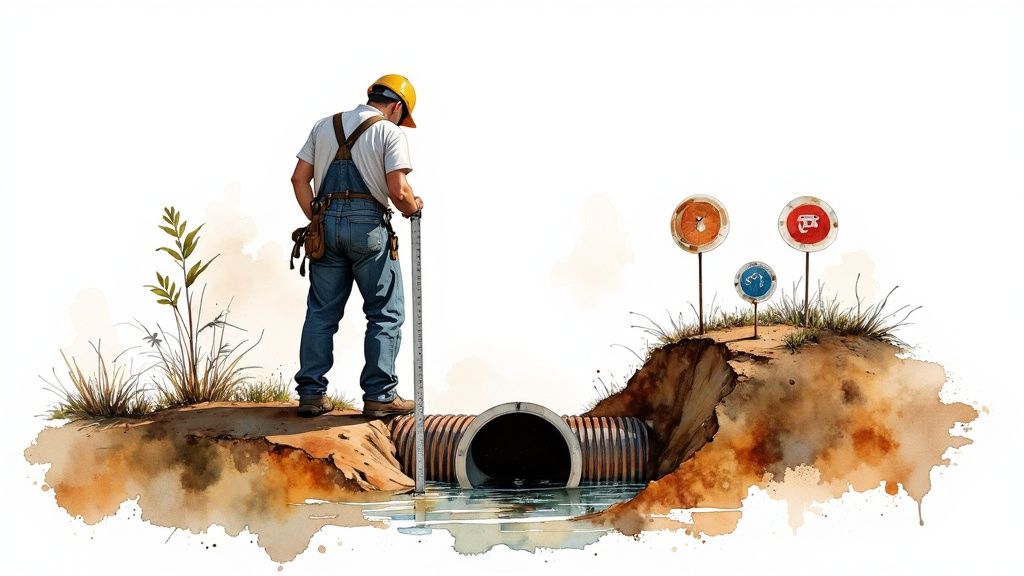
So, why does one sewer line replacement quote come in at $3,000 while a neighbor’s project ends up costing over $15,000? It’s a fair question. The reality is that the average cost of sewer line replacement isn’t a single number but a spectrum, shaped entirely by your property’s unique situation.
Think of it like buying a car. The base model has one price, but adding all-wheel drive, a sunroof, and a premium sound system changes the final sticker price. Your sewer line is no different. Knowing what drives these costs helps you understand exactly what you’re paying for when you look at an estimate. The biggest factors are almost always tied to the physical realities of the job.
Pipe and Property Specifics
First things first, let’s talk about the pipe itself and where it’s located. A straightforward, shallow replacement is a completely different job than one that’s deep, long, and hard to get to.
- Length and Depth of the Pipe: This is the most basic cost driver. Longer and deeper pipes mean more digging, more materials, and more hours for the crew. It’s simple math—a 100-foot replacement will cost significantly more than a 25-foot patch.
- Ease of Access: Can a mini-excavator drive right up to the problem area? Or is your sewer line buried under a concrete patio, a detached garage, or your prize-winning rose garden? The more obstacles in the way, the more time and specialized equipment are needed, which adds up quickly on the labor bill.
A huge cost factor, especially with traditional digging methods, is what has to be torn up to get to the pipe. Restoring your lawn is one thing. But if the sewer line runs right under your driveway, you might be looking at a complete paver driveway installation after the plumbing work is done, adding a major expense to the total project budget.
Materials and Hidden Costs
Beyond the physical challenges, the materials used and other “behind-the-scenes” expenses play a massive role. These are the details that can sneak up on you and turn an average job into a surprisingly expensive one if you aren’t prepared.
The cost can vary wildly based on materials, the total length of the pipe, and labor. While an average new line installation might be around $3,468, the price per foot can swing from $50 to $250. It all depends on the type of pipe being used and how difficult it is to access.
This variability is why getting a detailed quote is so important. Here are a few other key things to keep in mind:
- Pipe Material: Modern PVC pipe is the go-to for its affordability and durability. If you’re replacing an old cast iron or clay pipe, however, the job can be more labor-intensive.
- Permits: Just about every city, Denver included, requires permits for this kind of major plumbing work. It’s a way to ensure the job is done safely and up to code, but it adds a few hundred dollars to the bottom line.
- Landscape Restoration: Traditional trenching leaves a mark. The cost to resod your lawn, replant flowerbeds, or repair a damaged walkway is often a separate line item on the final invoice.
- Code-Required Upgrades: Sometimes, fixing one problem uncovers another. Replacing an old sewer line can trigger a local requirement to bring other parts of your plumbing up to current code, like installing a new backflow preventer.
When it’s time to replace your sewer line, you’re essentially at a fork in the road. You can go the old-school route or opt for a more modern solution. Think of it this way: traditional trenching is like major open-heart surgery for your yard, while trenchless methods are more akin to minimally invasive laparoscopic surgery. Both get the job done, but the impact on your property, your time, and your wallet can be worlds apart.
Making the right choice between these two approaches is one of the single biggest decisions you’ll make, and it heavily influences the average cost of sewer line replacement. Getting a handle on how they work, their pros and cons, and when to use each one will put you in the driver’s seat, allowing you to make the best call for your home and budget.
The Traditional Trenching Method
This is the classic method, the one most people imagine when they hear “sewer replacement.” It’s straightforward: a crew brings in an excavator and digs a long, open trench directly above the old sewer pipe, from your house all the way to the city connection. Once the damaged line is exposed, it’s physically removed, a new pipe is laid down, and the trench is filled back in.
While this approach is sometimes the only option for pipes that are severely collapsed or have lost their proper slope (back-pitched), it’s incredibly disruptive. The downsides are significant:
- Major Property Disruption: Say goodbye to your lawn. Your flower beds, walkways, and even your driveway could be torn up in the process.
- Longer Project Time: All that digging, replacing, and refilling takes time. A project can easily stretch over several days.
- High Restoration Costs: The plumber’s quote for the trenching itself might seem reasonable, but it doesn’t include the aftermath. You have to budget for rebuilding your patio, replanting mature shrubs, or repairing your driveway—costs that can add thousands to the final bill.
The Modern Trenchless Approach
Trenchless technology is a game-changer. It lets plumbers replace your entire sewer line with very little digging. Instead of a massive trench, the job usually just requires a small access pit at each end of the line. This is a huge deal because it saves your landscaping, hardscaping, and a lot of headaches.
Trenchless methods can have a higher upfront cost due to the specialized equipment and expertise required. However, they almost always save you money in the long run by completely avoiding those massive landscape restoration bills.
There are two main ways to go trenchless: pipe bursting and CIPP lining.
With pipe bursting, a powerful machine pulls a brand-new, super-durable plastic pipe through your old, damaged one. Attached to the front of the new pipe is a “bursting head” that fractures the old pipe into pieces, pushing them into the surrounding soil while simultaneously sliding the new pipe into place.
CIPP (Cured-in-Place Pipe) lining, on the other hand, works by inserting a flexible, resin-soaked liner into the existing pipe. Once it’s in position, it’s inflated and cured with heat or UV light, hardening into a brand-new, seamless pipe right inside the old one.
The image below gives you an idea of how the cost of pipe materials—a key part of any replacement—can vary.
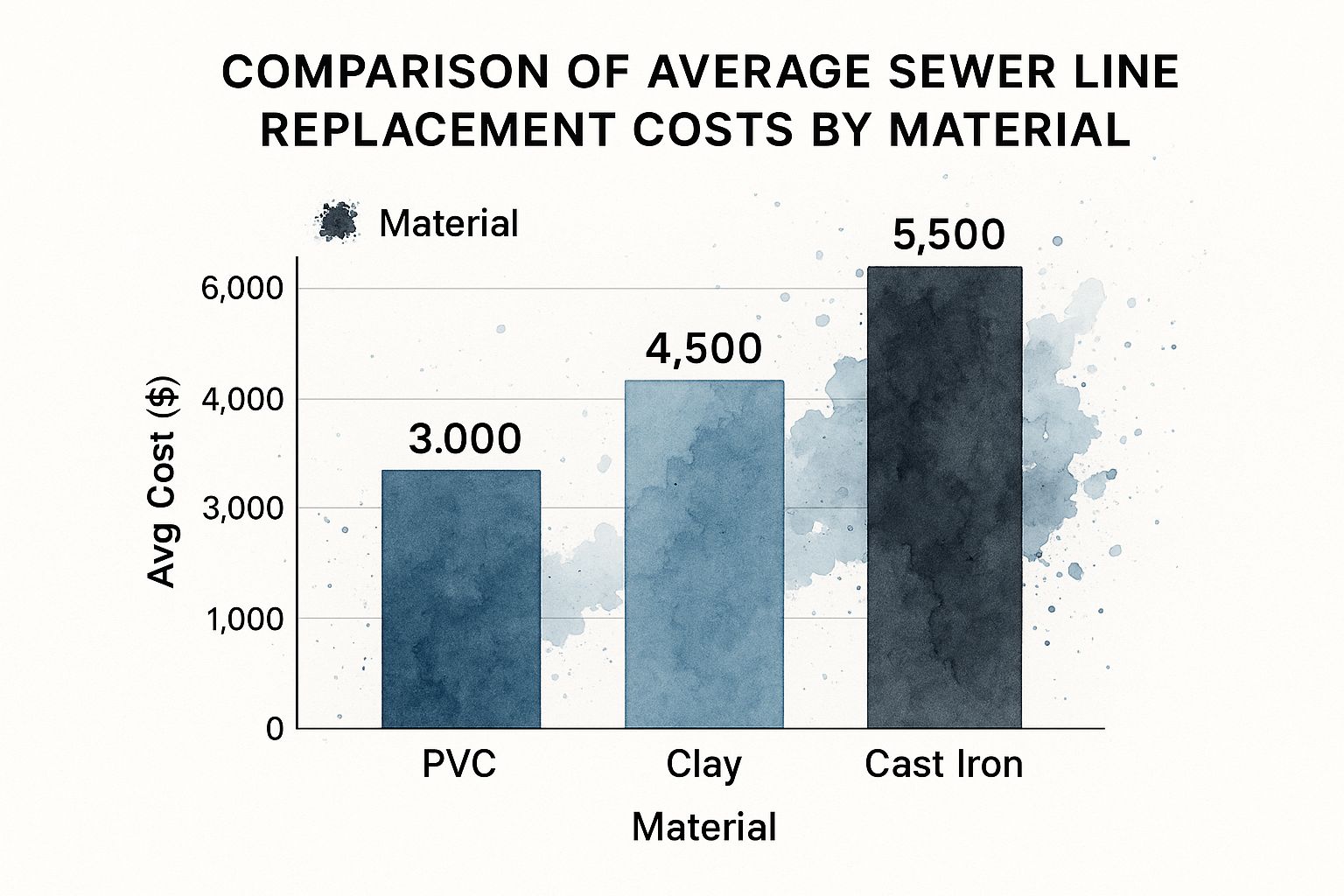
As you can see, modern PVC is far more budget-friendly than old-school cast iron, which is another reason trenchless methods using these materials are so popular. In most situations, going trenchless is the smartest move for protecting your property’s value and avoiding the hidden costs that come with a giant trench.
To make the decision clearer, here’s a direct comparison of the two approaches.
Comparison of Replacement Methods
| Factor | Traditional Trenching | Trenchless Methods (Pipe Bursting/Lining) |
|---|---|---|
| Property Disruption | High. Requires digging a long trench, destroying lawns, gardens, driveways, and patios. | Minimal. Only requires one or two small access holes, preserving your landscape. |
| Project Duration | Longer. Can take several days for excavation, replacement, and backfilling. | Faster. Often completed in a single day. |
| Overall Cost | Lower upfront labor cost, but very high hidden costs for landscape and hardscape restoration. | Higher upfront cost for specialized work, but lower total cost by avoiding restoration expenses. |
| Pipe Durability | Excellent. New pipe is installed. | Excellent. Installs a seamless, joint-free pipe that resists roots and corrosion. |
| Best For | Severely collapsed, bellied, or back-pitched pipes where digging is unavoidable. | Intact properties where preserving landscaping, driveways, and mature trees is a priority. |
Ultimately, weighing these factors will help you and your plumber decide on the most effective and cost-efficient solution for your specific situation.
Warning Signs Your Sewer Line Is Failing
Long before you have to worry about the average cost of sewer line replacement, your house will probably start sending up flares. A failing sewer line rarely keeps its problems to itself. Catching these early distress signals is your best defense against a small issue turning into a full-blown, property-damaging emergency.
Think of your home’s plumbing as its circulatory system. The main sewer line is the critical artery, and when it’s compromised, the whole system starts acting up. Ignoring the symptoms is like ignoring chest pains—the underlying problem only gets worse and more expensive.
Sounds and Smells to Watch For
Often, the very first clues that something is wrong underground will hit your senses of hearing and smell. These are the subtle hints that trouble is brewing, long before you see the messy evidence of a backup.
A classic sign is a strange gurgling sound coming from your toilets or drains. Have you ever flushed a toilet, only to hear a weird bubbling noise from the nearby shower drain? That’s a tell-tale sign. It means air is trapped in the line by a blockage and is desperately trying to escape through any available opening.
Then there’s the smell. A persistent, foul odor of sewage in your basement, bathrooms, or even wafting around your yard is a dead giveaway. It’s a clear signal that wastewater isn’t making its way to the city main like it’s supposed to.
Visual Clues Inside and Outside
Beyond the initial sounds and smells, you’ll start to see physical evidence that points directly to a failing sewer line. These visual cues usually signal a more serious problem that needs prompt attention.
Inside your home, the most blatant sign is frequent drain backups. If you’re constantly fighting clogs in multiple drains at once—say, the toilet, sink, and shower all seem slow or backed up—the problem isn’t with one fixture. It’s almost certainly in the main line itself. A single clogged toilet is an annoyance; a house-wide backup points to system failure.
Outside, the clues can be surprisingly sneaky at first:
- Lush, Green Patches: A random patch of grass in your yard that’s suddenly greener and more vibrant than the rest might be getting some unwanted “fertilizer” from a leaking sewer pipe just below the surface.
- Yard Indentations: A slow, steady leak can wash away the soil supporting the pipe, causing a distinct dip or small sinkhole to form in your lawn over time.
- Water Pooling: Finding soggy spots or standing water in your yard when it hasn’t rained is a major red flag. That moisture is likely wastewater seeping up from a cracked or broken line.
Understanding all the ways your home can warn you is key. For a more comprehensive look, our guide on the top signs you need a sewer line replacement in Denver covers these issues in greater detail.
Spotting any of these signs gives you the advantage. You can call a professional for a camera inspection to see exactly what’s happening, where the damage is, and how bad it is. This crucial step helps you make an informed decision and can be the difference between a simple repair and a costly, catastrophic failure.
How to Budget and Save on Your Replacement
Let’s be honest: a sewer line replacement is a major expense, and it’s almost never one you see coming. But that doesn’t mean you have to just take the financial hit without a plan. With the right approach, you can manage the average cost of sewer line replacement and make sure your money is well spent on a solution that lasts.
The most powerful thing you can do right out of the gate is get several detailed quotes from reputable local plumbers. I can’t stress this enough—don’t just glance at the final price. A suspiciously low bid often means something is missing, and you’ll be hit with surprise charges later. A truly professional estimate will itemize everything: labor, materials, permits, and even the cost of fixing up your yard afterward.
Smart Strategies for Reducing Costs
Beyond just comparing the numbers on those quotes, there are a few other smart moves you can make to keep your budget from spiraling. These tips are all about finding a balance between immediate savings and long-term value.
- Ask About Payment Options: Don’t be afraid to ask about financing. Many plumbing companies have plans that can spread the cost out over time, making it much easier to handle without draining your savings all at once.
- Invest in Durable Materials: It can be tempting to go with the cheapest pipe material to save a few bucks upfront. But this is one of those areas where you really get what you pay for. Choosing modern, high-quality materials like PVC or HDPE might cost a little more now, but it can give you decades of trouble-free service and better protection from things like tree roots and corrosion.
Before you sign on the dotted line for a full replacement, you need to be 100% sure it’s necessary. The symptoms of a failing sewer line can be tricky. A camera inspection is the only way to know for certain if you need a total replacement or if a more targeted, less expensive repair will do the job.
Exploring Financial Assistance and Insurance
You might not have to bear the full cost alone. Before you commit to anything, take a little time to see what financial help might be available. Your first call should be to your homeowner’s insurance company.
While most standard policies won’t cover problems from simple wear and tear, some situations—like damage from a sudden, unexpected event—might be covered. Knowing the ins and outs of navigating property insurance claims can make a huge difference here.
Of course, it all comes back to knowing whether this is truly a replacement situation or something less drastic. Our guide on how to know if you need to repair or replace your sewer is a great resource for getting clear on that. Taking these steps puts you in control, allowing you to make a smart financial decision for your home.
When you’re staring down a sewer line replacement, it’s easy to focus on the immediate problem under your lawn. But it helps to zoom out and see the bigger picture. Your sewer line isn’t just your problem; it’s the very last piece of a vast, and often very old, city-wide puzzle.
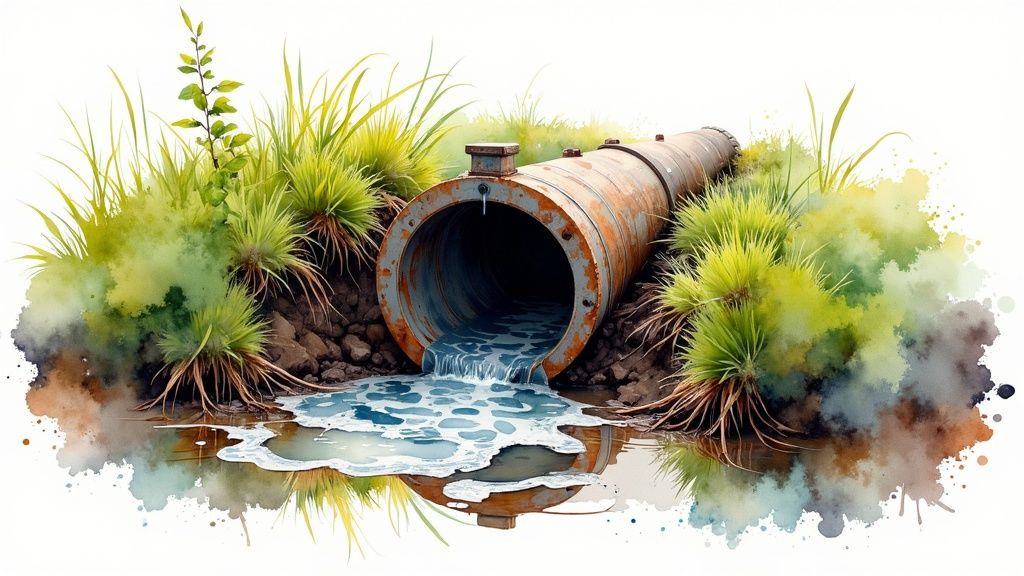
Think about it: cities like Denver have been growing for a long time, and the public sewer systems are feeling the strain. These decades-old pipes are under more pressure than ever, leading to more frequent breaks and backups across entire neighborhoods. When you opt for a high-quality, professional replacement, you’re not just fixing your pipe—you’re building a personal firewall, protecting your property from the inevitable problems of an aging public grid.
The Bigger Picture: A National Trend
This isn’t just a Denver-specific headache. The need for reliable sewer repairs has become a massive national issue. In fact, the market for these services was valued at $3.5 billion in 2024 and is expected to climb to $5.2 billion by 2033.
Why the boom? It boils down to two key factors:
- Aging Infrastructure: The pipes laid down generations ago are simply reaching the end of their lifespan.
- Urban Growth: More people and more development put an incredible amount of stress on these already fragile systems.
If you’re interested in the data, you can read the full research about this market trend and see the numbers for yourself.
By investing in a high-quality replacement now, you are future-proofing your home. You’re ensuring your connection to the city main is robust enough to withstand the ongoing challenges of an older, overburdened system.
This isn’t just about avoiding another messy backup. It’s about being proactive. Taking this step now turns a stressful, reactive emergency into a smart, deliberate investment in your home’s value and your own long-term peace of mind.
Your Top Sewer Replacement Questions, Answered
It’s completely normal to have a lot of questions when you’re facing a sewer line replacement. It’s a big job, and you want to be sure you’re making the right call. We’ve gathered some of the most common questions we hear from homeowners and answered them straight up.
One of the first things people ask is, “How long will my yard be torn up?” For a classic, trenched replacement, you’re looking at a few days. There’s the digging, laying the new pipe, getting it inspected, and then filling everything back in. But if you can go the trenchless route, like with pipe bursting or lining, the whole thing is often wrapped up in just one day, which is a huge relief for most families.
Another big one: “Do I really need a permit for this?” In almost every case, yes. Your sewer line is a critical piece of plumbing that connects to the city’s system. Because of that, and the digging involved, places like Denver require permits to make sure the work is done right and meets all safety codes. Don’t worry, though—any reputable plumber will handle the entire permitting process for you.
Can’t I Just Patch the Bad Spot?
This is a great question, and we get it all the time. The honest answer? It depends entirely on what the camera inspection shows. If you’ve just got one isolated problem—a single cracked joint or a small hole from a pesky tree root—then yes, a targeted spot repair could be a great, budget-friendly option.
However, if that camera reveals problems all over the place, like widespread corrosion, numerous cracks, or a sagging “bellied” pipe, a full replacement is the only smart move. Think of it like this: patching one weak spot on a rusty old pipe is just asking for another leak to spring up somewhere else a few months later. It ends up costing you more in the long run.
A camera inspection isn’t just about finding a problem; it’s about diagnosing the health of the entire line. It gives your plumber the clear picture needed to recommend the right fix—whether that’s a simple patch or a full replacement.
Getting clear on these details is what takes the mystery out of the average cost of sewer line replacement and helps you feel confident in your decision.
Dealing with a busted sewer line is stressful, but you’re not in it alone. Professional Plumber Denver provides expert diagnostics and replacement services throughout the Denver Metro area. Contact us today for a professional consultation and a clear, upfront estimate.

Recent Comments