
That foul smell coming from your shower drain is usually an easy fix. Most of the time, the culprit is a buildup of gunk—hair, soap scum, and body oils—that forms a slimy layer called biofilm.
Another common issue, especially in a guest bathroom, is a dry P-trap. If a shower isn’t used often, the water barrier in the drain pipe evaporates, allowing unpleasant sewer gas to sneak into your bathroom.
What’s Causing the Bad Smell From Your Shower Drain

When a strange odor starts wafting up from the shower, it’s not just a nuisance; it’s your plumbing trying to tell you something. Before you can fix it, you need to play detective and figure out what that specific smell means. Different smells point to different problems.
A musty or mildew-like scent almost always points to biofilm. This is a slimy, bacteria-filled film made from soap residue, body oils, and skin cells that have gotten tangled up with hair in the drain. It’s the perfect breeding ground for bacteria, and that’s what produces the signature “stinky drain” smell.
Deeper Plumbing Problems
What if the smell is sharper, like rotten eggs or raw sewage? That’s a classic sign of an issue with your P-trap. This U-shaped pipe under your drain is meant to hold a little bit of water, creating a seal that blocks sewer gases from coming up. If you haven’t used the shower in a while, that water can evaporate, breaking the seal.
A persistent sewer smell that doesn’t go away, however, might signal a bigger problem. You can find out more about what a sewer smell in your house might mean in our detailed guide.
Another possible, though less common, cause is a blocked plumbing vent. This pipe, which typically runs up through your roof, is crucial for releasing sewer gases and maintaining proper air pressure in your drain system. If leaves, nests, or other debris clog it, a vacuum can form that sucks the water right out of the P-trap, letting those foul odors flow freely into your home.
Plumbing headaches are incredibly common. In the U.S., roughly 30% of households deal with some kind of plumbing problem each year, and stinky, clogged drains are at the top of the list. That biofilm we talked about? It can even cause pink or orange stains around the drain and needs consistent cleaning to keep it from coming back. For more on this, you can check out some great insights on common drain issues over on Mr. Rooter’s blog.
How to Remove Biofilm and Simple Clogs Yourself
More often than not, that funky smell wafting up from your shower drain is just biofilm. It’s a nasty, slimy concoction of soap scum, hair, skin cells, and bacteria that builds up over time. This gunk not only stinks but also creates minor clogs that keep water from draining properly. Thankfully, you can usually tackle this yourself without calling in a pro.
First things first, let’s get hands-on. Pop on a pair of rubber gloves, grab a screwdriver if you need one to lift the drain cover, and pull out any hair and gunk you can see. It’s not glamorous, but you’d be amazed what a difference clearing that initial blockage makes. Sometimes, this simple act alone solves the smell problem.
Using a Natural Cleaning Solution
For the deeper grime you can’t just grab, a classic baking soda and vinegar combo is surprisingly effective. That fizzing reaction you see when you mix them isn’t just for show—it actively works to break down the sticky biofilm and loosen soap scum from the pipe walls.
This infographic lays out the whole process, showing just how simple it is to get your drain smelling fresh again.
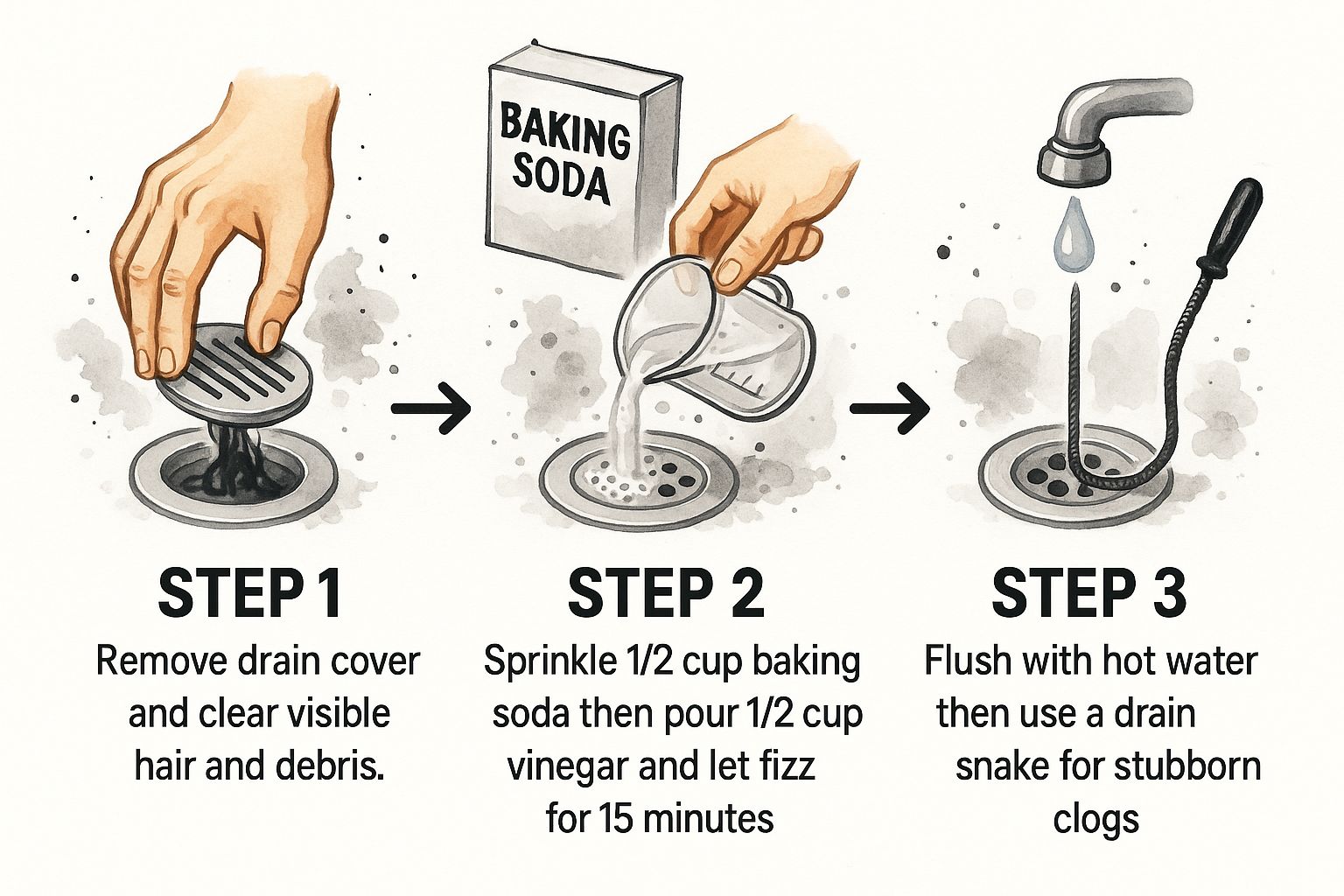
As you can see, it’s a straightforward, three-part approach. You start with manual cleaning, move on to a natural solution for the gunk you can’t reach, and then use a tool for anything more stubborn.
Tackling More Stubborn Blockages
If the fizzing trick doesn’t quite cut it, you’re likely dealing with a more compacted clog sitting further down the line. This is where a drain snake becomes your go-to tool. You don’t need a professional-grade one; a simple plastic drain snake from the hardware store is cheap, flexible, and perfect for navigating the bends in your shower’s plumbing.
Pro Tip: When you’re using a drain snake, be patient. Gently feed it down the drain until you feel it hit the blockage. Then, slowly rotate it to snag the clog before carefully pulling it back out. Never try to force it—that’s a good way to damage your pipes.
If you want a closer look at the right tools and techniques, our guide on how to unclog a drain pipe has you covered. For some more great DIY strategies, check out these tips on how to unblock your pipes. These methods are your best bet for fixing that bad smell without pouring harsh, corrosive chemicals down your drain.
Tackling P-Trap Problems and Sewer Gas
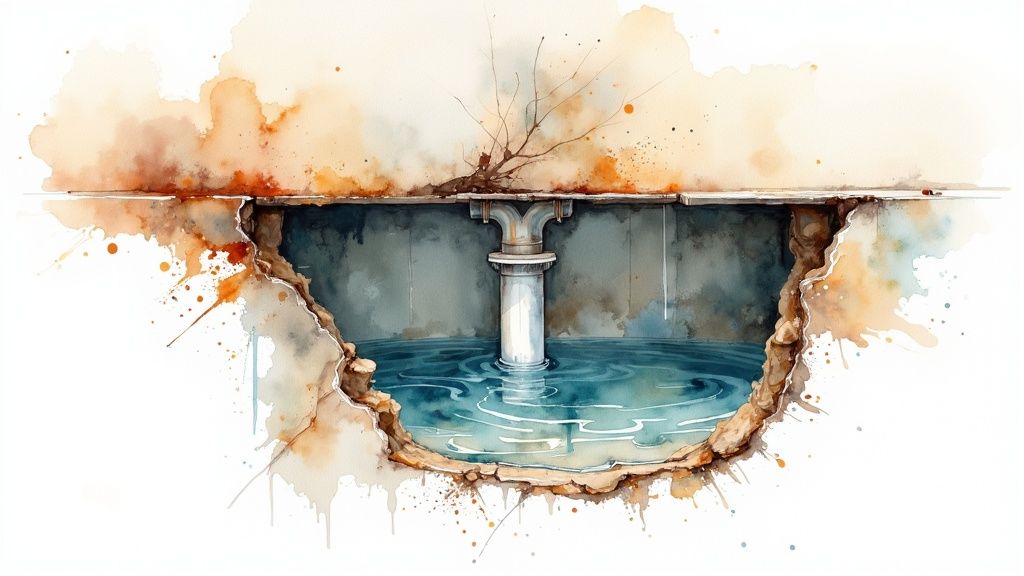
If the smell wafting from your shower is less “damp towel” and more “rotten eggs,” you’re likely dealing with something beyond a simple clog of hair and soap scum. That unmistakable sewage odor is a dead giveaway for sewer gas, and the prime suspect is almost always your P-trap.
Look under any sink and you’ll see one—that U-shaped bend in the pipe. Your shower has one too, just hidden beneath the floor. Its design is brilliantly simple: it’s built to hold a small amount of water at all times. This little pool of water creates an airtight seal, blocking foul (and potentially hazardous) sewer gases from bubbling up into your home.
The Case of the Dry P-Trap
So, what happens when that water seal disappears? You get sewer gas. The most common reason for this is simply that the water has evaporated. This is a frequent issue in guest bathrooms or any shower that doesn’t see much action. Without regular use, the water in the trap just dries up.
Luckily, the fix is usually just as simple. Run the shower for a minute or two. This refills the P-trap, re-establishes the water barrier, and should stop the smell in its tracks. It’s a surprisingly easy solution to a very common problem. If you’re curious about the mechanics, our guide on what P-trap plumbing is goes into greater detail.
Pro Tip: If a shower you rarely use starts to smell like a sewer, a dry P-trap is the first thing to check. Running the water for a minute is the easiest and most likely fix.
The need for a functional P-trap isn’t just a local building code—it’s a global standard for maintaining healthy indoor air. In places with less rigorous plumbing standards, missing or improperly installed traps are a major cause of indoor air quality issues. For a deeper dive, you can read more about these global plumbing standards and their impact.
When the Smell Won’t Go Away
But what if you use the shower daily and that nasty sewer smell just won’t quit? This points to a deeper, more complicated issue that a quick shower won’t solve.
Here are a couple of possibilities:
- A Clogged Vent Stack: Every home’s plumbing system has a vent pipe, usually sticking out of the roof. If this pipe gets clogged by leaves, a bird’s nest, or other debris, it can create a vacuum in your drain lines. This suction can actually pull the water right out of the P-trap, breaking the seal.
- A Damaged or Leaking Drain Line: A small crack or a loose connection in the drain pipe itself could be allowing sewer gas to leak out before it even gets to the P-trap.
If you suspect either of these problems, it’s best to put down the tools and pick up the phone. Diagnosing and repairing vent stacks or cracked drain lines is a job for a professional plumber.
Keeping Your Shower Drain Fresh and Odor-Free
Getting rid of a nasty drain smell is one thing, but making sure it never comes back is the real win. You don’t need to spend hours on it, either. A simple, consistent routine is all it takes to keep your drain clear and your bathroom smelling clean. Believe me, a little prevention goes a long way in avoiding future headaches.
One of the easiest things you can do is a weekly hot water flush. Seriously, that’s it. Just let the hot water run for an extra 60-90 seconds after the last shower of the week. This helps melt away any fresh soap scum and oils before they harden into the gunk that eventually causes clogs and smells.
Build a Simple Cleaning Routine
If you don’t already have one, get a good hair catcher for your drain. This is non-negotiable. Most of the foul-smelling clogs I see start with a tangled web of hair that catches every bit of soap and grime passing by. A drain protector stops the problem at the source, and you just have to wipe it clean after you shower.
Once a month, give your drain a little extra attention with the classic baking soda and vinegar treatment. It’s cheap, effective, and only takes a few minutes.
- Start by pouring about half a cup of baking soda down the drain.
- Chase it with half a cup of white vinegar and pop the drain cover on.
- Let that fizzy reaction work its magic for about 15-20 minutes; it’s great for breaking down any gunk that’s starting to build up.
- Finally, flush it all out with a few minutes of hot water.
Doing this monthly really messes with the bacterial growth cycle, stopping those smells before they even have a chance to develop.
Here’s a pro tip: A dry P-trap is a super common culprit for sewer gas smells, especially in a guest bathroom shower that doesn’t see much action. If a shower isn’t used often, just make a point to run the water for a minute every couple of weeks. That keeps the P-trap’s water barrier full, which is what blocks sewer gases from creeping into your home.
For more great ideas on maintaining your home’s plumbing, check out these essential home maintenance tips that include plumbing advice. Folding these small habits into your regular cleaning schedule is the best way to guarantee your shower drain stays clear and odor-free for good.
When You Should Call a Professional Plumber
Look, a lot of smelly drain issues are things you can absolutely handle yourself. But every so often, that odor is your plumbing system’s way of waving a big red flag. Knowing when to step back and call in a pro can be the difference between a simple fix and a full-blown, wallet-draining disaster.
The number one sign you’re out of your league? A stubborn sewer gas smell that just won’t quit, even after you’ve cleaned the drain and made sure the P-trap is full of water. If that rotten-egg odor sticks around, it’s a strong hint that the problem is lurking deeper in your drain lines or vent system, where you can’t see it.
Signs of a Deeper Problem
Start thinking about your home’s plumbing as a whole system. Is it just the shower drain acting up, or are other fixtures misbehaving too? Widespread issues are a dead giveaway that the source of the problem isn’t at the drain’s surface.
Here are the specific red flags that mean it’s time to call a licensed plumber:
- Gurgling Noises: You flush the toilet, and a moment later, the shower drain starts gurgling. That’s not normal. It’s usually a sign of a blockage or pressure problem in the main sewer line.
- Widespread Slow Draining: If the kitchen sink, the bathroom sink, and the shower are all taking their sweet time to drain, the clog is probably deep in your home’s main line.
- Water Backups: This one’s impossible to ignore. If you see murky water or, worse, raw sewage backing up into your shower, that’s a plumbing emergency. Stop what you’re doing and call for help immediately.
Trying to tackle these bigger problems without the right know-how can quickly turn a bad situation into a catastrophe, potentially leading to cracked pipes and serious water damage. A professional plumber has specialized gear, like sewer inspection cameras, to find the exact source of the smell and fix it for good.
Got Questions About That Lingering Shower Drain Smell?
So you’ve done the cleaning, but that awful smell is still hanging around. It’s a frustrating spot to be in, but don’t worry, it’s a common problem. Let’s dig into a couple of the most frequent questions I hear from homeowners dealing with this.
I Already Cleaned It, So Why Does It Still Stink?
You’ve pulled out the hair and scrubbed what you can see, but the odor persists. What gives? More often than not, the real culprit is hiding just out of sight.
The problem could be a stubborn biofilm colony that has taken hold deeper down the pipe. It’s a slimy, smelly layer of bacteria that a simple cleaning won’t touch.
Another common issue is the P-trap. This U-shaped pipe is designed to hold water and block sewer gas, but it can also trap foul-smelling debris. Or worse, the water seal might have evaporated, giving sewer gas a direct line into your bathroom. If that’s the case, a deeper clean with a drain snake and a good baking soda and vinegar flush is your next best move.
That unmistakable rotten egg or sewer smell is a major red flag. It’s almost always a sign of a dry P-trap or a bigger problem with your home’s vent stack. Don’t just ignore it and hope it goes away.
Is This Smelly Drain Actually a Health Risk?
Honestly, it can be. While a musty, mildew-like smell from biofilm is more of an annoyance, that distinct sewer gas odor is a real concern.
That smell is your nose telling you that gases like hydrogen sulfide are creeping into your living space.
Breathing this in for too long can cause headaches, dizziness, and other unpleasant health symptoms. It’s really important to tackle any sewer gas smell right away to keep your home’s air safe and clean.
When you’ve tried all the DIY tricks and that nasty smell just won’t quit, it’s time to bring in a professional. The team at Professional Plumbers Denver has seen it all and can get to the root of the problem fast. Schedule your service today and finally get your bathroom back to smelling fresh.

Recent Comments