
Thinking about swapping out your old bathroom sink? When you hire a pro, the bathroom sink installation cost usually lands somewhere between $216 and $663. That final price really boils down to two things: what you pay for the sink itself and what you pay the plumber to put it in.
What Is the Average Bathroom Sink Installation Cost
When you're trying to figure out a budget for a new bathroom sink, it helps to see the total cost as two distinct parts. First, you have the materials, which is everything from the sink and faucet to the little plumbing bits and pieces needed to connect it all. The second part is labor—what a professional plumber charges for their skills and time.
How much you spend on each can swing wildly depending on what you choose. For example, replacing a basic drop-in sink is a relatively quick job. But if you're installing a wall-mounted sink that needs new plumbing run inside the wall, that's a whole different story. The style of the sink, your plumber's hourly rate, and even where you live all factor into the final bill.
Key Financial Factors to Consider
Several things can nudge the cost of a bathroom sink installation up or down. A project can be a simple one-for-one swap of an old fixture or a brand-new installation during a major remodel, and each has very different cost implications.
Homeowners should be ready for a wide range. Professional plumbers typically charge between $50 to $200 per hour for their work. If you want to dig deeper, you can find more details on sink installation cost variables and pricing factors on Angi.com.
Key Takeaway: The final bathroom sink installation cost is a blend of the fixture's price and the complexity of the installation labor. A simple swap is always more affordable than a project requiring significant plumbing or countertop adjustments.
To give you a clearer picture right from the start, let's break down the essential numbers. This table gives you a quick financial snapshot so you know what to expect.
Bathroom Sink Installation Cost At a Glance
This table summarizes the typical costs associated with installing a new bathroom sink, including the price range and average professional labor rates.
| Cost Component | Typical Range |
|---|---|
| National Average Cost | $440 |
| Typical Price Range | $216 – $663 |
| Low-End Cost (Simple DIY) | $150 |
| High-End Cost (Complex Install) | $1,200+ |
| Professional Plumber Labor Rate | $50 – $200 per hour |
As you can see, a straightforward DIY job can be quite affordable, while a high-end installation with a premium sink and complex plumbing can easily top $1,200. Knowing these ranges helps you set a realistic budget for your project.
What Goes Into the Final Price Tag?
Ever wonder why one bathroom sink installation comes in at a neat $300, while a seemingly similar project ends up costing over $1,000? It's a common question, and the answer lies in the details. Think of it like buying a car—the base model has one price, but as you add features like a sunroof, leather seats, and a premium sound system, the total climbs. Your sink project follows the same logic.
The final bathroom sink installation cost really boils down to two things: materials and labor. Materials are the tangible items—the sink bowl, the faucet, and all the little plumbing bits like drains and supply lines. Labor is the plumber's time and expertise, which can swing wildly depending on how tricky the job is. A straightforward sink swap is one thing, but rerouting pipes is a whole different ballgame.
The image below gives you a great visual breakdown of how these factors—the quality of your materials, the complexity of the labor, and any extra plumbing work—all add up.
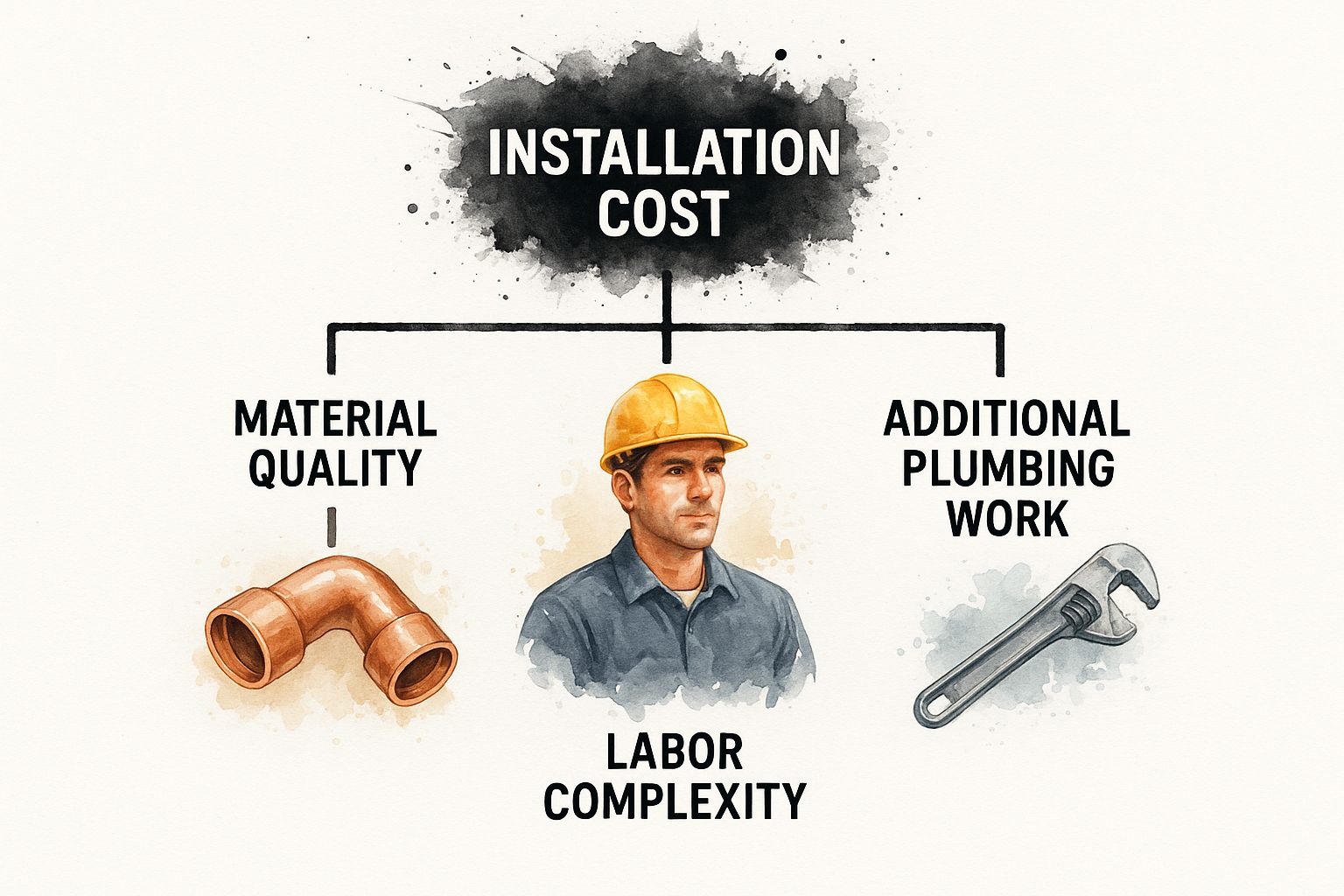
As you can see, the more involved the work and the fancier the parts, the more you can expect to invest. Let's dig into these drivers a bit more.
How Much Does the Sink Style Matter?
The type of sink you pick is one of the first and most significant decisions affecting your budget. A simple, functional drop-in sink is worlds apart from a statement-making vessel or a sleek undermount model, both in material cost and the labor needed to install it.
To give you a clearer picture, here’s how different popular styles typically stack up.
How Different Sink Styles Impact Your Budget
| Sink Style | Average Material Cost | Installation Complexity | Estimated Total Cost Range |
|---|---|---|---|
| Drop-In | $50 – $300 | Low (Fits into a pre-cut hole) | $250 – $500 |
| Undermount | $150 – $600 | High (Requires precise cutting and sealing) | $450 – $1,200 |
| Vessel | $100 – $800+ | Moderate (Needs a hole for the drain only) | $400 – $950 |
| Wall-Mount | $150 – $700 | High (Requires reinforced wall support) | $500 – $1,300 |
| Pedestal | $100 – $500 | Moderate (Plumbing must be perfectly aligned) | $350 – $700 |
Choosing a style isn't just about looks; it's a practical decision that sets the stage for the entire project's scope and cost.
The Real Cost of Labor
Labor is often the wild card in any project quote. Why? Because the complexity of the job is the biggest factor determining how many hours a plumber needs to be on site. A simple, like-for-like replacement of a drop-in sink might only take a pro 2-3 hours. Quick and easy.
But what if your project is more ambitious? That's when labor costs start to climb. Tasks that add significant time and effort include:
- Moving the Plumbing: If your new sink isn't going in the exact same spot, the plumber will have to open up walls to move the water supply and drain lines.
- Cutting Countertops: Installing an undermount sink is a specialized skill. It requires a perfectly measured cut in materials like granite or quartz, which is nerve-wracking and best left to a pro.
- Adding Wall Support: Floating a wall-mounted or heavy console sink isn't as simple as screwing it to the drywall. It needs extra blocking installed inside the wall to hold the weight safely.
These scenarios don't just take more time; they require a higher level of experience and specialized tools, which is always reflected in the plumber’s estimate.
Material Choices and Those "Hidden" Costs
It’s easy to focus on the sink itself, and the price range there is huge. A basic ceramic drop-in model might be less than $100, while a hand-carved stone vessel sink could easily run you over $1,000. But the sink is just one piece of the puzzle.
It's helpful to understand how plumbers price their services to see the full picture. They're factoring in not just the parts and their time, but also their business overhead and deep expertise.
Don't forget to budget for the faucet, the drain assembly, and maybe even new shut-off valves under the sink. A high-end, widespread faucet can sometimes cost more than the sink! And if you're undertaking a major project, like adding a bathroom from scratch, the costs scale up quickly. For those bigger jobs, our guide on the cost to install a basement bathroom provides a great breakdown of what's involved. Every single component adds another line item to your total budget.
How Sink Types and Materials Shape Your Budget
When you're planning a bathroom refresh, it’s easy to think of the sink as just another fixture. But in reality, your choice of sink is one of the biggest decisions you'll make, and it has a massive ripple effect on your total budget. It’s not just about what you like the look of; it's about what it takes to get it installed properly.
Think of it like this: a simple drop-in sink is the most common and budget-friendly choice. It’s the trusty sedan of the sink world—reliable and easy for a plumber to install into a pre-cut countertop. But if you're aiming for a sleeker, more modern look with an undermount sink, the game changes. Installing one requires a perfectly cut opening and a meticulous sealing process from below. That’s a more delicate, time-consuming job, and that extra skill and effort will be reflected in the labor costs.
Comparing Popular Sink Styles
It’s a rule of thumb in remodeling: the more visually striking the feature, the more complex (and expensive) the installation often is. That trendy vessel sink that sits on the counter like a beautiful bowl is a perfect example of how a design choice creates a domino effect on costs.
- Vessel Sinks: These dramatic sinks usually need a special, taller faucet to clear the rim, which often costs more than a standard one. The installation itself is also a custom job, requiring a carefully drilled hole for the drain.
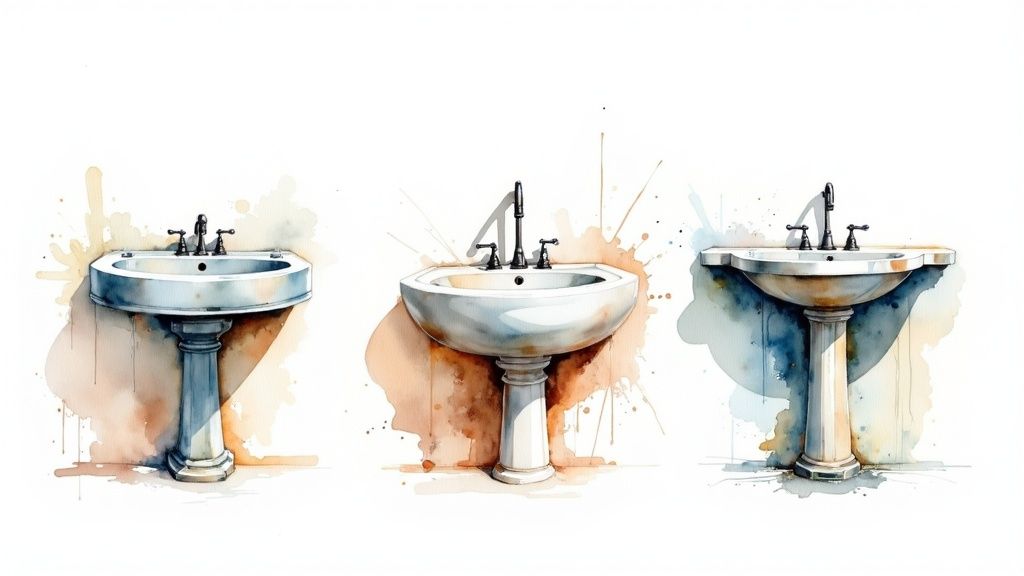
- Pedestal Sinks: While the sink itself might seem affordable, the installation is all about precision. There’s no vanity cabinet to hide the plumbing, so everything has to line up perfectly behind the pedestal. Any misalignment is immediately obvious.
- Wall-Mount Sinks: Achieving that minimalist, floating look takes the most work. A plumber often has to open up the wall to add sturdy blocking and support brackets. It’s a labor-intensive process to make sure it’s securely anchored.
This is exactly how a sink with a $200 price tag can lead to a final bill that's hundreds of dollars higher than a simpler model. You have to look beyond the cost of the sink itself and consider the labor it demands.
Expert Insight: Always tell your cabinet maker which sink you’ve chosen, especially if it’s a vessel style. I've seen it happen too many times: a standard-height vanity gets installed with a tall vessel sink, and suddenly the basin is at an awkward, uncomfortable height. It’s a frustrating and completely avoidable mistake.
How Materials Influence Price and Durability
After you’ve picked a style, the next big cost factor is the material. This decision affects not only the upfront price but also how the sink holds up over the years and how much effort it takes to maintain.
The industry workhorse for a good reason is classic vitreous china or porcelain. It's tough, doesn't stain easily, and is a breeze to clean—making it a fantastic, cost-effective choice for most homes. You can typically find these for anywhere from $75 to $300.
Of course, if you want to make more of a statement, you can venture into premium materials, but be prepared for the price to climb.
- Cast Iron: Incredibly heavy and durable, these sinks are coated in a thick enamel and can genuinely last a lifetime. Their weight means they're tougher to install, which adds to the labor cost.
- Natural Stone: If you want a one-of-a-kind look, a sink carved from marble, granite, or travertine delivers. But they come with homework—they're porous and need to be sealed regularly to prevent staining. They’re also at the top of the price scale, sometimes costing $800 or more.
- Glass: A tempered glass sink can make a bathroom feel modern and open. While they look stunning, they’re magnets for water spots and come with the risk of chipping or shattering if you drop something heavy.
Ultimately, your choice of material is a balancing act between your budget, your personal style, and the amount of upkeep you’re willing to commit to. That gorgeous marble sink might be a showstopper, but it’s probably not the most practical pick for a busy family bathroom.
Cracking the Code on Plumber Labor Costs
When you get a quote from a plumber, that hourly rate can sometimes cause a bit of sticker shock. It’s easy to think, “How can it cost that much for an hour or two of work?” But what you're seeing isn't just payment for the time they spend in your bathroom. It’s an investment in their expertise, safety, and the long-term health of your home.
Think of it this way: that rate bundles together years of apprenticeship and on-the-job training, the expensive and specialized tools they bring, and the business insurance that protects your home. You're not just hiring a person; you're hiring a professional who knows how to prevent a tiny drip from turning into a catastrophic, ceiling-destroying leak.
The demand for this kind of professional know-how is huge. The global market for sink and faucet installation services was recently valued at around $5.032 billion, and it's still growing. This trend shows that most homeowners understand the risks of a DIY plumbing job and prefer to trust a pro.
What’s Actually Happening During the Installation?
A professional sink installation is a lot more than just swapping out the old for the new. It's a precise, step-by-step process where every detail matters. The time it takes to complete these steps is what makes up the bulk of your labor cost.
- Careful Takedown: First, the plumber has to disconnect the old water lines and drain, then carefully pry the old sink away from the countertop without cracking the surface or damaging the vanity.
- Site Prep: Next, they'll clean up the area, making sure the surface is perfectly level and ready for the new fixture.
- The Perfect Connection: This is the most critical part. They’ll connect the new faucet and drain, install the P-trap, and hook up the hot and cold water lines, making sure every single connection is sealed tight and completely leak-proof.
When Labor Costs Start to Climb
The standard price is for a straightforward replacement. Things get more complex—and more expensive—when the job isn't a simple swap.
For example, if you decide to move your sink to a different wall, the plumber has to reroute the drain and supply lines. That often means cutting into drywall and making major adjustments to your home's existing plumbing system. To get a better idea of what that kind of work involves, you can explore our guide on understanding rough-in plumbing costs.
Key Takeaway: Any job that requires extra precision or specialized tools will drive up labor costs. Cutting a new hole in a granite or quartz countertop for an undermount sink is a high-stakes task. The skill and risk involved are far greater than just dropping a new sink into a pre-existing hole, and the price will reflect that.
DIY Installation vs. Hiring a Professional
You’ve finally found the perfect sink. Now comes the big question: should you roll up your sleeves and install it yourself, or is it time to call in a professional plumber? This is a classic home improvement crossroads, and the best path forward really boils down to your own skills, the tools you have on hand, and how complex the job is.
The biggest draw for a DIY install is, of course, the potential savings. When you take labor out of the equation, you can knock a significant chunk off the total bathroom sink installation cost. But this route isn't without its pitfalls. A tiny mistake—like a drain that isn't sealed just right—can cause a slow, hidden leak that silently destroys your new vanity and subfloor. Or worse, you could crack that beautiful new countertop while setting the sink, turning your money-saving project into a much more expensive problem.
It’s a bit like choosing between a home haircut and going to a stylist. A simple trim? You might pull it off. But attempting a complicated new style without any training can easily end in a disaster that only an expert can fix. For a more detailed breakdown, check out our guide on DIY plumbing projects versus when to call a professional.
Making the Right Choice for Your Project
Hiring a licensed plumber gets you more than just an extra pair of hands. You're paying for their expertise, specialized equipment, and the sheer peace of mind that comes with a professional guarantee. They can get the job done quickly and correctly, ensuring every connection is tight and every angle is perfect. Think of it as an investment in protecting your home from water damage and making sure your new fixture lasts for years.
The Bottom Line: The biggest advantage of hiring a pro is the assurance of a job done right. A professional plumber is insured, which means if something unexpected happens, you’re covered. A DIY mistake, on the other hand, comes straight out of your own wallet.
A Quick Self-Assessment Checklist
Before you make the final call, run through these questions with an honest eye. Your answers should point you in the right direction.
- What is your experience level? Have you handled plumbing projects before, or would this be your first time wrestling with pipes and drains?
- Do you own the right tools? This job often requires more than a simple wrench. Do you have a basin wrench, plumber's putty, and pipe cutters ready to go?
- How complex is the installation? Are we talking about a straightforward drop-in sink replacement, or a tricky undermount or wall-mounted model that demands precision?
- What is your timeline? A pro can usually have it done in a couple of hours. A DIY project could easily eat up your entire weekend—or longer, if you run into problems.
- What is at stake? If you’re working with a pricey countertop or a high-end sink, the financial risk of a slip-up is much, much higher.
If you feel confident after reading through this list, a DIY installation could be a fantastic way to save some money. But if any of these questions give you pause, hiring a professional is always the safer, smarter bet.
Smart Strategies to Lower Your Installation Cost
Everyone loves saving a bit of cash on home projects, and your bathroom sink installation is the perfect place to do it. With a few strategic moves, you can knock a surprising amount off the final bill without sacrificing quality or the look you're going for. It’s all about working smarter, not harder.
One of the easiest ways to save is by timing your purchases. Think like a seasoned bargain hunter and keep an eye out for sinks and faucets during big holiday sales events—think Black Friday, Memorial Day, or Labor Day. Big-box stores often slash prices during these times, and those discounts can seriously pad your project budget.
Be Smart About Sinks and Services
The type of sink you choose has a huge impact on the final cost. While a stunning vessel or a sleek undermount sink can be a showstopper, a modern drop-in sink is almost always cheaper and much faster to install. Making this one simple choice can shave off significant labor time, which translates directly into money saved.
Here's another pro tip: bundle your plumbing jobs. If you have other small fixes on your to-do list, like swapping out a toilet flapper or tackling a minor shower drip, get it all done in one go. Most plumbers would rather book a solid block of work and will often give you a better overall rate than they would for several separate, small service calls.
Key Insight: Never underestimate the power of getting multiple quotes. Sourcing at least three detailed estimates from licensed, qualified plumbers is the single most important thing you can do. Not only does it help you find a fair price, but it also gives you a crystal-clear picture of what each pro includes for their fee.
Taking on Simple Tasks Yourself
You can also chip away at the labor costs by handling some of the simple prep work on your own. For instance, clearing out the old vanity, taking down the mirror, and making sure the work area is totally clean and accessible saves your plumber time. When you're paying by the hour, every minute you save them is money back in your pocket.
Remember, the plumbing installation world is a competitive one—the global market for bathroom sink and faucet installation is valued at nearly $1.5 billion. This healthy competition between major retailers and local plumbing companies is great news for you, creating plenty of opportunities to find a good deal if you know where to look. If you want to dive deeper into the market, you can explore more findings about the installation and repair industry.
Your Questions, Answered
As you get closer to starting your project, a few final questions always seem to come up. It's completely normal. Getting solid answers now helps you plan with confidence and ensures there are no hiccups when the plumber arrives. Let's tackle some of the most common things homeowners ask.
How Long Does a Typical Sink Installation Take?
For a simple, one-for-one swap—say, replacing an old drop-in sink with a new one of the same size—a professional plumber is usually in and out in about 2 to 4 hours. This is the best-case scenario, where everything lines up perfectly.
But what if your project is a bit more involved? The timeline can definitely stretch. You might be looking at 4 to 6 hours or even a full day's work if the job includes extra steps.
- Countertop Work: Cutting a new opening for that undermount sink you have your eye on takes precision and time.
- Plumbing Reroutes: Moving water supply lines or the drain, even by a few inches, adds a significant amount of work.
- Tricky Sink Styles: Wall-mounted and console sinks often need extra blocking installed inside the wall for support, which is a much bigger task than a simple countertop installation.
Can I Buy My Own Fixtures for the Plumber to Install?
Yes, absolutely! And honestly, it’s one of the best ways to control your bathroom sink installation cost. Buying your own sink and faucet means you can hunt for sales, find the perfect style online, and avoid the markup that some companies add to materials.
Most plumbers are completely fine with this arrangement. The key is to communicate clearly. When you call to schedule the work, just give them a heads-up that you'll be supplying the fixtures. Also, make sure everything—the sink, faucet, drain assembly, and any special connectors—is on-site before they arrive. Nothing burns through labor charges faster than a plumber having to wait or make a second trip.
Pro Tip: Do yourself a huge favor and unbox everything the day before your plumber is scheduled to arrive. Check for any shipping damage or missing parts from the factory. Finding a cracked sink basin or a missing faucet handle before your plumber is on the clock will save you a world of headache and money.
What Are the Potential Hidden Costs to Anticipate?
Even with the most careful planning, remodel projects can unearth a few surprises. It’s always a smart move to build a little cushion into your budget—think 10-15% of the total project cost—just in case. This contingency fund keeps a small issue from becoming a major financial stress.
Here are a few common "gotchas" you might run into:
- New Shut-Off Valves: Those little knobs under the sink can corrode and seize up over the years. If they can't be turned off or are leaking, they'll need replacing, which usually runs $20-$50 per valve, plus the labor to install them.
- Surprise Plumbing Issues: You never really know what’s behind a wall until you open it up. Removing an old vanity might reveal a slow, hidden leak or old pipes that need to be brought up to code.
- Disposal Fees: Don't assume your plumber will haul away your old, heavy cast-iron sink for free. Many charge a small fee for disposal.
- Wall Repair and Painting: If you're swapping a bulky vanity for a sleek pedestal or wall-mount sink, you'll almost certainly expose an unfinished section of wall that needs patching and a fresh coat of paint.
Ready to get a clear, upfront quote for your sink installation without any hidden surprises? The experienced team at Professional Plumbers Denver can handle any project, from a simple swap to a full plumbing reconfiguration. Get your free estimate today!

Recent Comments