
Figuring out the cost for a new garbage disposal can feel a bit like trying to hit a moving target. You’ll see prices that range anywhere from $150 to $950, but most homeowners find themselves landing somewhere in the middle, around $550. That’s a pretty big spread, and it all comes down to the specific unit you pick, what plumbers charge in your neck of the woods, and whether the job is a simple swap or a more involved project.
Your Quick Guide To Installation Costs
When you’re putting together a budget for a new garbage disposal, it helps to break the total price into two key parts: the cost of the unit itself and the fee for professional installation. Each of these can fluctuate quite a bit, which is why there’s no single, one-size-fits-all price tag for this common kitchen upgrade.
The latest numbers from 2025 back this up, showing the national average to install a garbage disposal is right around $550. This figure covers everything from replacing an old, tired unit with a basic model to a brand-new installation that needs new wiring and plumbing. If you want to dig deeper into what shapes these figures, you can review comprehensive pricing data on HomeAdvisor.com.
To give you a clearer picture, here’s a typical breakdown of what you might expect to pay.
Estimated Cost Breakdown for Garbage Disposal Installation
This table provides a summary of the potential costs involved in a standard garbage disposal installation project.
| Cost Component | Low-End Estimate | High-End Estimate |
|---|---|---|
| Garbage Disposal Unit | $50 | $300 |
| Plumber Labor | $100 | $200 |
| New Electrical Outlet/Switch | $0 | $250 |
| Plumbing Modifications | $0 | $200 |
| Total Estimated Cost | $150 | $950 |
As you can see, the final cost really depends on whether you’re just swapping units or starting from scratch with new electrical and plumbing work.
Breaking Down The Primary Expenses
To build a realistic budget, you need to know exactly where your money is going. The final bill is almost never just the price you see on the disposal’s box at the store.
Here are the main expenses that drive the total cost:
- The Disposal Unit: You can find basic, smaller horsepower models that are easy on the wallet. On the other end, high-end units with powerful motors, stainless steel parts, and noise-dampening technology will naturally cost more.
- Professional Labor: A plumber’s hourly rate is a huge part of the equation. A straightforward swap of an old unit for a new one is quick and costs less. A first-time installation, however, takes more time and expertise.
- Plumbing Modifications: If your existing pipes don’t quite line up with the new disposal, the plumber will need to reconfigure them. This adds to the labor time and requires a few extra parts.
- Electrical Work: Putting a disposal where one has never been before almost always means running a new electrical outlet and switch. This is a job for a licensed electrician and adds a separate cost to the project.
Think of it like this: a simple replacement is like changing a lightbulb—quick and easy. But a brand-new installation is like wiring a new lamp from scratch. The first is a simple swap, while the second involves more steps, materials, and skilled hands, which all factor into the final price.
What Drives the Cost of Installation?
Ever wonder why one person pays just over a hundred dollars for a garbage disposal installation while their neighbor’s bill is closer to a thousand? The final price tag is rarely about the disposal unit alone. Instead, a few key factors come together to determine the total cost, and knowing what they are is the first step to setting a realistic budget.
The biggest fork in the road is whether you’re doing a simple replacement or a brand-new installation. Swapping an old, broken unit for a similar new one is a relatively straightforward job for a plumber—it can often be done in an hour or two. But if you’re putting a disposal in a sink that’s never had one, that’s a different story entirely.
Key Insight: Think of it like adding a ceiling fan. Replacing an old fan is a quick job. But installing one in a room with no existing wiring means calling in an electrician to run new power, which is a much bigger and more expensive project. The same idea applies here.
Unit Choice and Labor Rates
The specific garbage disposal you pick is a major part of the cost. A basic 1/3 HP model, perfect for light use in a small household, will be much easier on the wallet than a high-end 1 HP unit built with stainless steel parts and advanced sound-dampening features. More horsepower and premium materials come with a higher upfront cost, but they usually mean better performance and a longer life.
Of course, the other half of the equation is labor, which can swing wildly depending on where you live and what the job entails.
- Regional Labor Rates: A plumber’s hourly rate in a major city is almost always higher than in a small town or suburb.
- Plumbing Modifications: If your new disposal’s outlet doesn’t line up perfectly with the existing drain pipes, the plumber will have to cut and reconfigure the plumbing. This adds extra time and material costs to the bill.
- Electrical Work: A brand-new installation almost always requires a new, dedicated electrical outlet and switch under the sink. This is a job for a licensed electrician and can add anywhere from $150 to $400 to the project.
These units are only getting more popular. The global market is expected to reach $5.5 billion by 2033, driven by a growing focus on managing organic waste at home. You can read the full market research on VerifiedMarketReports.com to see how consumer demand is shaping the industry.
While your disposal is great for food scraps, remember that major clogs can sometimes signal deeper plumbing problems. For homeowners in the Denver area, it’s wise to learn more about sewer line issues and repairs in our guide.
Choosing a Disposal Unit That Fits Your Needs and Budget
Picking the right garbage disposal is all about finding that sweet spot between what your kitchen needs and what your budget allows. The unit itself is a major part of the total bill, so knowing your options is the first step to making a smart purchase—one that won’t give you problems down the road.
Think of it like buying a car. You wouldn’t buy a giant pickup truck if all you do is commute in the city, and a tiny hatchback won’t cut it if you’re hauling construction materials. It’s the same idea for your sink.
Continuous-Feed vs. Batch-Feed Models
Your first big choice is between a continuous-feed and a batch-feed disposal.
Continuous-feed disposals are what most people have. You flip a switch on the wall, and you can keep adding food scraps while it runs. They’re super convenient for clearing plates right after a meal.
Batch-feed disposals, on the other hand, only turn on when you insert a special stopper into the drain opening. This makes them a bit safer, which is a nice feature if you have small children or just want that extra peace of mind.
What About Power and Materials?
Once you’ve decided on the type, the next things to look at are motor power and what the grinding parts are made of. These two factors have the biggest impact on the price and how long your unit will last. A disposal’s muscle is measured in horsepower (HP).
- 1/3 to 1/2 HP: These are your basic, entry-level models. They work great for smaller households or individuals who don’t cook a ton. They’re easier on the wallet but are best for soft food waste.
- 3/4 to 1 HP: If you’re an avid cook or have a busy family kitchen, stepping up to a more powerful motor is a wise move. These units can chew through tougher stuff like small chicken bones, fruit pits, and fibrous celery stalks without breaking a sweat.
To help you see how these different types stack up, here’s a quick comparison.
Garbage Disposal Unit Cost Comparison
This table breaks down the common disposal types, their costs, and who they’re best for.
| Disposal Type | Average Unit Cost | Key Feature | Best For |
|---|---|---|---|
| Continuous-Feed | $75 – $1,000+ | Runs via a wall switch for ongoing use | Busy kitchens, quick cleanups, convenience |
| Batch-Feed | $75 – $300 | Activates with a stopper for added safety | Households with children, enhanced safety |
| Basic (Aluminum) | $75 – $150 | Lower upfront cost | Light use, budget-conscious buyers |
| Durable (Stainless Steel) | $150 – $400+ | Corrosion-resistant, long-lasting | Heavy use, long-term investment |
As you can see, the features you choose directly influence the price.
The materials inside the grinding chamber are just as critical as the motor. You’ll often find grinders made from aluminum or stainless steel. Aluminum components keep the initial cost down, but they’re more likely to corrode over time. For a bit more money upfront, stainless steel grinders offer far better durability and a longer lifespan. For a deeper dive into unit costs, you can explore more about disposal unit prices on Angi.com.
This image gives a great visual breakdown of where the money goes.
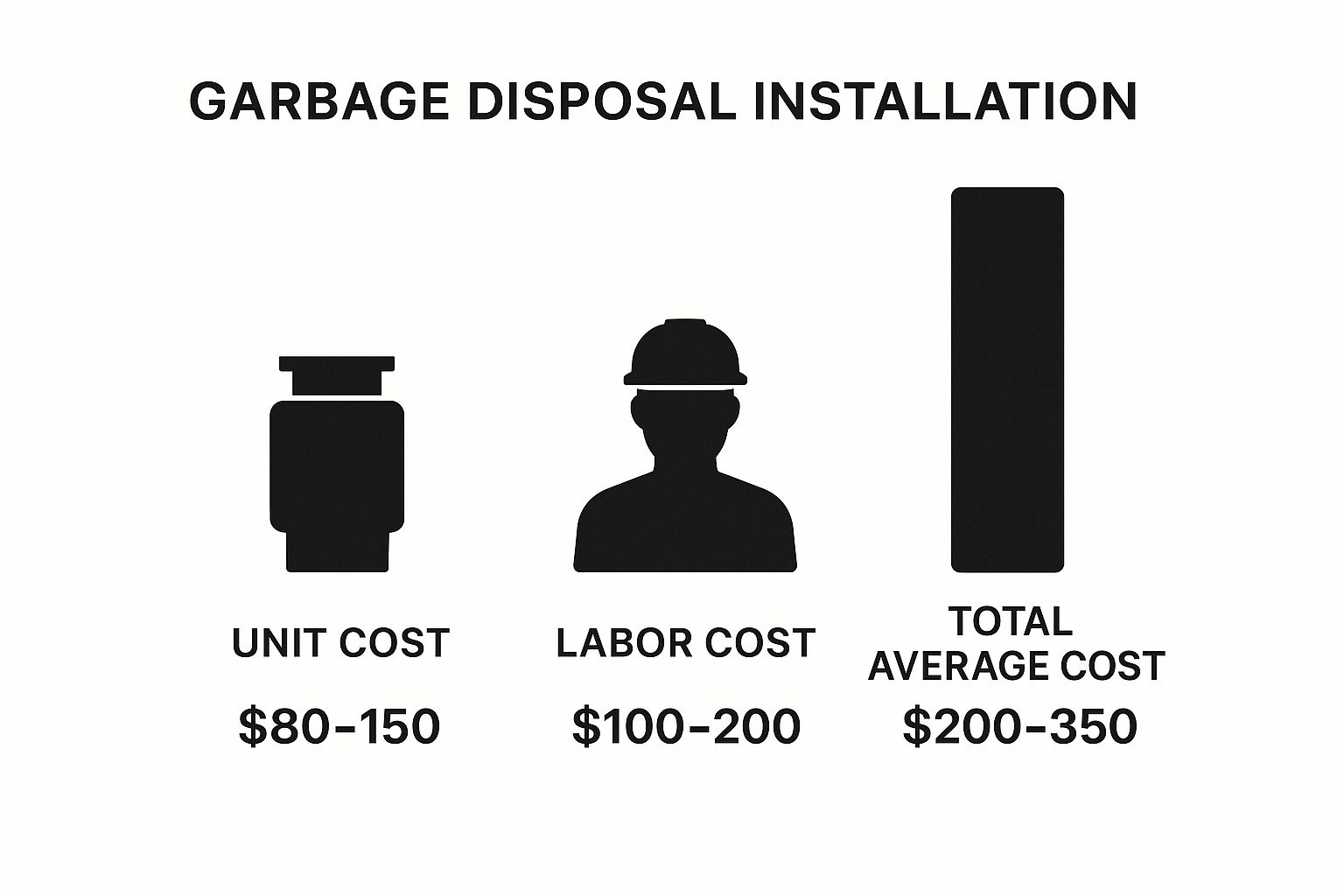
As the infographic shows, installation labor can easily cost as much as the unit itself, especially for standard models. It’s a crucial reminder to always factor that labor cost into your overall budget from the start.
DIY Installation vs. Hiring a Professional
So, you’re ready for a new garbage disposal. The biggest fork in the road you’ll face is deciding whether to tackle the installation yourself or call in a pro. This choice is really the main event when it comes to the average cost of garbage disposal installation, pitting potential savings against guaranteed, expert work.
Going the DIY route looks tempting on paper. You can immediately shave off the $100 to $300 a plumber typically charges for labor. But this path isn’t for the faint of heart. A successful installation demands a good grasp of both plumbing and basic electrical work. If you’ve handled similar projects, like learning how to install a water filter and avoid common leaks, you might feel prepared for the challenge.
The Professional Advantage
Hiring a licensed plumber is about more than just getting the job done; it’s about buying peace of mind. A pro shows up with the right tools, years of hands-on experience, and crucial knowledge of local building codes. They can navigate those frustrating, unexpected hiccups—like pipes that don’t quite line up or quirky old wiring—that would send most homeowners scrambling.
What’s more, their work is almost always guaranteed. If you spot a drip under the sink a week later, a reputable plumber will come back to make it right. That assurance alone is why so many people decide the professional labor cost is money well spent. It’s important to understand why hiring a professional plumber is important, as their value extends far beyond the installation itself.
Consider This: A simple DIY mistake, like an improper seal, can cause a slow, silent leak inside your kitchen cabinets. The resulting water damage and mold remediation can end up costing you far more than you ever would have paid a plumber in the first place. This decision is less about the upfront cost and more about managing long-term risk.
Weighing the Risks
Before you break out the toolbox, have an honest conversation with yourself.
- Do you own and know how to use tools like plumber’s putty, basin wrenches, and wire strippers?
- Are you completely comfortable shutting off power at the breaker and handling electrical connections safely?
- What’s your plan if the new disposal’s plumbing doesn’t line up with your existing drain?
If you can confidently answer yes, a straightforward DIY replacement could be a satisfying, money-saving project. But if you’re installing a disposal where there wasn’t one before, or if you feel even a little hesitant about the plumbing or electrical aspects, hiring a pro is the smarter, safer, and often cheaper choice in the long run.
How to Budget for Your Installation and Avoid Hidden Fees
A solid plan is your best defense against those surprise costs that can quickly inflate what you end up paying for a garbage disposal installation. The key to budgeting effectively is remembering that the final bill is always more than just the sticker price of the unit itself.
Your first move? Get multiple quotes from qualified, licensed plumbers. Don’t just go with the first person who gives you a number. It’s like shopping for a car or any other big purchase—you have to compare offers to get a real feel for what’s fair in your area. If you’re in the Denver metro, our comparative pricing guide on plumbing services can give you some valuable local benchmarks.
Questions to Ask Before You Hire
Once you have a few estimates in hand, it’s time to dig a little deeper. A rock-bottom price can sometimes be a red flag, so it’s smart to vet your potential plumbers.
Before you give anyone the green light, make sure you ask these questions:
- Is this a flat-rate price, or are you charging by the hour? This is crucial. It tells you if you’ll be on the hook for unexpected delays.
- Does your quote include taking out and hauling away my old unit? Some companies tack on an extra fee for this, so it’s best to ask upfront.
- What kind of warranty or guarantee do you offer on the installation itself? A true professional will always stand behind their work.
Asking these direct questions is the best way to uncover potential hidden fees before they show up on the final invoice. A trustworthy plumber will provide a detailed, written estimate that itemizes everything: the unit, labor, parts, and any plumbing or electrical work that might be needed.
Following this process puts you in the driver’s seat. It helps you control the spending and make a smart investment. Frankly, sometimes paying a bit more for a heavy-duty, high-horsepower unit installed by a reputable pro saves you a lot of money and headaches down the road by preventing future repairs and ensuring a perfect, leak-free installation from day one.
Common Questions About Garbage Disposal Installation Costs
As you get closer to starting your project, you’re bound to have some questions about the average cost of garbage disposal installation and other practical details. It’s completely normal. Getting solid answers upfront is the best way to avoid surprises and feel confident about your decision. Let’s dig into a few of the most common questions we hear from homeowners.
How Long Does a Typical Installation Take?
Time is money, especially when you’re paying for labor, so this is a great question to ask. The honest answer is: it depends entirely on the job.
- A simple replacement—just swapping out an old unit for a new one—is pretty straightforward. For a seasoned plumber, this is usually a quick 1 to 2-hour job.
- A brand-new installation in a sink that’s never had a disposal before is a different story. This involves more complex plumbing and new electrical work, which can easily extend the job to 2 to 4 hours.
Key Insight: Think of it like this: replacing an old disposal is like changing a lightbulb. Installing a new one is like wiring up a brand-new light fixture where one never existed before. One is a simple swap, the other requires setting everything up from scratch.
What Are the Signs I Need a New Disposal?
Are you on the fence about whether to repair or replace your unit? Your garbage disposal will usually give you some pretty clear signals when it’s nearing the end of its life.
Look out for these classic signs of failure:
- Frequent Clogs: If your disposal constantly backs up, even with small amounts of food, its grinding power is likely gone.
- Persistent Odors: A nasty smell you can’t get rid of, no matter how much you clean it, often means food is trapped and rotting inside the mechanism itself.
- Strange Noises: Loud humming, rattling, or grinding sounds are a dead giveaway that the motor or internal parts are damaged and failing.
- Water Leaks: A puddle of water under your sink is a serious red flag. It almost always points to cracked housing or worn-out seals that can’t be easily fixed.
Do I Need an Electrician for the Installation?
This is a crucial question because it can significantly affect your budget. If you’re just replacing an existing disposal, your plumber has it covered. They can handle the whole thing.
However, if this is a first-time installation and there’s no dedicated outlet or switch under your sink, you will absolutely need a licensed electrician. They are the only ones qualified to safely run the new wiring required to power your unit.
Ready to get your new garbage disposal installed by a team you can trust? At Professional Plumbers Denver, we have the expertise to handle any installation, from simple swaps to complex new setups, ensuring your project is done right the first time.

Recent Comments