
When your drain clogs, you might think of a simple plumber’s snake or a bottle of chemical cleaner. But what if there was a way to not just poke a hole in the clog, but to make your pipes as clean as the day they were installed?
That’s exactly what hydro jet drain cleaning does. It’s a powerful, modern plumbing solution that uses highly pressurized water to completely scour the inside of your pipes, removing years of buildup and stubborn blockages.
What Is Hydro Jet Drain Cleaning?
Think about the difference between using a small hand auger to break up a blockage and using a pressure washer to blast away every last bit of grime from a dirty sidewalk. That’s a great way to understand the leap from traditional drain snaking to hydro jetting. A snake might clear a path through the gunk, but hydro jetting truly restores the entire pipe from the inside out.
The process involves a specialized, flexible hose fitted with a unique nozzle. This nozzle sprays water in multiple directions at once, at pressures that can reach an incredible 4,000 PSI or even higher. This isn’t just a stream of water; it’s a force that obliterates everything in its path.
It’s powerful enough to cut through:
- Thick, caked-on grease and fat
- Hardened scale and mineral deposits
- Years of accumulated sludge and soap scum
- Tough, invasive tree roots
The result? Your drain isn’t just “unclogged.” The pipe is restored to its full, original diameter, which dramatically improves flow and helps prevent new clogs from forming anytime soon. It’s less of a quick fix and more of a total reset for your plumbing lines.
A Modern and Growing Solution
More and more homeowners and businesses are turning to hydro jetting because of how effective it is. In fact, the global market for these services is on track to hit around USD 2.5 billion by 2033. This growth shows a real shift toward smarter, more sustainable plumbing maintenance that avoids harsh chemicals. If you’re interested in the market trends, you can find more details on this growth at Strategic Revenue Insights.
Hydro jetting doesn’t just solve the immediate problem; it addresses the underlying cause of recurring clogs by eliminating the buildup that blockages cling to. It’s a reset for your entire drain line.
Hydro Jetting vs Traditional Drain Cleaning Methods
So, when would you choose hydro jetting over a standard snake or a chemical cleaner? It really comes down to the nature of the problem and the long-term health of your pipes. Each method has its place, but they are far from equal.
Here’s a quick breakdown to help you see the differences.
| Method | How It Works | Best For | Pipe Safety |
|---|---|---|---|
| Hydro Jetting | High-pressure water scours pipe walls clean. | Severe clogs, grease, roots, preventative cleaning. | Very safe when done by a pro after a camera inspection. |
| Drain Snaking | A rotating auger breaks up or retrieves a clog. | Simple clogs like hair or a single object. | Generally safe, but can scrape older pipes. |
| Chemical Cleaners | Corrosive chemicals dissolve the blockage. | Minor organic clogs in slow drains. | Can damage pipes, septic systems, and is toxic. |
As you can see, while snaking and chemicals might offer a temporary fix for minor issues, hydro jetting provides a comprehensive cleaning that is safer and far more effective for serious or recurring problems.
The Hydro Jetting Process From Start to Finish
Thinking about hydro jetting? It’s far more than just blasting water down a pipe. A professional service is a carefully planned operation, designed to be both incredibly effective and completely safe for your plumbing. It all starts well before the first drop of high-pressure water is ever used.
The absolute first thing a true pro will do is a sewer camera inspection. This isn’t optional; it’s essential. A technician feeds a small, waterproof camera on a flexible cable deep into your pipes. This gives them a live video feed, showing them exactly what kind of clog they’re dealing with—is it years of greasy buildup, stubborn scale, or aggressive tree roots?
More importantly, the camera reveals the health of your pipes. This is the crucial safety check.
A camera inspection is the only way to know for sure if your pipes can handle the force of hydro jetting. It prevents a powerful cleaning solution from turning into a costly pipe-bursting problem, especially with older or weakened plumbing.
Getting the Job Done
Once the technician has reviewed the video footage and confirmed your pipes are in good shape, the real work begins. They’ll insert the hydro jetting hose into a cleanout, which is your system’s main access point.
The magic happens at the specialized nozzle on the end of that hose. It’s engineered to work in two directions at once:
- A forward-facing jet acts like a battering ram, shooting a concentrated stream of water to pulverize the core of the blockage.
- Rear-facing jets spray backward, scouring the inside walls of the pipe and propelling the hose deeper into the line. It’s this backward motion that washes away all the gunk and residue.
The technician will skillfully guide the hose back and forth, making sure the powerful jets hit every square inch of the pipe’s interior. This process doesn’t just poke a hole through the clog; it strips the pipe clean, restoring its original full diameter. Think of it less like snaking a drain and more like pressure washing the inside of your entire sewer line.
Here’s a look at a plumber guiding the high-pressure hose to clear out a stubborn pipe blockage.
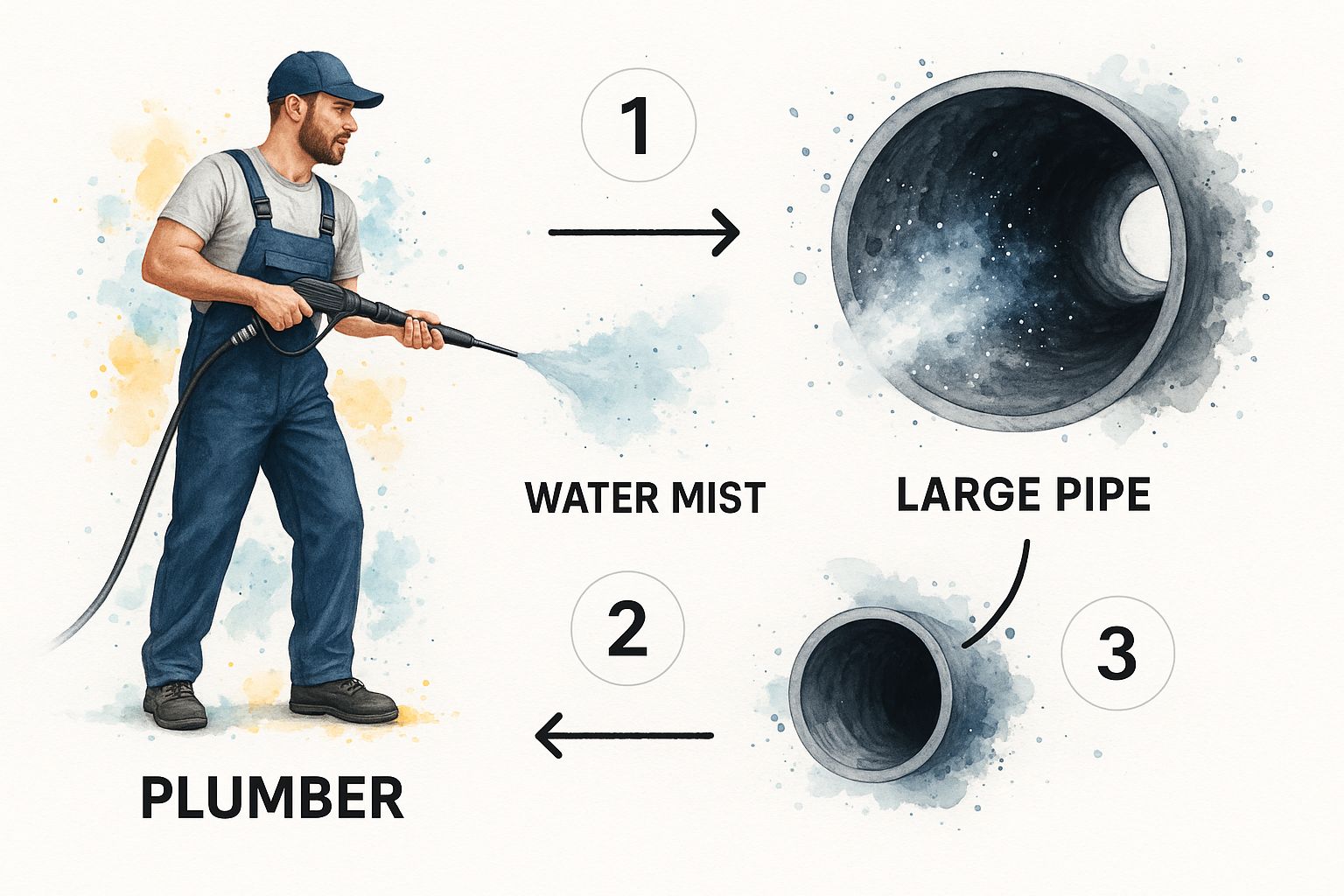
This shows how the focused water jets systematically break down obstructions and scrub the pipe walls clean.
The Proof is in the Pipe
After the jetting is done, a good plumber doesn’t just pack up and leave. They’ll often run the camera through the line one last time. This post-service inspection is your proof that the blockage is 100% gone and the pipe walls are spotless.
You aren’t just left with a drain that works again. You’re left with pipes that are as clean as they can possibly be, which is why hydro jetting provides such a lasting solution, not just a quick, temporary fix.
Why Choose Hydro Jetting for Your Drains?
When you’re dealing with a stubborn clog, it’s tempting to grab whatever promises a quick fix. But hydro jetting is much more than a temporary patch. It’s an investment in the long-term health of your home’s entire plumbing system, designed to tackle the real source of your recurring drain problems.
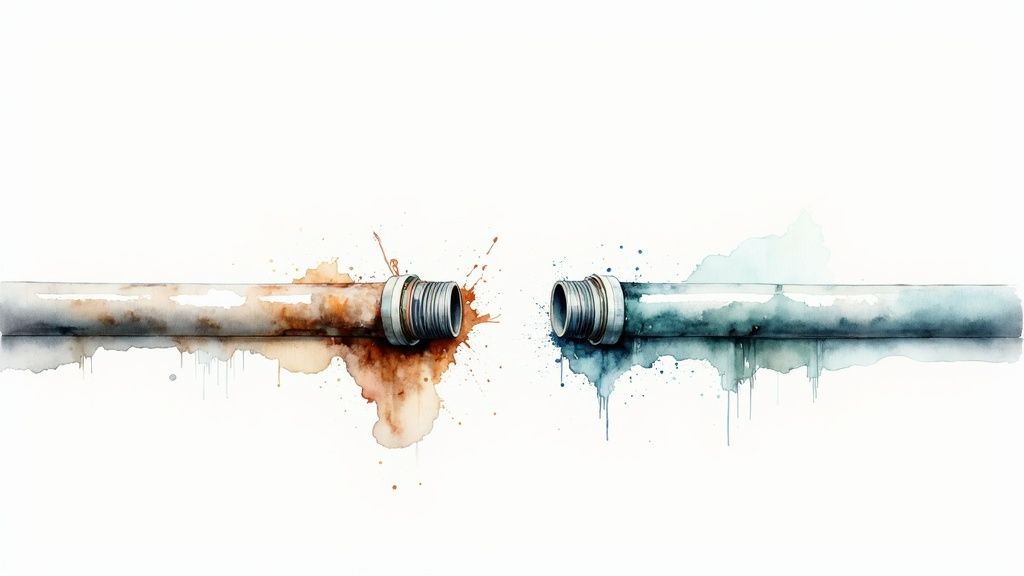
Think of it this way: a traditional drain snake just punches a hole through the blockage. It clears a path, but it leaves behind all the gunk clinging to the pipe walls. Hydro jetting, on the other hand, delivers a truly deep clean. The high-pressure water jets scour the entire inner surface of the pipe, blasting away years of accumulated grease, scale, and sludge.
This process doesn’t just open the drain; it restores the pipe to its original, full diameter. Better flow means future clogs have a much harder time forming, making it a powerful preventative tool, not just a reactive fix. For a deeper dive into this proactive approach, you can explore the many benefits of professional drain cleaning services in Denver right here on our blog.
A Powerful—and Eco-Friendly—Alternative
One of the best things about hydro jetting is that it’s completely safe for the environment. Many people’s first instinct is to pour a bottle of chemical drain cleaner down the sink, but those products are loaded with harsh, corrosive chemicals.
Over time, these chemicals can seriously damage your plumbing, especially if you have older pipes. They literally eat away at the pipe material. Worse yet, they’re toxic to the local ecosystem and can wreak havoc on your septic system if you have one.
Hydro jetting is different. It uses nothing but pure, high-pressure water. It’s an incredibly powerful cleaning method that’s non-corrosive and completely safe for your pipes (as long as a professional performs a camera inspection first) and the environment. You get a far better clean without introducing any harmful substances into your home or the water supply.
Real Long-Term Value
While the initial cost of hydro jetting can be higher than a simple snaking job, it’s almost always the more cost-effective choice in the long run. Why? Because a single, thorough hydro jet drain cleaning can resolve stubborn issues that might otherwise require multiple service calls for temporary fixes. By completely removing the buildup that causes clogs in the first place, you drastically reduce the chance of needing an emergency plumber down the road.
This approach reflects a broader shift in the industry toward more sustainable and effective solutions. The global market for drain cleaning equipment, which includes hydro jetters, was valued at USD 2.42 billion and is expected to keep growing. This trend shows a clear preference for methods that truly maintain and restore our critical plumbing infrastructure.
Ultimately, choosing hydro jetting is about investing in a lasting solution. You’re not just clearing a single clog; you’re restoring your plumbing system’s integrity and preventing future headaches—saving yourself time, money, and a whole lot of frustration.
When Is Hydro Jetting the Right Call?
While hydro jetting is an incredibly effective tool, it’s not always the first thing a plumber reaches for. Think of your plumbing toolkit like a mechanic’s: you wouldn’t use a sledgehammer to tap in a small nail. Knowing when to deploy hydro jet drain cleaning is just as important as knowing how to do it.
This powerful technique is really meant for the tough jobs. It’s the solution we turn to when simpler methods just aren’t cutting it or when we can see the problem is far more serious than a simple clog.
Prime Scenarios for Hydro Jetting
So, when is it time to bring in the big guns? Here are a few tell-tale signs that hydro jetting is probably your best bet:
- Recurring Clogs: Are you constantly calling a plumber or pulling out the snake for the same drain every few months? That’s a classic sign that a temporary fix isn’t clearing the real problem. Hydro jetting scours the pipe walls, removing the sticky buildup that causes clogs to keep coming back.
- Widespread Slow Drains: If the toilet gurgles when the shower is running, or multiple drains are backing up at once, the blockage isn’t in a single fixture. It’s deep in your main sewer line. Hydro jetting is one of the few methods with the power to clear out these massive, system-wide obstructions.
- Severe Grease Buildup: Kitchen drains are notorious for accumulating years of fats, oils, and grease that harden into a stubborn, pipe-choking mass. A drain snake just punches a small hole through the gunk, but a hydro jet will literally blast it apart, washing it all away for good.
- Proactive Pipe Maintenance: If you live in an older Denver home, especially one with original cast iron pipes, hydro jetting can be a fantastic preventative tool. Over the years, scale and rust build up inside these pipes, narrowing the flow. A good cleaning can restore them to near-original capacity and help you avoid future emergencies.
A professional plumber’s goal isn’t just to clear the immediate clog, but to diagnose why it happened. For serious obstructions deep within your plumbing, understanding the common causes of sewer line issues is a critical first step. You can learn more about these problems in our guide to understanding sewer line issues and repairs in Denver.
When to Avoid Hydro Jetting
Knowing when not to use hydro jetting is equally crucial. Its raw power can be too much for pipes that are already in bad shape. That’s why we always perform a camera inspection first.
We would recommend a different approach if the camera reveals:
- Fragile or Brittle Pipes: Old pipes that have become weak or heavily corroded over time might not be able to handle the intense pressure.
- Cracked or Broken Lines: Blasting high-pressure water into an already broken pipe is a recipe for disaster. It could easily turn a simple blockage into a full-blown pipe rupture and a costly excavation project.
This is precisely why that initial camera inspection is non-negotiable. Any true professional will insist on seeing the inside of your pipes before firing up the jetter. It’s the only way to be certain that we’re solving your problem, not creating a much bigger one.
How to Choose a Hydro Jetting Professional
The sheer power that makes hydro jetting a fantastic solution is also what makes your choice of plumber so important. In inexperienced hands, that high-pressure water can do more harm than good, potentially damaging your pipes. Hiring a qualified, experienced, and trustworthy professional isn’t just a good idea—it’s absolutely essential for a safe and successful job.
So, how do you separate the real experts from the rest? It all comes down to asking the right questions. Before you let anyone near your pipes with a hydro jetter, you need to get some clear answers. A true pro will be happy to answer and will have the information ready.
Vetting Your Plumbing Pro
A reputable company will never be cagey about its credentials or how it works. Your first step should be to confirm they are fully licensed and insured to work in Denver. This is your safety net, protecting you from any liability if an accident happens. After that, you can dig into the specifics of the job.
Here’s a simple checklist to guide you when you call:
- Do you perform a camera inspection first? This is non-negotiable. The answer must be a firm “yes.” A plumber who skips this step is gambling with your property.
- What kind of equipment do you use? Ask about the PSI (pounds per square inch) range of their machine. A professional uses equipment that can be carefully adjusted to match your specific pipe material and the type of clog.
- Can you explain your pricing model? Be wary of quotes that seem too good to be true. They often come with hidden fees or signal that the company lacks the right equipment or insurance.
The biggest red flag is a willingness to skip the pre-service camera inspection. That’s like a surgeon agreeing to operate without looking at an X-ray first—a dangerous gamble you don’t want to take with your home’s plumbing.
Choosing the right company is crucial, and you can find more guidance in our article covering 5 tips for choosing the best plumber in Denver for your home. This decision is becoming even more important as more homeowners recognize the need for powerful drain solutions.
The market for drain cleaning equipment hit USD 1.79 billion in 2022 and is expected to grow, which tells you just how vital these services have become. Finally, for plumbing businesses offering these advanced services, managing customer calls and questions is key. Many are finding that a plumbing virtual receptionist can be a huge help in keeping things running smoothly.
Still Have Questions About Hydro Jetting?
It’s completely normal to have a few questions before you bring in the heavy-duty equipment. After all, hydro jetting is a whole different ballgame compared to running a simple drain snake, and you want to be sure it’s the right call. Let’s walk through some of the most common things Denver homeowners ask us, so you can feel confident about your decision.
We want to clear up any confusion you might have. Think of this as the final piece of the puzzle, giving you a complete picture of what hydro jetting involves, whether it’s safe, and why it’s often the smartest long-term fix for stubborn pipes.
Will Hydro Jetting Wreck My Pipes?
This is, without a doubt, the number one question we get—and for good reason. The short answer is no, hydro jetting is perfectly safe for pipes that are in good shape, as long as it’s done by a qualified professional. The secret ingredient to this safety is the pre-service camera inspection. For any plumber worth their salt, this isn’t optional; it’s a mandatory first step.
A seasoned expert will run a camera through your pipes first to check their condition. They’re looking for any signs of weakness—cracks, significant corrosion, or fragile joints—that might not stand up to the pressure. If they spot a problem, they’ll tell you right away and recommend a different approach. The real danger isn’t the tool itself, but using it blindly on pipes that are already compromised.
It’s a bit like a structural engineer checking a building’s foundation before bringing in heavy machinery. The camera inspection does the same job for your pipes, making sure the “ground” is solid before the work begins. It’s all about preventing a small issue from turning into a full-blown catastrophe.
Isn’t Snaking Just as Good?
While snaking and hydro jetting both clear clogs, they aren’t really in the same league. Pushing a drain snake through a blockage is like poking a hole in a dam. It gets things moving, sure, but it leaves most of the gunk stuck to the pipe walls. That’s exactly why snaked drains tend to clog up again so quickly—it’s just a temporary patch.
Hydro jetting is a completely different approach. It’s a total pipe restoration. The high-pressure water scours the entire inside of the pipe, blasting away years of caked-on grease, scale, and sludge. It doesn’t just poke a hole; it cleans the pipe back to its original, full-bore diameter. Snaking is a quick fix; hydro jetting is a long-term solution.
How Often Should I Have This Done?
For most Denver homes, you won’t need hydro jetting as a regular maintenance task. It’s the powerful solution you call on when you have a serious, recurring clog that other methods just can’t beat.
There are some exceptions, of course. A busy restaurant kitchen, for example, might schedule an annual hydro jetting to clear out the extreme grease buildup that could shut them down. For a home with known, persistent issues—like aggressive tree roots invading the sewer line or old cast iron pipes that are prone to scale—a plumber might suggest a preventative hydro jet drain cleaning every 18 to 24 months. This proactive step helps keep the lines flowing freely and prevents a messy emergency down the road.
Ready to find out if hydro jetting can solve your drain headaches for good? The experts at Professional Plumbers Denver have the right tools and years of hands-on experience to diagnose your plumbing problems and get your pipes back to pristine condition, safely and effectively. Schedule your camera inspection and get a quote today!
Recent Comments