
Taking care of your sewer system isn’t just another chore on your weekend to-do list—it’s one of the smartest things you can do to protect your home. Let’s be honest, nobody wants to deal with a sewage backup. Ignoring those hidden pipes can lead to disgusting messes, emergency calls to the plumber at 2 AM, and repair bills that make your eyes water. A little proactive care is really the only way to keep your plumbing flowing freely and protect your biggest investment.
Why Proactive Sewer Maintenance Is a Must
It’s completely understandable to have an ‘out of sight, out of mind’ mentality with your sewer lines. They’re buried underground, doing their job quietly day in and day out… until they’re not. A sudden backup in your basement or a toilet that won’t stop gurgling is more than just a hassle. It’s a genuine biohazard that can turn your life upside down and drain your bank account.
This guide is all about changing that mindset. Instead of waiting for a disaster to strike, you’ll learn how to get ahead of problems with a smart, proactive strategy. When you know what to look for and when to take action, you can stop small issues from turning into catastrophic failures.
The Real Cost of Neglect
Putting off those early warning signs—a drain that’s a little slow, a faint, funky smell—can have some serious financial blowback. An emergency sewer line replacement can easily run into the thousands, which is a whole lot more than the cost of a routine inspection. It’s a massive global issue, with the sewer line repair market projected to balloon to $50 billion by 2025. This is driven by aging city infrastructures and damage from increasingly common extreme weather events. You can read more about these market trends and what’s causing them.
The goal here is simple: shift from reactive panic to proactive prevention. A small investment in regular maintenance pays for itself many times over by protecting your property’s value and your family’s health.
My aim is to give you the knowledge you need to manage your home’s plumbing with confidence. We’ll walk through everything from simple checks you can do yourself to understanding the complex problems that absolutely require a professional.
By the time you’re done, you’ll know how to:
- Set up a simple, routine maintenance schedule.
- Get the right tools for basic upkeep.
- Spot the subtle clues that trouble is brewing.
- Decide when it’s time to pick up the phone and call a pro.
You’ll start to see sewer maintenance not as a burden, but as a fundamental part of being a smart, responsible homeowner.
Your Essential Sewer Maintenance Toolkit and Schedule
When it comes to sewer lines, the old saying “an ounce of prevention is worth a pound of cure” has never been more true. Staying ahead of problems starts with having the right tools on hand and sticking to a consistent schedule. You don’t need a plumber’s van parked in your garage, but a few key items and a proactive mindset can be the difference between a normal Tuesday and a full-blown plumbing nightmare.
This isn’t about turning you into a master plumber overnight. It’s about building smart habits that keep your system flowing freely.
The Gear Every Homeowner Should Have
Before you ever think about reaching for a bottle of harsh chemical drain cleaner (which can do a number on your pipes, especially older ones), make sure your basic toolkit is stocked. These are your first responders for common clogs and slowdowns.
- Heavy-Duty Rubber Gloves: This is non-negotiable. Protect your hands from all the gunk and bacteria lurking in your drains.
- A Quality Plunger: Get a good flange plunger. That’s the one with the extra flap that folds out, which creates a much better seal for clearing toilets.
- Enzymatic Drain Cleaners: Forget the harsh chemicals. These cleaners use natural bacteria to eat away at organic gunk like hair, grease, and soap scum without corroding your pipes.
- A Small Hand Auger (or “Snake”): For those stubborn clogs in a sink or shower drain that a plunger just can’t handle, a simple hand-crank snake can often be the hero, pulling the blockage right out.
Of course, when you’re dealing with a serious mainline blockage, that’s when the pros and their big toys come in. Tools like hydro-jetters—which blast pipes clean with high-pressure water—and heavy-duty mechanical augers are powerful and effective, but they can also cause serious damage in untrained hands. Leave those to the licensed experts.
This is the typical workflow a pro follows—they don’t just start blasting away. They diagnose first.
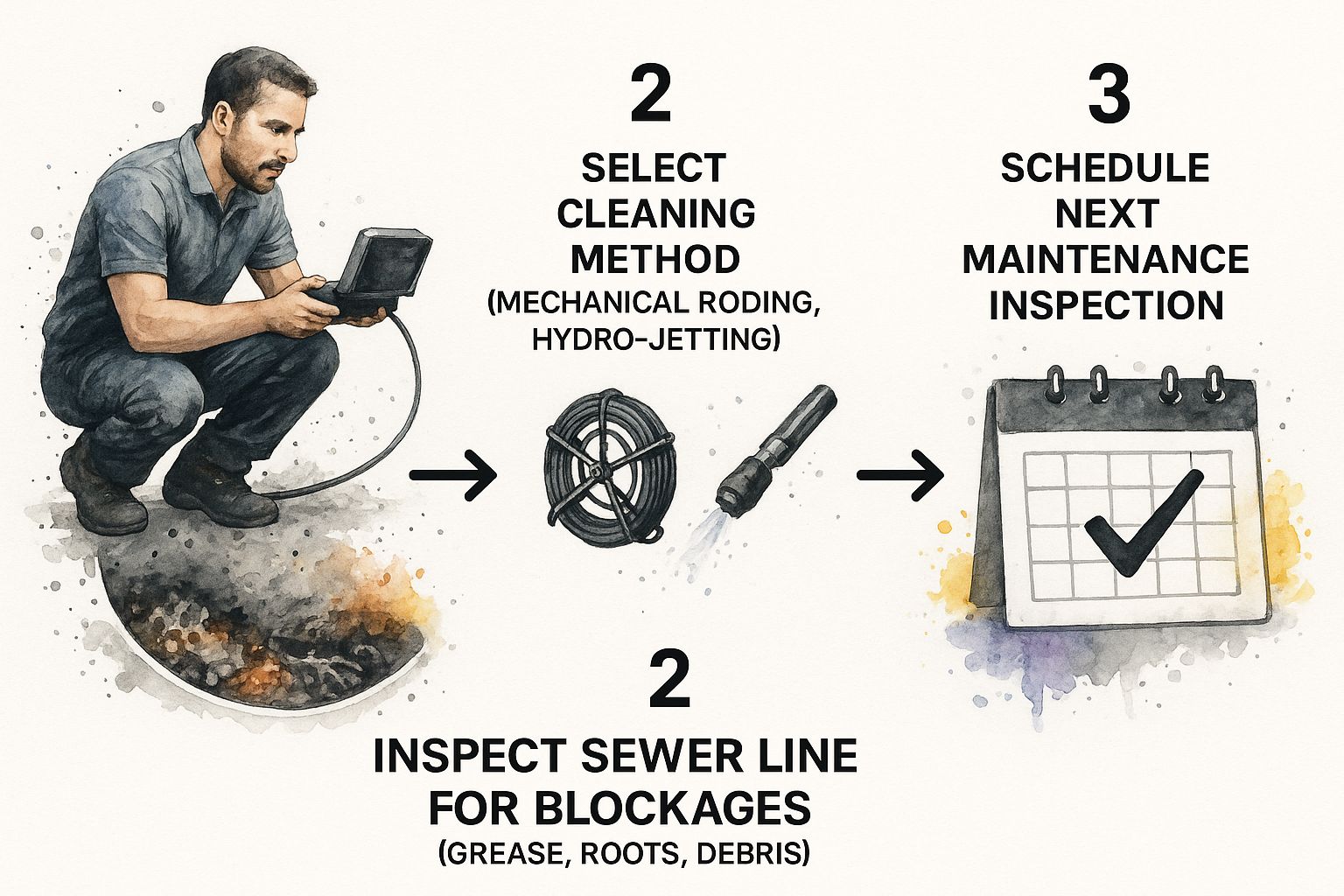
As you can see, figuring out what the problem is and where it is comes first. This ensures the right tool is used for the job, saving time, money, and potential damage.
Sticking to a Proactive Maintenance Schedule
Consistency is your single most powerful weapon against sewer problems. A regular maintenance calendar turns sewer care from a reactive, emergency-based headache into a simple, manageable routine. This approach helps you spot small issues long before they have a chance to become catastrophic failures.
A well-maintained sewer system isn’t an accident. It’s the result of a deliberate, planned approach that prioritizes prevention over emergency fixes. This simple shift in mindset can save homeowners thousands of dollars over the life of their property.
To make it easy, I’ve broken down a practical, tiered schedule. Think of it as layers of protection for your home’s plumbing.
Proactive Sewer Maintenance Schedule
Here’s a simple calendar you can follow to keep your sewer lines in top shape and catch potential issues early.
| Frequency | Task | Objective | DIY or Pro? |
|---|---|---|---|
| Monthly | Flush drains with hot water. Don’t pour grease or coffee grounds down any sink. | Prevents the slow, steady buildup of grease and small debris that eventually causes clogs. | DIY |
| Quarterly | Check all drains for slow performance. Treat showers and kitchen sinks with an enzymatic cleaner. | Clears out minor organic buildup (hair, soap, food particles) before it can form a full blockage. | DIY |
| Annually | Schedule a professional video camera inspection, especially if your home is over 20 years old. | Lets you see the inside of your pipes to find hidden cracks, tree root intrusion, or major buildup. | Professional |
| Every 2 Years | Consider professional hydro-jetting if you have large trees or recurring slow drains. | A deep clean that scours the entire pipe, removing stubborn blockages and slicing through roots. | Professional |
Following this layered approach gives you multiple opportunities to keep things flowing smoothly. A monthly hot water flush is an easy habit to build, while the annual pro inspection gives you invaluable peace of mind, confirming the long-term health and integrity of your home’s most critical plumbing line.
Reading the Telltale Signs of Sewer Trouble
Your home has its own way of telling you when something’s wrong with the plumbing, but it doesn’t exactly shout. It whispers. Learning to pick up on these subtle clues is the key to catching sewer problems before they become catastrophic. Think of it like the check engine light in your car—ignoring it just leads to a bigger, more expensive headache down the road.
These issues rarely appear overnight. It usually starts small. Maybe a single bathroom drain takes a little longer to clear than it used to, or you hear a weird gurgling sound from the toilet after a flush. It’s tempting to write these off as minor quirks, but they’re often the first signs of a blockage forming deep inside your main sewer line.
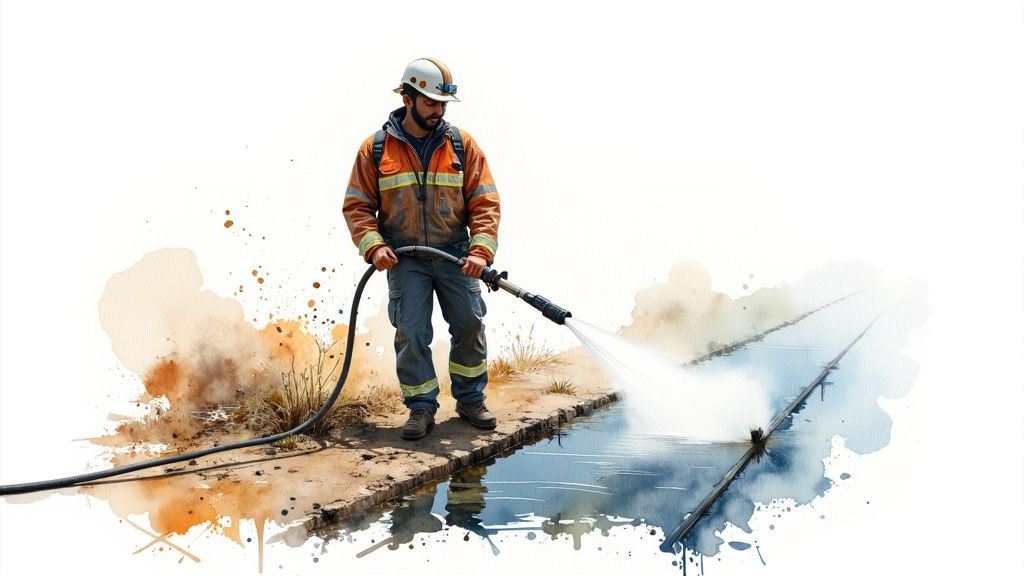
This is the kind of view a professional gets during a sewer camera inspection. This tech takes all the guesswork out of the equation, giving a clear, live feed of your sewer line’s condition to pinpoint the exact location and nature of any problems.
When Your Plumbing Starts Talking, Listen Up
If your plumbing starts acting strange, pay attention. These aren’t random events; they are symptoms pointing to a deeper issue that needs to be addressed.
Here are the most common red flags I see in the field:
- Multiple Drains Running Slow: If the kitchen sink, the shower, and a toilet are all draining sluggishly at the same time, you can bet the problem isn’t a simple clog in one fixture. This is a classic symptom of a blockage in your main sewer line.
- Funky, Persistent Odors: A constant sewage smell hanging around inside or outside your house is a major warning. It means sewer gas is escaping the system. Sometimes it’s just a dry P-trap under a rarely used sink, but if you rule that out, it could mean a crack or break in the line itself.
- Gurgling Noises: Ever flush a toilet and hear the shower drain gurgle in response? That’s not a good sign. It happens when air gets trapped by a partial blockage and is forced back up through the system.
- That One Really Green Patch of Grass: If a spot in your yard is suddenly looking way more lush and vibrant than everywhere else, it might be getting some “free fertilizer” from a leaking sewer pipe buried underneath.
What Really Happens During a Professional Inspection
When you suspect a mainline issue, the single most important tool a plumber can use is a sewer scope camera. This isn’t just a cool gadget; it’s a diagnostic game-changer that gives us a real look at your pipes from the inside.
The process is pretty simple. We feed a long, flexible fiber-optic cable with a high-res camera at the end into your sewer line, usually through an access point called a cleanout. As the camera snakes through the pipe, it sends a live video to a monitor, so you can see exactly what we’re seeing in real-time.
A professional video inspection is the single most effective step in sewer maintenance. It replaces speculation with certainty, ensuring that any recommended repair is based on direct visual evidence of the problem.
During the scope, we’re on the hunt for a few common culprits:
- Tree Root Intrusion: Roots are moisture-seekers, and they can worm their way into tiny cracks in pipe joints. Once inside, they grow into a thick, tangled mass that snags waste and creates nasty backups.
- Pipe Bellies (Sagging): Over time, shifting soil can cause a section of the pipe to sink, creating a “belly” or low spot where water and debris pool, leading to recurring clogs.
- Cracks and Breaks: Older pipes, particularly clay or cast iron, can become brittle and eventually crack or collapse, causing major leaks and backups.
- Grease and Scale Buildup: Decades of grease, soap scum, and mineral deposits can harden on the inside of pipes, narrowing the passage and severely restricting flow.
Knowing what’s actually wrong is empowering. The North American sewer repair market is growing fast, from $1.33 billion in 2021 to a projected $1.75 billion by 2025. You can explore more data on this growing industry and its importance. Having this visual proof transforms the conversation with your plumber from a confusing, technical chat into an informed decision you can feel confident about.
How to Handle Common Sewer Line Problems
Even if you’re a pro at regular maintenance, your sewer line can still throw you a curveball. The good news is that most issues fall into a few predictable categories, from grease buildup to those dreaded tree roots. Knowing what you’re up against gives you a huge advantage, helping you react quickly and correctly.
The real trick is understanding what you can fix yourself and when it’s time to back away and call a plumber. A simple clog from last night’s dinner scraps is one thing. A pipe that’s been completely taken over by the roots of a 50-year-old oak tree? That’s a whole different beast.
Tackling Grease and Organic Buildup
In my experience, grease is the number one enemy of a healthy residential sewer line. You pour hot oil or fat down the drain, and somewhere down the line, it cools off, gets hard, and sticks to the inside of your pipes. It’s like plumbing cholesterol, creating a sticky trap that catches every bit of debris that follows.
For minor clogs made of hair, soap scum, or food bits, reach for an enzymatic drain cleaner. Skip the harsh chemical stuff—those can actually eat away at your pipes over time. Enzymatic cleaners use natural bacteria to digest the organic gunk, which is a much gentler, albeit slower, solution.
If that doesn’t do the trick, it’s time to get physical. A simple hand auger (often called a “snake”) can often break up or pull out the blockage causing your sink or shower to back up.
Never underestimate the cumulative impact of small habits. What goes down the drain day after day directly affects the health of your sewer line. The best maintenance of sewer systems starts with mindful daily use.
The Challenge of Invasive Tree Roots
Tree roots are nature’s plumbing locators. They’re instinctively drawn to the moisture and nutrients hanging out in your sewer line, and they can wiggle their way into the tiniest cracks. Once inside, they grow into a dense, tangled mess that not only blocks flow but can physically break the pipe apart. If you live in an older home, chances are you have clay or cast iron pipes, which are prime targets.
Let me be clear: this is not a DIY fix. Trying to clear a serious root problem yourself can easily make it much, much worse. Pros have the right tools for the job:
- Mechanical Augering: Think of a super-powered snake with a specialized cutting head designed to chew through roots and clear a temporary path.
- Hydro-Jetting: This is the deep-clean option. A hose blasts high-pressure water through the pipe, scouring the interior walls and obliterating any roots or buildup.
- Trenchless Pipe Lining: When roots are a recurring nightmare or the pipe is already damaged, this is the modern solution. We insert a flexible, epoxy-resin sleeve into the old pipe, which then hardens to create a brand-new, seamless pipe inside the old one. Roots can’t get through it.
Figuring out which approach is best almost always requires a camera inspection to see exactly what’s happening down there. You can learn more about the difficult choice of whether to repair or replace your sewer line in our detailed guide.
Dealing with Pipe Corrosion and Aging
Older homes come with charm, but they also come with older pipes. Sewer lines made of cast iron or clay eventually break down from corrosion, cracks, and general old age. Cast iron pipes, for example, can develop rough, scaly rust on the inside that snags toilet paper and waste, leading to one frustrating clog after another.
This kind of structural failure is always a job for a professional. A video inspection is the only way to know the true condition of the pipe. Depending on what we find, the fix could be anything from descaling the pipe to a full-blown replacement.
It’s a massive undertaking. The American Society of Civil Engineers estimated that over $105 billion would be needed by 2025 just to upgrade sewer systems across the U.S. That huge number really puts into perspective why staying on top of your home’s maintenance is so critical.
Knowing When to Call a Professional Plumber
While staying on top of your sewer line maintenance can head off a lot of trouble, some problems are just too big for a DIY approach. Honestly, one of the most important skills a homeowner can develop is knowing when to put down the wrench and pick up the phone. It’s what keeps a manageable issue from snowballing into an expensive, destructive nightmare.
There are certain red flags that just scream “call a pro now.” If you run into any of these, don’t hesitate.
Immediate Red Flags for an Emergency Call
When you see any of the following, it’s time to stop troubleshooting and get help. These aren’t just minor annoyances; they’re clear signs of a serious problem in your main sewer line that could threaten your health and cause major property damage.
- Sewage Backing Up: This is the big one. If raw sewage is coming back up through your drains, especially in low points like a basement shower or floor drain, it’s a critical emergency.
- Multiple Fixtures Clogged: A single slow drain is one thing. But when toilets, showers, and sinks all start backing up at the same time, the blockage is almost definitely in the main line, not a small branch pipe.
- Persistent Sewer Gas Odors: A strong, foul sewage smell that you can’t pin down to a specific drain often means you have a crack or break somewhere in your sewer line. That’s a serious health hazard.
A slow drain is a warning; a sewage backup is a crisis. The key is recognizing when the problem has gone beyond a simple clog and points to a system-wide failure in your main sewer line. Acting fast can save you thousands in cleanup and restoration costs.
How to Find and Vet the Right Plumber
When you’re facing a potential sewer disaster, you need help fast. But making a rushed, panicked decision can land you with the wrong person for the job. Before you hire anyone, take a deep breath and ask a few smart questions.
For those in managed properties, clear communication is just as vital. It’s interesting to see how efficient property management answering services for handling maintenance requests can ensure these urgent calls get through immediately.
Before you agree to any work, make sure the plumbing company can answer these questions:
- Are you licensed and insured here in Denver? This is non-negotiable. It protects you from liability if something goes wrong.
- Will you perform a camera inspection first? A true professional will always use a sewer scope to diagnose the exact problem before recommending a fix. Be wary of anyone who wants to start digging without visual proof.
- Can you show me the problem and explain my options? A good plumber will walk you through the camera footage and clearly explain whether you need a simple cleaning, a spot repair, or a full replacement.
Choosing the right expert is absolutely essential for a major job. To get a better feel for what’s involved in a bigger project, check out our detailed guide on the https://professional-plumbers-denver.com/blogs/main-sewer-line-replacement/ process.
Answering Your Sewer Line Maintenance Questions
Even with a solid maintenance plan, it’s completely normal to have a few questions. Your sewer line is one of those out-of-sight, out-of-mind parts of your home, so a little uncertainty is expected. We’ve pulled together some of the most common questions we hear from homeowners to give you clear, straight-to-the-point answers.
Think of this as a quick reference to clear up any confusion and help you feel more confident about keeping your plumbing in top shape.
How Often Should I Get a Professional Inspection?
For the average home, getting a professional video camera inspection every 1 to 2 years is a smart move. It’s a fantastic preventative measure.
That said, you should definitely bump that up to an annual inspection if you’re dealing with any of these situations:
- Older Pipes: If your house was built before the 1980s, you likely have old cast iron or clay pipes. These materials are much more prone to cracking and letting tree roots in.
- Large Trees: Got beautiful, mature trees on your property? Their root systems are powerful and are constantly searching for water, making your sewer line a prime target.
- Recurring Issues: If you find yourself fighting slow drains or clogs more than once a year, it’s time for a yearly check-up. That’s a clear sign something bigger is going on.
This is single-handedly the best way to catch a serious problem like a growing root blockage or a hidden crack before it turns into a messy, expensive backup in your basement.
Are Chemical Drain Cleaners Really That Bad for My Pipes?
In a word, yes. We strongly advise homeowners to stay away from them.
I get it—pouring a bottle of harsh chemicals down a slow drain feels like a quick and easy fix. The reality is, you’re often creating a much bigger problem down the road. Those corrosive chemicals can eat away at the inside of your pipes, especially older metal ones, leading to weak spots and eventual leaks.
On top of that, they’re usually no match for the serious blockages found in a main sewer line, like dense tree roots or years of accumulated grease. For a minor clog, a much safer bet is an enzymatic cleaner. It uses natural bacteria to break down organic gunk without harming your plumbing.
Regular maintenance isn’t just about avoiding disaster; it’s about extending the life of your plumbing. Simple, smart habits are far more effective—and safer for your pipes—than relying on harsh chemical shortcuts when problems arise.
What Does a Sewer Line Replacement Typically Cost?
This is the big question on every homeowner’s mind, and unfortunately, there’s no single answer. The cost varies dramatically depending on the length and depth of the pipe, how easy it is to access, and the replacement method used.
A full replacement is a major investment, no doubt about it. To get a better handle on what to expect, check out our detailed guide on the average cost of sewer line replacement. Having that information can help you budget and understand all the factors involved if you’re ever faced with that decision.
When you need an expert diagnosis or a reliable repair, Professional Plumber Denver is ready to help 24/7. Contact us for a professional camera inspection or any of your plumbing needs at https://professional-plumbers-denver.com.

Recent Comments