
Is that a faint, musty smell you’ve noticed in the basement? Did your last Denver Water bill seem surprisingly high? It’s easy to dismiss these things, but they’re often the first whispers of a hidden plumbing leak—a sneaky problem that can wreak havoc long before you ever see a puddle. Getting ahead of it with some proactive leak detection is your best line of defense.
Spotting the Subtle Signs of a Hidden Water Leak
Most leaks don’t announce themselves with a dramatic geyser. They’re far more subtle, starting small and giving off quiet clues. If you can learn to tune into what your house is telling you, you can save yourself a mountain of cash and headaches down the road.
One of the classic tell-tale signs is the sound of running water when everything is turned off. You might only hear it in the dead of night when the house is still. That phantom sound is a major hint that water is moving somewhere it shouldn’t be, likely inside a wall or under your foundation.
Pay Attention to Physical Clues
Your eyes and nose are some of the best leak detectors you have. Keep a lookout for any unusual changes around your home, as these physical signs are often undeniable proof of a leak.
- A sudden musty smell: If you smell mold or mildew in a typically dry area like a closet or hallway, it’s a big red flag. That’s the scent of trapped moisture.
- Warped or stained surfaces: Look for bubbling paint, peeling wallpaper, or dark stains on ceilings. If your floorboards feel soft or spongy underfoot, that points to water saturation from below.
- Warm spots on the floor: This one is specific to homes with slab foundations. A mysteriously warm patch on your concrete or tile floor can indicate a hot water line is leaking beneath the surface.
- New foundation cracks: An underground leak can saturate and shift the soil around your foundation, leading to new cracks in the concrete or your drywall.
These clues aren’t just cosmetic. Understanding how to prevent mold growth is critical, since it can start developing in just 24 to 48 hours once a surface gets wet.
Denver’s Climate and Your Plumbing
Living here in Denver adds another layer of complexity. Our plumbing systems go through a lot with the constant freeze-thaw cycles. This temperature whiplash puts a tremendous amount of stress on pipes and their joints, making them more likely to develop leaks over time, especially in older homes.
Those temperature shifts are a big reason why pipes fail. Getting a better handle on what causes pipes to burst can give you some valuable insight into protecting your own plumbing.
The big takeaway here is to simply be vigilant. A tiny, slow drip might not seem like a big deal, but it can waste over 3,000 gallons of water a year and create the perfect breeding ground for mold and rot. Your attention is the most powerful tool you have.
Using Your Water Meter for a Definitive Leak Check
While strange sounds and musty smells are great starting points, your water meter is the ultimate truth-teller. It’s the one tool every homeowner has that gives a definitive yes-or-no answer about a hidden leak. It doesn’t guess; it just measures. Learning to read it is surprisingly simple and provides the hard evidence you need.
You’ll usually find your water meter in a box at the curb, sometimes with a lid stamped “Water.” Pop it open carefully—you never know what critters might be hiding in there! Inside, you’ll see a display that looks a bit like a car’s odometer, tracking your total usage, along with a large sweep hand.
But here’s the pro tip: look for a tiny dial, often shaped like a triangle or a star. That’s the low-flow indicator. This little guy is incredibly sensitive and will spin with even the slightest water movement, making it your best friend for catching those slow, sneaky drips that can cause so much damage over time.
The Two-Hour Meter Test
Ready to get to the bottom of this? Let’s run a simple test that will confirm if water is escaping somewhere on your property.
- Go on a Water Fast: The first step is to make sure absolutely no water is being used. That means turning off every single faucet and spigot, and ensuring the dishwasher, washing machine, and sprinklers are all off. Listen to make sure no toilets are still filling up from a recent flush.
- Check the Indicator: Head back out to the meter and stare at that little low-flow indicator. Is it moving? Even a tiny, slow spin means you have a leak. Boom. You’ve got your answer right there.
- The Waiting Game: If the indicator is perfectly still, your work isn’t done yet. Pull out your phone and snap a quick, clear picture of the meter face. You want to capture the exact position of all the dials and the numbers on the odometer. Now, for the hard part: make sure no one uses any water for at least two hours.
- The Moment of Truth: After the two hours are up, go back and compare the meter to the photo you took. If the sweep hand has budged or the numbers on the odometer have ticked up even slightly, you have a leak somewhere.
This little test removes all the guesswork. These are some of the classic signs that should make you want to go check that meter right away.
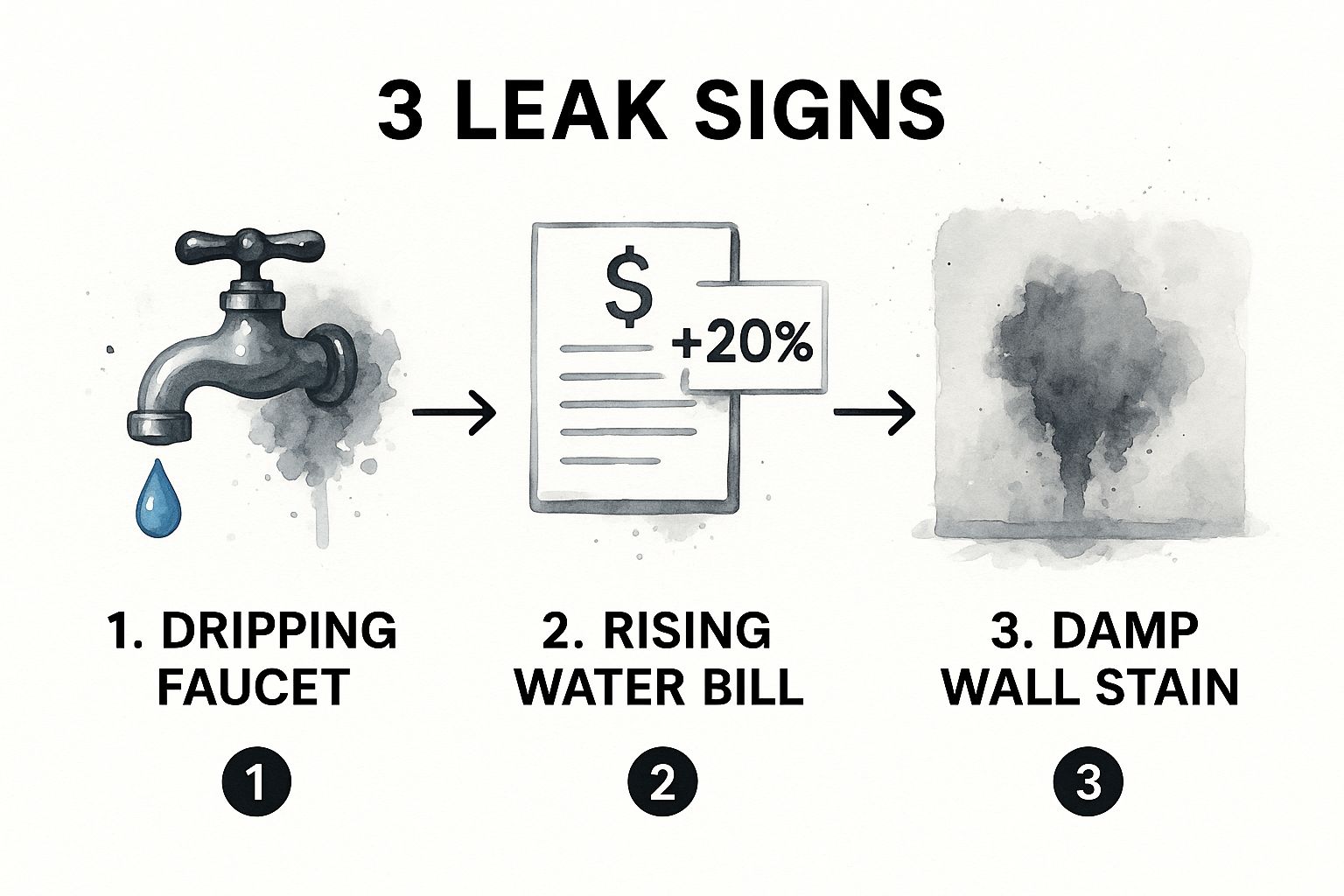
As you can see, when your bill starts creeping up by 20% or more and you’re noticing other signs like damp spots, the meter test is your next logical step.
A positive meter test is your call to action. It’s no longer a question of if you have a leak, but where it is. The test confirms water is being wasted, and it’s time to find the source.
If your meter test comes back positive but you can’t find any visible leaks inside, the problem might be in the main water line running underground between the meter and your house. These are tough to find on your own and often require specialized tools. In those cases, it’s helpful to understand the professional techniques used for slab leak detection, as that’s a job best left to the experts.
A Room-by-Room Guide to Finding Common Leaks
Alright, so the water meter test points to a leak. Now it’s time to put on your detective hat and start the search inside your home. The best way to approach this is with a systematic sweep of the usual suspects. Grab a good flashlight—the one on your phone is fine, but a dedicated one is better—and a few paper towels for checking damp spots.
This isn’t about breaking out the sledgehammer just yet. It’s a game of observation. By moving methodically through the most common trouble spots, you can often find the source of a simple leak on your own, which can save you a lot of stress and money.
Start in the Kitchen and Bathrooms
These rooms are ground zero for your home’s plumbing. They’re jam-packed with fixtures, supply lines, and drains, making them a hotspot for slow drips and failing connections that can fester for months before you notice the damage.
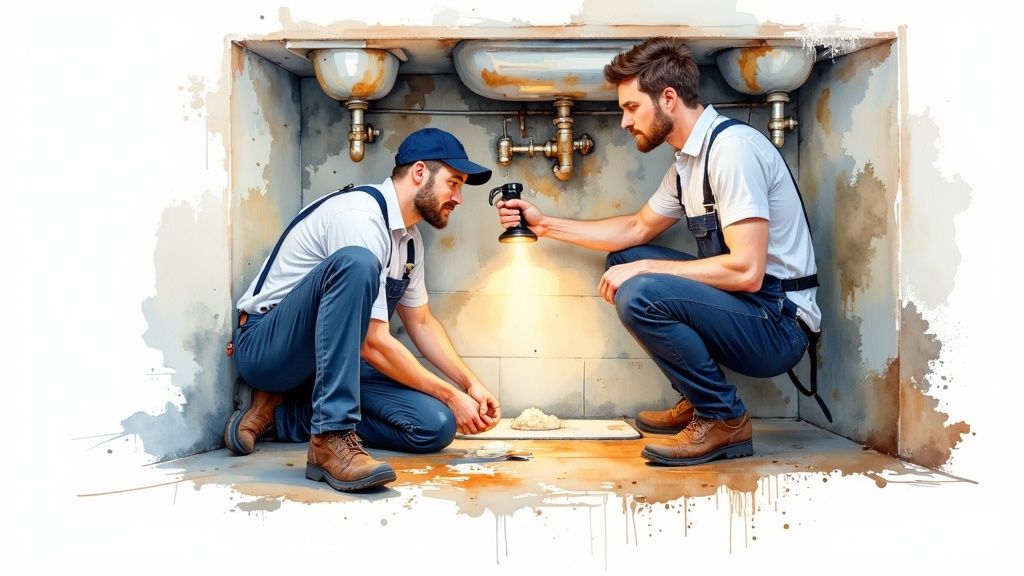
Begin your search under the kitchen sink. Get your flashlight in there and look closely at every connection. Check the P-trap (that U-shaped pipe) for any signs of dripping and run a dry paper towel along the bottom of it. Pay special attention to the supply lines feeding your faucet and dishwasher. A little corrosion or some chalky white buildup on a fitting is a dead giveaway of a slow, long-term leak.
From there, head to the bathrooms and give them the same treatment, focusing on these specific areas:
- Toilets: Look for any water pooling around the base. Even a little bit of moisture here could mean the wax ring has failed. Also, take a close look at the small supply line connecting the wall to the tank; these connections are notorious for developing tiny, persistent drips.
- Sinks: Just like in the kitchen, get under the bathroom vanity. Check the P-trap and all the supply line connections. Is the inside of the cabinet damp? Do you see any dark water stains on the wood?
- Showers and Tubs: Examine the caulk lines where the tub or shower meets the wall and floor. If the caulk is cracked, peeling, or missing altogether, water is definitely getting behind your wall. Gently press on the tiles around the fixtures—any that feel loose or have discolored grout are big red flags.
A bit of pro advice: Trust your gut and your senses. That faint dripping sound you only hear late at night when the house is silent? That’s a huge clue. So is that musty, mildewy smell that hits you when you open a cabinet—that’s the classic scent of trapped moisture from a hidden leak.
To help you on your search, I’ve put together a quick-reference table. It covers the most common places leaks hide and what to look and listen for.
Common Leak Hotspots and Their Telltale Signs
| Location | Visual Signs | Auditory Clues |
|---|---|---|
| Under Sinks | Water stains, mold/mildew, warped cabinet floors, corrosion on pipes. | A faint but steady drip…drip…drip. |
| Toilets | Puddles at the base, “phantom flushing,” constant running water sound. | A hissing sound from the tank or a gurgling noise after a flush. |
| Showers/Tubs | Loose tiles, cracked grout, peeling paint on adjacent walls, soft spots on floor. | Dripping from the faucet or showerhead when turned off. |
| Water Heater | Puddles on the floor, rust streaks on the tank, corrosion at fittings. | A sizzling or hissing sound, indicating water hitting the burner. |
| Washing Machine | Damp spots behind or under the unit, bulging or cracked hoses. | A dripping sound from the supply valves, even when not in use. |
Think of this table as your field guide for leak hunting. A quick scan can help you zero in on a problem area much faster.
Check Laundry Rooms and Basements
Your washing machine is another heavy hitter when it comes to leaks. The supply hoses are under constant, high pressure and can get brittle with age. Feel along the entire length of both the hot and cold water hoses. If you find any dampness or, worse, a noticeable bulge, that hose is a blowout waiting to happen.
Down in the basement or utility room, give your water heater a thorough inspection. Look for puddles on the floor around the base and any signs of dripping from the temperature and pressure relief valve. It’s really easy to write off a small, slow leak here as just a bit of condensation, so look closely.
It’s not just homeowners who are more aware of these issues. The global plumbing leak detection market was valued at around $2.5 billion in 2023 and is on track to more than double. This growth is all about a bigger focus on water conservation and avoiding expensive property damage. You can read more about these industry trends and their impact on homeowners to see how technology is evolving.
Mastering the Toilet Dye Test: Your Secret Weapon Against Hidden Leaks
After you’ve done a once-over with the water meter and poked around the house, it’s time to zero in on the number one cause of surprise-high water bills: the toilet. The “silent leak” is infamous for a reason. It doesn’t make a sound, it doesn’t leave a puddle, but it can drain hundreds of gallons of water—and money—right down the sewer.
Thankfully, there’s an incredibly simple and effective trick for this exact problem, a classic in the world of plumbing leak detection that anyone can do in minutes.
How to Run the Test Like a Pro
The toilet dye test has been around forever because it just works. All you need is a little dark-colored food coloring or one of those dye tablets made for the job. This is all about seeing if water is sneaking from the tank into the bowl when it’s supposed to be sealed off.
First things first, take the lid off the toilet tank and set it somewhere safe. Now, squeeze about 10-15 drops of food coloring into the tank water. You want the water in the tank to be deeply colored. The key is to put the dye in the tank, not the bowl.
Here’s the most important part: walk away. Don’t flush it. Give it about 15 minutes to sit. This gives that colored water plenty of time to work its way past a bad seal if there’s a leak.
When you come back, take a look inside the toilet bowl. Is the water still clear? Great, you’re in the clear. But if you see even a hint of color in the bowl, bingo. You’ve found a leak.
Nine times out of ten, the problem is a worn-out flapper. That’s the rubber plug at the bottom of the tank. Over the years, these things get old, they crack, or they get gunked up with mineral deposits from our Denver water, and they just don’t seal tight anymore.
Why This Little Test Packs Such a Punch
It’s easy to shrug off a running toilet as a minor annoyance, but the waste is shocking. A single leaky toilet can waste up to 200 gallons of water a day. That’s 6,000 gallons a month—a massive hit to your water bill and a serious strain on our local resources.
Let’s break that down:
- Your Wallet: All that wasted water shows up as real money on your Denver Water bill. We’re talking an extra $50, $100, or even more tacked onto your monthly costs, all for water you never even used.
- Our Community: Living in a semi-arid place like Denver means water conservation is everyone’s job. Fixing one toilet leak is probably the single easiest and most impactful thing a homeowner can do to help out.
The good news is that replacing a toilet flapper is one of the cheapest and easiest DIY jobs out there. A quick trip to the hardware store and about 15 minutes of your time is all it takes. Making the dye test a twice-a-year habit is one of the smartest things you can do for your home. It’s a five-minute check that could literally save you hundreds of dollars.
Knowing When to Call a Denver Plumbing Pro
There’s a ton of satisfaction in tracking down and fixing a small leak yourself. But knowing your limits is what separates a savvy homeowner from someone facing a disaster. Pushing your luck with a serious plumbing problem can turn a simple fix into a catastrophic, wallet-draining mess.
Knowing the signs that scream “call a professional” is a critical skill.
The most common scenario? Your water meter test proves you have a leak, but a thorough search of your home turns up absolutely nothing. This is the classic signature of a hidden leak. It could be anywhere—lurking behind a wall, seeping under your floorboards, or even worse, running beneath your concrete slab foundation. These aren’t the kind of leaks you find with a flashlight; they require specialized gear to locate without tearing your house apart.
Red Flags That Demand a Professional
Some situations are just too complex or risky for a DIY approach. If you spot any of the following, your next move should be to grab the phone and call a licensed Denver plumber.
- A Sudden Drop in Water Pressure: When the flow from your faucets and showers suddenly weakens all over the house, it could point to a serious breach in your main water line.
- Significant Water Damage: Large, growing stains on the ceiling, warped floors, or sagging drywall mean the leak has been going on for a while. A pro is needed not just to find the source but also to assess the structural damage.
- You Can’t Find the Shut-Off Valve: In a water emergency, you have to be able to kill the flow fast. If you can’t find or operate your main shut-off valve, you need a professional on-site, immediately.
- Signs of a Slab Leak: Do you hear the sound of running water under your feet? Or feel a weirdly warm spot on the floor? These, along with new cracks in your foundation, are urgent signs of a slab leak that needs immediate, expert attention.
When a leak’s location is a mystery, professionals bring out the heavy-duty technology. They use tools like acoustic sensors to listen for the specific sound of water escaping a pressurized pipe and infrared cameras to spot temperature changes caused by hidden moisture. This is non-invasive plumbing leak detection, and it’s what saves your home from being ripped apart just to find the source.
The Value of Professional Expertise
Hiring a professional plumber is about more than just their fancy tools; it’s about paying for experience. A seasoned plumber has dealt with hundreds of different leak scenarios and can diagnose a problem with an accuracy you simply can’t get on your own.
They understand the unique challenges of Denver’s homes and how our climate impacts plumbing systems. For a deeper dive into local issues, take a look at our guide on essential winter plumbing tips to better protect your property.
Plumbing leak detection is a field that’s constantly advancing, driven by smart home tech and a greater focus on conserving water. In North America, big names like Mr. Rooter and American Leak Detection are always innovating. You can dig into the trends by checking out the market analysis for plumbing leak detection systems. This growth means today’s pros have access to better technology than ever before, guaranteeing a faster and more accurate fix for you.
Ultimately, calling in an expert is an investment in a precise, lasting solution that protects the value of your home.
Answering Your Top Leak Detection Questions
Even after doing your own detective work, you’re bound to have a few questions. That’s completely normal. Let’s walk through some of the most common things Denver homeowners ask about finding leaks, so you can figure out your next steps with confidence.
How Much Can a Small Leak Really Cost Me?
It’s easy to dismiss a tiny drip, but the numbers are genuinely shocking when you add them up. A single faucet dripping just once per second wastes over 3,000 gallons of water in a year. Think that’s bad? A constantly running toilet can waste up to 200 gallons every single day.
But the water bill is often just the beginning. The real financial pain comes from the silent damage that water causes over time. We’re talking about rotted floor joists, stained drywall that needs replacing, and the dreaded cost of professional mold remediation. Those repairs can quickly escalate into thousands of dollars, making early detection your absolute best defense.
Will My Homeowners Insurance Cover This Damage?
This is a big one, and the answer isn’t always what homeowners want to hear. Typically, your insurance will cover damage from a sudden, catastrophic event, like a pipe that bursts unexpectedly. However, most policies specifically do not cover damage that results from a gradual, long-term leak that hasn’t been addressed.
From an insurer’s perspective, a slow leak is often seen as a preventable maintenance issue, not a sudden accident. This is a huge reason to be proactive. Catching a leak early doesn’t just protect your home—it helps ensure you stay on the right side of your insurance policy for when a real emergency strikes.
Can I Find a Leak Under a Concrete Slab Myself?
This is one area where DIY is a definite no-go. Finding a leak under your home’s concrete foundation isn’t something you can do with a standard toolbox. It’s a job that requires highly specialized gear, like acoustic listening devices that can hear water moving underground and thermal imaging cameras to spot temperature differences.
Without this technology, you’re just guessing. Trying to find it yourself often means breaking up perfectly good sections of your concrete floor, which can lead to thousands of dollars in needless repairs. If you notice tell-tale signs like a hot spot on your floor, or you can hear water running when everything is off, it’s time to call in a pro. The equipment and experience they bring are essential. In fact, the market for professional leak detection systems is booming, with projections showing it will reach $8.43 billion by 2032 precisely because of the massive costs they help homeowners avoid. You can learn more about the growth of water leak detection systems and why they are so vital.
If your own checks are pointing toward a hidden issue, or you’re simply out of your depth, don’t wait for the problem to escalate. The team at Professional Plumber Denver has the advanced tools and local experience to pinpoint and fix any leak, fast. Contact us 24/7 for reliable, professional service at https://professional-plumbers-denver.com.

Recent Comments