
Let’s be honest, the idea of a backhoe turning your prized Denver lawn, driveway, and garden into a mud pit is the stuff of nightmares. But what if you could fix a broken sewer line without all that destruction? That's exactly what sewer line repair without digging delivers—a modern approach that solves the problem from the inside out.
The End of Destructive Digging
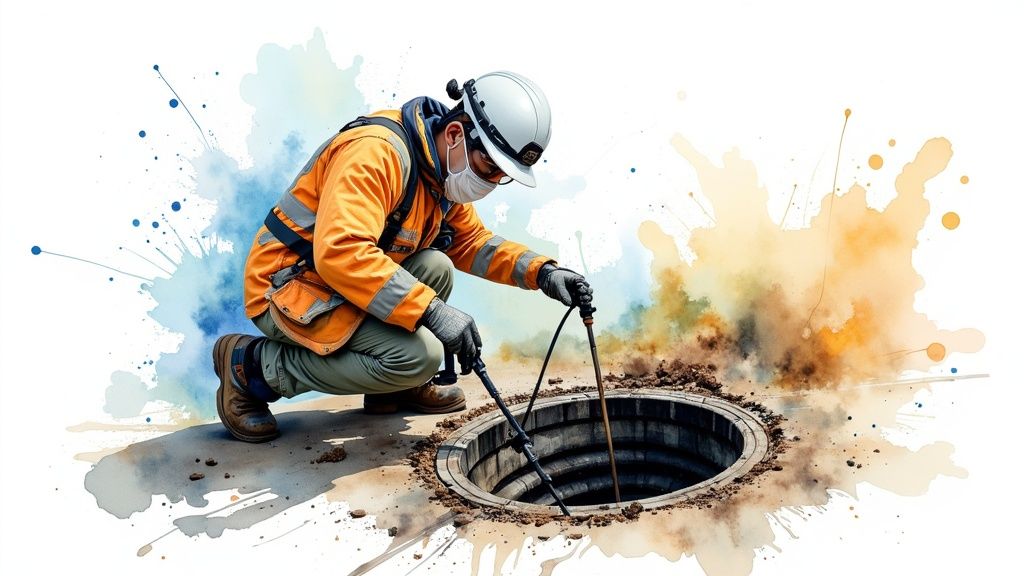
For decades, a broken sewer line meant one thing: a massive trench across your property. It was a messy, loud, and unavoidable process. Homeowners just had to accept the collateral damage, from torn-up landscaping to the extra costs of putting it all back together. Thankfully, those days are quickly becoming a memory.
Trenchless technology has completely changed the game. It's best to think of it like keyhole surgery for your pipes. Instead of digging up the entire line, professionals use one or two small access points to do all the work. From these small entry holes, they can repair or even completely replace your sewer line from within.
A Smarter Approach to a Common Problem
This isn't just about saving your flowerbeds, either. It’s a fundamentally more efficient, durable, and often more cost-effective way to handle a failing sewer line. The advantages are pretty hard to ignore.
Here’s what makes it so appealing:
- Minimal Property Disruption: Your driveway, patio, garden, and mature trees stay exactly where they are. No collateral damage.
- Faster Project Completion: Most trenchless jobs are done in just one day. Compare that to the week or more that traditional trenching can take.
- Long-Term Durability: The new seamless pipe lining is incredibly tough. It resists root intrusion and corrosion and can last for over 50 years.
This guide will walk you through everything you need to know about this modern repair method. We’ll break down the main techniques, show you how they work, and help you figure out if going trenchless is the right call for your home. If you're already noticing problems, you might also want to read our guide on understanding sewer line issues in Denver for more local insights. By the time you're done, you'll understand why digging a giant trench is no longer the go-to solution.
How No-Dig Sewer Repair Actually Works
The idea of fixing a pipe buried deep underground without digging up your whole yard might sound a little too good to be true. But it’s not science fiction; it’s a well-established engineering solution we use all the time here in Denver. Trenchless repair works by using small, carefully chosen access points—often an existing cleanout—to completely fix your old, broken sewer line from the inside out.
What this really means is we can avoid tearing up your property. The whole job happens underground, leaving your lawn, driveway, and landscaping exactly as they were. To really get a handle on it, let's break down the two main techniques for sewer line repair without digging.
The Two Pillars of Trenchless Technology
While there are a few variations out there, almost every residential no-dig repair uses one of two core methods. Think of them like two different tools in a toolbox, each designed for a specific job. Knowing the difference helps you understand what your home actually needs.
The two main approaches are:
- Cured-In-Place Pipe (CIPP) Lining: This is a rehabilitation method. We essentially build a brand-new, super-strong pipe right inside your old one.
- Pipe Bursting: This is a full replacement method. It breaks apart the old, failed pipe while pulling a new one into its place in one seamless motion.
Both are incredibly effective, but they solve different types of sewer problems. The right choice always depends on the exact condition of your current pipe, which we determine with a detailed camera inspection before any work starts.
CIPP Lining: The Inner Reinforcement
Think of CIPP lining as giving your existing sewer pipe a powerful, structural upgrade. It’s the perfect fix when your pipe is mostly intact but has problems like cracks, small leaks, or constant trouble with tree roots getting in. CIPP doesn't replace the pipe; it restores it to better-than-new condition from within.
Here’s how it works. We take a flexible liner, made of felt or fiberglass and cut to the precise length of your pipe, and saturate it with a special two-part epoxy resin. This resin-soaked liner is then carefully inserted into your old pipe, usually through a cleanout opening.
Once the liner is in position, an internal bladder is inflated. This presses the liner firmly against the inside walls of the old pipe, holding it in place while the epoxy cures. Depending on the situation, we can let it cure with ambient air, or speed it up with hot water or UV light. After a few hours, that resin hardens into a solid, seamless, and corrosion-proof new pipe.
The result is a new inner pipe that's incredibly smooth, which actually improves wastewater flow and helps stop future clogs from forming. It seals every crack and weak spot, creating an impenetrable barrier against any new root invasions.
This timeline shows just how fast a typical CIPP lining project can be.
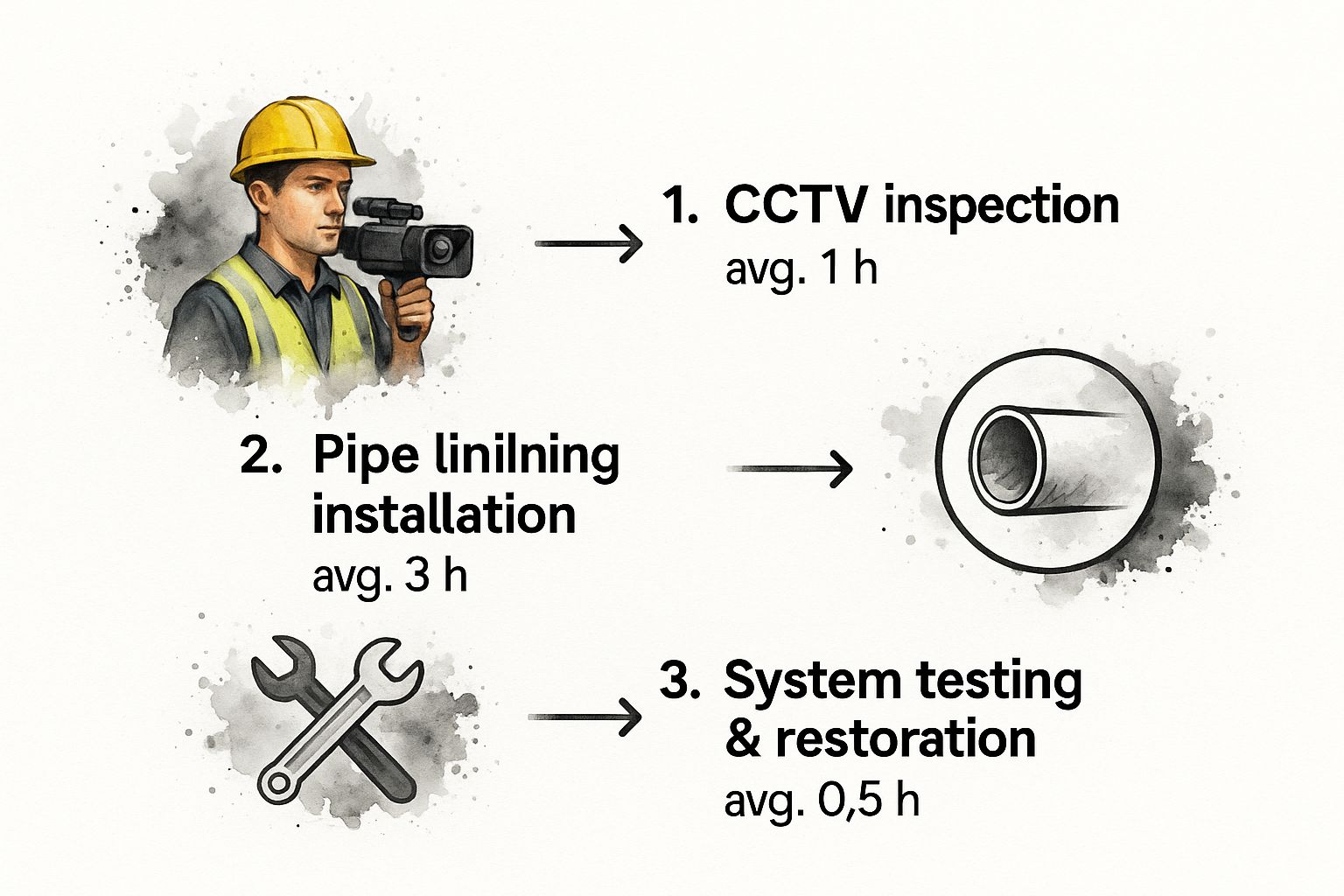
As you can see, the actual repair work is often done in just a few hours—a tiny fraction of the time it takes to dig and replace a pipe the old-fashioned way.
Pipe Bursting: The Powerhouse Replacement
So, what do you do if a sewer line is too far gone for lining? If your pipe has collapsed, has sections missing, or is so misaligned that it's barely connected, lining isn't an option. You need a stable "host" pipe for the liner to work, and in these cases, you just don't have one. This is where pipe bursting shines.
Pipe bursting is a powerful replacement technique that doesn't require a trench. The process begins with us digging two small pits, one at each end of the damaged pipe section. Then, a heavy-duty steel cable is fed through the entire length of the old, broken pipe.
At the entry pit, we attach a cone-shaped "bursting head" to the cable, and right behind it, the new pipe (usually a tough high-density polyethylene, or HDPE). A powerful hydraulic system at the other end starts pulling the cable.
As the bursting head is pulled through, it shatters the old pipe—whether it’s clay, cast iron, or old PVC—and simply pushes the broken pieces into the surrounding soil. The brand-new HDPE pipe is pulled directly behind it, sliding neatly into the space that was just created. You’re left with a brand-new, single-piece sewer line that will last for more than 50 years. It's also the only trenchless method that allows us to increase the pipe's diameter, a huge benefit for improving flow in older homes with outdated plumbing.
To give you a better sense of these two approaches, here’s a quick comparison of how trenchless methods stack up against the old way of doing things.
Traditional Digging vs Trenchless Repair At a Glance
| Factor | Traditional Digging (Excavation) | Trenchless Repair (No-Dig) |
|---|---|---|
| Property Damage | Extensive; destroys lawns, driveways, landscaping. | Minimal; requires only one or two small access holes. |
| Project Time | Can take several days or even weeks. | Typically completed in 1 day, often in just a few hours. |
| Labor & Equipment | Requires heavy machinery and a large crew. | Less labor-intensive, specialized equipment. |
| Overall Cost | High initial cost plus thousands in landscape repair. | Often lower total cost once restoration is factored in. |
| Pipe Durability | New pipe has joints, which are future weak points. | Creates a seamless, joint-free pipe that lasts 50+ years. |
| Effectiveness | Replaces the pipe, but at a high cost to property. | Repairs or replaces the pipe with superior, long-lasting results. |
Ultimately, trenchless technology isn't just a local convenience—it's changing how we maintain infrastructure worldwide. The global market for these services was valued at $15 billion in 2025 and is projected to climb to $25 billion by 2033. This growth is all about the need to fix aging pipes without bringing our busy lives to a standstill. You can discover more insights about this growing market and see how it's impacting infrastructure on a global scale.
Choosing Between CIPP Lining And Pipe Bursting
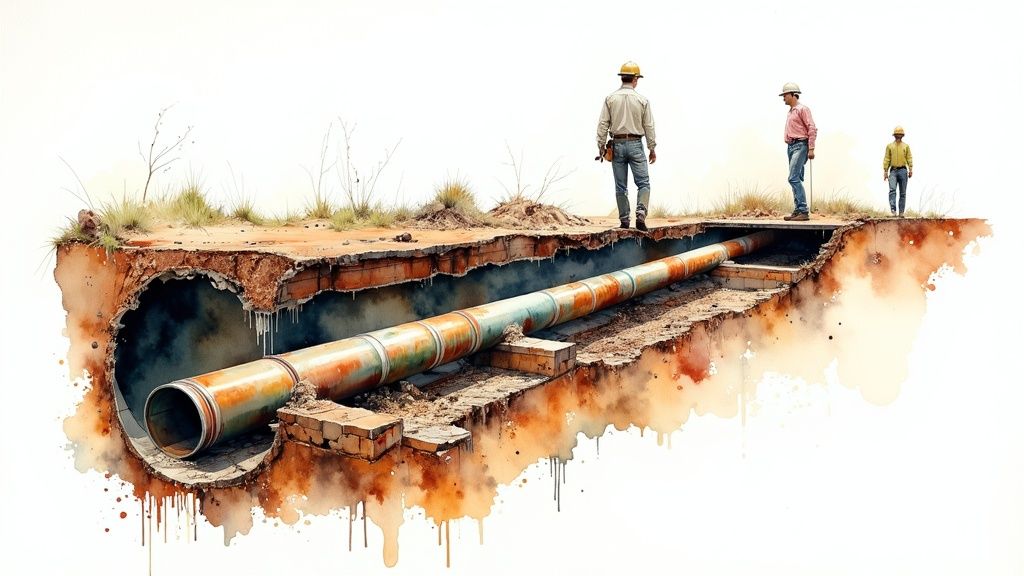
Alright, you know the two main techniques for sewer line repair without digging, but the million-dollar question remains: which one is right for your home? Both CIPP lining and pipe bursting are fantastic, modern solutions, but they aren't one-size-fits-all. The best choice comes down to the real-world condition of your existing sewer line.
The first step is always a professional camera inspection. There's no guesswork here. This gives us a live feed of exactly what's happening underground. Once we see the problem firsthand, we can confidently point you toward the most effective and long-lasting repair.
When CIPP Lining Is The Clear Winner
Think of CIPP lining as giving your old pipe a brand-new, super-strong inner wall. It’s the perfect fix when the original pipe is still mostly in one piece but is causing problems like leaks, root intrusion, or slow drains. This method essentially breathes new life into a pipe that's just showing its age.
CIPP lining is the go-to choice for:
- Sealing Cracks and Leaks: It creates a solid, joint-free sleeve inside the old pipe, completely stopping wastewater from seeping into your yard.
- Stopping Root Intrusion: Tree roots can't get through the tough epoxy liner. It forms a rock-solid barrier, putting a permanent end to one of the most common sewer headaches.
- Correcting Minor Misalignment: If pipe sections have shifted a bit over the decades, the liner smoothes over those rough transitions, which helps prevent future clogs.
- Restoring Aging Pipes: For old cast iron or clay pipes that are corroded but haven't collapsed, CIPP provides a powerful new structural interior that can last for over 50 years.
In short, CIPP is a restoration. If the pipe’s basic shape and path are still good, lining is almost always the best and least invasive option.
When You Need The Power Of Pipe Bursting
Sometimes, a pipe is just too far gone for a liner. A liner needs a stable "host" pipe to bond with. If that structure has collapsed or is missing chunks, you need a full replacement. That's when pipe bursting steps in to save the day.
Pipe bursting is your heavy-duty solution for pipes that are severely damaged. It’s a replacement, not just a repair.
This method is essential when the original pipe has completely caved in, has large sections missing, or is so badly separated that it's no longer a continuous line. In these cases, there's nothing left for a liner to hold onto, making pipe bursting the only viable no-dig option.
Another huge benefit of pipe bursting is the ability to increase your pipe's diameter. If your household has grown and your plumbing is struggling to keep up, we can pull a larger new pipe into place—say, upgrading from a 4-inch to a 6-inch line—to dramatically improve your sewer's flow capacity. CIPP lining simply can't do that. For a complete look at what's involved, you can learn more about the sewer line replacement process in Denver on our blog.
A Head-To-Head Comparison
To make the decision clearer, it helps to see the two methods side-by-side. The choice is critical, and it really underscores why you need an experienced pro to make the right call. The demand for these advanced repairs is skyrocketing—North America's trenchless pipe rehabilitation market was valued at about USD 4.91 billion in 2025 and is expected to hit USD 6.86 billion by 2032. This isn't just a trend; it's a direct response to aging infrastructure and homeowners wanting solutions that don't destroy their property.
Here’s a simple table to help you compare the two leading trenchless technologies.
Choosing Your Trenchless Method: CIPP vs. Pipe Bursting
Deciding between CIPP and pipe bursting depends entirely on your pipe's specific problem. This comparison breaks down the key differences to help you understand which solution fits your situation.
| Consideration | CIPP Lining | Pipe Bursting |
|---|---|---|
| Primary Use | Repairs and rehabilitates an existing pipe. | Replaces a severely damaged or collapsed pipe. |
| Pipe Condition | Host pipe must be structurally sound. | Can be used even if the pipe is totally collapsed. |
| Invasiveness | The least invasive; often uses an existing cleanout. | Requires two small pits to be dug at each end. |
| Upsizing Pipe | No, the diameter is slightly reduced. | Yes, it's the only method that can increase pipe size. |
| Best For | Cracks, leaks, root intrusion, and general wear. | Collapsed pipes, major offsets, and improving flow. |
Ultimately, a camera inspection will reveal the truth and point to the right solution. Whether you need to restore your current pipe with a liner or replace it entirely with pipe bursting, a trenchless approach is the modern, smart way to fix your sewer line for good.
What Are the Real Benefits of Going Trenchless?
Choosing a sewer line repair without digging is about so much more than just keeping a backhoe off your prize-winning petunias. Of course, saving your landscape is a huge plus, but the real advantages go much deeper. They touch on your wallet, your schedule, and the long-term health of your entire plumbing system. Honestly, these modern methods are just a smarter way to invest in your property.
The most obvious win is protecting your yard and everything in it. Traditional excavation is brutal—it tears up anything in its path. Mature trees, a custom-built patio, your concrete driveway, and years of careful gardening can be destroyed in an afternoon. The cost to put all that back together can easily climb into the thousands, a nasty surprise that's never part of the original plumbing quote. Trenchless repair works from below, leaving your hard work and landscaping completely untouched.
Save Time and Sidestep the Chaos
You can’t get your time back, and old-school sewer repairs devour it. A full-blown excavation can turn your home into a noisy, messy construction zone for a week or more. That means days of loud equipment, crew members everywhere, and a total disruption to your family’s life.
Trenchless repairs, on the other hand, are incredibly efficient.
- CIPP lining is often finished in just a few hours.
- Pipe bursting is usually wrapped up within a single day.
That kind of speed means your life gets back to normal almost right away. You get to skip the extended stress and turn what could have been a major ordeal into a manageable, one-day fix. The benefits of trenchless repair extend to preserving your home's landscaping and foundation, a concern also addressed by effective water management; you might explore expert drainage solutions for yards to prevent waterlogging and property damage.
The Advantage of Long-Term Durability
One of the biggest, yet least-discussed, benefits of going trenchless is the superior quality of the final product. Both CIPP lining and pipe bursting create a single, seamless pipe. Think about it: traditional pipes are laid in sections, and every single joint is a potential failure point—a place for roots to sneak in, corrosion to take hold, or leaks to spring.
The new pipe created with trenchless methods is one continuous, solid line. Made from tough materials like epoxy resin or high-density polyethylene (HDPE), this new pipe is built to last. It’s designed to shrug off corrosion, cracks, and even aggressive tree roots for 50 years or more.
This isn't just a patch. It's a fundamental upgrade to your home's infrastructure. You get the peace of mind that comes from knowing your sewer line is secure for decades, dramatically cutting down the chances of dealing with this mess again.
Looking at the Total Cost
At first glance, the price per foot for a trenchless repair might seem a little higher than digging. But that’s a misleading comparison because it ignores the huge secondary costs that always come with excavation.
Think about the real cost of digging a trench:
- Landscape Restoration: New sod for the lawn, replacing flower beds, and buying new shrubs.
- Hardscape Repair: Pouring fresh concrete for a torn-up driveway, patio, or walkway.
- Extra Labor: The hours and bigger crew needed not just for digging, but for putting everything back together.
Once you add up all those "hidden" expenses, sewer line repair without digging very often comes out as the more affordable option. It delivers a stronger, faster, and less disruptive solution, making it the most cost-effective choice when you look at the entire project from start to finish.
Is Your Home a Candidate For Trenchless Repair?
While the benefits are compelling, sewer line repair without digging isn't a one-size-fits-all solution. So, how do you know if this modern, less-invasive approach is the right call for your Denver home? It all starts with learning to spot the classic signs that your main sewer line is failing.
Think about it this way: if you have a single slow sink, the clog is probably right there under the cabinet. But when you start seeing weird plumbing issues pop up all over the house, that's a huge clue the problem is much deeper—in the main line connecting you to the street. These are the red flags that make your home a prime candidate for a trenchless fix.
Common Warning Signs of a Failing Sewer Line
Those persistent plumbing problems you're experiencing aren't just minor annoyances. They're your home’s cry for help, signaling something is seriously wrong with the pipe buried in your yard.
It's time to call in a pro if you're noticing things like:
- Recurring Clogs: You’re constantly fighting with backups in toilets, showers, and sinks, often at the same time. No amount of plunging ever seems to truly solve it.
- Multiple Slow Drains: Does flushing a toilet make your shower gurgle? Or does running the washing machine cause water to back up in a floor drain? That's a classic symptom of a bottleneck in the main sewer line.
- Unexplained Sewer Odors: That unmistakable smell of sewer gas inside or outside your home is a major warning. It means there’s a crack or break in the pipe allowing nasty odors to escape.
- Lush, Green Patches in Your Lawn: If one spot in your yard is suddenly looking extra green and healthy, it might be getting some unwanted "fertilizer" from a leaking sewer pipe right beneath it.
These symptoms often point to deeper issues like invasive tree roots, old corroded pipes, or joints that have shifted over time. If this sounds like your house, it’s worth digging deeper into the top signs you need a sewer line inspection in Denver to see what comes next.
Scenarios Where Trenchless Repair Excels
Beyond just the symptoms, the location of your sewer line is a huge factor in whether trenchless methods make sense. This is where a no-dig approach really proves its worth, saving you from a world of headaches and massive restoration bills.
Your home is a perfect candidate if your sewer line runs directly under:
- Your Home's Foundation or Slab: Tearing up your foundation is not just messy; it's incredibly expensive and can even risk the structural integrity of your home.
- Expensive or Extensive Hardscaping: Think about that beautiful paver patio, concrete driveway, or stone retaining wall. Trenching means demolishing it and then paying to rebuild it all.
- Mature Trees and Established Landscaping: Trenchless methods can save that gorgeous old tree in your front yard, not to mention the garden you've spent years perfecting.
In essence, if the path from your home to the city sewer connection is covered by anything you don’t want to destroy, a no-dig repair is almost certainly the superior financial and practical choice.
When Trenchless Might Not Be The Answer
Let's be honest, trenchless technology has its limits. It’s a fantastic solution for the vast majority of sewer problems, but there are a few situations where the old-school method of digging a trench is still the only way.
The main culprit is a pipe with a severe "belly," or sag. If a section of the pipe has sunk over time, it creates a low spot where water and waste just sit instead of flowing away. A liner will just follow the shape of that sag, and while pipe bursting can help with minor grade issues, a significant belly can't be fixed without digging. The only way to fix it properly is to excavate, regrade the soil underneath, and give the new pipe the solid, sloped base it needs.
This is exactly why a professional camera inspection is non-negotiable—it's the only way to see what's truly going on down there and make the right call.
Frequently Asked Questions About Trenchless Repair
Even after learning how sewer line repair without digging works, it’s completely normal to have more questions. We get it. This is a big investment in your home, and you want to feel confident before you commit.
Over the years, we've heard just about every question from homeowners across the Denver area. To help put your mind at ease, we've gathered the most common ones right here with straightforward, honest answers. Our goal is to give you the clarity you need to make the right call for your property.
How Much Does Sewer Line Repair Without Digging Cost?
This is usually the first thing people ask, and the real answer is about looking at the total cost, not just the initial price tag. While trenchless repair might seem more expensive per foot at first glance, it often ends up being the more affordable option when all is said and done.
Why? Because traditional excavation comes with a mountain of hidden costs. You're not just paying to fix the pipe; you're paying to fix everything the digging destroyed. That can mean thousands of dollars to re-pour a concrete driveway, rebuild a stone patio, or replace mature trees and landscaping.
Trenchless methods wipe out almost all of those extra restoration expenses. The final price for your no-dig repair will hinge on a few key things:
- Pipe Length and Diameter: Longer, wider pipes naturally require more material and time.
- Accessibility: How easy it is for our crew to get to the sewer line's access points can affect labor costs.
- The Specific Method: CIPP lining and pipe bursting use different materials and equipment, which impacts the cost.
- Extent of Damage: A heavily damaged or clogged pipe might need more prep work before the real repair can begin.
When you compare the all-in cost—the repair plus the restoration—trenchless solutions very often come out on top as the smartest financial decision.
How Long Does a Trenchless Sewer Repair Last?
This is where the true value of modern trenchless technology shines. We're not talking about a quick fix or a temporary patch. This is a long-term, permanent solution designed to last for generations.
It all comes down to the materials. The epoxy-resin liners used in CIPP and the high-density polyethylene (HDPE) pipes in pipe bursting essentially create a brand-new, seamless pipe right inside the old one. This new pipe is a single, continuous tube with no joints—and joints are the number one weak spot in older sewer lines.
A new trenchless pipe is engineered to stand up to the most common culprits of sewer failure. It resists corrosion, prevents cracking from ground shifts, and creates a rock-solid barrier that tree roots can't penetrate. Most trenchless repairs come with a design life of 50 years or more, giving you true, lasting peace of mind.
Can Any Plumber Perform a No-Dig Repair?
Absolutely not. This is something every homeowner needs to understand. Trenchless repair is a highly specialized trade that requires a massive investment in both training and equipment. It’s not a service a general plumber can just decide to add to their menu.
Performing a sewer line repair without digging correctly requires some serious, expensive hardware. We’re talking about high-definition sewer cameras for pinpoint-accurate diagnostics, specialized machinery for inserting and curing liners, and powerful hydraulic systems for pipe bursting.
More importantly, the technicians operating this gear need extensive, hands-on training to master the process. When you're looking for a company to handle a trenchless job, you have to do your homework.
Always ask potential contractors for:
- Proof of specific training and certification in CIPP or pipe bursting.
- References from past trenchless projects right here in the Denver area.
- Case studies or examples of jobs they've completed that are similar to yours.
Hiring a team without this specialized expertise is a huge gamble. A failed repair can end up costing you far more in money and property damage than the original problem.
Does Homeowners Insurance Cover Trenchless Sewer Repair?
This is a tricky one, because coverage really depends on your specific policy and what caused the damage in the first place. There’s no simple "yes" or "no" answer that applies to everyone.
As a general rule, most insurance policies will cover damage from a "sudden and accidental" event. For instance, if an unexpected ground tremor crushes your pipe, that might be covered. On the other hand, problems that develop slowly over time—like gradual corrosion, wear and tear, or tree root intrusion—are typically excluded.
Here's the key takeaway: if the damage is caused by a covered event, your insurance company is usually on the hook to pay for the most cost-effective repair method. Since trenchless solutions often have a lower total project cost (by eliminating that expensive landscape restoration), they are frequently the method insurance companies prefer and approve.
Your first step should always be to call your insurance agent. Go over your policy with them and explain the situation before you agree to any work. This will ensure you know exactly what’s covered and avoid any unpleasant financial surprises.
When you’re facing sewer line problems, you need a team with proven expertise in modern repair solutions. Professional Plumbers Denver has the specialized equipment and trained technicians to handle any no-dig repair project in the Denver Metro area, ensuring the job is done right the first time.
Ready for a permanent solution that saves your landscape and your peace of mind? Contact us today for a professional inspection and a no-obligation quote!

Recent Comments