
When your toilet handle suddenly puts up a fight, the culprit is almost always hiding inside the tank. The good news is that you're likely dealing with a simple mechanical issue, not a plumbing disaster.
More often than not, the extra friction comes from a tangled lift chain, mineral gunk on the flapper, or a handle that’s just not sitting right. You can usually spot the problem with a quick look inside.
Why Your Toilet Handle Feels Stuck
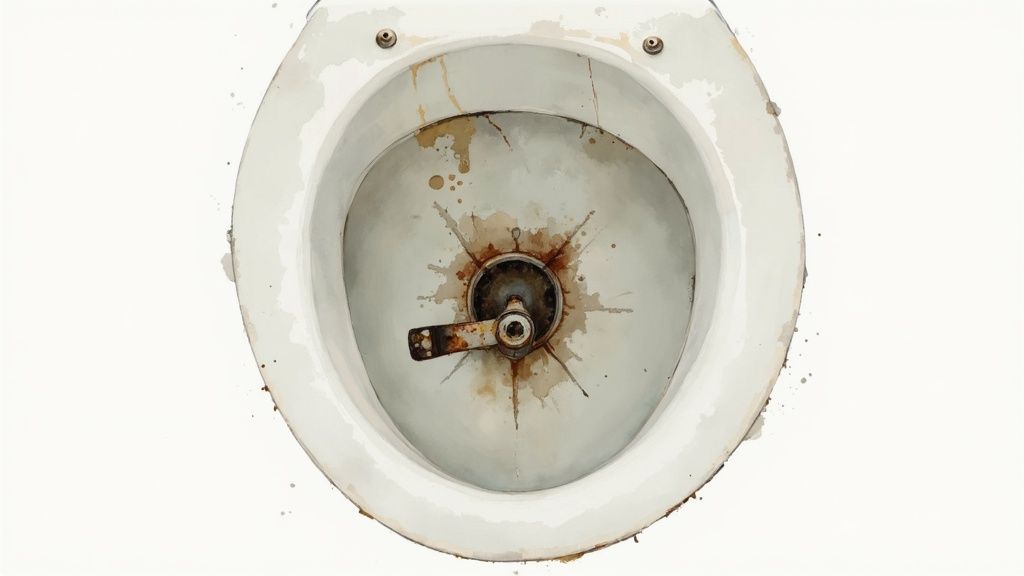
That moment you push the handle and it barely budges is frustrating, but it’s a super common household hiccup. Before you can fix it, it helps to understand the simple machinery at play. That resistance you're feeling is a dead giveaway that something is creating drag in the flushing mechanism.
Most toilets use a basic lever-and-chain system. The handle you push is connected to a lever arm inside the tank, which pulls a chain connected to a rubber flapper. When the flapper lifts, water rushes into the bowl. Over time, that little chain can get twisted, corroded, or have too much slack, making it much harder to lift the flapper. If you're curious, Princeton's facilities team offers a great page that breaks down toilet mechanics in simple terms.
Common Causes of a Stiff Handle
It's not always the chain's fault. A few other parts can get stubborn over time. Let's run through the usual suspects.
- Mineral Buildup: If you have hard water, you've seen the chalky white stuff it leaves behind. Those calcium and magnesium deposits can build up on the flapper and the flush valve it seals against, creating a sticky seal that takes extra force to pop open.
- Worn or Warped Flapper: The rubber flapper doesn't last forever. Over the years, it can get waterlogged, stiff, or warped. A misshapen flapper won't lift smoothly and can create a suction effect that makes it feel stuck.
- Corroded Handle Assembly: The handle itself has a pivot point that can rust or get gummed up with mineral deposits. This corrosion adds a ton of friction, making the whole lever arm tough to move.
Before you start pulling things apart, a quick visual inspection can save you a lot of guesswork. Use this table to match what you're seeing and feeling with the most likely cause.
Quick Diagnosis for a Stiff Toilet Handle
| Symptom | Likely Cause | Difficulty to Fix |
|---|---|---|
| Handle feels "gritty" or scrapes | Corrosion on the handle assembly | Easy |
| Handle has a lot of "play" before it engages | The lift chain is too loose or tangled | Very Easy |
| Feels like you're breaking a vacuum seal | Mineral buildup on the flapper or a worn-out flapper | Easy |
| Handle moves, but nothing happens | The lift chain is unhooked | Very Easy |
With a clear idea of what's wrong, you can move straight to the solution instead of just tinkering.
By isolating which part is creating the friction, you can move from guessing to solving. A quick, systematic check of these few parts will almost always reveal why your toilet handle is hard to flush.
Once you know what you’re looking for, you’re no longer just wrestling with a stubborn handle—you're getting a simple machine back in working order.
Getting Your Toolkit Ready
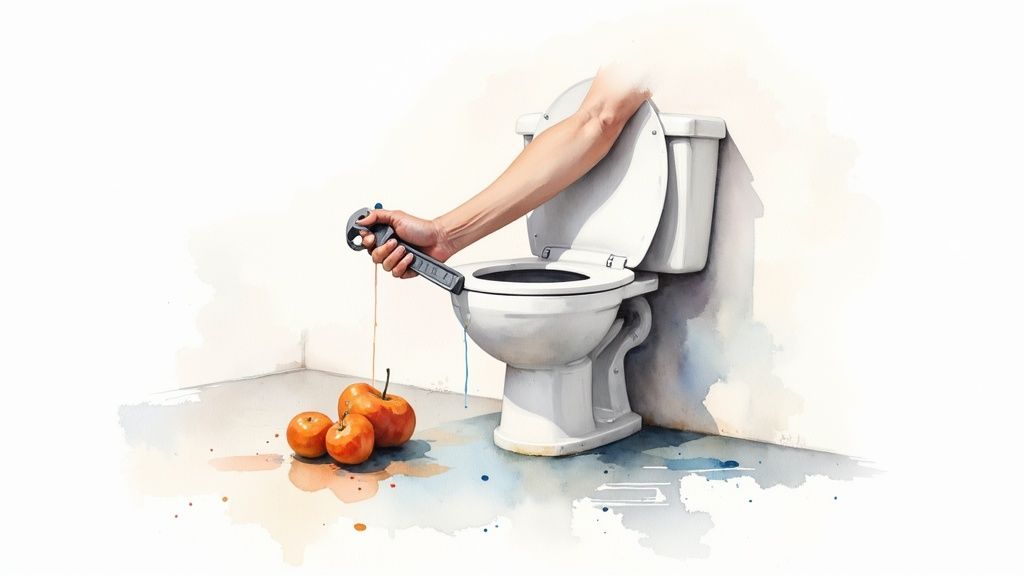
Before you even think about lifting that tank lid, let's get organized. A little prep work now can turn a frustrating plumbing puzzle into a simple 15-minute fix. Trust me, having everything you need within arm's reach is a game-changer—no more mid-job sprints to the garage.
First things first: shut off the water. You’ll find a small valve on the wall or floor right behind the toilet. Turn the knob clockwise as far as it will go. Give the toilet a flush to drain the tank, which makes the next steps much cleaner.
The Essential Tools You'll Need
You don’t need to be a master plumber with a truck full of gear for this. Chances are, you already have everything you need lying around the house.
- Adjustable Pliers or a Wrench: This is your main tool. You'll need it to loosen the mounting nut that secures the flush handle from inside the tank.
- An Old Sponge and a Bucket: Even after flushing, a little water always hangs out at the bottom of the tank. Use a sponge to soak it up and squeeze it into the bucket. Working in a dry tank is so much easier.
- Rubber Gloves (Optional but Recommended): Toilet tanks can get pretty grimy with mineral deposits over time. A pair of gloves will keep your hands clean.
Getting these few items together beforehand makes all the difference. It lets you transition smoothly from diagnosing the problem to getting it fixed without any hassle. This small bit of prep is the secret to a quick, stress-free repair.
A Look Inside Your Toilet's Inner Workings
Alright, with the tank lid off and the water gone, you’ve got a front-row seat to the action. It's time to play detective. A good, methodical look inside the tank is how you’ll pinpoint what’s really going on with that stubborn handle, which beats guessing and replacing parts that are perfectly fine.
The first thing to check is the handle itself. Go ahead and unhook the lift chain from the lever arm inside the tank. Now, move that arm up and down. Does it move easily? If so, the handle assembly is probably in good shape. But if it feels gritty, scrapes, or still resists, you’re likely dealing with corrosion or mineral buildup where the handle pivots.
Check Out the Flapper and Chain
Now, let's hook that chain back up. Your focus should shift to the flapper—that rubber seal at the bottom—and the chain connecting it to the handle. A poorly adjusted chain is one of the most common culprits for a stiff flush.
- Is the chain too short? When a chain is pulled taut with no slack, you’re fighting against a tight seal right from the start. That takes a lot of extra muscle.
- Is the chain too long? Too much slack is also a problem. The chain can get tangled up or, worse, wedge itself under the flapper, preventing it from sealing properly.
- Is it pulling straight up? The chain needs to lift the flapper vertically. If it's pulling at an angle, it can cause the flapper to drag and bind against the overflow tube.
The sweet spot for a lift chain is having just a little bit of slack—I find about a half-inch is usually perfect. This lets the flapper sit tight but engages it the moment you press the handle.
Finally, take a close look at the flapper itself. These things don't last forever. Over the years, the rubber can get warped, waterlogged, or coated with chalky mineral deposits. Run your finger along the underside of the flapper and the rim of the flush valve it rests on. If you feel any gunk or a rough texture, it can create a suction-cup effect that requires a real yank to break free.
Fixing these tank issues is usually pretty straightforward. However, if everything inside the tank checks out, the problem might be a tougher clog further down the line. If you think you're facing a more serious blockage, our guide on how to snake a toilet walks you through the next steps.
Getting Your Toilet Flushing Smoothly Again
Alright, you've done the detective work and have a good idea of what's causing the problem. Now for the good part: fixing it. The good news is that when a toilet handle is hard to flush, it's almost always a simple mechanical issue. You don't need to be a master plumber to sort this out.
We'll walk through the most common culprits, starting with the easiest fix.
Fine-Tuning the Lift Chain
More often than not, the source of a stiff flush is the small chain connecting the handle's lever arm to the flapper at the bottom of the tank. The goal here is a perfect balance—not too tight, not too loose.
Ideally, the chain should have just a little bit of slack, maybe about a half-inch or so. If it's pulled completely taut, you're literally fighting to break the flapper's seal every time you flush. On the flip side, too much slack can cause its own set of problems.
Getting it right is a matter of small adjustments. Just unhook the clip from the lever arm and move it up or down a few links. Give it a test flush. Feel the difference. You're looking for that sweet spot where the handle engages the flapper immediately without resistance.
A chain that's too loose can get tangled or even slip under the flapper, preventing it from sealing. That's a classic cause for a toilet that just won't stop running. If that's happening to you, we have a whole guide on what to do when your toilet won’t stop running.
Dealing With a Gummy Flapper or Valve Seat
If adjusting the chain didn't do the trick, the next place to look is the flapper itself and the flush valve seat it sits on. Over time, especially in areas with hard water, mineral deposits build up and create a sticky, gritty film. This gunk can practically glue the flapper down, making it tough to lift.
My Go-To Tip: Grab an old toothbrush or a non-scratch scrub pad and some plain white vinegar. Gently scrub the underside of the flapper and the rim of the flush valve seat. You'd be surprised how often this simple cleaning is all it takes to get things moving freely again.
Of course, sometimes the flapper is just old and worn out. Rubber breaks down over the years, becoming waterlogged, warped, or brittle. A misshapen flapper won't lift properly and creates a stubborn, vacuum-like seal that's tough to break. The fix? Replace it. It's one of the cheapest, easiest, and most satisfying toilet repairs you can do.
Choosing the Right Replacement Flapper
Picking a new flapper isn't complicated, but grabbing the right one makes a difference. This quick guide will help you choose the best fit for your toilet to ensure a perfect seal and a powerful, clean flush.
| Flapper Type | Best For | Key Feature |
|---|---|---|
| Adjustable Flapper | Water-saving toilets (1.6 GPF or less) | Allows you to fine-tune the flush volume for optimal performance. |
| Solid Frame Flapper | Older, high-flow toilets (3.5 GPF) | Provides a rigid structure that prevents warping and ensures a consistent seal. |
| Universal Flapper | Most standard toilets | Designed with flexible rubber to fit a wide range of flush valve openings. |
A quick look at your toilet's age and flush volume (gallons per flush, or GPF) will usually point you to the right one.
When to Replace the Whole Handle Assembly
Lastly, if you've unhooked the chain entirely and the handle still feels gritty or scrapes when you push it, the problem is the handle mechanism itself. It's likely corroded on the inside of the tank.
Don't worry, swapping out the handle assembly is a quick job. The one thing to remember is that the nut holding it in place is usually reverse-threaded. This means you'll turn it clockwise (to the right) to loosen it—the opposite of what you'd expect.
Taking a few minutes for some preventative care can help you avoid these headaches down the road. A little routine maintenance goes a long way.
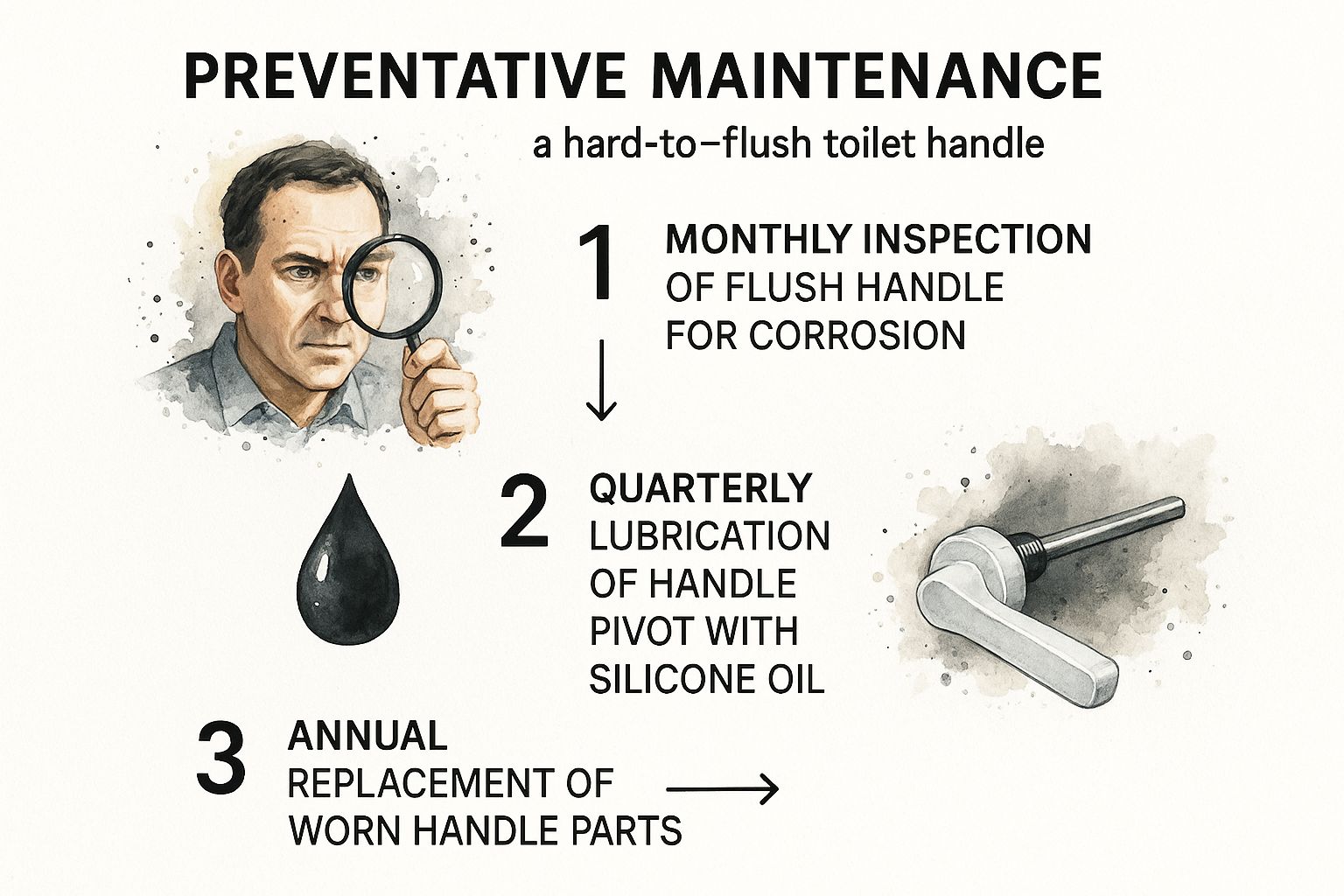
As you can see, a quick quarterly check-up can stop corrosion and wear in their tracks, keeping your flush smooth and effortless.
Knowing When to Call a Plumber
Most of the time, you can fix a stubborn toilet handle yourself. It's usually a pretty straightforward job. But every now and then, that stiff handle is your toilet's way of telling you something more serious is wrong. Knowing when to step back and call in a pro can save you a world of hurt—and a much bigger repair bill down the line.
If you’ve already tried fiddling with the chain and given the flapper a good cleaning, but the handle still puts up a fight, it's probably time to bring in an expert. A handle that just won't cooperate often points to a worn-out flush valve assembly, and that's a much more complex replacement than just swapping out a flapper.
Red Flags That Mean You Need a Plumber
Some toilet problems are definitely not in the DIY category. If you see any of these warning signs, put the wrench down and pick up the phone. Ignoring them can lead to some serious water damage.
- A Cracked Flush Valve: Take a close look at the flush valve at the bottom of the tank. If you spot even a hairline crack in the plastic or porcelain, that’s your cue to stop. This is a job for a professional, period.
- Leaks That Won't Quit: You’ve done your best, but you can still hear the toilet running constantly or see water pooling around the base. That's a leak you haven't pinned down. Our guide on common plumbing problems and how to fix them can offer some more ideas, but a persistent leak needs a pro's touch.
- The Toilet Wobbles or Sinks: A stiff handle is one thing, but if the entire toilet rocks when you sit down, you have a much bigger issue on your hands. There are tell-tale signs of severe toilet issues that impact your bathroom floor that often point to hidden water damage and a compromised subfloor.
It's easy to forget that keeping our toilets in working order is a luxury. Failing parts and poor maintenance are part of a massive global challenge. In fact, about 60% of the world's population still doesn't have access to safely managed sanitation at home. You can learn more about the broader context of global sanitation on unicefusa.org.
Sticking Toilet Handle FAQs
Even after you've fixed the problem, a few questions might pop into your head. A toilet handle that’s hard to flush can be a weirdly specific issue, and the cause isn't always what you'd expect. Here are the most common things people ask, with answers that will help you keep things running smoothly.
Think of this as a way to understand your toilet's flushing system a little better, so you're prepared for whatever comes next.
Why Is My Brand New Toilet Handle Already Hard to Push?
It’s frustrating when a new part doesn’t work right, but if a new handle is stiff, it’s almost always a setup problem, not a faulty handle.
Most often, the lift chain is just too short. If there's no slack, you're fighting constant tension right from the start, making you pull extra hard just to lift the flapper.
Another thing to check is whether the new lever arm is rubbing against the inside of the tank or hitting another part. Finally, make sure the flapper is the right one for your toilet. The wrong kind of flapper can create a seal that's way too tight, which makes any handle, new or old, feel like it’s stuck in cement.
Can Hard Water Make a Toilet Handle Stiff?
Yes, absolutely. Hard water is full of minerals like calcium and magnesium, and over time, these deposits build up on everything inside your tank. This mineral scale gums up the works, especially at the flapper's seal and the handle arm's pivot points.
This buildup is a major source of friction. It's the reason a handle can feel like it’s getting harder and harder to push over the years—it’s slowly getting seized up from the inside.
Should I Fix Just One Part or Replace the Whole Thing?
This really depends on what you find when you lift the lid.
If it's a simple problem like a tangled chain or a single worn-out flapper, just stick to a targeted repair. It’s cheap, easy, and there’s no reason to replace parts that are still working perfectly well.
But if you open the tank and see corrosion and gunk on everything, that’s a different ballgame. For older, less efficient toilets, replacing the entire flush mechanism with a modern kit is a fantastic move. These kits are surprisingly affordable, they fix multiple potential problems in one go, and can even reduce your water bill.
If you’ve gone through these steps and are still fighting with a stubborn handle, it might be time to call in a pro. For any plumbing headaches in the Denver area, Professional Plumber Denver has the expertise to get it diagnosed and fixed right. Visit us online or give us a call today.

Recent Comments