
As the Rocky Mountains get their blanket of snow, Denver homeowners know that the crisp winter air brings unique challenges, especially for a home’s plumbing. The city’s notorious freeze-thaw cycles and sudden, plunging temperatures put immense stress on water lines. Ignoring this threat can turn a minor oversight into a major catastrophe.
A single frozen pipe isn’t just an inconvenience; it can quickly escalate into a burst pipe, causing thousands of dollars in water damage and turning your cozy winter haven into a significant headache. Proactive preparation is your strongest defense against the cold.
This guide provides a comprehensive roundup of six critical, actionable winter plumbing tips specifically tailored to the demands of a Colorado winter. We will move beyond generic advice to provide detailed, practical steps you can take right now. From insulating pipes in vulnerable areas like crawl spaces to knowing the exact location of your main water shut-off valve, these strategies will help you safeguard your home. By implementing these measures, you can ensure your plumbing system weathers the harshest conditions with resilience, protecting your investment and granting you peace of mind all season long.
1. Insulate Exposed Pipes: Your First Line of Defense Against the Cold
When preparing for a Denver winter, insulating exposed pipes isn’t just a suggestion; it’s one of the most essential winter plumbing tips you can follow. This preventative measure involves wrapping vulnerable pipes with materials like foam sleeves, fiberglass, or even thermostatically controlled heat tape. This simple action creates a thermal barrier, slowing the transfer of cold air to the water inside and significantly reducing the risk of a catastrophic freeze and burst.
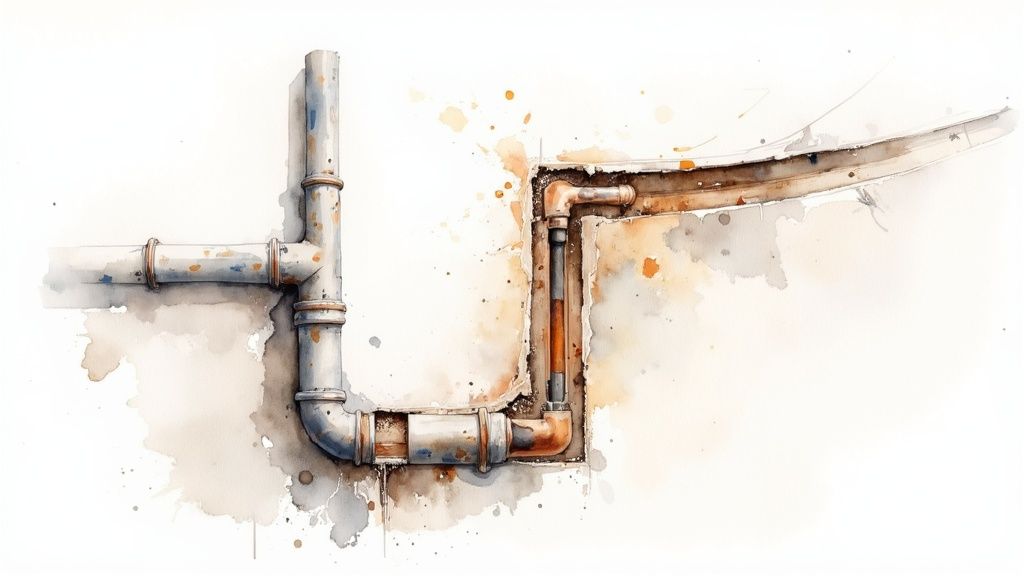
This step is especially critical for pipes in unheated or poorly insulated areas of your home. In many Denver properties, this includes basements, crawl spaces, attics, and plumbing routed along exterior walls where temperatures can easily plummet below freezing. Properly insulating these arteries is the single most effective action to prevent a costly emergency.
Why This is a Top Priority for Denver Homeowners
The impact of insulation is well-documented. A study of homes in nearby Boulder County found that comprehensive pipe insulation reduced the likelihood of frozen pipe incidents by over 40%. On a larger scale, a historic Capitol Hill apartment complex saved an estimated $50,000 in potential winter damage claims by implementing a building-wide pipe insulation program.
For those in the foothills, thermostatically controlled heat tape is often used on well-supply pipes to ensure consistent water access, showcasing a more advanced application of the same principle.
Key Takeaway: Pipe insulation is a high-impact, low-cost measure that directly prevents the most common and expensive winter plumbing disaster: burst pipes.
Actionable Tips for Effective Insulation
- Prioritize Strategically: Begin with the most vulnerable pipes. Focus on those located in unheated spaces or within six feet of an exterior wall.
- Choose User-Friendly Materials: For a straightforward DIY project, select foam pipe sleeves that are pre-split lengthwise. They slide on easily and can be secured with duct tape at the seams.
- Don’t Forget Outdoor Plumbing: Protect outdoor spigots with insulated faucet covers and remember to insulate any plumbing in an unheated garage.
- Perform Annual Checks: Inspect your insulation each fall. Compressed or damaged insulation loses its R-value and effectiveness, so replace it as needed.
For a comprehensive guide on selecting and installing the right materials, you can find detailed instructions and more professional insights on choosing the best pipe insulation for your Denver home.
While wrapping pipes is crucial, persistent cold spots could indicate broader issues with your home’s thermal envelope. To pinpoint systemic heat loss that makes pipes more vulnerable, consider understanding thermal bridge assessments. This helps ensure your entire home is fortified against the cold, not just the pipes themselves.
2. Drip Faucets During Freezing Weather: A Simple Trick for a Big Problem
When a deep freeze hits Denver, one of the most effective winter plumbing tips is also one of the simplest: letting your faucets drip. This may seem counterintuitive, but allowing even a slow, steady drip relieves pressure inside the pipes and keeps the water moving. Static water can freeze solid when temperatures plummet, but even a small amount of flow makes it significantly harder for ice to form and create a blockage that leads to a burst pipe.
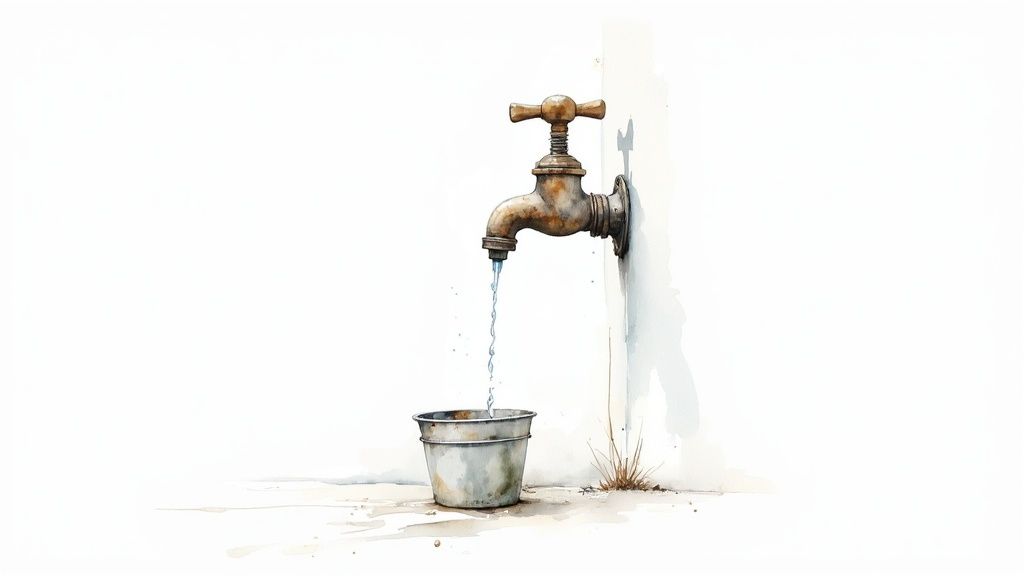
This tactic is a crucial backup, especially for plumbing located along poorly insulated exterior walls or in drafty areas where insulation alone might not be enough. It’s a low-tech, high-impact method endorsed by public safety organizations like the American Red Cross and routinely advised by municipal water departments across the country during extreme cold snaps.
Why This is a Top Priority for Denver Homeowners
The effectiveness of this method was demonstrated on a massive scale during the 2021 Texas winter storm, where countless residents who heeded the advice from utility companies to drip their faucets successfully avoided catastrophic pipe damage. Closer to home, many landlords of older multi-family buildings in Denver and apartment managers in cities like Detroit implement building-wide drip policies when temperatures are forecast to drop into the teens. This simple communication prevents dozens of potential bursts in a single night.
For Denver residents, this is a vital tactic when arctic air moves in and temperatures stay below freezing for an extended period. It’s a proven, short-term solution to get through the coldest nights.
Key Takeaway: A continuous drip creates water movement and relieves internal pipe pressure, making it an essential, last-minute defense against freezing when temperatures drop dangerously low.
Actionable Tips for Effective Dripping
- Know When to Start: Begin dripping your faucets when the forecast calls for temperatures to fall to 20°F or below, especially during multi-day cold snaps.
- Focus on Vulnerable Areas: Prioritize faucets connected to pipes running through exterior walls or unheated spaces like basements and garages. The faucet furthest from where the water main enters your home is often a good choice.
- Get the Flow Right: A pencil-lead-thin stream is all you need. Open both the hot and cold taps slightly to keep water moving in both lines.
- Conserve If Possible: If you are concerned about water waste, place a bucket or basin under the drip to collect the water for reuse in cleaning or watering houseplants.
3. Disconnect and Drain Outdoor Hoses: A Simple Step With Huge Impact
Of all the winter plumbing tips, this is perhaps the easiest to execute and one of the most frequently overlooked. Properly winterizing your outdoor faucets, also known as hose bibs or spigots, is a non-negotiable task for Denver homeowners. This process involves disconnecting all garden hoses, draining any residual water, and crucially, shutting off the interior water supply to that specific faucet. This eliminates the possibility of water sitting in the pipe, where it can freeze, expand, and crack the spigot or the supply pipe just inside your home’s foundation.
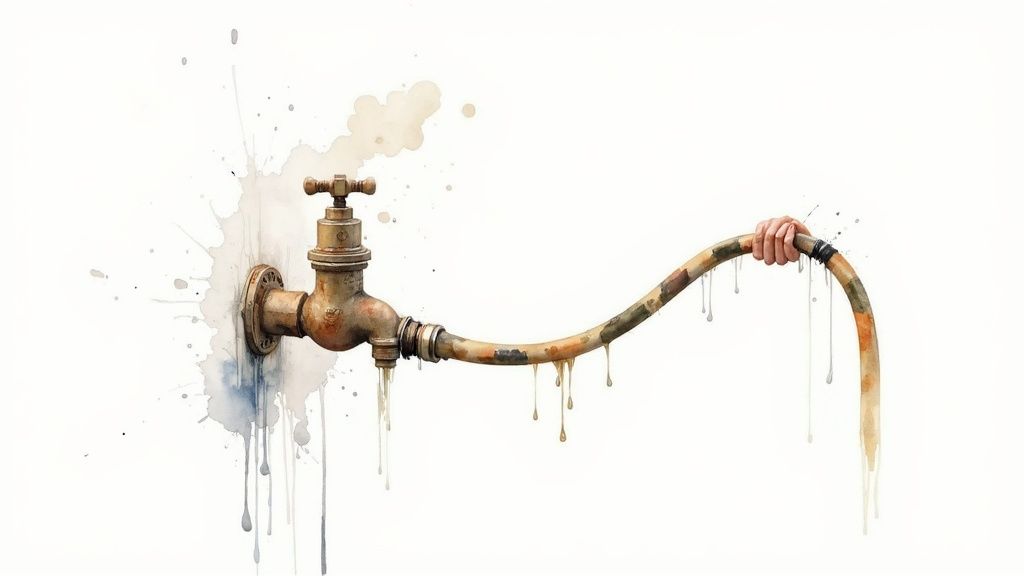
When a hose is left connected, it traps water inside the faucet and the pipe leading to it. As Denver’s temperatures drop, this trapped water freezes solid. The immense pressure from the expanding ice can easily fracture the hose bib or the pipe within the wall, leading to a major, often hidden, flood once a thaw occurs.
Why This is a Top Priority for Denver Homeowners
The effectiveness of this simple chore is proven. Many Colorado homeowners associations have made it a mandatory requirement, demanding hose disconnection by a set date like October 15th to prevent community-wide damage. Evidence from other cold climates is just as compelling; a Wisconsin insurance study revealed that homeowners who consistently disconnected their hoses saw a 60% reduction in winter-related water damage claims.
The practice is so critical that it’s a staple of home maintenance education, promoted by Master Gardener extension programs and home improvement shows like Ask This Old House as a fundamental part of seasonal prep.
Key Takeaway: Disconnecting and draining outdoor water lines is a free, five-minute task that prevents one of the most common causes of winter-related basement and crawl space flooding.
Actionable Tips for Effective Winterization
- Locate Your Shut-Offs Early: Don’t wait for the first freeze. Find the interior shut-off valve for each outdoor spigot now. They are typically located in the basement, crawl space, or a utility closet, often near the ceiling along the same wall as the exterior faucet.
- Mark Your Calendar: Set a reminder for early October to perform this task. An unexpected early cold snap in Denver can catch you off guard.
- Follow the Correct Drainage Sequence: First, disconnect the hose. Second, turn off the interior shut-off valve. Third, go back outside and open the spigot to let any remaining water drain completely. Leave it open for the winter.
- Store Hoses Properly: Drain your hoses completely and store them in a heated garage or basement. This prolongs their lifespan and prevents cracking.
If you discover a drip or leak after turning the water back on in the spring, it could indicate that the faucet was damaged by a previous freeze. You can find guidance on how to address this common issue and learn more about hose bib leak repair for your Denver property.
4. Maintain Consistent Indoor Temperature: The Unseen Guardian of Your Plumbing
While direct pipe protection is crucial, one of the most effective winter plumbing tips involves managing your home’s overall environment. Maintaining a consistent indoor temperature prevents the dramatic thermal swings that allow pipes, especially those in less-insulated areas, to reach freezing point. This means avoiding drastic thermostat setbacks, even when you’re away or asleep, to keep ambient warmth circulating and protecting your entire plumbing system from the inside out.
The logic is simple: a steady, moderate temperature creates a thermal buffer that prevents interior walls and the spaces within them from getting cold enough to freeze the water in your pipes. This is especially vital in Denver, where a sunny afternoon can be followed by a night of single-digit temperatures. Keeping your thermostat consistently at or above 60°F ensures that even the most remote pipes in your home benefit from the ambient heat.
Why This is a Top Priority for Denver Homeowners
The value of a stable indoor climate is a core principle in property management and building science, popularized by HVAC manufacturers like Carrier and Trane. For instance, vacation rental properties in Colorado ski towns like Breckenridge and Vail often mandate a minimum thermostat setting of 60°F in their rental agreements to prevent frozen pipe disasters between guest stays. Similarly, historic homes in Capitol Hill or the Highlands, known for older and more vulnerable plumbing, rely on this strategy to safeguard irreplaceable infrastructure.
This approach, championed by Energy Star home efficiency programs, shifts the focus from merely reacting to cold to proactively maintaining a safe indoor environment. It’s a holistic strategy that protects your home 24/7.
Key Takeaway: A consistent thermostat setting is not just about comfort; it’s a non-negotiable tool for creating a home-wide defense against the pervasive, creeping cold that threatens pipes.
Actionable Tips for Effective Temperature Management
- Avoid Aggressive Setbacks: During extreme cold snaps, set your thermostat to “Hold” at a consistent temperature (e.g., 65°F) instead of letting a program drop it significantly overnight.
- Improve Air Circulation: Open cabinet doors under kitchen and bathroom sinks to allow warmer air from the room to circulate around the plumbing. This is especially important for sinks on exterior walls.
- Seal the Envelope: Your furnace works hard to maintain heat, but drafts from windows can create cold spots near pipes. Upgrading your window insulation for winter is a key step in retaining that precious heat and ensuring it reaches all corners of your home.
- Embrace Smart Technology: Use a smart thermostat to monitor your home’s temperature remotely, ensuring it never drops into the danger zone, even when you are on vacation.
5. Service Water Heater Before Winter
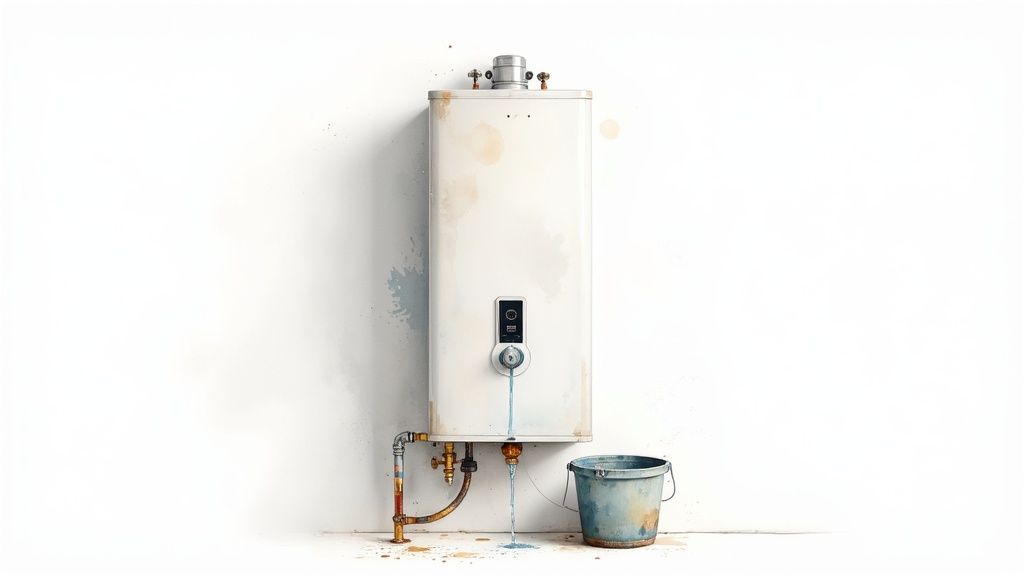
Ensuring your water heater is in prime condition before the first snowfall is a critical winter plumbing tip that goes beyond just comfort; it’s about reliability and avoiding emergency repairs during the coldest months. Pre-winter maintenance involves a systematic check-up of your unit, which includes flushing the tank to remove efficiency-robbing sediment, inspecting the sacrificial anode rod, testing the pressure relief valve, and verifying its insulation. This proactive service ensures you have dependable hot water when demand is highest and helps prevent catastrophic failures when plumbing services are busiest.
This process is vital because cold incoming water forces your heater to work significantly harder, and any underlying issues like sediment buildup or a corroded anode rod will be exacerbated. For Denver homeowners, this means a higher risk of a breakdown right when a hot shower is most needed. A well-serviced unit operates more efficiently, saving you money on energy bills and extending the appliance’s lifespan.
Why This is a Top Priority for Denver Homeowners
The value of preventive maintenance is clear in high-demand environments. Mountain resort properties in Colorado, for instance, make it standard procedure to service every water heater before the ski season begins to guarantee guest satisfaction and prevent operational shutdowns. Similarly, homeowners in Minnesota, a state with notoriously harsh winters, reported a 30% reduction in winter water heater failures after adopting routine preventive maintenance schedules.
This proactive approach, heavily promoted by manufacturers like Rheem and AO Smith, prevents the inconvenience and high cost of an emergency call. A mid-January failure in Denver not only means a cold home but also potentially a long wait for an available technician.
Key Takeaway: Servicing your water heater in the fall is a strategic investment in energy efficiency and reliability, preventing costly mid-winter emergencies when your system is under the most strain.
Actionable Tips for Effective Maintenance
- Schedule Early: Book your professional service in the early fall (September or October) to beat the pre-winter rush and ensure you get an appointment.
- Flush the Tank: Sediment from Denver’s hard water can accumulate at the bottom of the tank, reducing efficiency and causing damage. Flushing it annually removes this buildup.
- Check the Anode Rod: This rod protects your tank from rust. It should be inspected annually and replaced if it’s heavily corroded, typically every 3-5 years.
- Add a Blanket: For older units or those in unheated spaces like a garage, an insulating water heater blanket is a low-cost addition that can reduce standby heat loss by 25-45%.
For a step-by-step walkthrough and more professional advice, explore this detailed guide on essential hot water heater maintenance.
While you’re focusing on your water heater, it’s also a good time to consider overall water quality. Addressing hard water can reduce the sediment that makes heater maintenance so crucial. Investigating a whole-house water filtration system can protect not just your water heater but all your plumbing fixtures and appliances from mineral buildup.
6. Know Your Main Water Shut-Off Location: Your Emergency Stop Button
Of all the winter plumbing tips available, knowing the location of your main water shut-off valve is arguably the most critical in an emergency. This single valve is your home’s “stop button,” allowing you to immediately halt all incoming water flow. When a pipe bursts under the extreme pressure of frozen water, shutting this valve off in seconds versus minutes can mean the difference between a manageable cleanup and catastrophic structural damage.
This valve is typically found where the main water line enters your house. For many Denver homes, this means checking the basement, often near the front foundation wall, or in a utility closet or crawl space. Locating and ensuring this valve is accessible and functional before a crisis is a non-negotiable part of winter readiness.
Why This is a Top Priority for Denver Homeowners
The value of this knowledge was starkly illustrated during the 2021 Texas freeze. Homeowners who knew their shut-off location were able to prevent widespread flooding as soon as they heard the tell-tale sound of a burst pipe. In contrast, those who couldn’t find their valve watched helplessly as water inundated their properties. Recognizing this, insurance companies like USAA now emphasize shut-off valve knowledge in homeowner education, and some even inquire about it during claims processing.
Local emergency services in cold climates, including many fire departments in the Denver metro area, frequently include “Know Your Shut-Off” as a core component of their winter safety presentations. It’s a simple piece of information with immense power to mitigate damage.
Key Takeaway: In a pipe burst scenario, the main water shut-off valve is your most powerful tool. Knowing its location and how to use it can save you thousands of dollars in water damage repairs.
Actionable Tips for Emergency Readiness
- Locate and Tag: Find your main water shut-off valve now. Once located, tie a brightly colored tag or ribbon to it so it’s unmistakable in a panic.
- Test its Function: Annually, turn the valve clockwise to close it and then back again to open it. If it’s stuck or difficult to turn, it may need servicing by a professional plumber before an emergency strikes.
- Educate Everyone: Make sure every responsible person in your household knows where the valve is and how to operate it. Take a photo of it on your phone for quick reference.
- Ensure Clear Access: Do not store boxes, holiday decorations, or other items in front of the valve. It must be clear and accessible at all times.
If your current valve is in a hard-to-reach location or is an outdated gate-style valve that is prone to seizing, it’s a wise investment to have a plumber install a modern, more accessible ball valve. For a professional assessment or upgrade, you can learn about main water line services to ensure your home is truly prepared.
Winter Plumbing Tips Comparison
| Item | Implementation Complexity 🔄 | Resource Requirements ⚡ | Expected Outcomes 📊 | Ideal Use Cases 💡 | Key Advantages ⭐ |
|---|---|---|---|---|---|
| Insulate Exposed Pipes | Moderate: DIY possible but tricky in tight spaces | Foam sleeves, heat tape, fiberglass insulation | High: Prevents bursts, reduces heat loss, saves energy | Pipes in unheated areas, extreme cold climates | Cost-effective, energy-saving, protects pipes |
| Drip Faucets During Freezing Weather | Low: Simple to implement, just faucet adjustment | Minimal: slight increase in water usage | Moderate: Prevents freezing by water movement | Exterior faucets, unheated spaces during freezes | Immediate protection, no equipment needed |
| Disconnect and Drain Outdoor Hoses | Low-Moderate: Requires valve access and hose handling | Minimal: no cost besides time | High: Prevents spigot damage and interior flooding | Outdoor connections before first hard freeze | Simple, major impact, extends hose lifespan |
| Maintain Consistent Indoor Temperature | Moderate: Requires thermostat management | Moderate-High: Continuous heating costs | High: Protects all indoor plumbing, prevents surprises | Whole-home plumbing protection, away from home | Comprehensive protection, maintains comfort |
| Service Water Heater Before Winter | Moderate-High: Requires technical knowledge or professional service | Professional service or DIY tools | High: Prevents failures, increases efficiency | Homes relying on water heaters in winter | Extends lifespan, improves safety and efficiency |
| Know Your Main Water Shut-Off Location | Low: One-time effort to locate and learn operation | Minimal: may need tools for operation | Very High: Enables quick emergency response | Emergency situations, burst pipes | Prevents major water damage, essential knowledge |
Your Winter-Ready Plumbing Action Plan
Navigating a Denver winter without plumbing emergencies is not a matter of luck; it’s a direct result of preparation and proactive maintenance. Throughout this guide, we’ve broken down the essential winter plumbing tips that form a comprehensive defense for your home against the Front Range’s unpredictable and often severe cold snaps. By taking these steps, you are actively preventing the catastrophic damage, costly repairs, and significant stress that a burst pipe can cause.
Think of this action plan as building multiple layers of security. Insulating your pipes is your first line of defense, shielding the most vulnerable parts of your system. Dripping faucets during a deep freeze acts as a pressure-relief valve, keeping water moving when it’s most likely to solidify. Disconnecting hoses is a simple but critical task that prevents ice from backing up into your home’s plumbing. Each action, from small to large, contributes to a robust, winter-ready home.
Key Takeaways for Denver Homeowners
The most important takeaway is that prevention is always more effective and less expensive than reaction. The unique challenges of our high-altitude climate, with its rapid temperature drops and dry air, make these measures especially critical.
Let’s recap the core strategies for a worry-free winter:
- Create a Physical Barrier: Your primary goal is to keep the cold out. Prioritize insulating pipes in unheated areas like crawl spaces, basements, and garages. This is the single most impactful preventive step you can take.
- Maintain Internal Stability: Your home’s internal environment is a powerful tool. Maintaining a consistent thermostat setting, even when you’re away, and servicing your water heater ensures your plumbing system isn’t subjected to extreme internal temperature fluctuations that can exacerbate external cold.
- Know Your Emergency Protocol: Knowledge is power. Locating and testing your main water shut-off valve before an emergency occurs can be the difference between a small, manageable leak and a full-blown flood. It’s a five-minute task that can save you thousands of dollars.
Your Next Steps: From Knowledge to Action
The value of mastering these concepts lies in transforming your role from a passive homeowner into a prepared guardian of your property. You are now equipped with the specific knowledge needed to protect your investment and ensure your family’s comfort and safety. Don’t let this checklist remain just a list. Over the next weekend, commit to taking action. Walk through your home, identify your exposed pipes, check your outdoor spigots, and locate that main water valve.
While these DIY winter plumbing tips empower you to handle seasonal preparations, it’s equally important to recognize when a situation requires professional expertise. If you discover a persistent leak, encounter a valve that won’t turn, or need a thorough inspection and servicing of your water heater, calling a professional is the safest and most effective choice. Your proactive efforts, combined with professional support when needed, create the ultimate defense against winter’s chill.
For comprehensive winterization services, emergency repairs, or professional advice tailored to your home’s specific needs, trust the experts at Professional Plumber Denver. Our team is ready 24/7 to help you implement these winter plumbing tips and ensure your home remains safe and dry all season long. Contact us today at Professional Plumber Denver to schedule your service.

Recent Comments