
That moment of shock when you turn on the tap for a relaxing bath, only to see murky, brown water filling the tub? It's definitely alarming, but don't panic. It's a surprisingly common issue, and the fix is often simpler than you'd think.
That rusty or yellowish tint is almost always caused by an excess of minerals, rust from old pipes, or sediment that's been kicked up somewhere along the water line. The key is figuring out where it's coming from.
So, Why Is My Bathtub Water Brown?
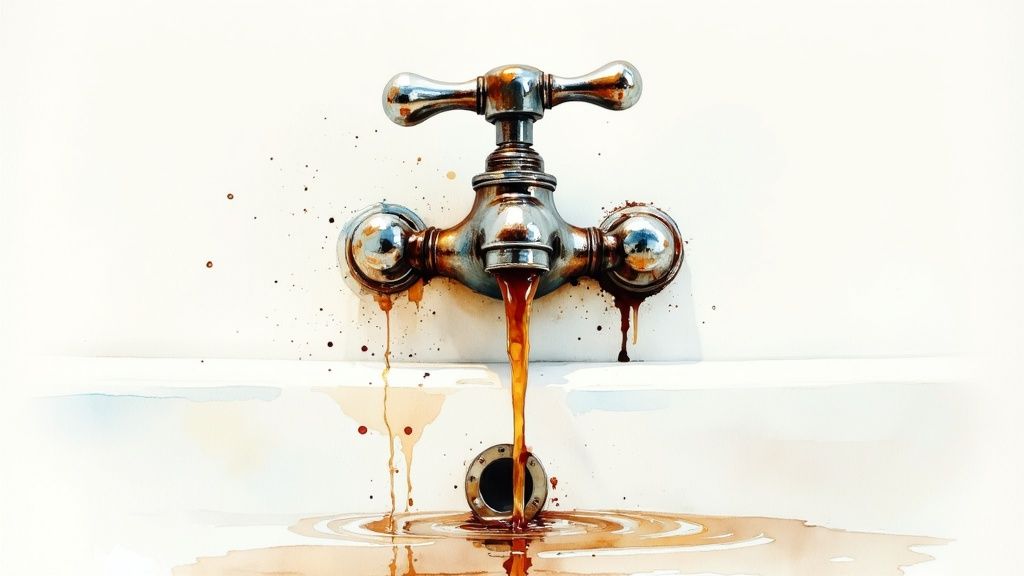
Seeing discolored water can be unsettling, but it’s rarely a sign of a plumbing disaster. Think of it more as a clue. Something has changed on the water's journey to your faucet, introducing particles that don't belong there.
The most frequent culprit is a high concentration of minerals, specifically iron and manganese. These elements are naturally present in the ground and can seep into the water supply, especially if you have well water or live in an area with older infrastructure. When they mix with the chlorine used to treat city water, they oxidize—basically, they rust—and create that unappealing brown color.
In fact, around 20% of households with private wells deal with aesthetic water issues like this, largely due to high mineral content.
The Three Most Likely Suspects
So, where is this discoloration originating? In my experience, it almost always traces back to one of three places:
- Your Hot Water Heater: If the brown water only shows up when you run the hot tap, you’ve likely found your problem. Sediment and rust have probably built up inside the tank over the years.
- Your Home’s Pipes: Older homes, especially those with galvanized steel pipes, are notorious for this. The pipes corrode from the inside out, and little flakes of rust break off into the water stream.
- The Municipal Water Supply: Sometimes the issue isn't in your home at all. If the city is flushing hydrants, there's a nearby water main break, or even heavy construction, it can stir up sediment in the main lines, affecting the whole neighborhood for a short while.
Pro Tip: Before you call anyone or start taking things apart, run a simple test. Turn on the cold water first, then the hot. If only the hot water is brown, the problem is your water heater. If both are brown, the issue is further down the line. This one check will save you a ton of time.
To help you get to the bottom of it even faster, here’s a quick chart to diagnose the problem based on what you're seeing.
Quick Diagnostic Chart for Brown Water
Use this table to quickly narrow down the source of your brown water based on where and when it appears, guiding you to the most likely cause.
| Symptom | Potential Cause | What to Do First |
|---|---|---|
| Brown water from hot taps only | Sediment/rust in the hot water heater | Flush your water heater to remove buildup. |
| Brown water from all taps (hot & cold) | Issue with main supply line or home's pipes | Check with neighbors to see if they have the same issue. |
| Water is clear at first, then turns brown | Rust inside your home's galvanized pipes | Run the tap for a few minutes to see if it clears. |
| Water pressure is also low | A broken water main or clogged aerator | Check the faucet aerator for sediment before calling a plumber. |
This chart should point you in the right direction. Once you've identified the likely source, you can move on to the solution.
Mineral content often goes hand-in-hand with "hard water." High levels of iron and manganese are just one part of the equation. You can learn more about the signs and effects of hard water in our detailed guide. Pinpointing the source is the crucial first step to getting your crystal-clear water back for good.
Is It Your Plumbing or the City's?
Before you start tearing things apart or calling in the cavalry, you need to do a little detective work. The big question is: is this a "my house" problem, or is this a "my whole street" problem? Figuring that out first will save you a ton of time and potential headaches.
The easiest way to get an answer? Just ask a neighbor. A quick text or a knock on the door to see if they're getting the same murky water can tell you everything you need to know. If their water is brown too, chances are the issue is coming from the municipal supply.
What to Do if It’s a City-Wide Issue
If your neighbors are seeing the same thing, your next move is to check in with your local water utility. Hop on their website or check their social media accounts. They're usually pretty good about posting alerts for things like:
- Hydrant Flushing: This is a super common reason for temporary brown water. The high pressure stirs up sediment in the main lines.
- Water Main Breaks: An emergency repair down the street can kick a lot of dirt and rust into the system.
- Scheduled Maintenance: Sometimes they have planned work that can temporarily affect water quality.
Here's the good news: if the problem is widespread, your job is easy. You just have to wait it out. Once the utility gives the all-clear, run your cold water taps for a few minutes to flush any lingering sediment out of your pipes.
Pinpointing the source is everything. You don't want to waste time and money flushing your water heater if the real problem is a broken main three blocks away. This is a very different situation from problems that start inside your own pipes, like a sewer line issue, which brings its own set of clues. For more on that, check out our guide on what causes a sewer backup.
But if your neighbor's water is crystal clear? Well, then it’s time to start looking closer to home.
Finding the Source Inside Your Home

So, your neighbor’s water is fine? That means it's time to play detective inside your own house. When the problem is localized to your home, the issue almost always boils down to one of two things: your water heater or the pipes themselves.
Let’s start with a quick and telling test. Go to the tub and turn on only the hot water. Let it run for about a minute. If that water is brown but the cold water runs crystal clear, you’ve probably just found your culprit. This is a classic sign of rust and sediment buildup inside your water heater tank.
What's happening is that years of mineral deposits and rust particles have settled at the bottom of the tank. When you call for hot water, all that gunk gets stirred up and flows right out of your faucet.
Investigating Your Pipes and Water Heater
Now, if both your hot and cold water are discolored, we need to look at your pipes. This is especially common in homes built before the 1960s, which often have galvanized steel pipes. These pipes are notorious for corroding from the inside out over the decades. As they rust, little flakes break off and travel with the water flow.
You can usually spot these pipes in a basement or crawl space—they have a dull, gray, metallic look.
If you suspect the water heater is the problem, there’s a simple way to confirm it.
- Find the drain valve: Look for a spigot near the bottom of the water heater tank.
- Be careful: The water in there is dangerously hot. Grab a bucket and put on some heavy-duty gloves.
- Drain a little water: Carefully open the valve just enough to let some water out into the bucket.
If that water looks rusty or has sandy sediment floating in it, there's your proof. The corrosion inside that tank is what's causing the brown water in your tub.
A rusty water heater isn't just an ugly problem; it’s an efficiency killer. All that sediment buildup acts like insulation, forcing your heater to work much harder to heat the water. That means higher energy bills over time. Tackling this now can genuinely save you money down the road.
Getting Your Water Clear Again: Practical Fixes
Okay, so you’ve played detective and have a good idea of what’s causing that murky brown water. Now, let's get it fixed. The right game plan depends entirely on where the problem is coming from—you wouldn't treat a rusty water heater the same way you'd handle an issue with the city's main line.
If It’s Your Hot Water Heater
When the brown stuff only shows up with the hot water, the most likely culprit is your water heater. Over time, sediment and rust settle at the bottom of the tank, and flushing it out is the best way to get things clean again.
It's a straightforward DIY job. You'll need a garden hose, a bucket, and some gloves. Start by shutting off the power (or gas) to the heater for safety. Next, connect your hose to the drain valve at the base of the tank and run the other end somewhere safe, like outside or into a floor drain. Open that valve, and then turn on a hot water tap somewhere in your house—this lets air into the system so the tank can drain completely.
A Pro's Take: Flushing your water heater isn't just a one-time fix. Think of it as an annual check-up. Doing this once a year not only prevents future water color problems but can also make your heater run more efficiently and last longer.
Dealing with Rusty Pipes or City Supply Problems
What if both your hot and cold water are running brown? That points the finger at either your home's pipes or the municipal water supply itself.
If the city is doing maintenance or there’s a water main break, your job is easy: just wait. Once your local water utility gives the all-clear, you'll need to flush your own lines. The best way is to run cold water from a large faucet, like your bathtub or an outdoor spigot, for a good 10-15 minutes until it’s crystal clear.
But if you're dealing with old, corroding galvanized pipes inside your own walls, you have a couple of options.
- The Quick Fix: A whole-house sediment filter can be a lifesaver. It’s a relatively affordable solution that installs where the water enters your home, catching rust and other gunk before it ever gets to your tub.
- The Permanent Solution: The only way to truly solve the problem of old pipes is to replace them. Repiping your home is a major project and a significant investment, but it eliminates the source of the rust for good.
For immediate, localized relief, something as simple as a faucet-mounted filter can make a difference, as you can see here.
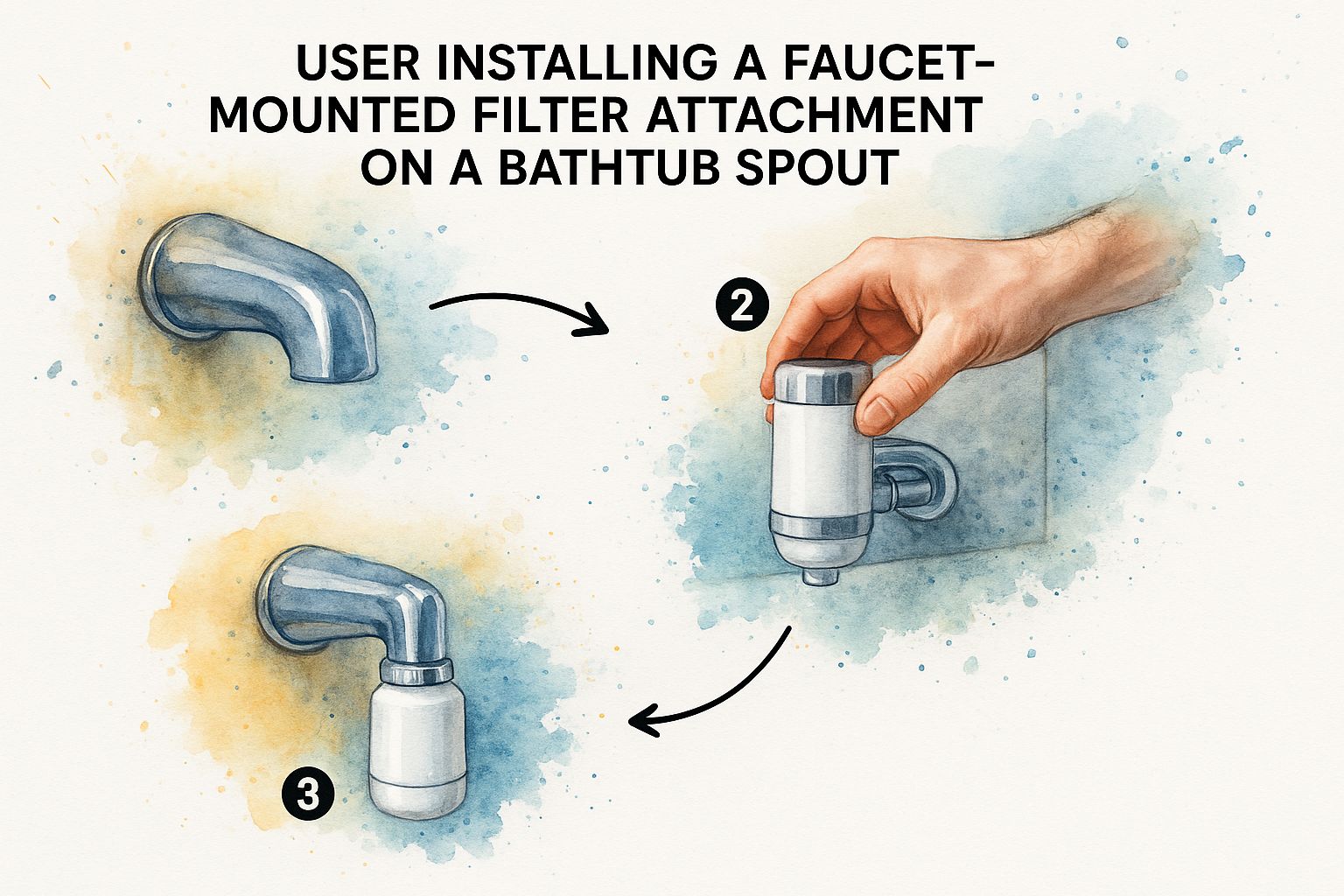
While a small filter like this is just a temporary measure, it shows that filtering the water right where you use it can work. Water quality issues are more common than you'd think. Many cities are working with water infrastructure that dates back to the mid-20th century, so pipe corrosion is an ongoing headache for many homeowners. If you're interested in the bigger picture, you can learn more by exploring some deeper insights on household water safety.
Knowing When to Call a Professional Plumber
Look, I'm all for a good DIY fix, and many causes of brown water in your tub can be handled with a bit of elbow grease. But there are definitely times when you need to put down the wrench and pick up the phone. Knowing when to call in a pro can save you a world of headache and protect your home from some serious damage.
So, when do you make that call? The biggest red flag is persistence. If you've already flushed your water heater and let the cold taps run for a good 10-15 minutes, but that ugly brown water just keeps coming back, it’s a clear signal that the problem is bigger than a simple fix.
Another major warning sign is a sudden drop in water pressure that happens right along with the discoloration. When those two things happen together, it often points to a serious issue like a water main break or a significant leak somewhere you can't see. That's not something to wait on.
When Safety Is the Top Priority
Sometimes, it just comes down to your comfort level. If you're not confident about messing with a water heater—and let's be honest, dealing with scalding hot water and pressure relief valves isn't for everyone—then don't. Your safety is what matters most. A botched DIY repair can easily turn a small issue into a costly disaster.
The potential health risks of contaminated water are no joke. Globally, unsafe water sources are linked to hundreds of thousands of illnesses every year. This is exactly why you can't afford to ignore persistent brown water. For a deeper look, check out this eye-opening report on global water safety from the Pacific Institute.
If you’ve got a hunch that your home’s old, corroded pipes are the real culprit, your next move is to get a professional diagnosis. A licensed plumber has the tools and experience to figure out exactly what’s going on and give you a solid plan to fix it for good.
Curious about how to stay on top of your home's plumbing health? Dive into our guide on the importance of sewer line maintenance.
A Few Lingering Questions About Brown Bathtub Water
Even after you've figured out what's going on, you're probably still left with a few nagging questions. Getting those answered can give you some peace of mind and a clear path forward.
Is Brown Water Safe for Bathing?
Most of the time, yes. If the culprit is simply rust or mineral sediment, the water is generally considered safe for bathing. The key minerals here, iron and manganese, are more of an eyesore than a health hazard for your skin.
However, the real red flag is the smell. If the brown water is accompanied by a foul, sewage-like odor, that’s a completely different story. That smell could indicate a serious contamination issue, and you should absolutely not use the water. In that scenario, your first call should be to your water company or a plumber.
My Advice: While a little rust in the water usually won't hurt you, it's always better to be safe than sorry. If you have any doubt about the source, just hold off on that bath until you know for sure.
How Long Until My Water Is Clear Again?
This really depends on what’s causing the problem. The timeline can range from a few hours to… well, a while.
- Public Water Main Work: If the city is flushing hydrants or fixing a main line, your water should clear up on its own within a few hours after they’ve wrapped up.
- Water Heater Sediment: This is a quick fix. Flushing your water heater usually solves the problem right away, and the whole task takes about an hour from start to finish.
- Corroded Pipes: This is the one you don't want. Rusted pipes are a long-term issue. The water might clear up after you let it run for a bit, but that brown tinge will keep coming back. The only permanent solutions are installing a whole-house filter or, eventually, replacing the pipes.
Will This Brown Water Stain My Tub?
Absolutely. The same iron particles that turn your water brown can leave nasty, rust-colored stains on your bathtub, sinks, and toilets. It's especially brutal on laundry, turning your bright whites into a sad, dingy yellow.
Try to avoid doing laundry or letting the discolored water sit in the tub for too long. If you already have some stains, you can often lift them with a simple paste made from lemon juice and baking soda.
If the brown water in your tub just won't go away, or if you're pretty sure your pipes are the problem, it’s time to bring in a pro. The team at Professional Plumber Denver has seen it all and has the right tools to diagnose the problem correctly and offer a real, long-term solution. Contact us today for a professional assessment.

Recent Comments