
Yes, virtually every tank-style gas water heater you’ll find has an anode rod. It’s a critical component installed by the manufacturer, and it acts as a silent bodyguard for your water tank, protecting it from itself.
Why Your Gas Water Heater Needs An Anode Rod
Think of the anode rod as a decoy. It’s a simple metal rod, usually made of magnesium or aluminum, that is deliberately designed to corrode.
The minerals and elements in your water are naturally corrosive and are constantly trying to eat away at the inside of your steel water heater tank. The anode rod essentially “sacrifices” itself by attracting all that corrosive action, drawing it away from the tank lining. This simple piece of science is the single most important factor in preventing your water heater from turning into a rusty, leaking mess.
This process is what allows a water heater to last for 10-15 years instead of just a few. You can get a more detailed look at how this works from the experts at Angi.com.
The Key Exception: Tankless Heaters
The big exception here? Tankless gas water heaters.
Since these units heat water instantly as it passes through, there’s no large tank full of standing water. No stored water means no risk of long-term corrosion, so an anode rod simply isn’t necessary.
To make it crystal clear, it really comes down to whether the heater has a storage tank or not.
Anode Rod Presence by Water Heater Type
Here’s a quick reference table to show you which common types of water heaters include an anode rod.
| Water Heater Type | Has Anode Rod? | Reason |
|---|---|---|
| Gas Tank Heater | Yes | Stores a large volume of water and needs protection from rust. |
| Electric Tank Heater | Yes | Also stores water and requires the same corrosion protection. |
| Tankless Heater | No | Heats water on demand, so there is no tank to corrode. |
As you can see, the rule is straightforward: if it has a tank to hold water, it has an anode rod to protect it.
How An Anode Rod Protects Your Water Heater
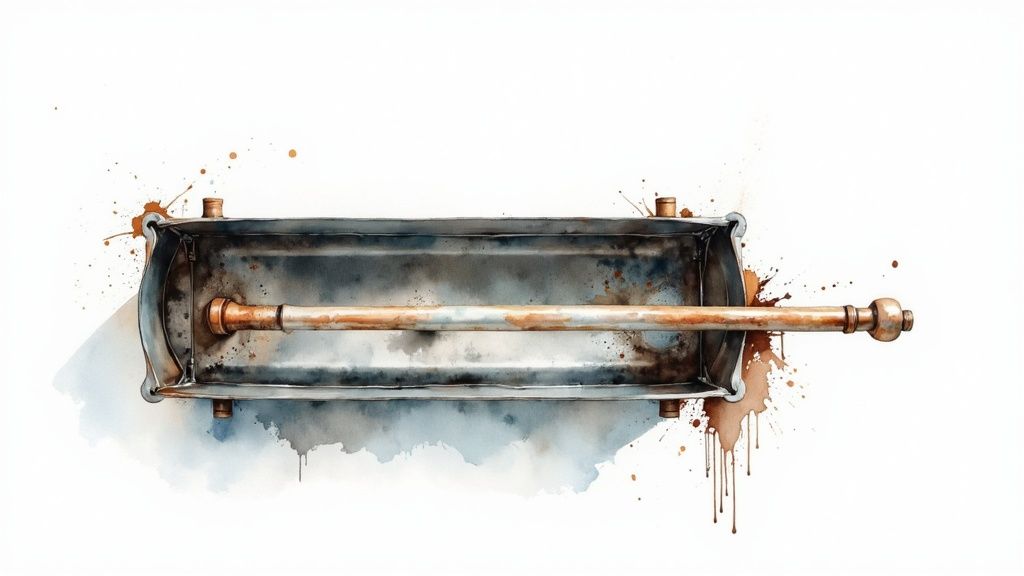
So, how does a simple metal rod stop a huge steel tank from turning into a rusty mess? The whole trick lies in a neat bit of science called galvanic corrosion. You can think of the anode rod as a decoy, or even a bodyguard, for your water heater.
It’s designed to be more attractive to the corrosive elements in your water than the steel tank is. The rod is made from more “reactive” metals—typically magnesium or aluminum—which means it willingly draws the corrosion to itself, leaving the much more expensive tank liner alone.
The Science of Sacrifice
The process is surprisingly similar to how a basic battery works. Inside your tank, you have three key players that create a tiny electrical circuit:
- The Anode: This is the anode rod.
- The Cathode: This is the steel tank of your water heater.
- The Electrolyte: This is simply the water filling the tank.
When these three are together, a small electrical current starts to flow between the rod and the tank. This current causes the more reactive metal of the anode rod to slowly break down and corrode. It literally “sacrifices” itself, bit by bit, to save the tank.
That’s why you’ll often hear plumbers call it a sacrificial anode rod. You can find out more about what an anode rod is in our detailed guide here: https://professional-plumbers-denver.com/blogs/what-is-anode-rod/
This small, controlled reaction is your water heater’s single most important line of defense against an early death. By taking the hit, the rod can easily double the lifespan of your appliance and save you from an expensive, premature replacement.
This internal protection is crucial. And while the anode rod is working hard on the inside, broader coverage like equipment breakdown insurance can give you an extra layer of financial peace of mind for all your essential home appliances.
As long as there’s still material left on the anode rod to corrode, your steel tank is safe. But over time, the rod will completely dissolve. Once it’s gone, the water will immediately start attacking the tank itself, leading to rust, leaks, and total failure. This is exactly why checking on it regularly is so important.
Choosing The Right Type Of Anode Rod
So, you know how an anode rod acts as a bodyguard for your gas water heater. But here’s the thing: not all bodyguards are created equal. Picking the right one isn’t a one-size-fits-all deal; it comes down to the kind of water flowing through your pipes.
Making the right call here is key. It ensures your tank gets the best possible protection and can even get rid of some annoying water problems you might be having. You’ll mainly run into three types of these sacrificial rods: magnesium, aluminum, and a zinc-aluminum alloy. Each one has a specific job to do, depending on your water.
Match The Rod To Your Water
Don’t worry, this is simpler than it sounds. You just need to know two things: is your water hard or soft, and does your hot water ever smell funky?
- Magnesium Rods: Think of these as the premium option. They offer the best protection and are the top choice for homes with soft water. The downside? They get eaten up really fast in hard water, so you’d be replacing them constantly.
- Aluminum Rods: If you’ve got hard water, this is your go-to. Aluminum rods are tough and corrode much more slowly when dealing with high mineral content, giving you a much longer lifespan in those conditions.
- Zinc-Aluminum Rods: This one is the specialist. If you’ve ever noticed a nasty “rotten egg” smell coming from your hot water, you have a bacteria problem. The zinc in this alloy rod is specifically designed to fight off those odor-causing bacteria and clear up the smell.
Making a smart choice here isn’t just about maintenance—it directly impacts your wallet and your water heater’s lifespan.
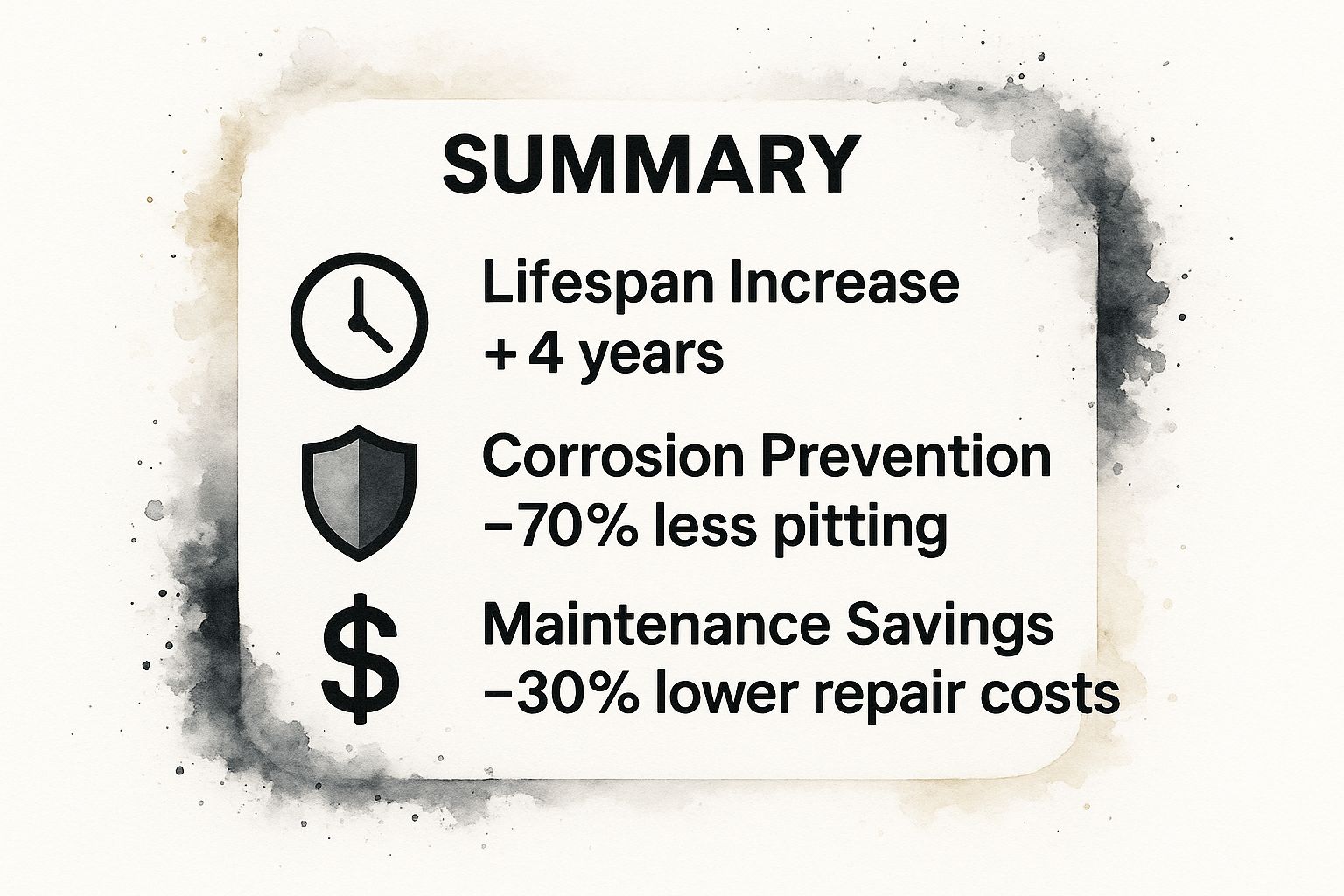
As you can see, this one small part plays a huge role in preventing expensive damage and keeping your heater running efficiently for years.
To make it even easier, here’s a quick breakdown to help you pick the perfect anode rod.
Which Anode Rod Is Best For Your Water?
| Anode Rod Type | Best For | Key Feature |
|---|---|---|
| Magnesium | Soft Water | Offers the highest level of corrosion protection. |
| Aluminum | Hard Water | Lasts much longer in water with high mineral content. |
| Zinc-Aluminum | Smelly Water | Contains zinc to eliminate “rotten egg” odors. |
Ultimately, choosing a rod isn’t just about replacing a part; it’s about customizing your water heater’s defense system. Putting an aluminum rod in a soft-water home is like sending a lightweight to a heavyweight fight—it just won’t offer enough protection. On the flip side, a magnesium rod in a hard-water home is a waste of money because it will dissolve in no time.
Taking a minute to get this right will save you a lot of headaches and cash down the road.
Warning Signs Your Anode Rod Is Failing
Thankfully, your gas water heater usually doesn’t suffer in silence. When its anode rod is on its last legs, it sends out some pretty clear signals. Learning to recognize these clues is the difference between a simple maintenance task and a catastrophic tank failure.
Ignoring the symptoms is really just rolling the dice. Once that anode rod is gone, the corrosive elements in your water have a direct path to the tank’s steel lining. At that point, the clock starts ticking toward rust, leaks, and a very expensive replacement. Catching it early saves a ton of money and a major headache.
Smelly or Discolored Hot Water
One of the first things you’ll probably notice is a change in your water. If your hot water suddenly has a rusty, brownish tint, that’s a huge red flag. This discoloration usually means the anode rod is completely used up, and the water has started eating away at the steel tank itself.
You might also get a nasty “rotten egg” smell, but only from the hot water taps. That distinct sulfur odor is caused by a chemical reaction between certain waterborne bacteria and a dying magnesium or aluminum anode rod.
A healthy anode rod actually helps suppress these odor-causing bacteria. Once the rod is nearly gone, the bacteria can multiply, creating that unmistakable smell that tells you the heater needs attention right away.
Unusual Noises From the Tank
Another dead giveaway is when your water heater starts making strange sounds. As an anode rod corrodes and falls apart, chunks of it settle at the bottom of the tank, adding to the sediment buildup.
This sludge at the bottom can cause all sorts of noises when the burner kicks on:
- Popping or Banging: This happens when water gets trapped underneath the sediment layer. It boils into steam, and the bubbles burst with a loud pop.
- Sizzling: A persistent sizzle can mean the burner is having a hard time heating the water through a thick blanket of mineral gunk.
These sounds aren’t just annoying; they’re a sign your heater is working overtime and losing efficiency, which you’ll see on your energy bill. This is why a proactive inspection every 2-3 years is your best bet—you can catch a failing rod long before the real damage starts.
How To Inspect And Replace Your Anode Rod
If you’re a hands-on type of homeowner, inspecting and replacing your gas water heater’s anode rod is a totally doable weekend project. Think of it this way: a little bit of work now saves you from the massive headache and expense of a premature tank failure later. With the right tools and a healthy dose of caution, you can absolutely get this done yourself.
First things first: safety. Before you even think about touching the tank, shut off the gas supply. Next, turn off the cold water inlet valve. Go open a hot water faucet somewhere in the house—this will relieve the pressure built up inside the tank. It’s also a good idea to drain a few gallons of water from the bottom drain valve to give yourself some working room.
Locating And Removing The Rod
Now for the hunt. The anode rod is almost always on the top of the tank, sometimes hiding under a little plastic cap. You’re looking for what appears to be a big hex-head bolt. To get this thing loose, you’ll need a 1 1/16-inch socket and a breaker bar. Don’t be surprised if it puts up a fight; they’re often cranked on incredibly tight at the factory.
Once you break the seal, you can unscrew and pull the old rod straight up and out. Get ready, because it can be surprisingly long and often heavy with all the gunk and corrosion it has collected. This is the moment of truth.
A healthy anode rod will still look pretty solid, even with some normal pitting. If what you pull out is pencil-thin, eaten away, or just the bare steel wire core, it’s definitely time for a replacement.
If the old rod is toast, it’s time for the new one. Just wrap the threads of the new rod with Teflon tape, screw it back into the tank, and tighten it down firmly. Now, just work backward: close the drain valve, turn the cold water supply back on, and wait for the tank to fill completely before you relight the pilot and turn the gas back on.
For a more complete picture of other crucial upkeep tasks, check out our guide on hot water heater maintenance for more pro tips.
Making this inspection a regular habit is the key. By checking the rod every 2-3 years, you can stop tank corrosion in its tracks, making sure your water heater lives a long, reliable life. Honestly, this simple check is one of the best investments you can make in your home’s plumbing system.
The Real Cost Of Ignoring Your Anode Rod

This is where a little bit of proactive maintenance can save you a whole lot of money down the road. It might seem harmless to ignore your gas water heater’s anode rod, but that decision can quickly lead to one of the most expensive and frustrating home repairs you’ll ever face.
When you look at the numbers, the choice is crystal clear. A brand new sacrificial anode rod is a surprisingly cheap part, usually costing somewhere between $30 and $60.
Compare that to the cost of replacing an entire gas water heater that has rusted out from the inside. You could easily be looking at a bill for $1,200 or more once you add up the cost of the new unit and professional installation.
A Small Investment For A Huge Return
Think of it this way: spending a few bucks on an anode rod every few years is one of the smartest investments you can make in your home’s plumbing. By simply checking and replacing this one small part, you’re protecting your entire water heater from the inside out and avoiding the massive headache of a tank failure.
This isn’t just about a minor repair; it’s a strategic financial move. A healthy anode rod can dramatically extend your water heater lifespan, potentially doubling it from an average of seven years to fifteen or more.
It seems more and more homeowners are catching on to this. The global market for water heater anode rods was valued at around USD 1.51 billion in 2023 and is expected to keep growing. This trend, highlighted by industry analysis from sources like Verified Market Reports, shows a major shift toward preventative home maintenance.
Ultimately, ignoring the anode rod is like letting your water heater slowly self-destruct. A small, predictable expense for a new rod is always going to be better than the shocking bill for an emergency replacement. It’s the key to keeping your unit running efficiently for years. To learn more, check out our guide on understanding your water heater’s lifespan.
Got Questions About Anode Rods? We’ve Got Answers.
Let’s finish up by tackling some of the most common questions I hear from homeowners about anode rods. Getting these basics down is the best thing you can do to keep your water heater running for years to come.
How Often Should I Replace My Anode Rod?
A good rule of thumb is to pull it out for a look every 2-3 years. You’ll likely need to replace it every 3-5 years, but that’s just an average.
Your mileage will vary. If your home has hard water, for instance, that rod is going to work overtime and wear out much faster. The same goes for homes with a water softener—the salts used in the softening process can be surprisingly aggressive on an anode rod, so you’ll want to check it more often.
Can A Water Heater Even Work Without An Anode Rod?
Technically, yes, but it’s a terrible idea for most models. The only exceptions are certain modern heaters with non-metallic tanks (like fiberglass) that simply can’t rust, so no anode rod is needed. And, of course, tankless water heaters don’t have one because they don’t store water in a tank.
For your standard steel tank heater, though, running it without a functional anode rod is like firing your tank’s only bodyguard.
Once that anode rod is gone, the water’s corrosive nature goes to work directly on the steel walls of your tank. It’s not a matter of if it will start to rust and leak, but when. Eventually, you’ll face a total tank failure and a very expensive replacement.

Recent Comments