Denver Drains: Keeping Them Flowing Freely
Clogged drains are a common household headache, especially in Denver, where our water and older infrastructure can present unique plumbing challenges. This listicle offers seven drain cleaning tips tailored to Denver homeowners, providing actionable solutions to tackle common clogs safely and effectively. Learn how to address minor blockages yourself, saving time and money. Knowing when to call a professional plumber is key. Explore resources on Digital Marketing for Plumbers from Core6 Marketing for insights into choosing the right professional for your needs. This guide empowers you to diagnose and address your drain issues with methods ranging from simple DIY fixes to more involved techniques. Discover how to use everyday household items and tools effectively, minimizing the need for harsh chemicals or costly plumbing services.
Inside, you’ll find detailed instructions for:
- Boiling water flushes
- Baking soda and vinegar mixtures
- Manual snake/auger techniques
- Proper plunger usage
- Dish soap and hot water solutions
- Wet/dry vacuum suction
- Enzyme drain cleaners
1. Boiling Water Flush
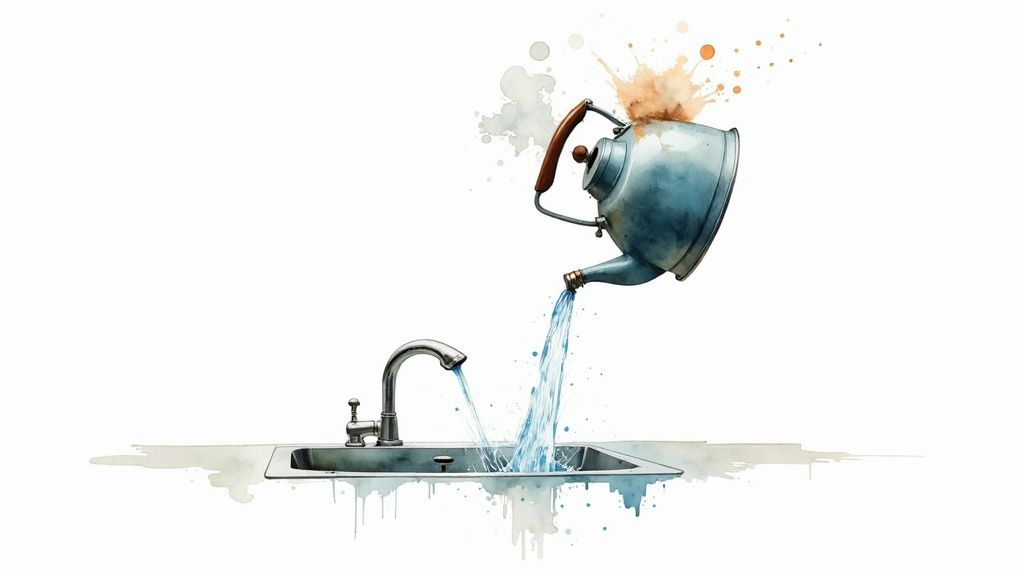
One of the simplest and most effective drain cleaning tips for Denver homeowners is the boiling water flush. This method harnesses the power of heat to dissolve common drain clogs like soap scum, grease, and organic matter. It’s a completely chemical-free and environmentally safe approach, making it a go-to solution for minor blockages. This straightforward technique can save you money on expensive drain cleaners and prevent plumbing emergencies.
How it Works
Boiling water works by melting solidified grease and soap, breaking down these substances into smaller, more easily flushed particles. This process is particularly effective for kitchen sinks prone to grease buildup from cooking and bathroom sinks dealing with soap scum accumulation. The heat also helps to loosen and dislodge other organic materials contributing to the clog.
Practical Applications in Denver Homes
In Denver’s dry climate, drain clogs can be exacerbated by hard water and mineral deposits. The boiling water flush can help mitigate this issue by softening these deposits and preventing them from accumulating into larger obstructions. This method is ideal for addressing slow-draining sinks before they become completely blocked.
- Kitchen Sinks: Grease from cooking often solidifies in drain pipes. Boiling water effectively melts this grease, restoring proper drainage.
- Bathroom Sinks: Soap scum combined with hair can create stubborn clogs. Boiling water helps dissolve the soap and loosen the hair, allowing it to flush away.
- Garbage Disposals: A monthly boiling water flush can help maintain a clean and efficient garbage disposal, removing built-up grease and food particles.
Tips for Effective Boiling Water Flushing
- Staged Pouring: Don’t pour all the boiling water down the drain at once. Instead, pour it in 2-3 stages, allowing 5-10 seconds between pours. This allows the heat to work on the clog more effectively.
- Preventive Maintenance: Use this method weekly as preventive maintenance to keep your drains clear and free-flowing.
- PVC Pipe Caution: Exercise caution with PVC pipes, as boiling water can potentially damage them. Use very hot (not boiling) water instead. This is particularly important in older Denver homes, which may have original PVC plumbing.
When to Call a Plumber
While the boiling water flush is effective for minor clogs, it may not be sufficient for severe blockages. If the drain remains clogged after several attempts, or if you notice other plumbing issues like gurgling sounds or foul odors, it’s best to call a licensed plumber in Denver. They have the expertise and tools to diagnose and resolve more complex plumbing problems.
2. Baking Soda and Vinegar Method
One of the most popular and readily available drain cleaning tips for Denver homeowners leverages the power of two common household items: baking soda and vinegar. This dynamic duo offers a natural, chemical-free approach to tackling drain clogs caused by organic matter, grease, and soap scum. The fizzing reaction created by combining these two ingredients helps break down these substances while also neutralizing unpleasant odors. This method is a simple, cost-effective, and environmentally friendly solution for maintaining clear drains.
How it Works
The science behind this method lies in a simple chemical reaction. Baking soda (sodium bicarbonate) is a base, while vinegar (acetic acid) is an acid. When combined, they produce carbon dioxide gas. This gas creates pressure within the drain, helping to dislodge clogs. The baking soda also acts as a mild abrasive, further aiding in the breakdown of organic matter.
Practical Applications in Denver Homes
This method is particularly useful in Denver homes for addressing minor drain clogs before they become major issues. It’s perfect for routine maintenance and preventing the buildup of grease, soap scum, and hair in drains. The deodorizing effect of the vinegar is also a bonus in combating musty drain smells, particularly relevant in older Denver homes.
- Bathroom Sinks: Ideal for dissolving soap scum and loosening hair buildup in bathroom sinks.
- Kitchen Sinks: Effective for removing minor grease clogs and food particles from kitchen drains.
- Shower Drains: A great way to maintain clear shower drains and prevent slow drainage caused by hair and soap.
Tips for Effective Baking Soda and Vinegar Drain Cleaning
- Dry Drain: Ensure the drain is relatively dry before starting. Remove any standing water.
- Baking Soda First: Pour 1/2 cup of baking soda directly into the drain opening.
- Vinegar Follow-Up: Follow immediately with 1/2 cup of white vinegar.
- Cover and Wait: Cover the drain with a stopper or cloth to contain the fizzing reaction and maximize its effectiveness. Wait for 15-30 minutes.
- Hot Water Flush: Flush the drain with hot (not boiling) water to clear away the loosened debris.
When to Call a Plumber
While this method is highly effective for minor drain clogs, it’s important to recognize its limitations. If your drain remains clogged after several attempts with the baking soda and vinegar method, it’s a sign of a more serious blockage that requires professional attention. Contact a licensed plumber in Denver for stubborn clogs or other plumbing issues like slow drains, foul odors, or gurgling sounds. They have the tools and expertise to diagnose and resolve more complex drainage problems.
3. Manual Snake/Auger Method
One of the most effective drain cleaning tips for Denver homeowners involves using a manual snake or auger. This tool, a flexible metal cable, is designed to physically break through and remove tough blockages within drainpipes. Unlike chemical drain cleaners, a snake can tackle stubborn obstructions like hair clogs, soap buildup, and other solid debris that chemicals can’t dissolve. This method offers a hands-on approach to clear drains quickly and efficiently.
How it Works
The manual snake, or auger, works by physically reaching the clog within the pipe. As you rotate the snake, its head breaks up the blockage into smaller pieces or grabs onto the obstruction, allowing you to pull it out. This mechanical action is particularly effective for blockages that are too solid or densely packed for liquid drain cleaners to penetrate.
Practical Applications in Denver Homes
Denver homes, particularly older ones, can often experience drain clogs due to hair, soap scum, and mineral buildup. The manual snake method is ideal for addressing these common issues in various drains:
- Bathroom Sinks: Hair and soap scum are notorious for clogging bathroom sinks. A snake can effectively remove these blockages.
- Shower Drains: Similar to sinks, shower drains are susceptible to hair and soap buildup, making a snake a valuable tool.
- Kitchen Sinks: Food particles and grease can accumulate in kitchen drains. While boiling water can help with grease, a snake may be necessary for solid food debris.
The infographic below illustrates the three key steps involved in using a manual snake or auger: insertion, rotation and retrieval, and disinfection.
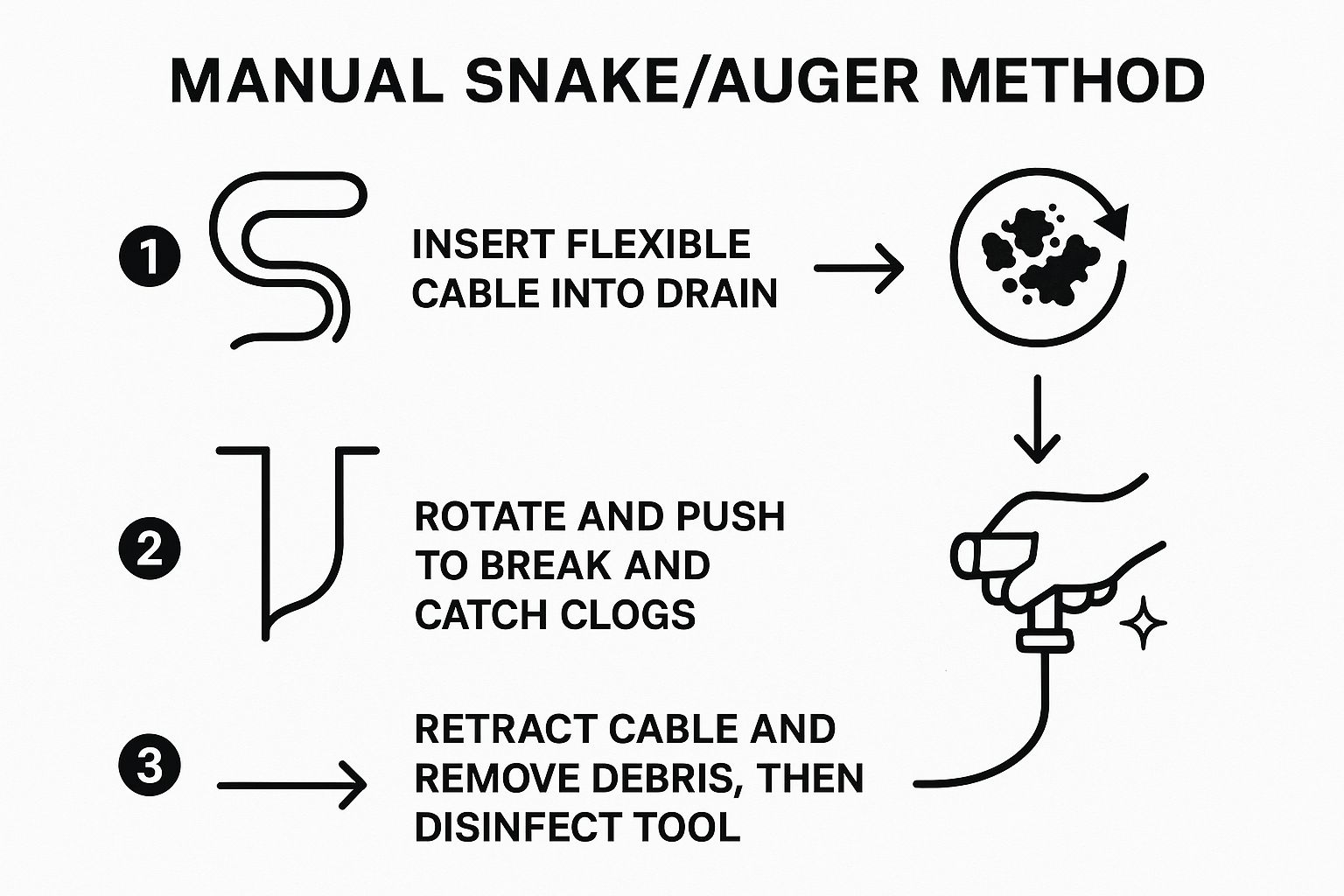
The visualized process emphasizes the importance of rotating the snake while pushing and pulling it to effectively break up and remove clogs. Disinfecting the tool afterwards is crucial for hygiene and preventing the spread of bacteria.
Tips for Effective Snaking
- Gentle Start: Begin with gentle pressure and gradually increase force as needed to avoid damaging pipes.
- Rotating Motion: Rotate the snake consistently while pushing and pulling it to effectively break up and catch debris.
- Retrieval Technique: Focus on retrieving the clog rather than pushing it further down the drain.
- Clean After Use: Thoroughly clean and disinfect the snake after each use to maintain hygiene.
When to Call a Plumber
While the manual snake is a powerful tool, some blockages may be too deep or complex for DIY methods. If you’re unsure about using a snake or if the clog persists after several attempts, it’s best to call a licensed plumber in Denver. Learn more about when to call a professional. They have the expertise and specialized equipment to handle complex drainage problems efficiently and effectively.
4. Plunger Technique
One of the most readily available and effective drain cleaning tips for Denver homeowners is the plunger technique. This method uses a cup plunger (not a toilet plunger) to create pressure and suction, dislodging blockages in sink, tub, and shower drains. The plunger technique works by creating hydraulic pressure that can break up clogs and force them through the drainage system. It’s a simple, inexpensive solution that can often resolve minor drain issues without the need for harsh chemicals or professional intervention.

How it Works
The cup plunger’s rubber cup forms a seal over the drain opening. Rapid up-and-down movements create alternating pressure and suction within the drain pipe. This action dislodges trapped debris like hair, soap scum, and food particles, allowing them to be flushed away. Maintaining a proper seal is key to the effectiveness of this technique. Learn more about Plunger Technique.
Practical Applications in Denver Homes
The plunger technique is particularly helpful in Denver homes where hard water can contribute to mineral buildup in drains. This buildup can trap other debris, leading to clogs. The plunger can help break up these mineral deposits and clear the blockage. It’s an excellent first-line approach for slow-draining or completely blocked sinks, tubs, and showers.
- Kitchen Sinks: Food particles and grease often clog kitchen sinks. The plunger can effectively dislodge these materials, restoring drainage.
- Bathroom Sinks: Hair and soap combine to create stubborn clogs in bathroom sinks. The plunger’s action can break up these clogs, allowing water to flow freely.
- Bathtub Drains: Standing water in bathtubs often indicates a clog. The plunger can clear the blockage, restoring proper drainage.
Tips for Effective Plunging
- Water Level: Ensure enough water covers the plunger cup to create a proper seal. Add water if necessary.
- Overflow Drain: Block the overflow drain with a wet cloth to maximize pressure and prevent air from escaping.
- Plunging Motion: Use quick, forceful plunges rather than slow, gentle ones. This generates the necessary pressure to dislodge the clog.
- Cleanliness: Thoroughly clean the plunger after each use to prevent the spread of bacteria.
When to Call a Plumber
While plunging is effective for many common drain clogs, some blockages may be too stubborn for this method. If repeated plunging attempts fail to clear the drain, or if you notice other plumbing issues like gurgling sounds or foul odors, it’s time to call a licensed plumber in Denver. They possess the expertise and specialized tools to address complex drain issues and prevent further damage.
5. Dish Soap and Hot Water Method
One of the most effective drain cleaning tips for Denver homeowners involves a surprisingly simple combination: dish soap and hot water. This gentle yet powerful method harnesses the lubricating and degreasing properties of liquid dish soap to break down clogs and facilitate smooth drainage. The surfactants in dish soap reduce surface tension, allowing the hot water to penetrate and emulsify fats and oils, the common culprits behind kitchen sink blockages. This method is a cost-effective and environmentally friendly alternative to harsh chemical drain cleaners.
How it Works
The dish soap and hot water method works by combining lubrication and heat to tackle drain clogs. The soap acts as a lubricant, helping debris slide through the pipes more easily. Simultaneously, the soap’s degreasing properties break down fats and oils, emulsifying them into smaller particles that can be flushed away. The hot water further assists in this process by melting solidified grease and softening other organic materials contributing to the blockage.
Practical Applications in Denver Homes
This method is particularly useful in Denver homes, where hard water can exacerbate the buildup of soap scum and mineral deposits. The dish soap helps to break down these deposits, while the hot water flushes them away, preventing further accumulation and potential blockages. It’s an ideal solution for addressing slow-draining sinks and garbage disposals before they become completely blocked.
- Kitchen Sinks: Grease from cooking often solidifies in drain pipes. The dish soap effectively cuts through this grease, while the hot water helps to melt and flush it away.
- Garbage Disposals: Fatty deposits and food particles can accumulate in garbage disposals, leading to unpleasant odors and reduced efficiency. This method helps to clean and deodorize the disposal unit.
- Bathroom Drains: Soap and shampoo residue can build up in bathroom drains, causing slow drainage. Dish soap and hot water can effectively dissolve this residue and restore proper drainage.
Tips for Effective Dish Soap and Hot Water Drain Cleaning
- Soap Quantity: Use 2-3 tablespoons of liquid dish soap, pouring it directly into the drain.
- Soaking Time: Allow the soap to sit in the drain for 20-30 minutes to penetrate and break down the clog.
- Water Temperature: Follow with very hot (but not boiling) water to flush away the loosened debris. This is particularly important in older Denver homes with PVC pipes, which can be damaged by boiling water.
- Repetition: Repeat the process if necessary for stubborn clogs.
When to Call a Plumber
While the dish soap and hot water method is highly effective for many common drain clogs, it may not be sufficient for severe blockages caused by deep-seated obstructions or plumbing issues beyond the p-trap. If the drain remains clogged after several attempts with this method, or if you experience other plumbing problems like gurgling sounds, foul odors, or sewage backups, it’s crucial to contact a licensed plumber in Denver. They possess the expertise and specialized tools to diagnose and resolve complex plumbing problems effectively.
6. Wet/Dry Vacuum Suction
Wet/dry vacuum suction offers Denver homeowners a powerful and effective drain cleaning tip, especially for tackling loose debris and hair clogs. This method bypasses chemical drain cleaners, utilizing the sheer force of suction to dislodge blockages. It’s a surprisingly versatile technique, applicable to various drains around the house. This approach can save you a call to the plumber for common, easily resolved clogs.
How it Works
A wet/dry shop vacuum generates powerful suction that can be directed into a drain opening. By creating a tight seal around the drain, the vacuum effectively sucks out the clog, clearing the blockage and restoring proper drainage. This method excels at removing hair, small objects, and other loose debris that often accumulate in drains.
Practical Applications in Denver Homes
This technique is especially useful in Denver homes where hard water can contribute to mineral buildup, exacerbating clogs caused by hair and other debris. Wet/dry vacuum suction can remove these blockages without harsh chemicals, which can damage pipes over time. This is a particularly valuable approach in older Denver homes with potentially fragile plumbing systems.
- Shower Drains: Hair is a notorious culprit for shower drain clogs. Wet/dry vacuums efficiently remove hair and soap scum buildup.
- Bathroom Sinks: Accumulated debris like toothpaste, hair, and small objects can easily be sucked out with this method.
- Floor Drains: Leaves, dirt, and other outdoor debris that find their way into floor drains can be effectively removed with a wet/dry vacuum.
Tips for Effective Wet/Dry Vacuum Suction
- Wet Mode: If standing water is present, ensure the vacuum is set to “wet” mode to prevent damage.
- Tight Seal: Create the tightest possible seal around the drain opening using rags or a specialized drain attachment for optimal suction.
- Maximum Suction: Use the highest suction setting available on the vacuum for the most effective clog removal.
- Post-Cleaning: Thoroughly clean the vacuum tank and any attachments after use, especially after removing organic material, to prevent bacterial growth and odors.
When to Call a Plumber
While wet/dry vacuum suction is highly effective for many common drain clogs, it may not be suitable for all situations. If the clog persists after several attempts, or if you suspect a deeper issue within the plumbing system, it’s time to contact a licensed plumber in Denver. They possess the specialized tools and knowledge to diagnose and resolve more complex plumbing problems, such as tree root intrusion or pipe damage. Don’t hesitate to seek professional help if a DIY approach doesn’t resolve the issue.
7. Enzyme Drain Cleaners
Enzyme-based drain cleaners offer Denver homeowners a powerful yet eco-friendly way to tackle drain clogs. Unlike harsh chemical cleaners, enzyme drain cleaners utilize naturally occurring bacteria and enzymes to break down organic matter, the primary culprit in most drain blockages. This includes common substances like hair, soap scum, and food particles. These biological cleaners work more slowly than chemical options, but their effectiveness extends beyond simply clearing the immediate clog. They continue working over time to prevent future blockages, promoting long-term drain health. This approach is particularly beneficial for those seeking environmentally safe drain maintenance solutions.
How it Works
Enzyme drain cleaners introduce beneficial bacteria into your drain system. These bacteria produce enzymes that break down organic waste into smaller, water-soluble components. This process essentially digests the clog, allowing it to be easily flushed away. Because enzyme cleaners target organic matter, they are safe for plumbing systems and septic tanks, unlike corrosive chemical cleaners that can damage pipes and disrupt the delicate balance of septic systems.
Practical Applications in Denver Homes
Denver homeowners can benefit from enzyme drain cleaners in various scenarios. They’re an excellent choice for monthly maintenance in bathroom drains, preventing hair and soap scum buildup. For homes with septic systems, enzyme cleaners are a safe and effective way to maintain drain health without harming the septic tank’s bacterial ecosystem. Even commercial kitchens in Denver with heavy grease production can utilize enzyme cleaners to break down grease buildup and prevent drain clogs. Learn more about the benefits of professional drain cleaning services in Denver. Learn more about…
- Bathroom Drains: Prevent hair and soap scum accumulation with regular enzyme cleaner application.
- Kitchen Sinks (Septic Systems): Safely maintain drain health without harming your septic system.
- Commercial Kitchens: Break down heavy grease buildup and prevent costly drain blockages.
Tips for Effective Enzyme Drain Cleaning
- Overnight Action: Apply the enzyme cleaner before bedtime to allow it to work its magic overnight.
- Preventive Maintenance: Use enzyme cleaners regularly to prevent clogs, not just as a reactive solution.
- Dosage: Follow package directions carefully for proper dosage and application instructions.
- Avoid Chemical Cleaners: Do not use enzyme cleaners in conjunction with other chemical drain cleaners, as this can neutralize their effectiveness.
When to Call a Plumber
While enzyme drain cleaners are effective for many common clogs, they might not be sufficient for severe blockages caused by inorganic materials like mineral buildup or foreign objects. If your drain continues to clog despite regular enzyme cleaner use, or if you notice other plumbing issues, contact a licensed plumber in Denver. They possess the expertise to diagnose and address more complex drain problems effectively.
7 Drain Cleaning Methods Comparison
| Method | Implementation Complexity 🔄 | Resource Requirements ⚡ | Expected Outcomes 📊 | Ideal Use Cases 💡 | Key Advantages ⭐ |
|---|---|---|---|---|---|
| Boiling Water Flush | Very low – simple pouring in stages | Minimal – only boiling water and heat source | Dissolves grease/soap scum, minor organic clogs | Kitchen/bathroom sinks with grease or soap buildup; maintenance | Chemical-free, quick, safe for septic systems |
| Baking Soda and Vinegar | Low – mix and pour with a wait period | Low – common household ingredients | Mild fizzing reaction breaks down light buildup | Light soap buildup, deodorizing drains, regular maintenance | Non-toxic, deodorizes, safe for all pipes |
| Manual Snake/Auger Method | Moderate – requires skill and handling tool | Medium – requires purchase or access to snake | Mechanical removal of tough clogs (hair, debris) | Hair/solid clogs in bathroom/kitchen drains; deep blockages | Highly effective, reusable, no chemicals |
| Plunger Technique | Low – simple tool use, requires technique | Low – inexpensive tool | Pressure breaks/clogs loose for removal | Suitable for sinks, tubs, showers with standing water | Immediate results, no chemicals, easy to use |
| Dish Soap and Hot Water | Very low – pour dish soap then hot water | Very low – common household items | Breaks down grease; lubricates debris flow | Grease clogs in kitchen sinks and disposals | Gentle, safe, leaves pleasant scent |
| Wet/Dry Vacuum Suction | Moderate – needs vacuum and sealing method | Medium – requires shop vacuum | Powerful suction removes loose debris & hair | Hair/debris in shower/bath/bathroom/floor drains | Effective clog removal, no pipe damage |
| Enzyme Drain Cleaners | Low – pour and leave, but works slowly | Medium – specialized enzyme cleaner products | Gradual organic clog breakdown & prevention | Regular maintenance, eco-conscious households, septic tanks | Biodegradable, safe, prevents future clogs |
When to Call a Denver Plumbing Professional
This article has equipped you with seven effective drain cleaning tips, ranging from simple boiling water flushes to using a wet/dry vacuum. Mastering these techniques can empower you to tackle minor clogs and maintain free-flowing drains in your Denver home. Remember, preventative maintenance, like routinely flushing your drains with hot water and baking soda, can significantly reduce the likelihood of future blockages.
Recognizing Your Limits with DIY Drain Cleaning
While these DIY methods are effective for many common clogs, recognizing when a situation necessitates professional intervention is crucial. Attempting to fix complex drain issues yourself could exacerbate the problem, leading to more costly repairs down the line.
Signs You Need a Professional Plumber
Here are some indicators that it’s time to call a professional plumber in Denver:
- Recurring Clogs: If you frequently experience clogs in the same drain, it could indicate a deeper underlying issue within your plumbing system.
- Slow Drains: Persistently slow drains, even after trying DIY methods, suggest a potential blockage further down the line that requires professional equipment.
- Foul Odors: Unpleasant smells emanating from your drains can be a sign of trapped debris or sewer line issues, best addressed by a licensed plumber.
- Multiple Clogged Drains: If multiple drains in your home are clogged simultaneously, it could signal a problem with your main sewer line.
- Standing Water: Standing water in your sinks, tubs, or showers is a clear indication of a blockage that needs professional attention.
- Sewage Backup: Sewage backup is a serious plumbing emergency that requires immediate professional intervention.
The Benefits of Professional Drain Cleaning in Denver
Professional plumbers possess the expertise, tools, and experience to diagnose and resolve complex drain issues effectively. They can identify the root cause of the problem, utilize advanced techniques like hydro jetting, and ensure a thorough cleaning that restores your plumbing system to optimal functionality. This can save you time, money, and the frustration of dealing with persistent drain problems. Specifically in Denver, understanding the unique plumbing challenges posed by our aging infrastructure and hard water is essential, making local expertise invaluable.
Living in the Denver metro area, you understand the importance of efficient plumbing, especially during our harsh winters. By implementing these drain cleaning tips and knowing when to call a professional, you can ensure your plumbing system functions smoothly year-round. Protecting your home from water damage and maintaining a healthy plumbing system is an investment worth making.
For expert drain cleaning services in the Denver Metro area, contact Professional Plumber Denver. They specialize in diagnosing and resolving complex drain issues, ensuring your plumbing system operates efficiently. Visit Professional Plumber Denver today for reliable and effective drain cleaning solutions tailored to Denver homeowners. Don’t let a stubborn clog disrupt your home – get the professional help you need!
Article created using Outrank
Recent Comments