
Before you even touch a drain snake, a little bit of prep work will make a world of difference. Trust me, spending a few minutes now can save you from a massive headache—and a nasty cleanup job—later.
Getting Your Bathroom Ready
First things first, let’s contain the potential mess. Grab some old towels or even a stack of newspapers and lay them down around the base of your toilet. This creates a protective barrier for your floor against any unexpected splashes. You’ll thank yourself when you’re not mopping up grimy water.
Next up, you have to shut off the water. Look for the small, often oval-shaped knob on the wall behind the toilet and turn it clockwise all the way. Cutting the water supply is a non-negotiable step; it prevents the bowl from overflowing if things get worse before they get better.
Size Up the Clog Before You Dive In
With the area prepped, take a good look at the bowl. Sometimes the culprit is right there in plain sight. If you spot a kid’s toy or a deodorant cap, you might be able to pull it out with a gloved hand. Often, a few good plunges are enough to clear a simple clog.
But if the plunger isn’t cutting it, this is where a lot of people go wrong. It’s tempting to grab that standard drain snake you have for the shower, but don’t do it. The exposed metal end of a regular snake can do serious damage to the porcelain, leaving you with permanent scratches or even a cracked toilet.
The right tool for this job, and really the only tool you should be using, is a toilet auger (sometimes called a closet auger). It’s designed with a special J-shaped bend and a rubber or vinyl sleeve to guide the cable safely through the toilet’s built-in trap without scratching anything.
The good news is that most toilet clogs are pretty close to the bowl. This means a standard 3- to 6-foot toilet auger is usually all you need to get the job done. You can find a solid one at most hardware stores for a reasonable price, which is a lot cheaper than calling a plumber. For more tips on selecting the right tools, you can find some great insights about plumbing snakes on goproplumbingrepair.com. Taking these simple steps sets you up for success and keeps your toilet safe.
Choosing The Right Tool To Unclog A Toilet
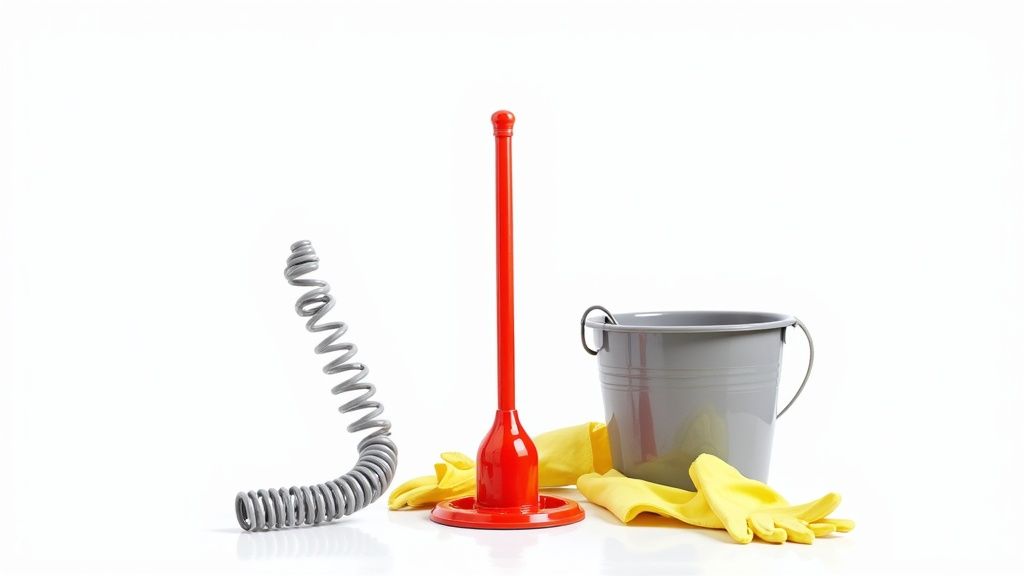
When you’re staring down a stubborn toilet clog, grabbing the first drain snake you can find is a classic, and often costly, mistake. The most important move you’ll make is picking the right tool for the job. In this case, there’s really only one smart choice: a toilet auger, which you might also hear called a closet auger.
A standard sink snake and a toilet auger are two very different beasts. A toilet auger is specifically designed with a J-shaped metal bend at the end. This curve isn’t just for looks—it’s engineered to guide the cable perfectly through the S-bend of the toilet’s internal trap, hitting the clog head-on without any fumbling.
The most critical part of a toilet auger is the protective rubber or vinyl sleeve. This simple guard sits against the bottom of the porcelain bowl, creating a barrier that stops the metal cable from scratching, chipping, or even cracking the finish while you work.
Trust me, trying to use a regular snake with its exposed metal tip is a terrible idea. You’ll almost certainly leave deep, ugly scratches inside the bowl that you can’t undo.
Toilet Auger vs Standard Drain Snake
It’s easy to think all drain snakes are the same, but using the wrong one can cause real damage. Here’s a quick breakdown to show why a toilet auger is non-negotiable for this particular job.
| Feature | Toilet Auger (Closet Auger) | Standard Drain Snake |
|---|---|---|
| Design | J-shaped metal bend guides the cable through the toilet’s trap. | Straight, flexible cable designed for sink or shower drains. |
| Protection | Has a rubber or vinyl sleeve to prevent scratching the porcelain bowl. | Exposed metal tip that will damage and scratch the toilet’s finish. |
| Best Use | Exclusively for toilet clogs. | Sinks, showers, and tub drains. Not for toilets. |
| Reach | Typically 3 to 6 feet long, perfect for clogs within the toilet itself. | Varies from 15 to 50+ feet for reaching clogs deep in pipes. |
Simply put, a standard snake is built for plumbing pipes, not for the delicate porcelain and unique shape of a toilet.
Manual vs. Powered Toilet Augers
Okay, so you’re on board with getting a toilet auger. Now you have one last decision: manual or powered?
- Manual Augers: These are the trusty, hand-cranked models. They’re inexpensive, easy to find, and give you great feedback—you can literally feel the clog and work through it. For 90% of clogs you’ll encounter at home, a manual auger is more than enough.
- Powered Augers: Usually battery-operated, these tools do the spinning for you. They can be faster, but they’re also more expensive. The biggest downside is that you lose that tactile feel, which can lead you to push too hard and potentially damage the toilet.
For most homeowners, a solid 3-to-6-foot manual toilet auger is the perfect investment. It strikes the ideal balance between power and price.
However, if you’ve given it a good try and the clog won’t budge, it might not be in the toilet at all. An especially stubborn clog could be a sign of a much deeper problem, so it’s worth learning more about the symptoms of a clogged main drain before you go any further.
A Practical Guide to Snaking Your Toilet
Alright, you’ve done your prep work and have the right toilet auger in hand. It’s time to get down to business and clear that clog. Remember, this process is more about patience and technique than brute force. Let’s walk through it.
Your first move is to position the auger correctly. Carefully lower the curved metal end—the “J” bend—into the toilet bowl. You want the protective rubber or vinyl sleeve to sit snugly against the bottom of the drain opening. This is absolutely crucial for preventing any scratches on the porcelain. Think of it as a buffer between the hard metal and your toilet’s finish.
Before you go any further, take a quick look at these essential safety tips. Don’t skip them.
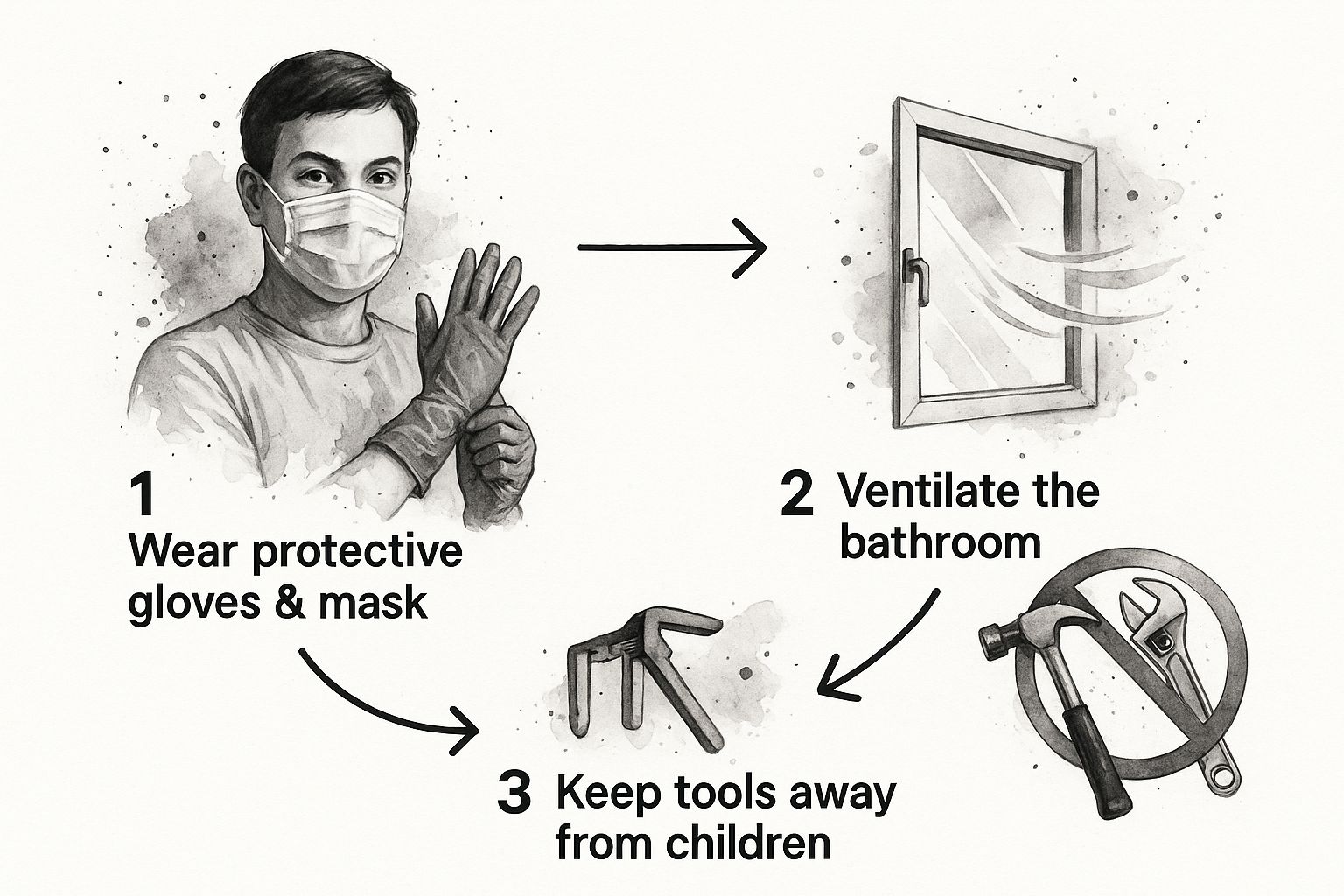
Simple things like wearing gloves and making sure the area is clear can make all the difference, turning a potential mess into a straightforward fix.
Getting the Snake to the Clog
With the auger in place, you can start feeding the cable into the drain. Turn the crank handle clockwise and apply a little bit of gentle, steady pressure on the shaft. This sends the coiled cable down into the toilet’s built-in trap. Just keep going until you feel the resistance change.
So, how do you know if you’ve hit the clog or just a bend in the pipe? It’s all about the feel. If the resistance feels a bit soft or “spongy,” you’ve probably found the culprit. A hard, abrupt stop usually means you’ve just hit a normal turn in the pipe.
Once you feel the snake engage with the blockage, keep rotating the handle. Your goal here is twofold: either break the obstruction apart so it can be flushed away, or hook it so you can pull it back out. Don’t get aggressive and start shoving—that’s a good way to get the auger stuck.
After you’ve worked the clog for a minute or so, it’s time to pull back. Start turning the handle counter-clockwise as you gently pull the auger back toward you. This retracts the cable, and with any luck, it’s bringing the clog (or pieces of it) with it. Keep your bucket and towels handy, as this can get a little messy.
Finishing Up and Testing Your Work
Once the auger is completely out of the toilet, it’s the moment of truth. Give the toilet a test flush.
If the water swirls down quickly and cleanly, you’ve done it! Job well done. But if it’s still draining slowly, don’t get discouraged. Just repeat the process one more time.
If a second pass doesn’t solve it, the problem might be located further down the line than a toilet auger can reach. For those tougher situations, our guide on how to unclog a drain pipe can offer some next steps.
When the Toilet Clog Just Won’t Budge
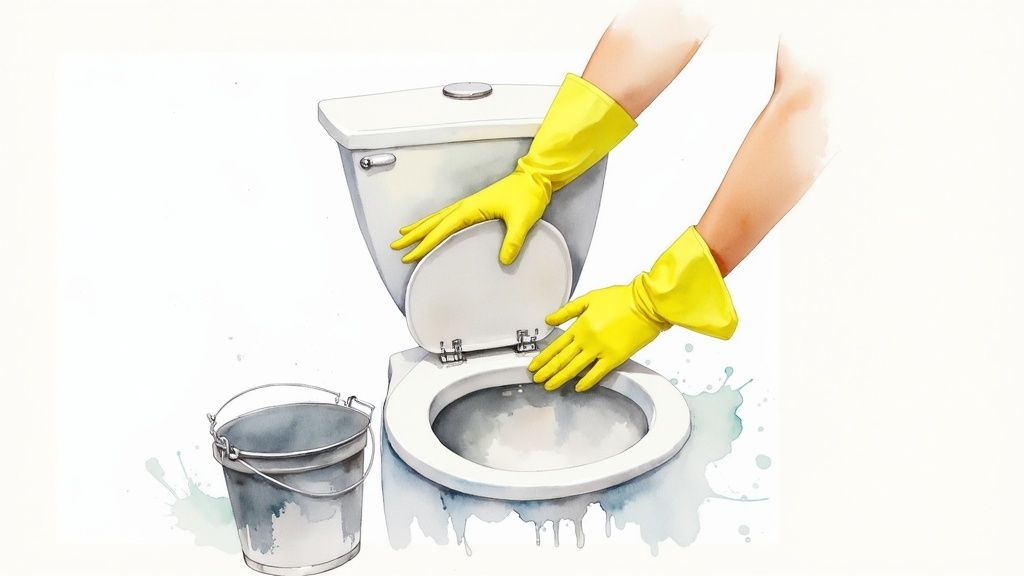
It’s one of the most frustrating moments in DIY plumbing: you’ve fed the toilet auger in, cranked the handle, and retrieved the cable, but the water is still sitting there, mocking you. Before you start looking up a plumber’s number, take a breath. A stubborn clog doesn’t always mean you’ve failed.
Sometimes, the blockage itself is the problem. A really dense or awkwardly shaped object can be tough for an auger to break apart or hook onto. If you felt the snake make contact but it just couldn’t push through, it’s worth giving it another careful, patient try.
But what if you’ve tried a few times and are getting nowhere? That’s when you need to start playing detective, because the problem might be much bigger than just your toilet.
Is It a Deeper Problem?
Start paying attention to the other drains in your house. The clues are usually pretty obvious once you know what to look for.
Do you flush the toilet and hear a gurgling sound coming from the shower drain? Are the sinks in the bathroom or kitchen suddenly draining slower than usual? These are tell-tale signs that the clog isn’t in the toilet’s trap—it’s in your main sewer line.
A standard toilet auger is a specialized tool, but it has its limits. It’s only designed to clear blockages within the first few feet of the toilet’s drain. It simply can’t reach a blockage that’s 15 or 20 feet down the main line. Trying to force it won’t work and you risk damaging the porcelain or your pipes.
If you suspect the main line is the culprit, it’s time to stop what you’re doing. You’ve gone as far as you can with DIY tools. Pushing things further can turn a simple clog into a much more complicated—and expensive—problem.
While drain snaking is fantastic for most clogs, experts often point out the risks of forcing a snake through old or fragile pipes. You can find more professional insights on drain snaking efficiency on fastacservice.com. When you’re dealing with a deep, stubborn blockage, calling in a professional is not only the safest move but also the most effective one.
Keeping Your Drains Clear After the Clog
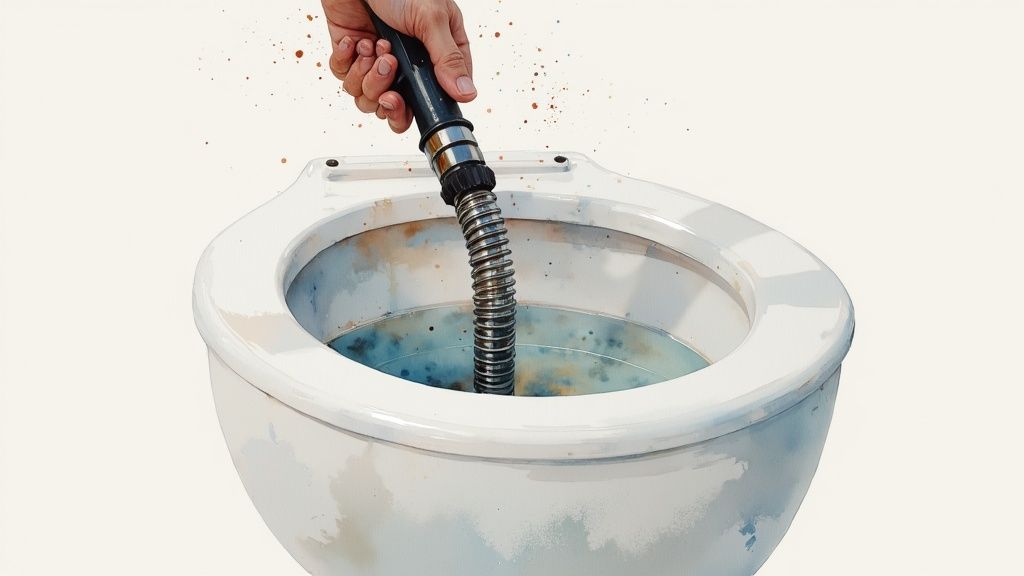
Alright, you did it. The clog is gone, and the toilet is flushing like new. It’s a great feeling, but don’t put your tools away just yet. A little post-job cleanup and some smart habits moving forward will save you from having to do this all over again.
First, take your auger outside and give it a good rinse with a garden hose. Once it’s clean, grab an old rag and dry it off completely. If you let it air dry, you’re just asking for rust to set in, which can ruin the tool over time. Store it somewhere dry, and it’ll be ready for the next time you need it (though hopefully, that won’t be for a long while).
The best way to deal with clogs is to stop them before they start. It all comes down to one simple rule: your toilet is only meant for human waste and toilet paper. That’s it.
What Never to Flush Down the Toilet
You’ve probably seen products at the store labeled “flushable,” but from a plumber’s perspective, that’s just clever marketing. These items are notorious for causing serious blockages that a simple auger can’t fix.
Here’s a quick list of things that should always go in the trash can, not the toilet:
- So-called “flushable” wipes: These are enemy number one. They don’t disintegrate like toilet paper and are responsible for a huge number of clogs I see.
- Paper towels and napkins: These are engineered for absorbency and strength, meaning they won’t break down in your pipes.
- Feminine hygiene products: They are designed to expand when they absorb liquid, which is the last thing you want happening inside a drain.
- Cotton balls and swabs: They bunch up in the pipes, creating dense, stubborn blockages.
- Dental floss: It might seem harmless, but it wraps around everything else, essentially creating a net that catches debris and builds a clog from the inside out.
A little bit of prevention goes a long, long way. Simply treating your plumbing with a bit of respect is the easiest way to keep your drains flowing freely and avoid another weekend wrestling with a toilet snake.
If you want to get serious about long-term care, we’ve put together some more professional drain cleaning tips to keep your entire system in top shape.
Common Questions When Snaking a Toilet
Even with a step-by-step guide in front of you, a few questions always seem to come up when you’re staring down a stubborn clog. Getting these answers right can be the difference between a quick fix and a much bigger, more expensive problem.
Let’s tackle some of the most common uncertainties.
Can I Just Use a Regular Sink Snake on My Toilet?
I see this question a lot, and the answer is a hard no. Please don’t try it. A standard drain snake has an exposed metal tip that can easily scratch, chip, or even crack the porcelain bowl of your toilet.
That’s why a toilet auger (or closet auger) exists. It’s specifically designed with a rubber or plastic sleeve that protects the bowl, and its J-shaped bend helps guide the cable directly into the trap without causing any damage.
How Do I Know if the Clog Is in the Toilet or Deeper in the Sewer Line?
This is a great diagnostic question. The key is to look at what else is happening with your plumbing.
If it’s just the one toilet giving you trouble and all your sinks and showers are draining normally, the clog is almost certainly isolated to that toilet’s trap. That’s a job a toilet auger can handle.
But if you’re seeing backups in multiple places—like a gurgling shower drain when you flush the toilet, or slow drains all over the house—you’re likely looking at a main sewer line blockage. A toilet auger won’t fix that. For a problem that big, you’ll need professional help. You can often find a qualified expert by checking Plumbing and HVAC industry resources.
Pro Tip: A main line clog affects multiple fixtures, usually starting at the lowest point in your home. A single misbehaving toilet is a local problem you can likely fix yourself.
What if My Toilet Auger Gets Stuck?
First off, don’t panic and definitely don’t try to yank it out with all your strength. Forcing it is the fastest way to break the auger or damage your plumbing.
Instead, try gently turning the handle in the opposite direction (counter-clockwise) while pulling back very lightly. This often helps the auger’s tip “un-hook” itself from whatever it’s caught on, whether it’s the clog or a bend in the pipe. If a few careful attempts don’t work, it’s time to stop and call a plumber. It’s not worth the risk of making things worse.

Recent Comments