
That sinking feeling when you spot a soggy patch in your lawn, or the frustration of a shower that’s suddenly lost its power—these are often the first signs that your main water line is in trouble. For homeowners in Denver, these aren't just minor annoyances; they're classic red flags pointing to a main water line replacement, a major project that addresses the pipe connecting your home to the city’s supply.
This isn’t about fixing a small drip under the sink. We’re talking about the failure of a critical piece of your home’s infrastructure.
Is Your Main Water Line Failing?
When people think of a water main break, they usually picture a dramatic geyser erupting from the front yard. While that can happen, most failures are far more subtle. They start with quiet clues that are easy to brush off until you’re facing a full-blown, costly emergency. Learning to spot these early warnings makes all the difference.
The most obvious sign, of course, is seeing water where it shouldn't be. Look for persistent puddles in your yard when it hasn’t rained, or maybe a patch of grass that’s suspiciously green and lush compared to everything around it. That’s a tell-tale sign of a slow, steady underground leak saturating the soil.
Look for These Subtle Clues
Beyond a swampy lawn, your plumbing system will give you other hints that trouble is brewing. Keep a close eye on these common indicators:
- A Sudden Drop in Water Pressure: If your faucets are trickling and showers feel weak, it could mean a lot of water is escaping the pipe before it even gets inside.
- Discolored or Murky Water: Is your tap water suddenly brown, yellow, or full of sediment? Soil and other contaminants can easily get into the system through a crack in the main line.
- Unexplained Spikes in Your Water Bill: Leaks waste a ton of water, which will show up as a surprisingly high bill from Denver Water. If you haven't changed your habits, a hidden leak is the likely culprit.
- Strange Noises: When all the water in your house is off, listen carefully. Hissing, bubbling, or the faint sound of running water could be the noise of water escaping the pressurized line underground.
A main water line leak doesn't just waste water; it can compromise the structural integrity of your property. Over time, the saturated soil can lead to foundation cracks, sinkholes in your yard, or damage to your driveway and walkways.
A Widespread Infrastructure Challenge
This isn’t just a problem for a few unlucky homeowners; it's a symptom of a much larger issue. Across the United States and Canada, aging infrastructure is responsible for an estimated 260,000 water main breaks every single year. According to data from Datatecnics.com, the repairs for these failures cost around $2.6 billion annually.
If you suspect something is wrong with your line, you need to act fast. Our guide on diagnosing a water line leak repair can help you confirm the problem and figure out what to do next before the damage gets any worse.
Trench vs. Trenchless: What’s the Best Move for Your Property?
So, you’ve confirmed there’s an issue with your main water line. Now comes the big decision: how to actually replace it. This isn't a one-size-fits-all problem, and the right solution for your home will hinge on your property's layout, your budget, and how much disruption you're willing to deal with. Essentially, it boils down to two main approaches for a main water line replacement: the old-school trenching method and the more modern trenchless techniques.
The Traditional Dig: Trenching Explained
Traditional trenching is exactly what it sounds like. We bring in a backhoe and dig a long, open trench all the way from your house to the city's connection point at the street. It’s a very direct, straightforward approach that gives us complete access to the old pipe for removal and lets us easily lay the new one. This method has been used for decades for a reason—it’s reliable and effective.
The massive downside? Your yard. Trenching is incredibly invasive. It means tearing up your lawn, gardens, and anything else in the pipe's path. If your water line runs under a driveway, a mature tree, or that beautiful patio you just installed, those will have to be torn out and rebuilt. That adds significant time and cost to the project.
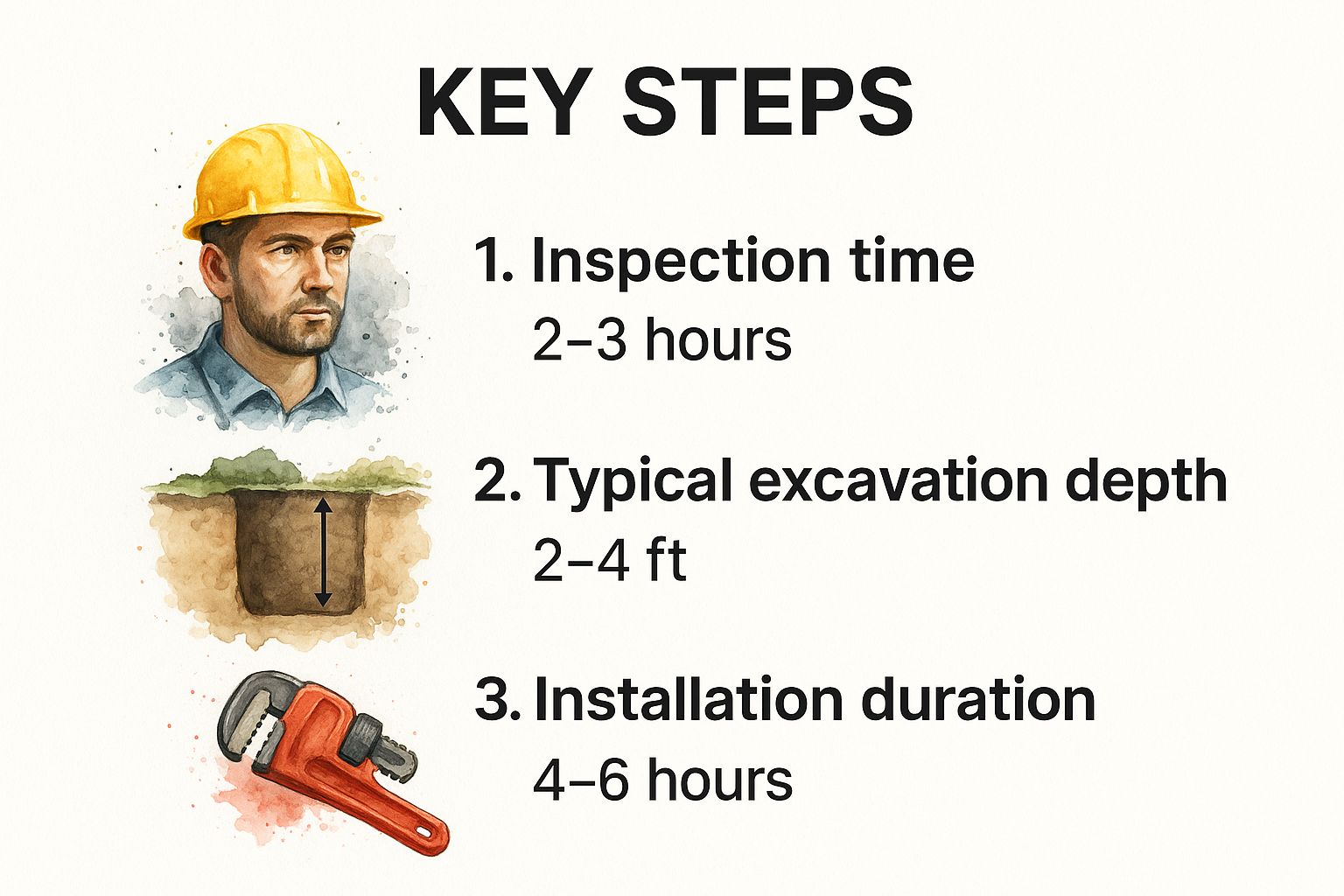
As you can see, once everything is prepped, the actual pipe installation can be surprisingly fast, often done in a day. It’s the digging and restoration that take all the time.
The Modern Alternative: Going Trenchless
Trenchless methods, like pipe bursting, are a game-changer for avoiding that landscape destruction. Instead of a huge trench, we dig two small pits—one where the pipe enters your house and another out by the street. From there, specialized equipment pulls a brand-new, seamless pipe through the path of the old one. This process literally "bursts" the old, failing pipe out of the way underground while simultaneously laying the new line.
The beauty of this technique is that your lawn, driveway, and walkways remain almost completely untouched. This can save you thousands of dollars in restoration costs alone. Plus, since there's far less excavation and cleanup, the whole job is usually finished much faster, sometimes in just one day.
It's not a silver bullet for every situation, though. If the old pipe is completely collapsed or has some funky bends and turns, a trenchless approach might not work.
Pro Tip: While the plumbing quote for a trenchless job might look higher at first glance, the total project cost is often much lower once you account for what you'd spend on a landscaper and concrete contractor to fix a trenched yard.
To make the choice clearer, here’s a quick rundown of how the two methods stack up against each other.
Trench vs Trenchless Main Water Line Replacement
| Factor | Traditional Trenching | Trenchless Methods (Pipe Bursting/Lining) |
|---|---|---|
| Yard Disruption | High. A long, open trench will destroy landscaping, driveways, and patios in its path. | Minimal. Only two small access pits are needed, preserving your yard and hardscaping. |
| Project Timeline | Longer. Typically takes several days due to extensive excavation and restoration work. | Faster. Often completed in a single day since there's very little digging and backfilling. |
| Upfront Cost | Lower for the plumbing work itself. | Higher for the specialized plumbing equipment and process. |
| Total Project Cost | Often higher when you include the cost of repairing your lawn, driveway, and landscaping. | Often lower because it eliminates the need for expensive landscape and hardscape restoration. |
| Best For… | Open properties with no major obstacles, or situations where the old pipe is too damaged for bursting. | Properties with established landscaping, driveways, patios, or other obstacles over the water line. |
Ultimately, both methods get the job done. The best one for you depends entirely on what’s standing between your house and the street.
Choosing the Right Pipe Material for Denver’s Climate
Just as important as how the pipe is installed is what it's made of. Here in Denver, with our unique soil and freeze-thaw cycles, you need a material that can stand up to the elements for decades to come.
Here are the top contenders:
- Copper: For years, copper was the go-to standard. It’s incredibly durable and corrosion-resistant. It’s still a great choice, but the skyrocketing cost of copper has made it a premium, and often prohibitively expensive, option.
- PEX (Cross-Linked Polyethylene): This is a flexible plastic tubing that’s fantastic for our climate because it resists freezing and cracking. Its flexibility also makes it a dream to install, especially with trenchless methods, which can help bring down labor time.
- HDPE (High-Density Polyethylene): Think of this as the heavy-duty version of PEX. It’s a super tough, flexible plastic pipe commonly used for trenchless jobs. HDPE is completely corrosion-proof and is rated to last for over 50 years, making it an outstanding long-term investment for your home.
The only way to know for sure which route to take—both for the method and the material—is to have a professional take a look. An experienced plumber can run a camera through your line, assess your property, and walk you through the real costs and benefits of each option for your specific home.
Navigating Denver Water Permits
Replacing a main water line isn't just a plumbing repair; it’s a full-blown construction project that taps directly into city infrastructure. Because of that, you can't just grab a shovel and start digging. The work requires specific permits and inspections here in Denver to make sure everything is done safely and to code, protecting both your property and the public water supply.
Trust me, trying to cut corners on this is a bad idea. Working without a permit can lead to hefty fines, stop-work orders, and the absolute nightmare of having to dig up your brand-new pipe because it wasn't approved. A good professional plumber handles all of this, but understanding the process helps you make sure they’re crossing all the t's and dotting all the i's.
The Permitting Essentials You Need to Know
Before a single shovel hits the dirt—before a permit application is even filled out—your contractor's first move must be to call 811. This is the "Call Before You Dig" hotline, and it’s non-negotiable. It prompts all the local utility companies to come out and mark their underground lines for gas, electric, and cable. Hitting a gas line is a catastrophic mistake, so this step is all about safety.
With the utilities marked, your plumber can get to work on the permits. This usually involves Denver Water and, if the work spills into the street or sidewalk, the Denver Department of Transportation and Infrastructure (DOTI).
These permits are more than just bureaucratic hoops. They ensure the job follows crucial local codes that specify:
- Pipe Depth: Your new line has to be buried deep enough to avoid freezing during our brutal Denver winters.
- Material Standards: The city has strict rules on what can be used. Only approved materials like Type K copper or HDPE are allowed for water service lines.
- Connection Methods: How the new line connects to the city main is tightly regulated to prevent leaks for years to come.
What to Expect During the Inspection
Once the new water line is laid in the trench but before it gets buried, a city inspector has to come out. This is the moment of truth. The inspector will walk the line, checking that every aspect of the installation matches the requirements spelled out in the permit.
The city inspection is your ultimate quality control check. It confirms that the job was done correctly, using the right materials and techniques, giving you peace of mind that your new water line is built to last for decades.
A key part of this is the pressure test. The plumber will fill the new pipe with water and pressurize it way beyond normal operating levels. The line has to hold that pressure without dropping at all for a specific amount of time. This is the only way to be certain every joint and fitting is perfectly sealed.
Only after the inspector gives the green light and signs off on the work can your contractor backfill the trench and start putting your yard back together.
Always Verify Your Contractor
Finally, a quick but critical piece of advice: make sure your plumber is properly licensed and insured for this exact kind of work in Denver. Don’t be shy about asking to see their Master Plumber license and proof of liability insurance. This protects you from being on the hook if something goes wrong on your property. Any reputable, experienced contractor will have these documents ready and will be happy to show you.
What to Expect During the Replacement Process
So, you’ve picked a contractor and decided on the best replacement method for your property. Now for the main event. Knowing what happens on the day of the job can take a lot of the stress out of the equation. A professional crew doesn't just show up and start digging; they follow a well-rehearsed plan designed to get your water back on with minimal hassle.
The first thing you'll see is careful site preparation. This isn't just about moving your patio furniture—it's a critical safety measure. Before any ground is broken, the crew confirms that all underground utility lines (gas, electric, cable) have been marked. This is why calling 811 is always the first step; hitting a gas line is a mistake you only make once.
Getting Started: Water Shut-Off and Excavation
Before a single shovel hits the dirt, a plumber has to shut off the water supply to your house. This is typically done at the city's connection point near the street, often called a "curb stop."
It's also a smart move to know where your home's main shut-off valve is. If you're not sure, our guide on how to find your water main shut-off valve can walk you right to it.
Once the water is off, the digging starts. If you went with traditional trenching, this is where the backhoe comes in, carving a path from your foundation to the street. For trenchless methods, the process is far less dramatic, usually just requiring two small access pits at either end of the pipe's run.
Laying the New Line
With the old, failing pipe out of the way, the crew can lay the new line. They'll carefully connect one end to your home's plumbing and the other to the city main, using high-quality, code-compliant fittings. From my experience, these connection points are where precision matters most—a sloppy connection is just a future leak waiting to happen.
This industry is always improving. The global market for water and wastewater pipes is expected to jump from $30.2 billion in 2025 to nearly $54.7 billion by 2033. That boom is driven by the demand for better, more durable materials that give homeowners like you peace of mind. You can see the data for yourself in this market research report.
Crucial Checkpoint: Before a single scoop of dirt goes back in the ground, the new line gets a pressure test. We fill the pipe with water and crank the pressure way up—much higher than it will ever see in normal use—to make absolutely sure there are no leaks.
Finishing Up: Inspection and Restoration
After a successful pressure test, it's time for the city inspector to visit. This is an essential step. Their job is to provide an independent, official verification that the work meets all of Denver’s strict building codes. The inspector will check everything from the pipe material and depth to the quality of the connections before signing off.
Only with the inspector's approval can the crew start putting things back together. They’ll backfill the trench or access pits, compacting the soil in layers to prevent it from sinking later on.
A final site cleanup leaves your property ready for any landscaping touch-ups, officially wrapping up your main water line replacement.
Understanding Your Replacement Costs in Denver

Alright, let's get straight to the question every Denver homeowner asks: what’s this actually going to cost me? When it comes to a main water line replacement, there's no simple, one-size-fits-all price. The final number on your invoice is a mix of several key factors, and understanding them is the best way to make sense of the quotes you’ll get.
The biggest variable, without a doubt, is the replacement method. A traditional open-trench dig might seem cheaper upfront in terms of labor, but that doesn't account for the thousands you could spend putting your beautiful yard, driveway, or patio back together. This is where trenchless methods often save you a fortune in the long run.
Key Factors Driving Your Final Cost
Beyond the trench-vs-trenchless decision, a few other things will heavily influence your project's budget. Your plumber is going to be looking at these specifics when they build your estimate.
-
Pipe Length and Diameter: This one’s pretty straightforward. The longer the distance from the city tap to your house, the more material and labor are needed. Most homes use a ¾-inch or 1-inch line, but if you need a larger diameter pipe for some reason, the material cost will jump.
-
Property Accessibility: What's between the street and your foundation? If your water line runs under a new concrete driveway, a custom flagstone patio, or right through the roots of a beloved old tree, things get more complicated. These obstacles can drive up the cost, especially if a full trench is the only way to get the job done.
-
Pipe Material: The pipe you select matters. Copper is the top-of-the-line choice, known for its incredible lifespan, but it comes with a premium price tag. For trenchless jobs, high-density polyethylene (HDPE) is a fantastic, durable, and more budget-friendly alternative that’s become incredibly popular.
Looking Beyond the Obvious Expenses
A good, transparent quote should cover everything, but it's smart to be aware of costs that might not be included in the initial plumbing bid. For example, if your yard needs significant digging, you’ll probably need to hire a landscaper to fix the lawn, repair sprinkler lines, and replant your garden beds.
Don't forget about timing, either. If your line bursts on a Saturday night, you can expect to pay a premium for emergency after-hours service. And while they aren't massive expenses, the required city permits and inspection fees are another line item to factor into your total budget.
It's not just your home—this is a nationwide issue. The global market for water infrastructure repair is projected to be a massive $100.33 billion industry by 2025. A big reason for this is that our systems are getting old; about 33% of all water mains in the U.S. are now over 50 years old and nearing the end of their useful life. You can read more about these global water infrastructure trends to see the bigger picture.
By getting a handle on these moving parts—from the replacement technique and pipe run to potential landscaping fixes—you’ll be in a much better position to compare estimates. It gives you the power to ask the right questions and feel confident that the quote you accept covers the entire scope of the project, with no nasty surprises down the road.
Choosing the Right Plumber for the Job
Let's be blunt: your main water line replacement is only going to be as good as the plumber you hire. This isn't a leaky faucet we're talking about; it's a major piece of your home's infrastructure. Getting the right professional on your side is the single most important decision you'll make, and it's what separates a smooth, well-run project from a total nightmare.
Finding a great company in Denver is about more than just picking a name from a list. You need to find a contractor with real, hands-on experience in this exact type of work. Don't be afraid to ask tough questions—any pro worth their salt will be happy to show you they know their stuff.
Vetting Your Potential Contractor
First things first, cover your bases. Any plumber you even consider must be fully licensed and insured for this kind of work in Denver. Ask to see their Master Plumber license number and a current certificate of insurance. This isn't just red tape; it's what protects you and your property if something goes wrong.
Once that's out of the way, it's time to dig into their actual experience replacing main water lines.
- Ask for references. And don't just take their word for it. Get the names and numbers of 2 or 3 recent customers who had a similar job done and actually call them.
- Talk about methods. A seasoned expert will be fluent in both traditional trenching and the newer trenchless techniques. They should be able to walk you through the pros and cons of each and explain why one is a better fit for your specific property.
- Check their reviews. Look at their online reputation, but read with a critical eye. A one-sentence "great job!" isn't as helpful as a detailed review that talks about the crew, the communication, and the cleanup process.
For a more detailed checklist, our guide on how to choose the right plumber in Denver can help you make a confident decision.
A Pro Tip From Experience: The best plumbers aren't just great technicians; they're great communicators. They can explain a complex problem in plain English, give you a detailed and transparent estimate, and answer your questions without making you feel rushed.
Reading Between the Lines of an Estimate
When you get a contract or an estimate, it's tempting to just look at the bottom line. Don't. Knowing the basics of reviewing contracts as a non-lawyer is a skill that will serve you well. A good, honest quote will break everything down for you—labor, materials, permit fees, and even potential charges for hitting unexpected rock or old pipes.
Be very skeptical of a quote that's drastically lower than the others. That's often a huge red flag. It could mean they're using cheap materials, skipping the permit process, or planning to hit you with a bunch of "surprise" charges once the work has started. A professional price reflects professional work, and it buys you the peace of mind that the job will be done right the first time.
Answering Your Lingering Water Line Questions
It's one thing to understand the steps on paper, but it's another to commit to a project of this scale. A main water line replacement is a big deal, and it’s completely normal to have some questions rattling around. Let’s tackle some of the most common ones we get from homeowners here in Denver.
How Long Does This Actually Take?
The timeline for a main water line replacement really boils down to one thing: the method we use.
If we go the traditional trenching route, it's a multi-day process. You're looking at 2-3 days just for the digging, laying the new pipe, getting it inspected, and putting the dirt back. The landscaping restoration will take even longer after that.
Trenchless methods, on the other hand, are a different story. They're incredibly fast. Since we're avoiding all that major excavation, a good crew can often knock out a pipe bursting replacement in just a single day. Of course, things like a sudden blizzard, rocky soil, or a backed-up city inspector schedule can throw a wrench in the works, but the speed is a huge plus.
Is My Homeowners Insurance Going to Cover This?
This is the big question, and the answer is almost always a "no"—at least, not for the pipe itself. Most standard insurance policies view a broken service line as a maintenance issue, which means the responsibility falls squarely on the homeowner.
But, that's not the end of the story. Your policy might cover the secondary damage the leak caused.
- Water Damage Cleanup: If the leak flooded your basement or seeped into your foundation, your policy will likely help with those specific repairs.
- Service Line Coverage: Some insurers offer an add-on, often called a service line endorsement, that provides specific coverage for these underground utility lines.
Don't ever assume you're covered. Your first move should be to call your insurance agent and have them walk you through your specific policy. Knowing exactly what's in the fine print before a crisis hits can save you a world of financial pain.
Can I Just Do This Myself?
Let me be direct: absolutely not. Replacing a main water line is not a weekend warrior project. This is a complex job that demands heavy machinery, an intimate knowledge of Denver's plumbing codes, and the right licenses just to get started.
Trying this on your own is playing with fire. You could strike a gas line, trigger a massive flood, or sever your home's connection to the city water main. Here in Denver, the law is clear: this work must be done by a licensed plumber. It requires permits and passes inspections to ensure it's done safely and up to code. The fallout from a botched DIY job can be financially and legally catastrophic.
If you think you're dealing with a main water line problem, don't wait and hope it gets better. The experts at Professional Plumbers Denver have the skill and the equipment to handle the job correctly, whether it's a traditional dig or a modern trenchless replacement. Contact us today for a professional assessment and a transparent quote.

Recent Comments