
Why Natural Solutions Beat Harsh Chemicals Every Time
I used to be that person, standing in the cleaning aisle, staring at rows of brightly colored drain cleaners, convinced the more expensive, the better. After years of battling stubborn clogs, I finally realized something: those harsh chemicals were actually making things worse. Switching to natural solutions was a game-changer.
It's not about masking the problem, it's about addressing the root cause. Baking soda and vinegar, for instance, don't just dissolve the gunk temporarily, they actually break down the organic matter that's usually the main culprit in clogs. It's like a deep clean for your pipes.
Think about enzymatic reactions. These natural processes are incredibly effective at breaking down organic material. Commercial drain cleaners often rely on harsh acids that can actually corrode your pipes over time, leading to pricey repairs down the road. Natural cleaners, on the other hand, work with your plumbing system, not against it. This is especially important if you have a septic tank, as harsh chemicals can disrupt the delicate bacterial balance.
Another perk of natural solutions? They actively prevent future clogs. Instead of obliterating everything in their path like chemical cleaners, natural ingredients gently remove buildup without stripping away beneficial bacteria. This helps foster a healthy drain ecosystem and reduces the chances of those recurring clogs that drive everyone crazy.
And let's not forget the hidden costs of chemical cleaners. Those fumes? They're often volatile organic compounds (VOCs) that can impact your indoor air quality and cause respiratory irritation. There's a reason why enzymatic cleaners are becoming so popular – people are prioritizing health, safety, and the environment. Want to learn more about this shift in the market? Check out this report on the Drain Cleaner Market. For additional helpful hints, you might also appreciate these drain cleaning tips.
The bottom line? Switching to natural drain cleaners is a win-win. You'll save money on repairs, reduce your exposure to harmful chemicals, and create a more sustainable approach to drain maintenance. It's better for your wallet, your health, and the planet.
Gathering Your Natural Cleaning Arsenal
Let’s ditch the harsh chemicals and say hello to the power of natural drain cleaners! Putting together what you need is surprisingly simple, and you probably already have most of the ingredients in your kitchen. From my experience, the quality of what you use really does make a difference. For instance, while apple cider vinegar seems like a decent option, white vinegar is the true champion thanks to its higher acetic acid concentration. Trust me on this one.
Essential Ingredients
Here's the lineup of natural drain-busting heroes:
- Baking Soda: Don't just grab any old box. Look for finely ground baking soda. It reacts much better with the other ingredients, creating that satisfying fizz that helps loosen the gunk. I've learned the hard way that the cheaper, coarser stuff can be a bit of a letdown.
- White Vinegar: This is the acidic muscle in your cleaning mix. The reaction with baking soda is what makes the magic happen. Keep a big bottle handy – you'll be surprised how much you use it.
- Boiling Water: Your trusty kettle is about to become your new best friend. Boiling water helps melt away grease and soap scum, giving your natural cleaner an extra boost.
- Salt: Good old table salt acts as a gentle abrasive, helping to scrub away stubborn buildup inside your pipes.
- Cream of Tartar: This is my secret weapon for really tough clogs. It adds an extra punch of cleaning power and is super affordable.
Tools of the Trade
Having the right tools makes the job so much easier. Here’s what I always keep nearby:
- A Sturdy Drain Plunger: Perfect for those clogs that need a little extra persuasion. A flat-bottomed plunger works best for sinks, in my opinion.
- A Drain Snake (Optional): This is for reaching deeper into the pipes and breaking up more serious blockages.
- Gloves: Protect your hands, especially when dealing with hot water.
- Safety Glasses (Recommended): Shield your eyes from any splashes, particularly during the vinegar and baking soda reaction.
Let's take a quick look at how these ingredients stack up against each other:
Natural Drain Cleaner Ingredients Comparison
A comparison of common natural ingredients, their effectiveness, cost, and best use cases
| Ingredient | Effectiveness | Cost | Best For | Safety Level |
|---|---|---|---|---|
| Baking Soda | Medium | Low | Mild clogs, deodorizing | High |
| White Vinegar | Medium | Low | Grease, soap scum | Medium (good ventilation needed) |
| Boiling Water | Medium | Low | Grease, soap scum | Medium (handle with care) |
| Salt | Low | Low | Abrasive cleaning | High |
| Cream of Tartar | High | Low | Stubborn clogs | High |
As you can see, combining these ingredients gives you a multi-pronged approach to tackling drain clogs. The cost-effectiveness is a major bonus, too!
Storage and Safety
Proper storage is key to keeping your ingredients effective. Store baking soda and cream of tartar in airtight containers in a cool, dry spot. This prevents clumping and keeps them fresh. White vinegar, salt, and boiling water don’t require any special storage. Good ventilation is essential when using your natural drain cleaner, especially with the vinegar and baking soda combo. The fizzing releases gases, and good airflow keeps the area comfortable and prevents any irritation, especially if you’re sensitive to vinegar fumes.
Okay, now that you've got everything assembled, let's get down to the actual cleaning!
Proven Recipes That Actually Clear Stubborn Clogs

Alright, let's get to the good stuff – the recipes! These aren't just some random ideas I pulled out of thin air; they're the real-deal solutions that have saved me a ton of money on plumbers. I'm talking about that glorious moment when the water finally goes down the drain with a satisfying whoosh. We'll start with the old faithful baking soda and vinegar combo, which, let's be honest, most people mess up.
The Baking Soda and Vinegar Power Duo (Done Right)
There's a real art to this, it's not just about dumping ingredients down the drain. Timing is key. First, pour 1/2 cup of baking soda down the drain. Let it sit undisturbed for about five minutes so it can really settle in and work on the clog. Then, pour in 1 cup of white vinegar. Get ready for some fizzing action – that's the chemical reaction at work breaking down the gunk. Cover the drain with a stopper to keep that reaction concentrated. Let it do its thing for about 30 minutes. Finally, flush with boiling water (or hot water if you have PVC pipes). This is a great solution for hair clogs and mild soap buildup.
The Enzyme Booster For Organic Buildup
For tougher clogs caused by things like food scraps, my enzyme booster is the secret weapon. Mix 1/4 cup baking soda, 1/4 cup salt, and 1/2 cup white vinegar. The mixture will fizz a bit, then pour it down the drain. Wait at least an hour, maybe longer, and then flush with hot or boiling water. This combo can really break down even the most stubborn organic clogs.
Grease-Cutting Formula For Kitchen Nightmares
Kitchen sink clogs? A whole different story. They’re usually caused by grease buildup. For these, I mix 1 cup of salt, 1 cup of baking soda, and 1/2 cup of white vinegar. The salt acts like an abrasive, scrubbing away the grease, while the baking soda and vinegar fizz away and loosen everything up. Pour it down, let it sit for several hours (I often leave it overnight), then flush with boiling water. This usually does the trick, even for seriously greasy kitchen sinks.
Monthly Maintenance Mixture For Prevention
You know what they say: an ounce of prevention is worth a pound of cure! My monthly maintenance mixture keeps everything flowing smoothly. Just mix 1/4 cup of baking soda and 1/4 cup of salt, pour it down the drain, and follow with a cup of hot water. Do this once a month to prevent buildup and keep things smelling fresh. When you're gathering your supplies, think about things you might already have around for other cleaning tasks, like when you're cleaning bathroom faucets.
Troubleshooting and Adjustments
These recipes are pretty reliable, but sometimes you need to tweak things. For really stubborn clogs, you might have to repeat the process a couple of times or use a little more of each ingredient. Try plunging the drain after you use the drain cleaner; that can help dislodge the loosened gunk. If you're constantly battling clogs, though, there might be a bigger problem lurking in the pipes. In that case, it's best to call a plumber to avoid making things worse. Knowing when a DIY solution isn't enough is important. Sometimes, you just need a pro.
Application Techniques That Make All The Difference
So, you've whipped up a batch of natural drain cleaner. Fantastic! But here's the secret: just having the right ingredients isn't enough. It's how you apply them that really makes the difference between a sparkling clean drain and ongoing frustration. Believe me, I've learned this the hard way through plenty of my own drain-cleaning adventures.
There are a few key things most people miss, and I'm happy to share what I've picked up over the years. It's not complicated, but these little details can make a world of difference. Let's get into the techniques that turn natural ingredients into drain-clearing powerhouses.
Water Temperature: The Secret Weapon
You might not think it, but water temperature is surprisingly crucial for activating your natural drain cleaner. For those tough grease clogs, boiling water is your best friend. It melts away the solidified fat, clearing a path for the other ingredients to do their thing.
However, if you have PVC pipes, be careful! Stick to hot water instead of boiling. Boiling water can soften and even damage PVC, kind of like how a plastic cup would warp if you poured boiling water into it. The same principle applies to your pipes.
Patience Is Key: Let It Sit
This is a big one. After you pour your natural drain cleaner down the drain, don't immediately flush it with water. Let it sit for a while. The amount of time can vary, from 30 minutes to a few hours, depending on the recipe and how clogged your drain is. This waiting period allows the ingredients to really react with the clog and break it down properly. It's like baking a cake – you can’t just pop it in the oven for five minutes and expect it to be done!
Safety and Prep: The Boring But Important Stuff
Before you even think about pouring anything down the drain, remove any standing water in the sink. This makes sure your cleaner goes directly to the clog where it's needed most. And always, always wear gloves and eye protection. Even though these are natural ingredients, it’s always better to be safe, especially when dealing with hot water and potential fizzing reactions.
Speaking of which, have you noticed how many more eco-friendly cleaning products are popping up these days? It's a huge market trend! Did you know the global drain cleaner market is expected to hit USD 3.08 billion by 2029, with a 5.93% annual growth rate? Pretty impressive, right? You can check out more about this growing market here.
A Little Extra Help: Agitation and Ventilation
Once your cleaner is in the drain, try using a drain cover to keep the reaction contained. This creates a more concentrated cleaning environment, sort of like putting a lid on a pot to make things cook faster.
For those really stubborn clogs, a little agitation can go a long way. Try gently using a drain snake (or even a straightened wire coat hanger) to help loosen things up and give your cleaner a boost.
You’ll likely see the cleaner working its magic with some fizzing and bubbling – that's a good sign! It means the ingredients are reacting with the clog. And lastly, make sure you have good ventilation, especially if you’re using baking soda and vinegar. Open a window or turn on a fan to keep the air fresh and prevent any fumes from building up.
When Things Don't Go According To Plan
Let's be real, sometimes even the most reliable natural drain cleaners need a little extra oomph. I've been there, staring at my trusty baking soda and vinegar concoction wondering why it’s not working its magic. It's definitely frustrating, but don't panic! There are a few other things you can try before calling a plumber.
Identifying the Culprit
The first step is playing detective. A slow drain is a different beast than a completely blocked one. What's the likely culprit? Hair? Grease? Or something more mysterious? Figuring this out will inform your next move. For example, a drain snake is your best friend for hair clogs. If grease is the suspect, another dose of boiling water (if your pipes can handle it) might do the trick. Sometimes, persistence is key, and repeating the natural cleaning process a few times is all it takes.
Creating Pressure Waves
Here's a neat trick I’ve picked up over the years: creating pressure waves. After trying a natural cleaner, fill the sink with a few inches of water and grab your plunger. The up-and-down action can dislodge stubborn gunk that the cleaner loosened. A tight seal around the drain is crucial for this to work. Think of it as creating tiny pressure bursts to blast things free.
Combining Mechanical Aids With Natural Cleaners
Don't shy away from combining mechanical tools with your natural cleaners. A drain snake can work wonders, especially for hair clogs. You can even try using a straightened wire coat hanger (carefully!) to fish out debris. I find this especially helpful in bathroom sinks. Knowing what type of clog you're facing makes a big difference here. Once the natural cleaner has loosened things up, these tools can help finish the job.
Recognizing When to Call a Pro
Even with all these tricks, sometimes you have to admit defeat. If you've tried everything and the drain is still clogged, it's time to call in a professional plumber. Keep an eye out for telltale signs of pipe damage, like leaks or slow drains throughout your house. These can indicate a much bigger issue than a simple clog. Also, remember that older plumbing systems require a gentler touch. Avoid overuse of harsh methods, even natural ones, as they can damage these delicate pipes.
It’s interesting to note that the drain cleaning equipment market is booming, projected to hit $2.36 billion in 2025 with a 10.4% growth rate. This just shows how important drain maintenance is becoming! Curious about this growing market? You can find more insights here.
Don't beat yourself up if you need to call a plumber. It's better to be safe than sorry, and a pro might be just what you need. They have specialized tools and know-how to tackle even the toughest clogs without causing more damage. Think of it as an investment in your plumbing's long-term health. Plus, even plumbers appreciate a clean drain to work with!
Building A Maintenance Routine That Actually Works
Want to know the real secret to avoiding clogged drains? Forget the expensive chemicals – it's all about a solid maintenance routine with natural cleaners. I've developed a system that keeps my drains clear without taking over my life, and I'm happy to share. We'll figure out a plan that works for your home, factoring in everything from family size to your water quality.
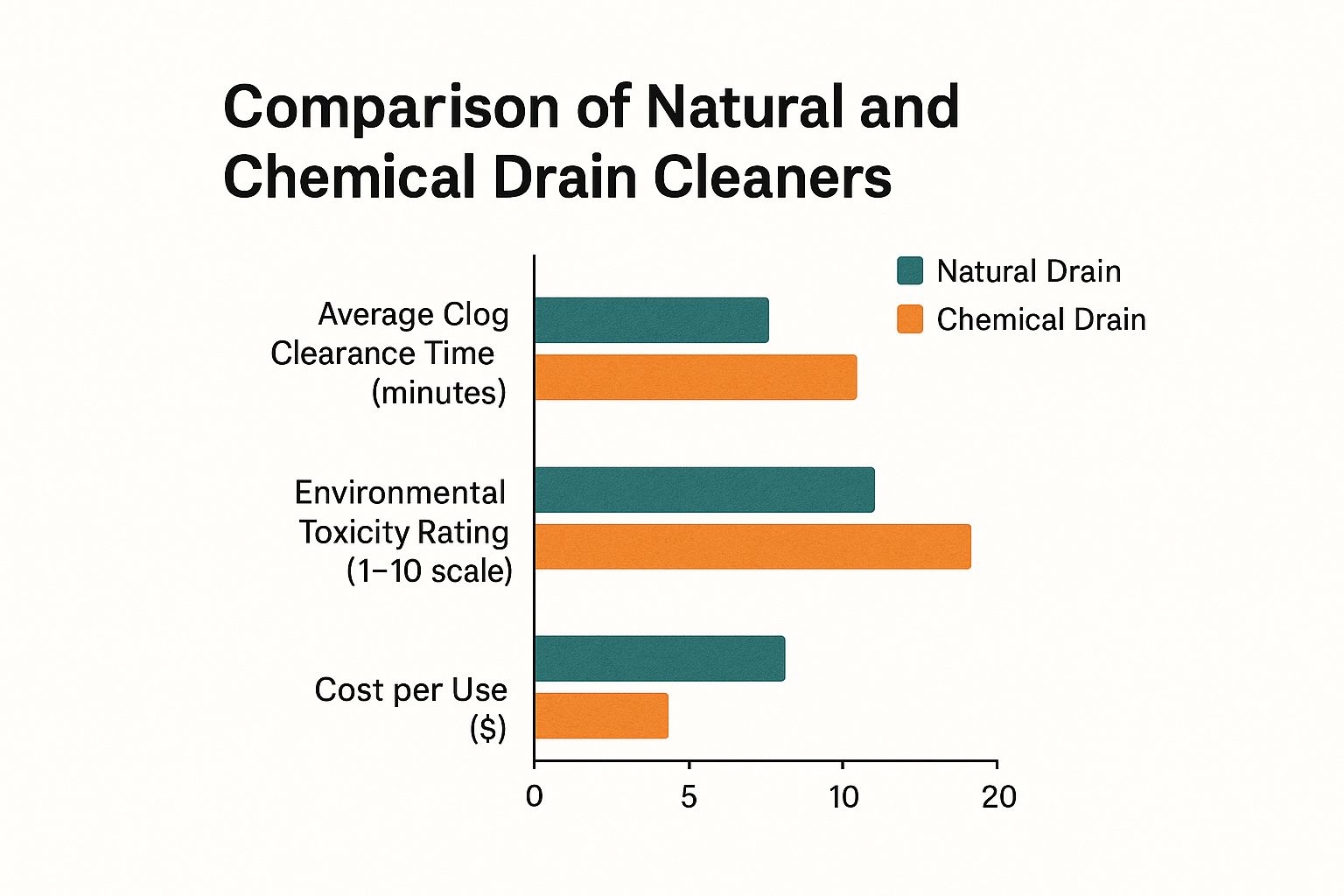
The infographic above gives a good comparison of natural drain cleaners and chemical options based on clog-clearing speed, how they impact the environment, and the cost. While chemical cleaners seem faster, natural solutions are better in the long run. They're gentler on the planet and much cheaper – a sustainable choice for your pipes and your wallet. For more tips on keeping your plumbing in tip-top shape, check out our guide on The Importance of Regular Plumbing Maintenance in Denver.
Recognizing the Early Warning Signs
Catching problems early is half the battle. Think of it like this: a slow drain is a whisper, a full blockage is a scream. Listen for those whispers! Is water pooling at your feet in the shower? Is the kitchen sink draining slower than molasses? These little things tell you a clog is starting to form. A little natural drain cleaner now can prevent a major plumbing emergency later.
Seasonal Maintenance: A Proactive Approach
Just like your wardrobe changes with the seasons, so should your drain care. In the fall, leaves can clog outdoor drains. Winter's cold can harden grease in your pipes. Spring rain can overload the system. And summer heat can dry out p-traps, letting sewer gases into your home. By thinking ahead, you can adjust your routine. For example, flushing drains with hot water every week during the winter can stop grease from building up.
Quick Weekly Routines: Making it a Habit
Small, weekly habits make drain maintenance much less of a chore. Personally, I like to pour a baking soda and vinegar mixture down my kitchen and bathroom drains every week, followed by hot water. The fizzing action helps keep things clean, and it only takes a few minutes. I also make sure to fish hair out of the shower drain regularly. It’s amazing how much these little things help!
Family Involvement and Smart Strategies
Getting the family on board with drain care doesn't have to be a struggle. Turn it into a game for the kids! Create a simple chart to track who's in charge of which drains. You can also batch-prepare your natural drain cleaner to save time and money. I keep a container of baking soda and vinegar pre-mixed under the sink. Another handy tip is to keep a logbook of any recurring drain issues. This helps figure out what works best for your plumbing.
To help you stay organized, I’ve put together a handy monthly schedule:
Here's a simple schedule to help you stay on top of drain maintenance throughout the year:
Monthly Drain Maintenance Schedule: A comprehensive timeline showing when to perform different maintenance tasks throughout the year
| Month | Kitchen Drains | Bathroom Drains | Utility Drains | Deep Clean Tasks |
|---|---|---|---|---|
| January | Flush with hot water; check for slow drainage | Flush with hot water; remove hair buildup | Check for leaks | Inspect and clean garbage disposal |
| February | Baking soda and vinegar treatment | Baking soda and vinegar treatment; check p-traps | Clear outdoor drains | Consider professional drain cleaning if needed |
| March | Check for leaks | Remove hair buildup; check for slow drainage | Inspect for root intrusion | – |
| April | Baking soda and vinegar treatment | Baking soda and vinegar treatment | Clear outdoor drains; check for leaks | – |
| May | Flush with boiling water | Flush with boiling water; remove hair buildup | – | – |
| June | Check for slow drainage | Check for slow drainage; check p-traps | – | Inspect and clean garbage disposal |
| July | Baking soda and vinegar treatment | Baking soda and vinegar treatment | – | – |
| August | Flush with boiling water | Flush with boiling water; remove hair buildup | – | – |
| September | Check for slow drainage | Check for slow drainage; check p-traps | Clear outdoor drains | – |
| October | Baking soda and vinegar treatment | Baking soda and vinegar treatment | Clear outdoor drains; check for leaks | Consider professional drain cleaning if needed |
| November | Flush with hot water; check for slow drainage | Flush with hot water; remove hair buildup | Check for leaks | Inspect and clean garbage disposal |
| December | Baking soda and vinegar treatment | Baking soda and vinegar treatment; check p-traps | Clear outdoor drains | – |
This table provides a basic framework. You can adjust it based on your household's specific needs and the unique characteristics of your plumbing system. Remember, consistency is key!
Your Complete Natural Drain Care Action Plan
So, you're ready to ditch the harsh chemicals and embrace the power of nature for cleaner, fresher drains? Awesome! Here’s a recap of everything we’ve covered to keep your pipes happy and clog-free, from picking the perfect natural drain cleaning concoction to building habits that'll prevent problems before they even start.
Quick Reference for Emergencies
Let’s be honest, plumbing emergencies never happen at a convenient time. That’s why I always keep a cheat sheet of my go-to natural drain cleaning recipes taped inside the cabinet under my sink. This little trick saves me so much hassle when I’m already dealing with a backed-up drain. I include variations for different clogs – like grease vs. hair – and notes on how long each recipe needs to sit. Trust me, you’ll thank yourself later!
Stocking Your Natural Cleaning Supplies
Just like a well-stocked pantry makes cooking easier, having all your natural drain cleaning supplies on hand makes dealing with clogs a breeze. I buy baking soda, vinegar, and other key ingredients in bulk – it’s cheaper in the long run. Having everything ready to go makes it so much easier to tackle small clogs before they turn into major plumbing nightmares. You can even pre-mix some solutions, like baking soda and vinegar in a jar (just don’t seal it tight!). For those who love organization, a Preventive Maintenance Schedule Template can be really helpful.
Troubleshooting Checklist
Sometimes, even with the best intentions, things don’t go quite as planned. That’s where a troubleshooting checklist comes in handy. Mine helps me figure out why a natural drain cleaner might not be working. Maybe I got the ingredient ratios wrong, didn't let it sit long enough, or used the wrong recipe for the type of clog. The checklist includes alternative methods like plunging or using a drain snake, and also reminds me when it’s time to call in a professional.
Realistic Expectations and Consistency
Natural drain cleaners might need a bit more time to work their magic compared to those harsh chemical products. Don't get discouraged if you don't see instant results. Be patient and repeat the process if necessary. Consistency is key – regular maintenance is the real secret to clog-free drains. If you’re passionate about eco-friendly living, you might find this article on Eco-Friendly Plumbing Solutions interesting.
Expanding Natural Cleaning Practices
Once you’ve gotten the hang of natural drain cleaning, you might be surprised at how versatile these ingredients are for other cleaning tasks around the house. Baking soda and vinegar are a powerhouse duo! They can tackle everything from a grimy oven to freshening up your laundry.
Ready for expert plumbing help in the Denver area? Professional Plumber Denver offers a full range of services, from clearing stubborn clogs to major repairs. Get a free estimate from Professional Plumber Denver today!

Recent Comments