
That gurgling you hear from the toilet isn’t just a random noise. That slow drain in the kitchen sink? It might be more than just a minor clog. For countless homeowners, these are the first subtle hints of a much bigger problem unfolding right under their lawn: roots in the pipes. It’s a slow, silent invasion that, if left unchecked, can lead to nasty blockages, backups, and some seriously expensive repairs.
The Hidden Problem Beneath Your Lawn
We rarely think about our home’s plumbing—it’s a hidden network that just works. Until it doesn’t. That beautiful, harmless-looking tree in your yard is hardwired for one thing: finding water and nutrients. And your sewer line? It’s the perfect, all-you-can-eat buffet for its root system.
Even the tiniest crack or a slightly loose pipe joint can release warm water vapor into the surrounding soil. For a tree root, that’s an open invitation. Tiny, hair-like tendrils follow that vapor trail right to the source and wiggle their way inside. Once they tap into that constant flow of nutrient-rich water, they explode with growth, forming thick, fibrous masses that can completely choke off the pipe.
This is how a nearly invisible crack morphs into a major blockage. What starts as a small nuisance can quickly escalate into a full-blown plumbing emergency. Grasping how this natural process works is the key to preventing it from happening in the first place.
The Cycle of Root Intrusion
The journey from a perfectly fine pipe to one that’s completely blocked follows a predictable path. It all begins with the tree’s natural instincts, which lead to warning signs you can spot, and eventually ends in serious damage if you don’t step in.
This chart really breaks down how roots find their way into your plumbing.
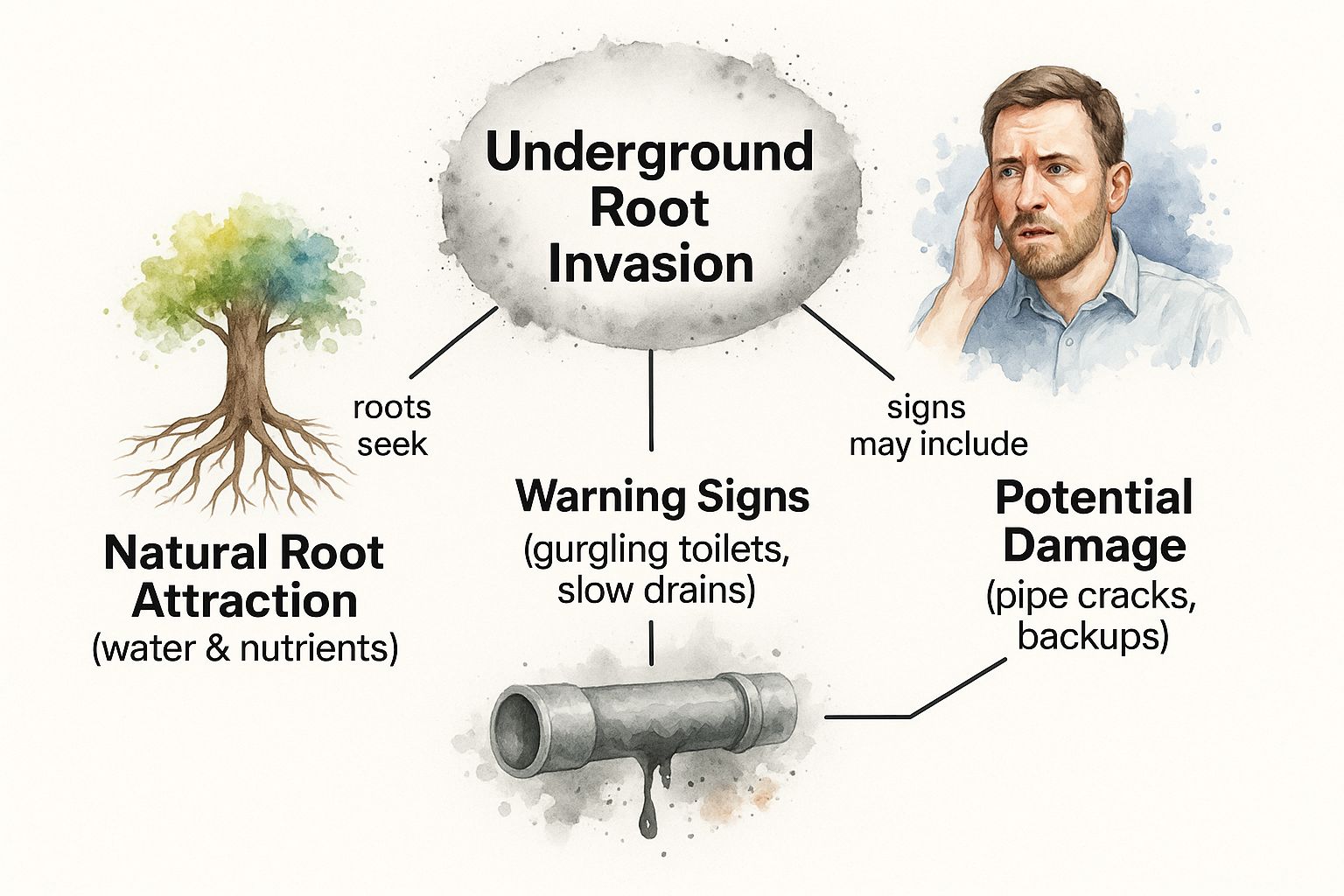
As you can see, the tree’s natural hunt for resources is what leads to those tell-tale symptoms like slow drains. Those are your early warnings before things get much worse, like cracked pipes and sewer backups.
From Minor Annoyance to Major Disaster
Ignoring the early signs of roots in the pipes is a risky bet. Today’s gurgling toilet can easily become tomorrow’s sewer backup—a messy, costly, and potentially hazardous situation.
A sewer backup isn’t just a mess. It can flood your home with contaminated water and harmful bacteria, turning a simple plumbing problem into a serious health risk for your family.
The damage isn’t just on the inside, either. As those roots grow and expand, they put incredible pressure on the pipe itself. This pressure can cause the pipe to crack, shift, or even collapse entirely. This is a huge risk for older homes with clay or cast iron pipes, which are far more susceptible to this kind of damage.
To get a clearer picture of what’s at stake, you can learn more about what causes sewer backup in our in-depth guide. Making the connection between that lovely tree in your yard and your slow-draining shower is one of the most important things a homeowner can do.
Why Tree Roots Target Your Sewer Lines
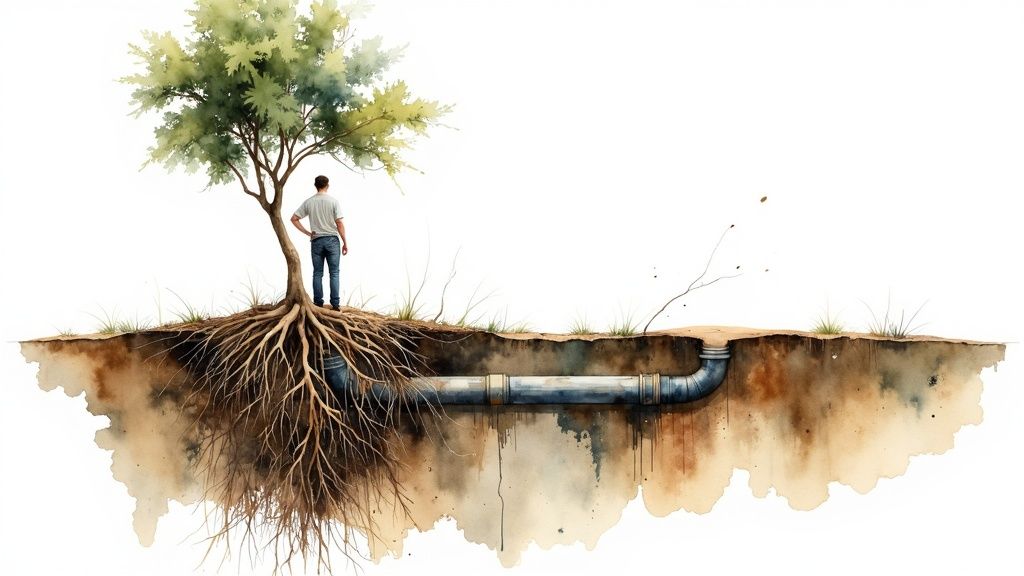
It’s easy to picture a tree aggressively attacking your pipes, but the truth is a lot simpler. Tree roots aren’t malicious—they’re just incredibly good at what they do: finding water and nutrients to survive. Your sewer line happens to be a perfect, year-round source for both.
Think of it this way. Your sewer pipes, especially older ones, are constantly releasing warm water vapor into the surrounding soil through tiny cracks or loose joints. For a tree, this vapor acts like an irresistible scent trail leading directly back to an underground oasis. The roots don’t have to search blindly; they just follow the moisture right to your pipes.
This all starts with the smallest, most delicate parts of the root system. Those tiny, hair-like tendrils are fine enough to wiggle their way into the most minuscule crack in a pipe. Once a single one gets inside, it’s hit the jackpot.
The Ideal Environment for Growth
Inside a sewer line, a root finds everything it needs to thrive. It’s dark, consistently moist, and packed with a steady supply of nutrients from the waste flowing through. This nutrient-rich buffet acts like a constant fertilizer, triggering a rapid explosion of growth.
That one tiny root immediately starts to expand and sprout new tendrils, quickly forming a dense, fibrous mass. What started as a microscopic intrusion can become a thick, powerful root ball that acts like a net, catching toilet paper, grease, and solid waste. This is what causes those stubborn, slow-draining pipes and nasty backups.
A single root intrusion acts as an anchor point. As more waste gets caught, the blockage grows exponentially, putting immense pressure on the pipe from the inside out and dramatically increasing the risk of cracks or a complete collapse.
The problem of roots in the pipes is more than just a clog. As that root mass grows thicker, it exerts incredible pressure on the pipe itself. This constant force can turn small cracks into major fractures, bust open pipe joints, and even cause entire sections of the line to collapse, leading to far more expensive and disruptive repairs.
Not All Pipes Are Created Equal
The type of pipe material under your lawn plays a huge role in how vulnerable your home is. Older homes are especially at risk because they were often built with plumbing materials that just don’t hold up as well over decades.
Here’s a quick rundown of common pipe materials and their weak spots:
- Clay Tile Pipes: Found in many older homes, these were installed in short sections. The mortar used to seal the joints between them is notorious for cracking and crumbling over time, basically creating an open invitation for roots.
- Cast Iron Pipes: While strong, cast iron eventually rusts and corrodes. This process weakens the pipe walls, leading to cracks and holes that give roots an easy way in.
- Modern PVC Pipes: Polyvinyl chloride (PVC) is a game-changer. This durable plastic resists corrosion and is installed in long, seamless sections. The joints are solvent-welded, leaving far fewer weak points for roots to exploit.
While no pipe is completely immune, upgrading an old clay or cast iron line to modern PVC can drastically lower your risk. It’s all about eliminating the structural weaknesses that roots are so good at finding. The smooth surface and tightly sealed joints of PVC present a much tougher barrier for even the most determined root system to breach.
Decoding the Warning Signs of Root Intrusion
Long before a catastrophic sewer backup floods your basement, your home’s plumbing system will almost always send out distress signals. These early clues are your best shot at tackling a manageable problem before it spirals into a costly emergency. Learning to spot the symptoms of roots in the pipes is like becoming a proactive plumbing detective for your own home.
The signs of root intrusion typically start small, almost whisper-quiet, and then grow more severe over time. At first, you might write them off as minor quirks, but they are direct indicators of a growing blockage in your main sewer line. Ignoring them gives the root mass more time to expand, dramatically increasing the risk of a complete pipe failure.
Subtle Sounds and Slow Drains
The earliest warnings are often things you hear, not see. Have you ever flushed your toilet and heard a strange gurgling sound coming from a nearby shower drain? That isn’t just a random noise; it’s a classic sign that something is partially blocking the line. Air is being forced back up through the water in your P-traps because it can’t vent properly, creating that tell-tale gurgle.
Soon after, you’ll probably notice that your drains just aren’t as quick as they used to be. The key here is to pay attention to where the slowness is happening.
- A single slow drain, like in one bathroom sink, usually points to a simple, local clog from hair or soap scum. Easy fix.
- Multiple slow drains all over the house, especially on the ground floor, strongly suggest a much bigger problem in the main sewer line—the central highway for all your home’s wastewater.
When several fixtures struggle to drain at once, it’s a clear signal the blockage is far down the system, and invasive tree roots are the number one suspect.
A gurgling toilet combined with slow drains in your tub and sinks is one of the most reliable indicators of an early-stage root intrusion. It’s your plumbing system’s way of telling you that the main line is struggling to breathe.
Escalating Issues and Foul Odors
As the root blockage gets worse, the symptoms become impossible to ignore. Foul odors are a big one. If you start smelling raw sewage in your bathrooms, basement, or even outside in your yard, it means sewer gases are being forced back into your home because they have nowhere else to go.
This is also when you might start dealing with frequent and frustrating clogs. If you find yourself constantly plunging the same toilet or snaking the same drain only for it to back up again in a few weeks, it’s because you’re only clearing the immediate waste, not the underlying root mass causing the traffic jam.
To help you figure out what’s going on, here’s a quick checklist to gauge how serious your situation might be based on the symptoms you’re noticing.
Root Intrusion Symptom Severity Checklist
| Symptom | Severity Level | What It Means |
|---|---|---|
| Gurgling Drains | Low | Air is struggling to escape the line, indicating an early or partial blockage. |
| Multiple Slow Drains | Medium | The main sewer line is likely obstructed, affecting fixtures throughout the home. |
| Recurring Clogs | Medium | A persistent obstruction is present that simple plunging or snaking can’t resolve. |
| Foul Sewage Odors | High | Sewer gases are backing up into the home, signaling a significant blockage. |
| Sewage Backup | Critical | The line is completely blocked. Wastewater has nowhere to go but back into your house. |
This checklist isn’t a substitute for a professional diagnosis, but it can give you a pretty good idea of when it’s time to make that call.
Obvious Outdoor Clues
Sometimes, the most telling signs aren’t inside your home at all. Take a walk around your yard, especially along the path where you think your sewer line runs, and look for these clues:
- An Unusually Lush Patch of Grass: If one spot on your lawn is inexplicably green and vibrant, it might be getting extra “fertilizer” from a leaking pipe underground.
- Sinkholes or Depressions: A seriously damaged or collapsed sewer line can create soft spots or small sinkholes in your yard as the surrounding soil washes into the broken pipe.
Recognizing these warnings is the first step toward smart plumbing care. To learn more about how to protect your system proactively, check out our guide on the importance of routine sewer line maintenance. Catching these signs early can save you from a world of mess and thousands of dollars in repairs.
How Professionals Clear Roots From Pipes
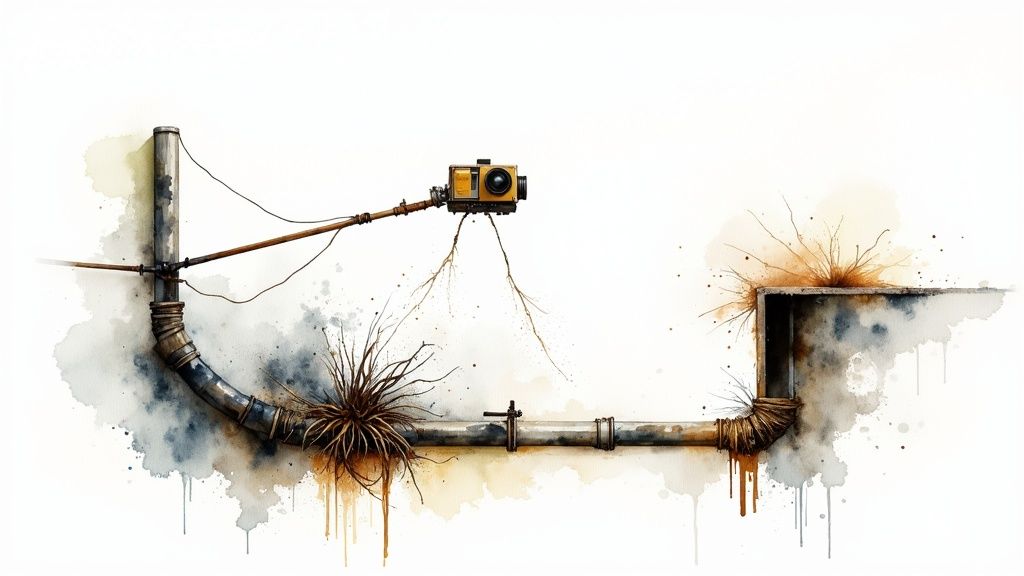
You’ve tried the store-bought snake and even chemical drain cleaners, yet the water still creeps by at a crawl. That’s because when roots invade, they weave themselves into your pipes like ivy on a wall. Professionals don’t stop at poking a hole—they diagnose, eradicate, and protect, ensuring your system runs smoothly for years.
By layering proven techniques rather than relying on a single method, a plumber tackles the hidden damage, not just the visible clog. It’s the difference between a temporary poke and a thorough sweep that restores real flow.
The First Step: Sewer Camera Inspection
Before cutting or flushing, a technician feeds a flexible cable with a high-resolution camera into your line. It’s like giving the plumber X-ray vision.
This inspection uncovers:
- Exact Root Location: Pinpoints the troublesome spot.
- Blockage Severity: Measures how dense the root mass has grown.
- Pipe Condition: Flags cracks, fractures, and any collapsed sections.
Skip this step and you’re guessing at the problem. With real-time footage, the plumber picks the right tool, saving time and avoiding unnecessary digging.
Mechanical Augering: The Brute Force Approach
Think of a mechanical auger as a mini chainsaw on a cable. It’s not the little hand crank you rent at the hardware store. This rugged, motorized “rooter” uses rotating heads to slice through tough fibers.
Here’s how it works:
- The cable snakes down to the clog.
- Spinning blades cut, tear, and grind roots into fragments.
- Debris flushes away, restoring partial flow instantly.
This method punches a hole through stubborn masses. But since it can leave a thin lining of roots on the walls, regrowth is still a possibility.
Hydro-Jetting: The Ultimate Pipe Cleaner
When roots cling stubbornly, plumbers call in hydro jetting services. Imagine blasting the inside of your pipe with a pressure washer set to 4,000 PSI. That’s exactly what happens.
A specialized nozzle sends water jets forward and backward, pulverizing roots and scouring the pipe walls. The result? Pipes that look nearly new:
- Eliminates grease and scale
- Removes every last root tendril
- Restores full pipe diameter
For a deeper dive into this process, check out our guide on what hydro-jetting is and how it saves your pipes.
Hydro-jetting offers a more complete cleaning than mechanical augering. By thoroughly cleaning the pipe walls, it helps prevent the rapid regrowth of roots and keeps your sewer line flowing freely for much longer.
Trenchless Pipe Lining: The Permanent Fix
Clearing roots is only half the battle. If your pipe has cracks or gaps, new intruders will creep in. That’s where Cured-In-Place Pipe (CIPP) lining shines—no yard excavation needed.
Here’s the process:
- A resin-saturated liner is inserted into the damaged pipe.
- It’s inflated to press firmly against the old walls.
- Heat or UV light cures the resin into a seamless, jointless tube.
The outcome is a brand-new pipe within your old one, sealed against future invasions.
Global Infrastructure Investment
Maintaining and upgrading water and sewage systems demands serious funding. In 2025, the industry saw:
| Region | Investment (2025) |
|---|---|
| Global | $583.5 billion |
| North America | $105.8 billion |
You can explore more about these global infrastructure trends and their financial scope in this comprehensive report.
By combining inspection, targeted clearing, and trenchless repair, professionals deliver a lasting solution—one that keeps roots out and flow at full speed.
Long-Term Strategies to Prevent Root Invasions
Getting a massive root blockage cleared out feels like a huge win, but it’s really only half the battle. If you don’t tackle the underlying issues that invited those roots in the first place, you can bet they’ll be back. To truly win the war against roots in the pipes, you have to shift from a reactive mindset to a proactive one.
This means moving beyond emergency repairs and focusing on long-term prevention. With a few smart strategies, you can make your property a much less inviting place for invasive roots and save yourself from future plumbing headaches. The goal here is to make your sewer line the least appealing water source on the block.
Practice Strategic Landscaping
Your best line of defense starts right in your own yard with smart planting. The trees and shrubs you choose have a direct line—pun intended—to the health of your underground pipes. Some species are notorious for their aggressive, water-hungry root systems that will travel surprisingly far to find a crack in your sewer line.
When you’re planning your landscape, knowing which trees to keep away from your plumbing is absolutely critical.
Trees with Aggressive Root Systems to Avoid:
- Willows: Famous for their love of water, their roots will hunt it down relentlessly.
- Poplars: Hybrid poplars grow at an astonishing rate, and their sprawling roots are incredibly invasive.
- Silver Maples: These are known for shallow but aggressive root systems that can easily crush or clog pipes.
- American Elms: Their powerful and extensive roots pose a major threat to underground lines.
Instead, look for trees with more contained, less invasive root systems. Species like Japanese Maples, Dogwoods, and Crabapples are often considered “sewer-safe” choices, especially when planted a good distance from your lines. If you have existing trees and want to know your risk, it’s a great idea to consult a certified arborist for an expert opinion.
Use Chemical Root Inhibitors Safely
Another powerful tool in your prevention arsenal is the regular use of chemical root killers. These products aren’t meant to kill the tree; they just create a “no-go” zone around your pipes that stops roots from growing there. The most common and effective type is a foaming root killer that contains an herbicide like Dichlobenil.
When you flush it down the toilet, the foam expands to fill the entire pipe, ensuring the chemical coats any roots that have snuck inside. This essentially “burns back” the tiny root tendrils and discourages new ones from trying to get in.
Using a foaming root killer once or twice a year—especially in the spring and fall when roots are growing most actively—can be a game-changer. It creates a chemical barrier that keeps your pipes clear without harming your beautiful trees.
This approach works especially well for homes with older, more vulnerable pipes that don’t quite need a full replacement yet. It’s an affordable way to manage the constant threat of roots in the pipes.
Commit to Routine Maintenance
Finally, the most surefire way to avoid a plumbing disaster is with regular professional check-ups. You get your car’s oil changed to prevent engine failure; your sewer line deserves the same kind of preventative care, especially if you live in an older house or have big, mature trees nearby.
Scheduling a professional sewer camera inspection every two to three years lets a plumber see problems long before they become emergencies. They can spot the early signs of root intrusion, tiny cracks, or separating joints that you’d otherwise never know about—until your drains stop working.
This proactive mindset is part of a larger, global shift toward more sustainable wastewater management. In fact, the global wastewater treatment services market is expected to nearly double from roughly $60.28 billion in 2024 to $116.78 billion by 2035. This boom is fueled by the need for better solutions, including new enzymatic treatments that stop root growth and manage infiltration from issues like roots in pipes. By taking a long-term view of your own plumbing, you’re not just protecting your home—you’re playing a part in building a more resilient infrastructure.
Got Questions About Tree Roots in Your Pipes? We’ve Got Answers.
When you’re dealing with plumbing problems, it’s easy to get overwhelmed by conflicting advice, especially when it comes to something as persistent as tree roots invading your sewer line. Let’s clear up a few of the most common questions homeowners have and separate the effective solutions from the myths.
Is It a Good Idea to Pour Rock Salt Down the Toilet to Kill Roots?
You’ve probably heard this one from a neighbor or seen it online, but pouring rock salt or copper sulfate down the toilet is a gamble we wouldn’t recommend. While it might kill off some of the tiny feeder roots right inside the pipe, it’s a short-term fix that can create long-term headaches.
These substances are highly corrosive and can eat away at older cast iron or metal pipes, making a bad situation even worse. Plus, it doesn’t solve the real problem: the cracks in your pipe that let the roots in, or the larger root mass causing the blockage. The roots will just grow back, and you’ll be right back at square one.
What Should I Expect to Pay for Professional Root Removal?
The cost really depends on how bad the blockage is and what method the plumber needs to use. Here’s a rough idea of what you can expect:
- Mechanical Augering (Snaking): For smaller clogs, this typically runs between $250 and $500.
- Hydro-Jetting: A much more powerful and complete cleaning, this service usually costs $400 to $1,000. The final price depends on things like how long your sewer line is and how easy it is to access.
- Sewer Camera Inspection: This is the critical first step to see what’s actually going on. Expect to pay $300 to $600, though many plumbers will bundle this cost with a cleaning service.
Will My Homeowners Insurance Cover Root Damage in My Sewer Line?
Unfortunately, the answer is usually no. Most standard homeowners insurance policies see tree root damage as a maintenance issue that the homeowner is responsible for.
In fact, most policies have specific exclusions for problems caused by neglect, gradual wear and tear, or—you guessed it—tree root intrusion.
There is a silver lining, though. Some insurance companies offer an add-on, often called “service line coverage,” that can protect you from this. The best thing to do is pull out your policy or call your agent to see exactly what you’re covered for.
If you’re noticing slow drains or just have that nagging feeling something isn’t right with your plumbing, don’t wait for a messy backup to confirm your fears. The experienced team at Professional Plumber Denver can use a camera inspection to find the source of the problem and recommend a solution that lasts. Protect your home by scheduling a service with us today.

Recent Comments