
When you’re planning a new build or a major renovation, the numbers can start to feel overwhelming. For rough-in plumbing, a good rule of thumb for a full house is typically between $8,000 and $12,000. If you’re tackling a single bathroom project, that figure often lands in the $4,000 to $7,000 range.
Of course, these are just starting points. The final cost can swing quite a bit depending on your project’s unique demands, its size, and even your zip code.
Deconstructing the Average Rough-In Plumbing Cost
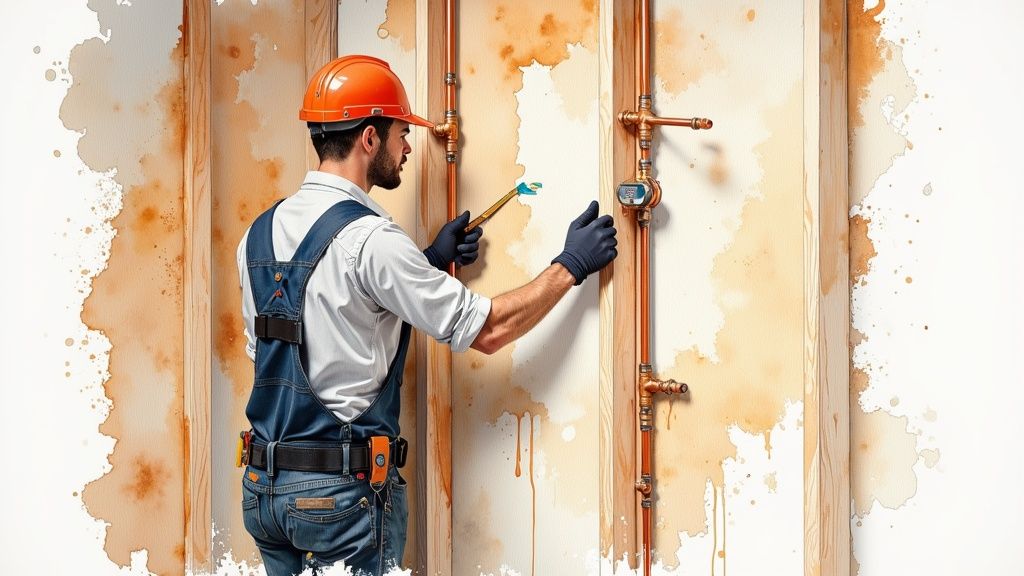
Before you can really budget for it, you need to understand what “rough-in” actually means in the world of plumbing. The best way to think of it is as the skeletal system for your home’s water and drainage. It’s the foundational work that happens after the framing is up but before any insulation or drywall goes in. This is the prime time for plumbers to run all the pipes that will eventually be hidden behind your finished walls.
This crucial phase involves a few key steps:
- Installing all the hot and cold water supply lines that will feed your faucets and appliances.
- Running all the drain lines that will carry wastewater away from sinks, toilets, and showers.
- Setting up the all-important vent pipes, which allow air into the system for smooth drainage and keep unpleasant sewer gases out of your home.
Because the rough-in is the core infrastructure, getting it right is absolutely non-negotiable. Any mistakes made at this stage can lead to frustrating leaks, incredibly expensive repairs, and massive headaches later on. That’s precisely why the rough-in plumbing cost is such a significant line item in any construction or remodel budget. It’s an investment in getting the foundation right.
A Starting Point for Your Budget
So, how does this translate into real dollars for your project? Let’s get a bit more specific. Studies show that roughing in the plumbing for a standard residential bathroom averages around $6,500. However, the full range can be anywhere from $3,000 to a staggering $20,000.
What causes such a huge difference? It comes down to the bathroom’s size, the materials you choose (like PEX versus copper), and the local cost of skilled labor. A simple change, like moving a toilet or shower more than three feet from its original spot, can easily add $500 to $1,000 to the bill. For a deeper dive into these expenses, this helpful cost guide on Angi.com is a great resource.
To help you get a better handle on what your specific project might cost, I’ve put together a table with some common scenarios.
Estimated Rough In Plumbing Costs By Project
This table gives you a quick overview of typical cost ranges for various plumbing projects. Think of it as a starting point for your own budget conversations.
| Project Type | Average Cost Range | Key Influencing Factors |
|---|---|---|
| Single Bathroom | $4,000 – $7,000 | Number of fixtures, layout complexity, remodel vs. new build |
| Kitchen | $3,500 – $6,000 | Dishwasher, garbage disposal, ice maker lines, island sink |
| Laundry Room | $1,000 – $2,500 | Simple setup for washer and utility sink |
| Whole House (2,000 sq ft) | $8,000 – $12,000 | Square footage, number of bathrooms, pipe material (PEX/Copper) |
| Basement Bathroom Addition | $5,000 – $10,000+ | Need for ejector pump, breaking concrete, distance to main stack |
As you can see, the scope of work is the biggest driver of cost. A simple laundry room hookup is worlds away from a full basement bathroom that requires breaking up concrete and installing a special pump. Use these numbers to guide your planning and discussions with your contractor.
Understanding the Rough In Plumbing Phase
Before you can really wrap your head around rough in plumbing cost, you have to understand what this phase is all about. Think of your house like a human body. The rough-in is the part where plumbers install the entire circulatory system—all the veins and arteries that will eventually supply water to your home and drain waste away. This all happens while the “bones” of the house (the framing) are exposed, long before any drywall or insulation goes up.
This work is the unsung hero of your home’s plumbing. It’s completely different from the “finish” or “trim-out” stage, which is when the pretty stuff gets installed. The finish work is all about installing the faucets, toilets, and showerheads you see and touch every day. The rough-in is the hidden, complex network behind the walls that makes it all work.
And getting it right is non-negotiable. A mistake here isn’t just a minor headache. A badly planned rough-in can lead to everything from frustratingly low water pressure to major leaks down the road, turning your dream renovation into a costly nightmare.
What Happens During the Rough In Phase
This isn’t just a matter of connecting a few pipes here and there. It’s a highly coordinated process that lays the groundwork for a reliable and functional home. A professional plumber will methodically tackle several critical tasks that all fit together.
Here’s a breakdown of what a proper rough-in involves:
- Running Supply Lines: These are the pipes, often PEX or copper, that carry clean hot and cold water to every fixture you plan to have—your kitchen sink, washing machine, bathrooms, and outdoor spigots.
- Installing Drain Lines: A completely separate network of larger pipes (usually PVC or ABS) is installed to carry all the wastewater away. These have to be sloped just right to let gravity do its job effectively.
- Setting Up Vent Stacks: This is a crucial step that homeowners often don’t know about. Vent pipes run up through the roof to let air into the drain system. Without them, you’d get a vacuum effect that stops drains from flowing properly and, more importantly, allows nasty sewer gases to sneak into your house.
This work is meticulous and labor-intensive, which is why the rough in plumbing cost is a significant part of any construction budget. It demands precision, a deep understanding of local building codes, and passing a formal inspection.
A common misconception is that rough-in plumbing is just for water. It also includes running gas lines for appliances like water heaters, stoves, or fireplaces, adding another layer of complexity and cost to the project.
Distinguishing Rough In from Finish Plumbing
The simplest way to tell the two apart is to think about what you can see. If you can see it and use it, it’s part of the finish plumbing. If it’s buried in a wall or under the floor, it was put there during the rough-in.
| Rough In Phase (Hidden) | Finish Phase (Visible) |
|---|---|
| Water supply lines (PEX/Copper) | Faucets and sinks |
| Drain and vent pipes (PVC/ABS) | Toilets and bidets |
| Shower and tub valves | Showerheads and tub spouts |
| Gas lines to appliances | Dishwashers and washing machines |
| Connection points (stub-outs) | Garbage disposals |
The rough-in phase is officially complete once all the lines are installed, connected, and pressure-tested for leaks. After it passes the city or county inspection, the general contractor can finally move on to insulation and drywall. This seals the plumbing skeleton inside the walls, making it the point of no return. It’s exactly why you need to hire a skilled, reputable plumber to get it perfect the first time.
Key Factors That Drive Your Plumbing Cost
Figuring out the final rough-in plumbing cost is a bit like budgeting for a road trip. You know your destination, but the total price tag hinges on the car you take, the route you choose, and what gas costs along the way. Several key variables can make your final bill swing up or down, and knowing what they are is the first step to getting a handle on your budget.
These factors can be anything from the type of project you’re tackling to the specific materials your plumber pulls off the truck. Let’s break down each one so you can anticipate the costs and have smarter conversations with your contractors.
New Construction vs. Remodel Projects
You might assume that roughing in the plumbing for a brand-new house would be more expensive than for a simple remodel. It’s a common thought, but the opposite is usually true. On a new construction site, plumbers have the luxury of working in a wide-open space. With studs and joists exposed, they can run pipes and drains along the most direct and efficient paths. It’s a clean slate.
Remodels, on the other hand, are a whole different beast. Before any new pipes go in, plumbers have to start with demolition—carefully cutting into drywall, prying up floors, and navigating a maze of existing obstacles. They have to work around live electrical wires, HVAC ducts, and crucial structural beams. This meticulous work is slower, more complex, and full of potential surprises, all of which drive up labor costs compared to a new build.
Project Size and Complexity
This one’s pretty straightforward: the bigger the job, the bigger the bill. A single half-bath rough-in is naturally going to cost a fraction of what it takes to plumb an entire 3,000-square-foot house with three full bathrooms, a gourmet kitchen, and a laundry room. Every fixture you add—a sink, toilet, shower, or dishwasher—requires its own supply and drain lines, adding to the material and labor totals.
Complexity is just as important as size. Imagine a simple, two-story house where the upstairs bathrooms are stacked directly over the kitchen. This design is incredibly efficient, allowing for straight, vertical pipe runs. Now picture a sprawling, custom home with bathrooms and wet bars spread out across different wings. That layout demands much longer pipe runs, more fittings, and a lot more labor to tie everything back into the main water and sewer lines. That added complexity shows up directly on the final invoice.
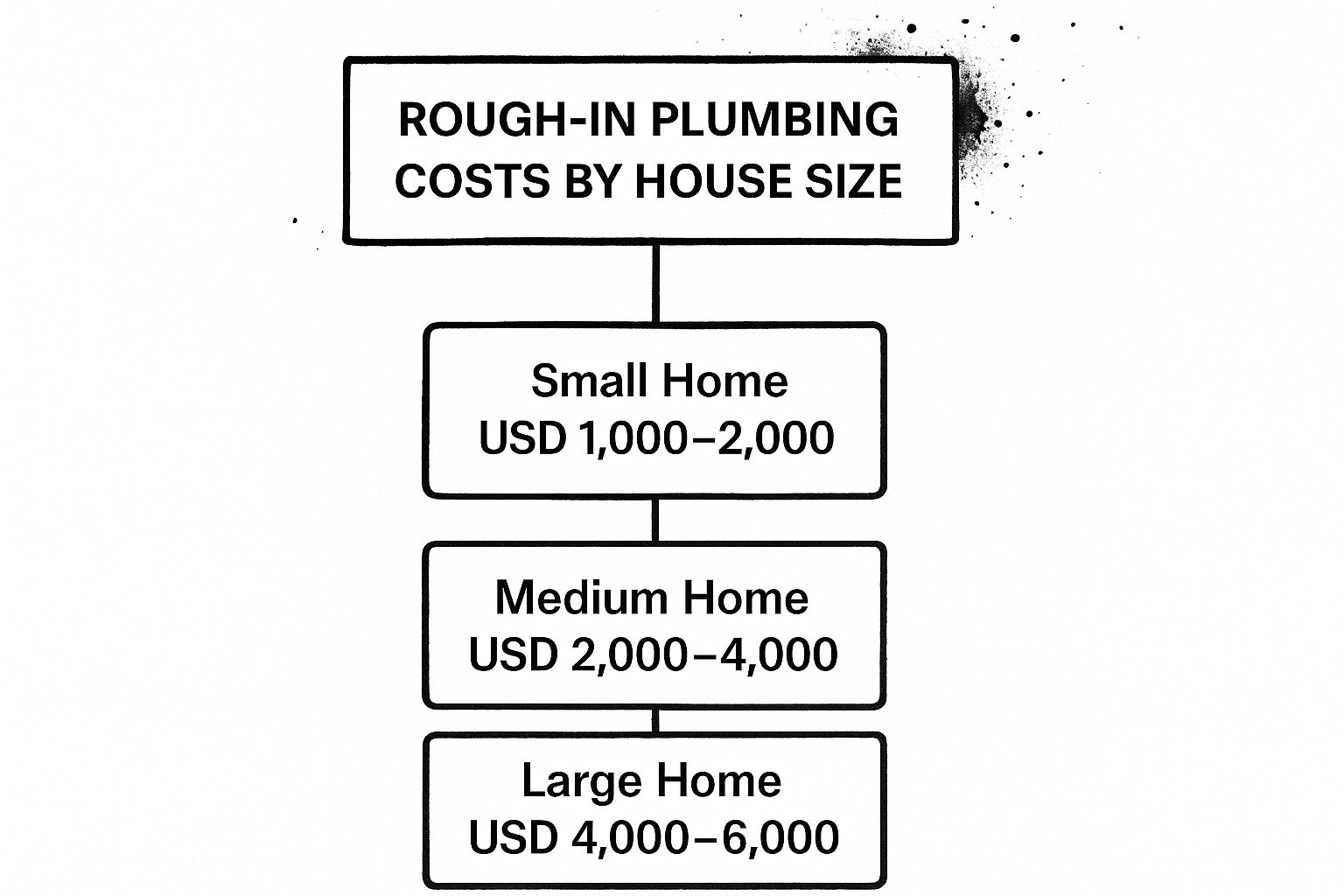
As you can see, the cost ranges get wider as a home gets bigger, which accounts for the extra materials and labor needed for more extensive plumbing systems.
Pipe Material Choices
The type of pipe used for your water lines is another critical fork in the road for your budget. For residential projects, it almost always comes down to two choices: PEX or copper.
- PEX (Cross-linked Polyethylene): This flexible plastic tubing is the go-to for most new homes today, and for good reason. It’s cheaper than copper, much faster to install (which cuts down on labor costs), and it won’t corrode over time.
- Copper: For generations, copper was the undisputed king of plumbing. It’s incredibly durable and can last more than 70 years, but that longevity comes at a premium. The material itself is expensive, and installation is a true craft, requiring a skilled plumber to solder every joint perfectly.
While PEX is the clear winner for most budgets, some homeowners still prefer copper for its proven track record, especially for main water lines. It’s also worth noting that some local building codes might still require copper in specific applications.
Local Labor Rates and Permits
Your zip code has a surprising amount of say in your project’s cost. Hourly rates for licensed plumbers can vary dramatically from one city to the next, influenced by the local cost of living, demand, and regional regulations. A master plumber in a busy urban center will naturally have a higher rate than one in a quieter, rural town.
It’s important to remember that when you hire a licensed plumber, you aren’t just paying for an hour of their time. You’re investing in their expertise, their insurance, and their deep knowledge of local building codes—the very things that protect your home and your family’s safety.
On top of labor, every municipality requires permits for major plumbing work. These fees, which can run anywhere from a couple of hundred to over a thousand dollars, pay for the official inspections that ensure the job was done to code. Think of it as a non-negotiable insurance policy that the work was done right.
To see where rough-in plumbing fits into the bigger picture, it helps to look at a comprehensive construction cost breakdown. Of course, sometimes the work extends beyond the walls of your house; for more on that, check out our guide on the average cost of sewer line replacement.
New Construction vs. Remodel: Why The Costs Are So Different
One of the biggest questions that will shape your plumbing budget is the nature of your project. Are you building a brand-new home from the ground up, or are you breathing new life into an existing space? It might seem counterintuitive, but renovating is almost always more complex and costly for plumbing than starting with a clean slate.
Think of new construction as a plumber’s dream: a blank canvas. The home’s frame is wide open, giving them clear, easy access. They can run pipes and drains through the floor joists and wall studs without a single obstacle in their way. It’s all about mapping out the most efficient system from the get-go.
This straightforward approach means the work is faster, the planning is simpler, and there are far fewer surprises. Plumbers can strategically stack bathrooms over kitchens to minimize the length of pipes, which saves a bundle on both materials and labor.
Why Remodeling Plumbing Costs More
A remodel, on the other hand, is a bit more like performing surgery. Before any new pipes can go in, a plumber has to carefully open things up. This means cutting into drywall, pulling up flooring, and navigating the hidden, and often unpredictable, world inside your walls and ceilings. It’s a slow, meticulous process.
When working on a remodel, a plumber has to dance around a whole host of existing obstacles:
- Live Electrical Wiring: One wrong move near an active circuit is a serious safety hazard.
- HVAC Ductwork: That perfectly logical path for a new pipe? It’s often blocked by a heating or cooling duct, forcing a complicated and expensive reroute.
- Structural Beams: You can’t just cut through a load-bearing wall. Plumbers have to find clever, and usually more labor-intensive, workarounds.
- Old, Failing Pipes: It’s common to uncover old, corroded, or incorrectly installed plumbing that absolutely must be replaced, adding unexpected costs and time to the job.
This kind of intricate work is full of surprises that can make labor hours climb quickly. What seemed like a simple fix can morph into a complex puzzle, and that complexity is reflected directly in your final bill.
For remodels, just remember this: distance equals dollars. Moving a toilet or sink even a few feet might seem minor, but rerouting the drain and supply lines inside a finished wall can easily add hundreds, or even thousands, to the cost.
Real-World Cost Examples: New vs. Old
In a new home build, the rough-in plumbing cost is fairly predictable. For a standard 2,000-square-foot house with two or three bathrooms, you can generally expect the rough-in phase to fall between $8,000 and $12,000. After you add the finish plumbing—installing the faucets, tubs, and toilets—the total plumbing cost often lands in the $12,000 to $20,000 range.
Now, let’s look at a remodel. Imagine you’re updating your master bathroom and want to move the shower across the room. To do this, a plumber will likely have to open up the floor and the ceiling below to reroute the large drainpipe. That’s a world of difference from just running a pipe through open joists in new construction.
This is also why adding a basement bathroom is often surprisingly expensive. The job usually requires breaking up the concrete slab to install new drain lines. If the new fixtures sit below the home’s main sewer line, you’ll also need a special ejector pump. These tasks add significant labor and material costs that simply don’t come up in a typical new build. If you’re tackling a kitchen, using a good kitchen remodel cost calculator can help you get a handle on how these plumbing changes fit into the bigger picture.
How Labor Rates Shape Your Plumbing Budget

When you start looking at quotes for a plumbing project, it’s easy to focus on the cost of pipes and fittings. But here’s something I’ve seen surprise homeowners time and time again: the single biggest line item on your rough in plumbing cost is almost always labor. It’s not unusual for labor to make up 40-60% of the entire bill.
At first, that might seem steep. But when you break down what you’re truly paying for, it starts to make perfect sense. You’re not just renting a pair of hands for a few hours; you’re investing in a highly specialized skill set.
Think of it this way: you wouldn’t hire just anyone to perform a critical surgery. You’d want a surgeon with years of training who understands the body’s complex systems inside and out. A professional plumber is a specialist for your home’s “circulatory system,” making sure everything from your water supply to your drains works safely and flawlessly for years to come.
Why Skilled Labor Costs What It Does
Hiring a licensed and insured plumber isn’t just a good idea—it’s your safety net. Their hourly rate is an all-inclusive cost that covers far more than just the time they spend at your property.
Here’s a glimpse into what’s bundled into that rate:
- Code Mastery: A deep, working knowledge of Denver and national building codes. This is absolutely critical for passing inspections and ensuring your family’s safety.
- Insurance and Licensing: This is your protection. It shields you from liability if an accident or damage happens on your property during the job.
- Professional-Grade Tools: They show up with specialized equipment that’s necessary to do the work efficiently and correctly.
- Hard-Earned Experience: The invaluable wisdom to solve problems on the fly, like creatively rerouting a pipe to avoid a hidden beam inside a wall.
This expertise is what stands between you and a future nightmare—think hidden leaks inside a wall, sewer gas backing up into your home, or poorly installed gas lines. Paying for quality labor upfront is a direct investment in your home’s long-term health and your own peace of mind. To keep that system in top shape, it’s also smart to understand the importance of regular plumbing maintenance in Denver.
Understanding Plumber Rates and Quotes
Of course, not all labor costs are the same. A master plumber with two decades of experience will naturally command a higher rate than an apprentice just learning the ropes. Geography plays a big part, too; labor costs in a busy metro area like Denver will be different than in a small, rural town due to higher demand and overhead.
Labor is the engine of your plumbing project. A licensed professional brings the expertise to navigate complex building codes, ensuring your installation is not just functional, but safe and built to last.
Generally, you can expect to see hourly rates for licensed plumbers fall somewhere in the $50 to $150 per hour range. Keep in mind that this can climb for emergency calls or after-hours work.
Because labor is such a huge part of the final price, getting several detailed quotes is non-negotiable. Always ask for an itemized breakdown that separates material costs from labor. This transparency is key—it lets you accurately compare different bids and gives you a clear picture of exactly where your money is going.
Smart Ways to Save Money on Your Project
Keeping your rough in plumbing cost in check doesn’t mean you have to compromise on quality. With some smart planning, you can make savvy financial moves that protect your budget while avoiding the pitfalls of shoddy work. It’s all about striking that perfect balance between saving money upfront and preventing costly disasters down the line.
Your best weapon here is knowledge. Start by getting at least three detailed, itemized quotes from licensed and insured plumbers. Doing this gives you a solid feel for the going rate in the Denver area and lets you see how different pros break down their costs for labor and materials. Be wary of any bid that seems way too good to be true—it often is, signaling cut corners or inexperienced hands.
Plan for Efficiency
A well-planned layout is one of the single most effective ways to lower your plumbing bill. The idea is to create a system that’s as simple and direct as it can be, which means less pipe, fewer fittings, and less time for the plumber to install it all.
Here are a few practical tips to think about:
- Cluster Your Fixtures: If you’re building a new home, try to stack bathrooms on top of each other between floors or place them back-to-back. This lets multiple sinks, toilets, and showers share the same “wet wall” and main drain stack, dramatically reducing the amount of pipe and labor needed.
- Limit Movement in Remodels: During a renovation, keeping fixtures close to their original spots can save you a bundle. Moving a toilet even a few feet can mean jackhammering concrete or re-routing major drain lines, which quickly adds up.
- Embrace PEX Piping: When your local building codes allow for it, choosing PEX tubing instead of traditional copper is a fantastic way to save. PEX material is cheaper, but the real savings come from the installation—it’s much faster to run, which directly lowers your labor bill. Plus, it’s more resistant to freezing and corrosion.
The Dangers of Cutting the Wrong Corners
It’s easy to get tempted by the thought of hiring a cheap, unlicensed handyman or grabbing the least expensive materials off the shelf. Honestly, this is a gamble you don’t want to take. Badly installed plumbing is a ticking time bomb, leading to anything from slow leaks that cause hidden mold and rot to catastrophic pipe bursts that flood your entire home.
Saving a few hundred dollars now on an unlicensed plumber can easily spiral into tens of thousands in water damage repairs later. Always make hiring a qualified, insured professional your top priority.
Think of quality plumbing as a long-term investment in your home’s health and value. For a broader look at keeping your entire project on track, check out this guide on mastering home renovation project management. You can also find more affordable plumbing solutions in Denver in our guide. When you combine intelligent design with a skilled professional, you can take firm control of your rough in plumbing cost.
Answering Your Top Rough-In Plumbing Questions
It’s one thing to understand the definition of rough-in plumbing, but it’s another to see how it plays out in the real world. You’ve probably got some specific questions on your mind, especially about saving money and what the process actually involves. Let’s tackle some of the most common questions we get from homeowners.
Can I Just Do the Rough-In Plumbing Myself?
I get this question all the time. With labor costs being what they are, it’s natural to look for ways to save a buck. But honestly, this is one job you really want to leave to the pros.
Rough-in work is the very foundation of your home’s plumbing system. It’s not like swapping out a faucet. We’re talking about getting drain slopes just right so waste actually flows away, making sure every water line connection is rock-solid, and knowing the local building codes inside and out. A small mistake here, buried behind a wall, can turn into a nightmare of hidden leaks, mold, or a failed inspection that forces you to rip everything out and start over. It’s just not worth the risk.
Does the Rough-In Phase Include Gas Lines?
Good question! In many cases, yes. If your project involves a gas stove, a new gas water heater, or maybe a fireplace, the plumber typically runs those lines during the rough-in stage.
This is another huge reason to hire a licensed professional. Installing gas lines is serious business with zero room for error. They have to be tested and pass a strict inspection to make sure they are perfectly sealed and safe. Factoring in gas work will affect the rough in plumbing cost, so make sure it’s part of the conversation when you’re getting quotes.
Remember: The rough-in inspection is a critical milestone. A passed inspection from your local building department is the green light that confirms all water, drain, vent, and gas lines were installed correctly and safely, allowing construction to proceed to the next stage.
How Long Does Rough-In Plumbing Usually Take?
The timeline really depends on the size and complexity of your project. There’s a big difference between plumbing a small bathroom and an entire house.
- A Single Bathroom: For a straightforward bathroom addition or remodel, a skilled plumber can often get the rough-in done in 1 to 2 days.
- An Entire House: Plumbing a whole new home is a much larger undertaking. You can expect this to take anywhere from 3 to 5 days, sometimes longer for very large or complex custom homes.
Remodels can sometimes take a bit longer if we have to work around existing pipes and structures. Your plumber should always give you a time estimate right alongside their cost breakdown.
Will My ADU or Garage Conversion Need Its Own Sewer Line?
Not always, but it’s a critical point to figure out early. Whenever possible, we’ll try to tie the new plumbing from an Accessory Dwelling Unit (ADU) or garage conversion directly into your home’s main sewer line. That’s the simplest and most affordable way to do it.
However, if the new unit is too far from the main line, or if it sits lower than the sewer line (like in a basement conversion), things get more complicated. You might need a brand new, separate line dug to the street or an ejector pump to actively push waste up and out. This can involve major excavation and add thousands to your budget, so it’s a key detail to nail down during the planning phase.
Are you planning a renovation or new build in the Denver area? Don’t leave your project’s success to chance. The team at Professional Plumbers Denver has years of experience handling every aspect of rough-in plumbing, from simple bathroom additions to complete installations for large residential projects. We ensure your plumbing is done right the first time—safely, efficiently, and up to code. Contact us today for a detailed quote and expert guidance on your project.

Recent Comments