
When you start budgeting for a new water heater in Denver, the numbers can feel a bit all over the place. On average, you can expect the total water heater installation cost to land somewhere between $1,200 and $3,500 if you’re going with a standard tank model. If a tankless unit is on your radar, that range often climbs to $3,000 to $6,000 or even higher.
Think of these numbers as a starting point. The final price tag really depends on the specifics of your home and the system you ultimately choose.
Understanding Denver Water Heater Installation Costs
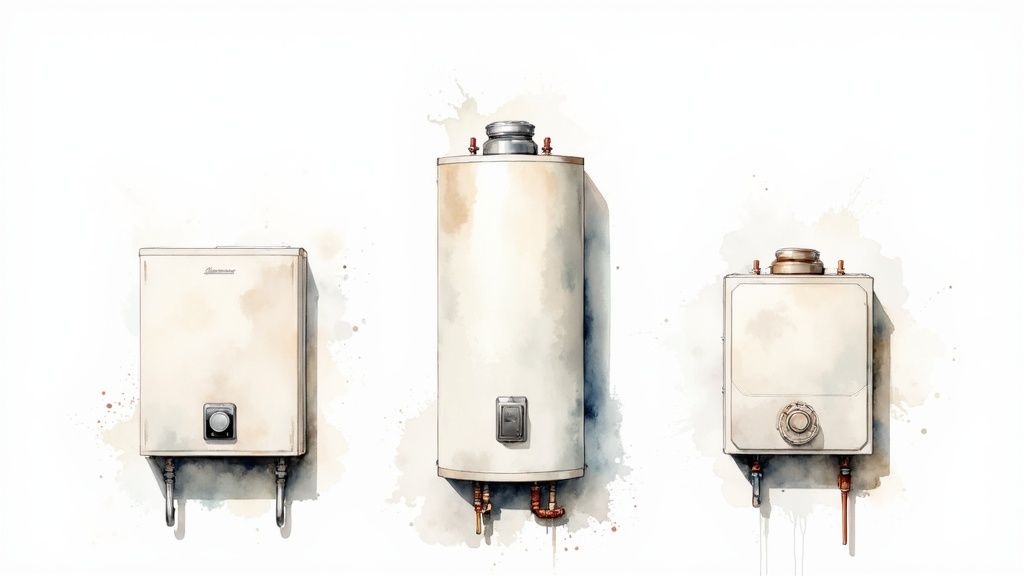
Figuring out the exact cost of a new water heater is a lot like planning a kitchen remodel—the price of the oven is just one part of the bigger picture. The total investment hinges on a few connected factors, from the type of technology you want to how complex the installation job will be.
On a national level, the average cost for a water heater replacement hovers around $1,330, with most homeowners paying somewhere in the $882 to $1,809 range. That price includes both the unit itself and the skilled labor to install it, which can easily make up half the final bill. Digging into national water heater cost averages from recent industry data can give you a good frame of reference.
To help you get a quick handle on potential costs for your Denver home, here’s a simple breakdown.
Estimated Denver Water Heater Installation Costs At A Glance
| Water Heater Type | Average Unit Cost | Average Labor Cost | Estimated Total Installation Cost |
|---|---|---|---|
| Standard Electric Tank | $400 – $1,600 | $600 – $1,400 | $1,000 – $3,000 |
| Standard Gas Tank | $500 – $2,000 | $700 – $1,500 | $1,200 – $3,500 |
| Tankless (Gas) | $1,200 – $3,500 | $1,500 – $2,500+ | $2,700 – $6,000+ |
| Tankless (Electric) | $700 – $2,500 | $1,000 – $2,000 | $1,700 – $4,500 |
This table provides a ballpark estimate to help you budget, but keep in mind that a detailed, on-site quote from a professional is the only way to know your exact cost.
Key Budgeting Components
So, where does all that money go? To build a realistic budget, it helps to understand the main pieces that make up the total price.
- The Unit Itself: This is the biggest variable. A straightforward 40-gallon electric tank heater will have a much lower upfront cost than a high-efficiency gas tankless model designed to heat water on demand.
- Labor and Expertise: You’re not just paying for a person’s time; you’re paying for their skill to do the job safely and correctly. Professional installation ensures everything is up to code and your new unit runs as efficiently as possible. Labor rates in the Denver area will reflect a plumber’s experience and the time required for the job.
- Permits and Inspections: Most local governments, including the City and County of Denver, require a permit for a water heater replacement. This is a good thing—it’s a check to make sure the work is done safely and meets all local building codes.
Your final bill is a combination of the heater’s price tag, the plumber’s time and skill, and any necessary modifications to your home’s existing plumbing or venting systems. Getting a detailed quote helps clarify every part of this equation.
Breaking Down What Goes Into Your Final Bill
So, what exactly are you paying for when you get a new water heater? The final invoice is a lot more than just the price tag on the unit itself. It’s a bit like buying a car—the sticker price is just the starting point. The engine upgrade, the premium sound system, and the delivery fee all add up. Knowing what these “add-ons” are helps you ask the right questions and get a quote that doesn’t have any nasty surprises.

Without a doubt, the single biggest variable is the type of water heater you pick. A classic storage-tank heater is your dependable family sedan—it gets the job done at a lower upfront cost. On the other hand, a modern tankless heater is like a sleek hybrid vehicle; it costs more to buy but saves you money on fuel in the long run.
Then there’s the labor. Here in Denver, you’re not just paying for a pair of hands; you’re investing in a licensed plumber’s skill, safety know-how, and insurance. That’s what guarantees the job is done right and, more importantly, safely and up to code.
The Curveballs: Job Complexity and Required Upgrades
Not every installation is a straightforward swap. The complexity of the job can really change the final price. If you’re just replacing a 10-year-old tank with its newer twin in the exact same spot, things are pretty simple. But that’s not always how it goes.
For example, a major cost driver is switching from electric to gas. That’s a whole different ballgame. It means running a brand-new gas line and figuring out the proper venting, which is a job that requires serious expertise. If you’re weighing your options, our guide on gas vs electric water heaters for your Denver home can help you sort out the pros and cons.
Other common factors that can complicate things include:
- Plumbing Rerouting: Sometimes the pipes just don’t line up with the new unit. Or, more often, your home’s plumbing needs to be updated to meet current Denver building codes.
- New Venting: Modern high-efficiency gas heaters usually need special PVC venting, which can’t just be hooked up to the old metal flue. That often means drilling new holes and running new pipes.
- Electrical Work: An electric tankless heater is a power-hungry beast. It might need its own dedicated circuit, and in some older homes, it might even require a full electrical panel upgrade to handle the demand.
Location, Location, Location
It’s not just real estate—where your water heater lives in your house matters, too. An installation in a wide-open basement or garage with plenty of headroom is going to be cheaper than one tucked away in a tiny closet, a claustrophobic crawlspace, or up in the attic.
A hard-to-reach spot means more time and effort for the plumber to haul the old unit out and wrestle the new one in. That extra labor time will show up on the final bill.
At the end of the day, all these pieces—from the heater model to its hiding spot in your home—come together to form the total price. A good plumber will give you an itemized quote that spells all of this out, so you know precisely what you’re paying for. No guesswork needed.
Choosing Your Heater: Tank Vs. Tankless
When it comes to replacing your water heater, one of the biggest decisions you’ll face is whether to stick with a traditional tank model or upgrade to a tankless system. This choice will have a major impact on both your immediate water heater installation cost and your energy bills for years to come.
Think of it this way: a tank heater is like a sprinter, with a lower upfront cost that gets you going quickly. A tankless heater, on the other hand, is a marathon runner—it costs more to get started but excels over the long haul with incredible efficiency and an endless supply of hot water.
Each option has its own set of pros and cons, and understanding them is the first step toward making a smart investment for your Denver home.
The Case For Traditional Tank Heaters
There’s a reason storage tank water heaters have been the standard in American homes for decades—they get the job done reliably and affordably. Their biggest draw is a much lower initial price tag, which makes them a go-to choice when you need a replacement fast and don’t want to break the bank.
Installation is also typically more straightforward, especially if you’re just swapping out an old tank for a new one of a similar size. This simplicity often translates to lower labor costs.
But that upfront savings comes with a long-term cost. The tank has to constantly burn fuel to keep 40 or 50 gallons of water hot and ready, even when you’re not using it. This phenomenon, called standby heat loss, means you’re paying for energy that’s literally just seeping out of the tank. Over time, that adds up.
Tank heaters also have a shorter lifespan, usually lasting around 10-15 years. This is partly due to components like the anode rod, a metal rod inside the tank designed to corrode so the tank itself doesn’t. You can learn more about how an anode rod protects your water heater in our detailed guide.
The Modern Appeal Of Tankless Heaters
Tankless water heaters—often called on-demand heaters—are all about long-term efficiency and convenience. Instead of storing hot water, they heat it instantly as it flows through the unit.
This “heat-as-you-go” technology eliminates standby heat loss entirely and offers some fantastic benefits:
- Never-Ending Hot Water: Say goodbye to running out of hot water halfway through a shower. A tankless unit can keep up with back-to-back showers and simultaneous laundry loads.
- Serious Energy Savings: Because they only fire up when you turn on a hot tap, tankless models can be 24%–34% more energy-efficient than their tank-based cousins.
- Built to Last: With proper care, a tankless water heater can last 20 years or more, which is nearly double the lifespan of a typical tank heater.
This image shows a quick comparison of the initial installation costs for different types of water heaters.

As you can see, the initial investment for a tankless system is quite a bit higher than for a standard gas or electric tank heater.
The main hurdle for many homeowners is the higher initial water heater installation cost. A standard tank replacement typically falls between $600 and $2,500. In contrast, going tankless often ranges from $1,400 to $3,900. That extra cost is an investment in future energy savings and a much longer product lifespan.
Comparing Tank And Tankless Water Heaters
To make things easier, let’s break down the key differences side-by-side. This table gives you a clear snapshot of what to expect from each type of water heater, helping you weigh the upfront costs against the long-term benefits.
| Feature | Traditional Tank Heater | Tankless Water Heater |
|---|---|---|
| Upfront Cost | Lower ($600 – $2,500) | Higher ($1,400 – $3,900) |
| Operating Cost | Higher due to standby heat loss | Lower due to on-demand heating |
| Lifespan | 10-15 years | 20+ years |
| Hot Water Supply | Limited to tank capacity | Endless and on-demand |
| Energy Efficiency | Lower | 24%–34% more efficient |
| Space Required | Large footprint (takes up closet/floor space) | Compact and wall-mounted |
| Installation | Simpler, especially for replacements | More complex, may require new venting/gas lines |
Ultimately, the right choice depends on your budget, your family’s hot water needs, and how long you plan to stay in your home. While a tank heater is a reliable and budget-friendly option for the short term, a tankless unit offers superior performance and savings that can pay off handsomely over its long life.
Uncovering Potential Hidden Installation Costs

That first quote for your new water heater can feel like a relief. But it’s often just the starting line, not the finish. Think of it like a base model car—the sticker price looks great, but the features you actually need, like power windows or a better stereo, are extra. Water heater installation works much the same way.
Certain conditions at your home can tack on necessary expenses to the final bill. These aren’t sneaky up-sells. In almost every case, they’re legally required upgrades to get your system up to current Denver building codes and, most importantly, keep your family safe. Knowing what to look for helps you have a smarter conversation with your plumber and sidestep any last-minute sticker shock.
Common Code-Related Upgrades
A lot of the so-called hidden costs pop up when we’re bringing an older home’s plumbing, venting, or electrical systems into the modern era. What was perfectly acceptable 20 years ago might not pass an inspection today.
A good plumber will spot these requirements during their initial visit. They’ll walk you through why an upgrade is needed, not just what it is.
Here are the most common things we run into:
- Plumbing Modifications: If your new water heater is a different size than the old one, we’ll obviously need to adjust the pipes. But more critically, many older setups lack essentials like a proper shut-off valve or a thermal expansion tank. Both are now non-negotiable for a safe, code-compliant installation.
- Electrical System Adjustments: Making the jump to a powerful electric tankless model? That almost always means running a brand-new, dedicated circuit. If your home’s main electrical panel is already full, you might even need a panel upgrade to safely handle the extra demand.
- Gas Line and Venting Changes: This is a big one. High-efficiency gas heaters can’t use an old metal flue; they require new PVC venting. Switching to a gas tankless unit often demands a larger gas line to deliver enough fuel, which is a fairly involved project.
It’s a bit of a misnomer to call these “hidden” costs. They’re necessary safety and code requirements. A trustworthy, itemized quote won’t hide them—it will list them clearly so you can see exactly where your money is going.
Structural and Disposal Considerations
The work doesn’t stop at the pipes and wires. The space itself—and what to do with the old equipment—can also affect your final cost.
For example, if the new heater needs a different venting route, the job might involve cutting through drywall or even an exterior wall. We’ll also likely need to install a new drain pan with a dedicated drain line, which is your best defense against water damage from a future leak.
And finally, what happens to that old, rusty tank? Don’t forget to ask about hauling away the old unit. Most professional quotes roll this service into the price, but it’s always smart to double-check. The last thing you want is an old, 150-pound tank left on your curb.
Why Professional Installation Is A Smart Investment
When you get a quote for a new water heater, the installation cost can sometimes feel like a shock. It’s tempting to think, “How hard can it be? Maybe I’ll just do it myself.” While that DIY spirit is great for a lot of home projects, water heater installation isn’t one of them.
This is a job where a tiny mistake can turn into a huge, expensive disaster. Think of a licensed plumber not just as an installer, but as a safety expert for your home. You’re not just paying for a few hours of their time; you’re investing in years of training that lets them handle complex plumbing, gas, and electrical systems without putting your family at risk. That peace of mind is worth every penny.
The Real Risks of a DIY Install
Trying to install a water heater without the proper training is a serious gamble. It’s one of the main reasons new units fail prematurely and can create some genuinely dangerous situations in your home.
Here are a few of the common hazards that come with an amateur installation:
- Gas Leaks and Carbon Monoxide: If you have a gas heater, a mistake connecting the gas line—even a small one—can cause a slow, dangerous leak. Even worse, if the unit isn’t vented correctly, it can release deadly, odorless carbon monoxide gas right into your living space.
- Massive Water Damage: A poorly soldered pipe or a connection that isn’t perfectly sealed can fail, leading to leaks that can destroy floors, drywall, and even your home’s foundation.
- A Voided Warranty: Most manufacturers are very clear: their warranty is only valid if the water heater is installed by a licensed professional. If you do it yourself and the unit fails, you’re on your own.
A professional installation is your best insurance policy against these potential disasters. It guarantees your new unit is installed according to strict Denver building codes, ensuring safe and efficient operation for years to come.
Investing In Longevity And Efficiency
Beyond just avoiding the big disasters, a professional installation sets your water heater up for a long, efficient life. A skilled plumber knows how to calibrate every component, from the pressure relief valve to the thermostat, for peak performance. That means lower utility bills from day one.
You can learn more about the critical details of a proper install in our guide to why professional plumbers are essential for water heater installation.
The global demand for safer, more advanced water heaters is huge—the market is expected to grow from $30.65 billion in 2024 to over $44.10 billion by 2032. You can read more about the growing water heater market on globenewswire.com. When you’re investing in a piece of this sophisticated technology, hiring a pro ensures that investment is protected.
Making a Confident Decision for Your Home
Figuring out the true water heater installation cost is your first real step toward making a smart investment for your home. It’s about more than just picking a unit off the shelf; you’re trying to strike that perfect balance between the price you pay today and the money you’ll save on energy bills over the next ten years.
Whether you land on a classic tank heater or a super-efficient tankless model, the real win is finding a system that actually fits your family’s needs without blowing up your budget.
Securing Your Investment
The best advice I can give? Always get a few detailed quotes from licensed plumbers here in Denver. This isn’t just about shopping for the lowest price—it’s about comparing the entire scope of work. One plumber might include necessary vent upgrades in their quote while another tacks it on later as a surprise.
Armed with this information, you’re in a much better position to ask the right questions and understand what you’re truly paying for. It’s a big decision, and it’s one that more and more homeowners are taking seriously.
If there’s one thing to remember, it’s this: a cheap installation is rarely a good one. Investing in a professional job protects your home from leaks, keeps your warranty valid, and guarantees your new heater runs safely and efficiently for its full lifespan.
This isn’t just a local trend. The global water heater installation market is expected to be a $15 billion industry by 2025 and is still growing. You can see the bigger picture in this water heater market analysis on archivemarketresearch.com. By keeping your eyes on both the upfront cost and the long-term value, you’ll make a choice you’ll be happy with for years to come.
Got Questions? We’ve Got Answers on Water Heater Costs
A new water heater is a big decision, and it’s only natural to have a few questions swirling around. When you’re trying to figure out the real cost of a water heater installation, getting solid answers is the key to planning your budget and avoiding surprises. Let’s tackle some of the most common things we hear from Denver homeowners.
Getting these details sorted out ahead of time makes the whole process smoother. It’s about taking the mystery out of the project so you feel confident and in control from the get-go.
How Long Will My House Be a Construction Zone?
Everyone wants to know how long they’ll have a plumber in their house. The good news is, it often depends on how straightforward the job is.
- A Simple Swap: If you’re just replacing an old tank water heater with a new one of the same type, it’s a pretty quick job. A seasoned pro can usually get it done in about 2-3 hours.
- A Bigger Project: Things get more involved if you’re making a big change, like going from a tank to a tankless model or switching from electric to gas. These jobs often require new plumbing lines, different venting, or updated electrical work. You should plan for a more complex installation to take anywhere from 4-8 hours, sometimes even a full day.
Do I Really Need a Permit to Install a Water Heater in Denver?
This is a big one, and the answer is a firm “yes.” In almost every case, the City and County of Denver requires a plumbing permit when you install or replace a water heater.
Don’t think of it as just another piece of paperwork—it’s your safety net. A permit ensures the installation is done by a licensed professional who follows all the current safety codes. This is your best defense against serious risks like carbon monoxide leaks, gas line issues, or improper venting. Any reputable plumber will pull the permit for you as part of their standard process.
A permit is basically a third-party inspection that guarantees the job was done right. It protects your home, your family, and your investment.
Can I Save a Few Bucks by Buying the Heater Myself?
It’s completely understandable to want to shop around for a deal at a big-box store. While you might see a lower price tag on the unit itself, this strategy can backfire and end up costing you more in the long run.
Most professional plumbers prefer to source the water heaters they install, and it’s not to pad the bill. It’s all about quality control. When your plumber provides the unit, they know it’s a reliable model, it’s the right size for your home, and it hasn’t been damaged in transit.
Plus, their installation almost always comes with a warranty that covers both the equipment and their labor. If a problem pops up with a heater you bought yourself, you could get stuck in a frustrating blame game between the installer and the manufacturer. Any initial savings can disappear fast.
Ready to get a clear, upfront quote for your Denver water heater installation? The team at Professional Plumbers Denver provides expert service and transparent pricing. Contact us today to schedule your consultation.

Recent Comments