
Your home’s concrete slab foundation feels solid and permanent, but hidden beneath it lies a network of water pipes essential for your daily life. When one of these pipes breaks or cracks, it creates a slab leak—one of the most destructive and deceptive plumbing issues a Denver-area homeowner can face. Left undetected, it can erode your home’s structural support, foster dangerous mold growth, and waste thousands of gallons of water.
The primary challenge is that the initial evidence is subtle and often mistaken for other, less serious problems. Many of these indicators overlap with the critical signs of water damage that can appear anywhere in a home, making it easy to overlook the true source of the problem. This guide is designed to empower you with the knowledge to identify the earliest warning signs of a slab leak, transforming vague suspicions into actionable insights.
Recognizing these key indicators can mean the difference between a simple, targeted repair and a catastrophic foundational failure. We will explore the six most common signs, providing practical steps and real-world scenarios to help you protect your investment and ensure your home remains safe and sound. By learning what to look and listen for, you can catch a slab leak early and prevent costly, long-term destruction.
1. Unexplained Increase in Water Bills
One of the most common and quantifiable signs of a slab leak is a sudden, unexplained spike in your water bill. Because the leak is hidden beneath your home’s foundation, it often runs 24/7 without any visible evidence. This constant water flow is registered by your utility meter, leading to a dramatic and costly increase in your monthly statement.
A small pinhole leak in a pipe under your slab can waste hundreds of gallons of water each day. This isn’t a minor drip; it’s a continuous drain on your water supply that can cause bills to double or even triple seemingly overnight. For homeowners who track their usage, this is often the very first red flag that something is wrong.
Real-World Examples of Bill Spikes
Consider a real-life scenario where a Phoenix homeowner saw their bill jump from a predictable $45 to $180 per month. The cause was a three-inch crack in a pipe beneath their slab, a classic slab leak. Similarly, a family in Texas was alerted to a problem when their monthly water consumption skyrocketed from 6,000 to 22,000 gallons, revealing a significant leak in a hot water line. These examples highlight how your utility bill acts as a critical diagnostic tool.
The infographic below summarizes the key indicators of a slab leak that you can spot on your water bill.
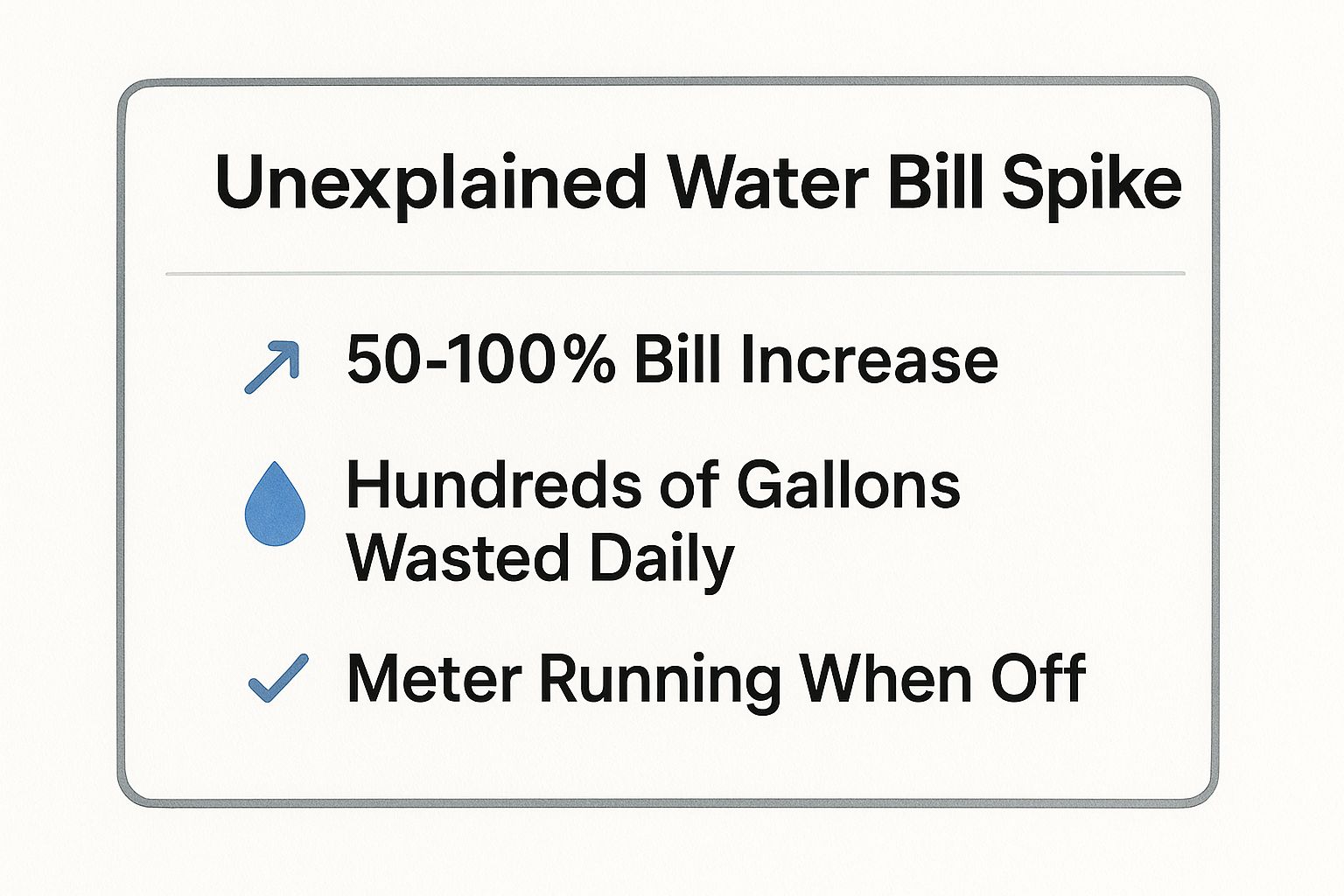
As the data shows, a significant bill increase combined with a constantly running meter are tell-tale signs that warrant immediate investigation.
What You Can Do Next
If you suspect your bill is abnormally high, don’t ignore it. Taking immediate, methodical action can help you confirm a hidden leak and prevent further damage.
- Compare Historical Bills: Pull up your water bills from the same month in previous years. A 50-100% increase without a corresponding change in your habits (like watering a new lawn or filling a pool) is a major warning sign.
- Perform a Water Meter Test: This is the most definitive DIY check. Turn off every water-using appliance in your home, including toilets, faucets, and ice makers. Go to your water meter and check the leak indicator (often a small triangle or dial). If it’s still moving, water is flowing somewhere on your property.
- Monitor Daily Usage: Many utility providers in the Denver Metro area detail your average gallons-per-day usage on your bill. Track this number each month to spot unusual upward trends early.
- Set Up Usage Alerts: Check if your water company offers high-usage email or text alerts. This proactive monitoring service can notify you of a potential leak in near real-time, long before your bill arrives.
2. Sound of Running Water When Fixtures Are Off
One of the most unnerving signs of a slab leak is hearing the distinct sound of water flowing, hissing, or whooshing when every tap and appliance is turned off. This auditory clue is a direct signal that water is actively moving through a broken pipe beneath your home’s foundation. The continuous escape of water creates a sound that can travel through the concrete slab and become noticeable, especially in quiet environments.
Because the leak runs nonstop, the sound is often most apparent at night when ambient household noise drops to a minimum. You might hear it near the kitchen, in a bathroom, or close to your laundry room where plumbing lines are concentrated. This isn’t the sound of a toilet refilling; it’s a persistent noise indicating a serious, hidden problem.
Real-World Examples of Auditory Clues
Consider the case of an Atlanta homeowner who was repeatedly woken up around 2 AM by a constant whooshing sound under their master bathroom. Investigation revealed a significant hot water line leak directly beneath their shower. Similarly, a family in Florida noticed a faint hissing noise near their kitchen sink, which led to the discovery of a slab leak that had likely been active for months. These scenarios show how your ears can be a primary tool for early leak detection.
The sound of running water is often the first indication of a slab leak for many homeowners in the Denver area, prompting them to investigate further before major water damage occurs.
What You Can Do Next
If you hear water running when you know it shouldn’t be, a systematic listening test can help confirm your suspicions and pinpoint the general area of the problem.
- Choose the Right Time: Wait until your home is at its quietest, typically late at night or early in the morning. Ensure all family members are silent and that noise-producing appliances like dishwashers, washing machines, and ice makers are off.
- Listen to the Floor: Carefully walk through your home, placing your ear close to the floor in areas with plumbing, such as bathrooms, the kitchen, and the laundry room. Pay special attention to the area around your water heater closet.
- Amplify the Sound: For a more sensitive test, you can use a mechanic’s stethoscope or even a simple glass placed upside-down on the floor. Press your ear to the bottom of the glass to amplify any subtle vibrations or sounds coming from beneath the slab.
- Isolate the Source: Note any specific locations where the sound is loudest. While sound can travel along pipes, a louder noise often indicates you are closer to the source of the leak, providing valuable information for professional plumbers. For more advanced methods, explore our guide on professional plumbing leak detection.
3. Wet or Damp Spots on Floors
Perhaps one of the most direct and concerning signs of a slab leak is the appearance of unexplained wet or damp spots on your floors. When a pipe breaks beneath your foundation, the escaping water has nowhere to go but up. It saturates the concrete slab and eventually seeps through your flooring, creating persistent moisture that has no obvious source, like a spill or pet accident.

These wet patches can manifest differently depending on your flooring. On carpet, you might notice dark, damp areas that never seem to dry. On tile or vinyl, the floor may feel constantly damp or cold to the touch. For concrete floors, such as in a garage or basement, a dark water stain might appear and gradually expand. If the leak is in a hot water line, these spots will often feel noticeably warm.
Real-World Examples of Water Seepage
Consider these real-life scenarios that illustrate how this sign appears. A Texas homeowner discovered a two-foot-wide damp spot on their living room carpet that felt warm; the cause was a significant hot water slab leak directly below. In another case, a California resident noticed a dark water stain spreading across their concrete garage floor, which was traced back to a leaking pipe connecting to the house. These examples show that any persistent, localized moisture on your ground-level floors should be treated as a serious red flag.
The video below offers a visual guide on what to look for when inspecting your floors for signs of hidden water damage.
As you can see, the location and feel of the wet spot provide crucial clues about the leak’s origin and severity.
What You Can Do Next
If you discover a damp or wet area on your floor, it’s critical to act quickly to identify the source and prevent widespread water damage, mold growth, and structural issues.
- Feel the Temperature: Carefully place your hand on the damp spot. If it feels warm or even hot, the leak is almost certainly in a hot water line. This information is vital for your plumber.
- Mark the Perimeter: Use chalk or painter’s tape to outline the edge of the wet area. Check it every few hours to see if it is growing, which indicates an active and ongoing leak.
- Document Everything: Take clear photos of the affected area from multiple angles. This documentation is essential for insurance claims and for showing your plumbing professional the progression of the problem.
- Check Beneath Carpeting: If possible, carefully pull back a corner of the carpet and padding in the affected area. Saturated padding is a definitive sign the moisture is coming from below. If you notice unexplained damp spots on your floors, particularly carpets, understanding the best practices for drying wet carpets can be useful while investigating the source of the moisture.
- Call a Professional Immediately: Do not delay. A wet spot means the slab is already saturated. A professional plumber in the Denver area can use electronic leak detection equipment to pinpoint the exact location of the leak without destructive guesswork. You can learn more about how these slab leak symptoms develop and why they are so critical to address.
4. Cracks in Walls, Floors, or Foundation
One of the more alarming signs of a slab leak is the sudden appearance of cracks in your walls, floors, or the visible foundation itself. This type of structural damage occurs when water escaping from a broken pipe beneath the slab erodes and saturates the soil. This process, known as “undermining,” creates voids and softens the ground, causing the massive weight of your home’s foundation to shift, settle, or heave.
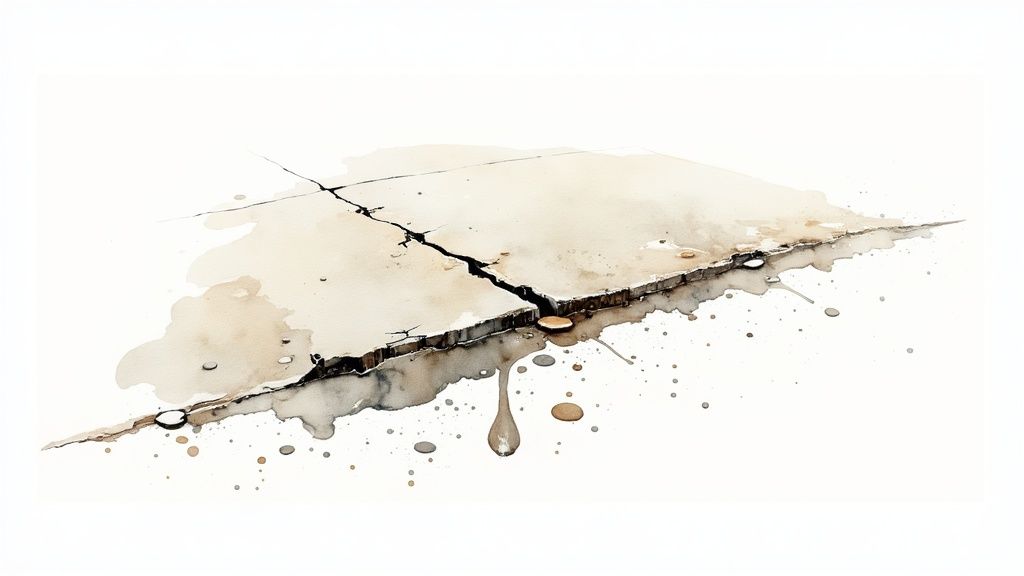
This structural movement places immense stress on your home’s frame, leading to visible cracks. You might notice them as diagonal or stair-step patterns in drywall, separation between walls and ceilings, or fractures in tile and concrete flooring. The presence of new or expanding cracks is not just a cosmetic issue; it signals a potentially serious, long-term leak that is compromising the very integrity of your home.
Real-World Examples of Structural Damage
Consider the case of a Georgia homeowner who noticed developing stair-step cracks in their exterior brickwork. An investigation revealed a six-month-old slab leak had completely washed away critical soil supporting a corner of the foundation. In another instance, a house in Colorado developed a new quarter-inch crack across its living room floor, directly above a leaking water main that had been slowly saturating the ground. These scenarios show how a hidden leak can manifest as severe, visible damage over time.
Structural damage often appears gradually, making it easy to dismiss at first. A door that suddenly sticks or a new hairline crack in the drywall might seem minor, but they can be early warnings of foundation settlement caused by a persistent slab leak.
What You Can Do Next
If you discover new or worsening cracks, it’s crucial to act methodically to diagnose the cause and prevent further structural harm. Don’t simply patch the crack; investigate the root problem.
- Document and Monitor: Take clear photos of any new cracks and measure their length and width. Place a piece of marked tape across the crack to easily track if it is actively growing.
- Check for Correlation: See if the cracks are located near areas with other slab leak signs, like damp flooring or hot spots. This can help pinpoint the leak’s location.
- Consult Professionals: This issue requires a two-pronged approach. First, have a leak detection specialist confirm if a slab leak is present. If it is, you should also consult a structural engineer to assess the extent of the foundation damage.
- Don’t Make Cosmetic Repairs: Avoid filling or painting over cracks until a professional has assessed the situation. Covering up the evidence can make diagnosis more difficult and mask an escalating problem.
- Contact Your Insurance: Report the potential damage to your homeowner’s insurance company promptly to understand your coverage for leak detection, repair, and any resulting structural issues.
5. Mold or Mildew Growth
The sudden appearance of mold, mildew, or a persistent musty smell is a significant and often overlooked sign of a slab leak. Because a leak beneath your foundation releases moisture into a dark, unventilated space, it creates the perfect breeding ground for fungal growth. This moisture can wick up through the concrete slab and into your home’s flooring, baseboards, and drywall.
Mold can begin to colonize within just 24 to 48 hours of water exposure. With a slab leak, this growth typically manifests at the lowest points of your home. The musty odor, produced by microbial volatile organic compounds (MVOCs), is often the first sensory clue you’ll have, even before you see any visible signs of mold.
Real-World Examples of Mold Discovery
Consider the case of a Washington homeowner who discovered black mold spreading across the baseboards in a guest bedroom. After an investigation, the source was traced to a slow slab leak that had likely been active for over eight months. In another scenario, a Florida family experienced worsening asthma symptoms, prompting an air quality test that revealed extensive mold growth hidden beneath their living room carpet, all stemming from an undetected pipe leak in the slab. These examples show that health symptoms and musty smells can be direct indicators of a hidden water problem.
The consistent moisture from a slab leak provides an endless food source for mold, allowing it to thrive unseen and potentially compromise your home’s air quality and structural integrity.
What You Can Do Next
If you notice mold or a musty odor with no obvious cause, it’s crucial to act methodically to protect both your property and your family’s health. The order in which you address the problem is critical.
- Document Everything: Before touching anything, take clear photos and videos of the visible mold growth and any water damage. This documentation is essential for insurance claims.
- Prioritize the Leak: Do not attempt to clean or remove the mold until the source of the moisture is stopped. Trying to remediate mold while the leak is active is futile; it will simply grow back. Your first call should be to a leak detection specialist.
- Check Hidden Areas: Carefully inspect areas where mold is most likely to appear first. This includes behind baseboards, under carpet or vinyl flooring, and inside closets or cabinets that are flush with the floor.
- Hire Certified Professionals: Once the slab leak is repaired, hire a certified mold remediation specialist, such as one with an IICRC (Institute of Inspection, Cleaning and Restoration Certification) credential. They have the training and equipment to safely remove the mold and prevent cross-contamination.
- Consider Air Quality Testing: If you are concerned about airborne spores, especially if household members have respiratory issues, an independent air quality test can confirm the extent of the problem and verify that remediation was successful.
6. Low Water Pressure
A sudden or gradual decrease in water pressure throughout your home is a significant and often disruptive sign of a slab leak. When a water supply line beneath your foundation cracks or bursts, a significant volume of water escapes before it ever reaches your faucets and fixtures. This diversion of water means less is available for your use, resulting in a noticeable drop in pressure.
This pressure loss can manifest in various ways, from a weak, unsatisfying shower to faucets that only produce a trickle. The problem may affect the entire house or be more pronounced in certain areas, depending on the leak’s location and which water line is compromised. It’s a physical symptom of a hidden problem that is actively wasting water and potentially eroding the soil supporting your home’s foundation.
Real-World Examples of Pressure Loss
Consider the case of a Michigan family who noticed their master bathroom shower pressure had dropped by nearly half over a few weeks. A plumbing inspection revealed a major slab leak in the main cold water supply line that fed that side of the house. In another instance, a California homeowner experienced consistently weak hot water pressure at every fixture, leading to the discovery of a leaking hot water line under the slab. These scenarios show how pressure changes can act as a direct indicator of a sub-foundation pipe breach.
The infographic below highlights how to distinguish between a general municipal issue and a potential slab leak causing low pressure.
As the graphic illustrates, isolated or persistent pressure loss within your property points strongly toward an internal leak.
What You Can Do Next
If you’re dealing with frustratingly low water pressure, a systematic approach can help you determine if a slab leak is the culprit. Don’t dismiss it as a minor annoyance; take these investigative steps.
- Test Multiple Fixtures: Check the water pressure at various faucets, showers, and spigots throughout your home. If the pressure is low everywhere, the issue is likely close to the main water line. If it’s isolated, the leak may be on a specific branch.
- Check Hot and Cold Separately: Test the pressure using only hot water and then only cold water. If the pressure drop only occurs with hot water, the leak is likely in a hot water line beneath the slab.
- Ask Your Neighbors: Briefly check with your immediate neighbors to see if they are experiencing similar pressure issues. If they are, the problem is more likely with the municipal water supply in the Denver area.
- Schedule a Professional Pressure Test: The most definitive step is to have a professional plumber perform a pressure test. They can isolate your home’s plumbing system from the city main and use specialized equipment to see if it holds pressure, confirming a leak’s existence and severity. For a deeper dive into diagnosing the issue, learn more about troubleshooting low water pressure.
6 Key Signs of Slab Leak Comparison
| Indicator | Implementation Complexity 🔄 | Resource Requirements ⚡ | Expected Outcomes 📊 | Ideal Use Cases 💡 | Key Advantages ⭐ |
|---|---|---|---|---|---|
| Unexplained Increase in Water Bills | Low – monitor bills, compare history | Minimal – water bills, meter check | Higher water costs, early leak sign | Early detection before damage | Easy to track; documented evidence |
| Sound of Running Water When Fixtures Are Off | Medium – requires attentive listening | Low – no special tools needed to notice; pros use acoustic devices | Confirms active leak presence | Quiet environments, homes at night | Detects leaks before visible damage |
| Wet or Damp Spots on Floors | Medium – visual inspection and monitoring | Low to medium – visual check, possible moisture meters | Visible moisture, indicates leak severity | Signs of progressing leak | Highly visible, locates leak approx. |
| Cracks in Walls, Floors, or Foundation | High – requires monitoring and professional inspections | High – plumbing & structural engineers needed | Structural damage, foundation issues | Severe, long-term leaks | Clear evidence for claims, exact location |
| Mold or Mildew Growth | Medium – requires visual and smell detection | Medium – mold testing, professional remediation | Health risks, hidden leak exposure | Leaks causing moisture over time | Alerts to hidden moisture, motivates action |
| Low Water Pressure | Medium – pressure testing at fixtures | Low to medium – pressure tools, plumber help | Reduced flow, leak indication | Early leak indicator affecting use | Noticeable and affects daily life |
Your Next Steps: Turning Detection into Decisive Action
Recognizing the subtle and often deceptive signs of a slab leak is a significant achievement in protecting your home’s integrity. Throughout this guide, we’ve explored the critical indicators, from the financial sting of an unexpectedly high water bill to the alarming appearance of cracks in your foundation. Each sign, whether it’s the faint sound of running water, a mysterious damp spot on your floor, or the musty smell of hidden mold, serves as your home’s early warning system. Paying attention to these clues is not just about being a vigilant homeowner; it’s about taking proactive control before a minor issue evolves into a catastrophic and costly problem.
The key takeaway is that these symptoms are interconnected. A single sign might be easy to dismiss, but when you notice a combination-perhaps low water pressure coupled with a warm spot on your laminate flooring-it paints a much clearer picture. Ignoring these warnings allows water to silently compromise your home’s structural foundation, warp flooring, and create a breeding ground for harmful mold. The damage from a slab leak is rarely confined to the plumbing itself; it radiates outward, affecting your property’s value, safety, and your family’s health.
From Suspicion to Solution: A Proactive Approach
If you’ve identified one or more of these signs in your Denver metro area home, your next move is the most important one: do not delay. A slab leak is a complex issue that lies beyond the scope of a typical DIY repair. It requires specialized knowledge and advanced diagnostic tools to pinpoint the exact location of the break without resorting to destructive, trial-and-error excavation. Attempting to locate it yourself can lead to unnecessary damage to your floors and foundation, turning a precise repair into a full-scale renovation project.
The value of professional intervention cannot be overstated. Certified technicians utilize non-invasive methods, such as:
- Acoustic Listening Devices: These highly sensitive tools can “hear” the sound of water escaping from a pipe deep beneath the concrete.
- Thermal Imaging Cameras: These cameras detect temperature differences in your flooring, revealing the path of a hot water leak as it warms the slab above.
- Pressure Testing: By isolating sections of your plumbing and testing their ability to hold pressure, experts can confirm a leak’s existence and general location.
This methodical, technology-driven approach ensures that the repair is targeted and efficient, minimizing disruption to your home and life. Acting swiftly not only mitigates the immediate water damage but also prevents the long-term structural decay that can jeopardize your entire home. Protecting your most significant investment starts with turning your informed detection into decisive, professional action.
Don’t let a potential slab leak undermine your peace of mind and your home’s foundation. The expert technicians at Professional Plumber Denver are equipped with state-of-the-art diagnostic tools to accurately locate and resolve slab leaks with minimal disruption. Contact Professional Plumber Denver today for a comprehensive inspection and protect your home from hidden water damage.

Recent Comments