
A sewer backup is one of those household disasters everyone dreads. It’s a messy, unpleasant, and potentially hazardous situation where your home’s plumbing system essentially works in reverse, sending wastewater back up through your drains.
Think of your main sewer line as a one-way street designed to carry waste away from your house. A backup is a full-blown traffic pile-up, a complete standstill caused by some kind of obstruction. The first step to avoiding this nightmare is knowing what causes it in the first place.
Decoding the Causes of a Sewer Backup
When a sewer backup happens, it’s because something is blocking the normal flow of wastewater from your home to the municipal sewer system. Unable to move forward, the sewage takes the path of least resistance—which, unfortunately, is back into your house, often through the lowest drains like those in a basement shower or floor drain.
Dealing with a spill like this requires immediate action. While you’re waiting for professionals to arrive, getting some initial guidance on water damage restoration can be incredibly helpful in minimizing the damage.
To help you get a clearer picture, here’s a quick overview of the most common causes of sewer backups.
Sewer Backup Causes at a Glance
| Cause Category | Common Examples | Typical Location |
|---|---|---|
| Internal Clogs | Grease, “flushable” wipes, paper towels, hair, food waste | Your home’s pipes (kitchen, bathroom lines) |
| Structural Damage | Cracked, collapsed, or bellied pipes | The sewer lateral (your property’s main line) |
| Root Intrusion | Tree and shrub roots growing into the pipe | The sewer lateral, especially near landscaping |
| Municipal Main Issues | City sewer main blockage or overflow during heavy rain | The public sewer system (out of your control) |
This table shows that the problem could be right under your sink or far down the street, which is why a professional diagnosis is so important.
The Primary Culprits Behind Backups
Most residential sewer backups can be traced back to a handful of repeat offenders. These problems can start inside your home’s own pipes (known as the sewer lateral) or they can originate in the city’s main line that runs under your street.
Here are the issues we see most often:
- Severe Clogs: This is more than just a slow drain. It’s a dense, stubborn blockage formed from an accumulation of grease, hair, soap scum, and things that should never have been flushed in the first place.
- Structural Pipe Damage: Many homes in the Denver area still have older clay or cast iron pipes. Over decades, shifting soil, ground freezes, and simple aging can cause these pipes to crack, separate, or collapse entirely.
- Tree Root Intrusion: This is a huge one. Tree roots are naturally programmed to seek out water and nutrients. They can work their way into your sewer line through the tiniest crack, growing into a massive root ball that snags debris and creates a complete blockage.
- City Sewer Main Issues: Sometimes, the problem has nothing to do with your home’s plumbing. A blockage or overflow in the municipal sewer main can force sewage back up into every connected home on the block, a frustrating situation that’s completely out of your control.
This breakdown shows the most frequent sources of these messy backups.
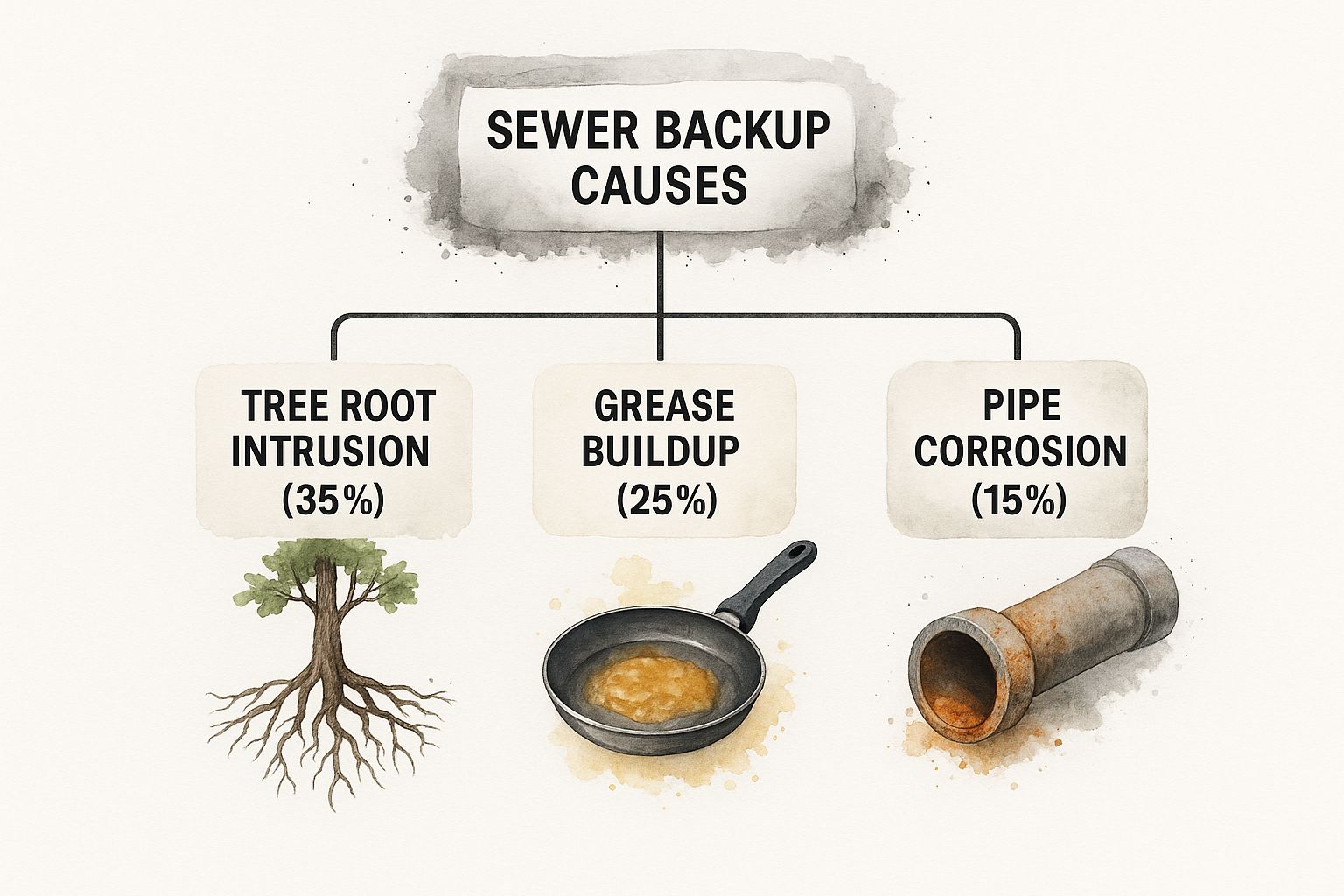
As you can see, tree root intrusion is the single biggest cause, accounting for more than a third of all backups. It’s a powerful reminder of how much the environment right outside your front door can impact the plumbing within it.
Everyday Habits That Clog Your Pipes
More often than not, the answer to what causes sewer backup starts right at home, in our own kitchens and bathrooms. It’s the small, seemingly harmless things we do every day that quietly conspire to create a massive plumbing emergency. Think of it like plaque slowly hardening inside an artery—one day, everything just stops.
Becoming aware of these habits is your first line of defense. Everything you let slip down the drain directly affects the health of your plumbing. Over time, sending the wrong stuff down the pipes builds up into dense, stubborn clogs that water can’t get past, leading to a foul-smelling and expensive mess.
The Problem with Grease and Fats
When you pour hot bacon grease or cooking oil down the kitchen sink, it flows away like any other liquid. The problem starts when it hits the cold pipes. That liquid quickly cools and solidifies into a thick, waxy gunk that sticks to the inside of your pipes.
This sticky residue is like flypaper for everything else going down the drain. It grabs bits of food, soap scum, and hair, creating a bigger and bigger clump. After a few months or years, that buildup can narrow the pipe so much that it’s completely sealed off. This is one of the top reasons for residential backups, turning a simple dinner cleanup into an urgent call to a plumber.
Pro Tip for Grease Disposal: Never pour grease down the drain. The best practice is to pour it into a heat-safe container, like a metal can or a glass jar. Let it cool and solidify, then just toss the whole thing in the trash.
“Flushable” Wipes Aren’t Really Flushable
One of the biggest modern-day culprits behind serious sewer clogs is the “flushable” wipe. Don’t believe the marketing hype. These wipes absolutely do not break down in water the way toilet paper does. They stay pretty much whole as they travel through your plumbing.
Because they’re so durable, they snag easily on any rough patch inside your pipes, whether it’s a tiny tree root intrusion or an existing patch of grease. Once snagged, they form a dam that rapidly traps other waste, leading to a sudden and severe blockage. Just remember this simple rule: the only things that should ever be flushed are human waste and toilet paper.
A clog from wipes isn’t just an inconvenience; it can put a ton of pressure on your plumbing. That kind of strain can even lead to pipe damage over time. You can learn more about what causes pipes to burst by reading our guide on the subject.
When Garbage Disposals Become the Problem
A garbage disposal is a fantastic tool, but it’s not a black hole. It’s designed to grind up soft food scraps, not make anything and everything disappear. A lot of homeowners either overload their disposals or try to force the wrong things down.
Here’s a quick list of what should never go into your garbage disposal:
- Fibrous Veggies: Things like celery, corn husks, and artichokes have stringy fibers that can wrap around the blades and jam the motor.
- Starchy Foods: Pasta, rice, and potato peels swell up with water, creating a thick, paste-like sludge that clogs pipes.
- Coffee Grounds: They might seem fine, but they don’t dissolve. Instead, they clump together and create a dense, heavy blockage.
- Bones and Eggshells: These hard materials don’t grind well. They dull the blades and just add to the solid debris building up in your pipes.
By simply being more mindful of these daily habits, you can take control and prevent the most common types of sewer backups. It’s a small effort that can save your home—and your wallet—from a nasty surprise.
When Your Sewer Line Is the Problem
Sometimes, the real reason your sewer is backing up has nothing to do with what you’ve been flushing. You can be doing everything right, but if the sewer line itself is compromised, a backup is often just a matter of time. These problems are sneaky—they develop underground, completely out of sight, setting the stage for a major plumbing nightmare.
Think of the main pipe running from your house to the city sewer as your home’s main artery. It’s called the sewer lateral. Over the years, this critical pipeline can fail due to age, shifting ground, and the surrounding environment. We’re not talking about a simple clog you can fix with a plunger; these are structural failures that need a professional eye and, usually, a camera inspection to see what’s really going on down there.
The Hidden Threat of Tree Roots
You’d be amazed at how destructive a simple tree root can be. Your sewer lines are a five-star resort for roots, offering a constant supply of water, vapor, and nutrients. Trees are naturally drawn to this, and their roots are powerful enough to snake their way into the tiniest crack or joint in your pipes.
Once a root gets inside, it doesn’t stop. It grows and expands, creating a dense, web-like mass that acts like a net, catching toilet paper, waste, and everything else you send down the drain. Before you know it, you have a solid, stubborn blockage and a sewer backup in your home. This is a story we hear all the time, especially from owners of older Denver homes with clay or cast iron pipes that are particularly vulnerable to root takeovers.
When Pipes Break Down Over Time
Sewer pipes don’t last forever. After decades buried in the ground, older materials start to degrade and break down, leading to cracks, collapses, or sagging sections that bring wastewater flow to a grinding halt.
Here are a few ways pipes can fail:
- Aging Materials: Older pipes, especially those made from clay or cast iron, get brittle with age. They can easily crack under the immense pressure of the soil above them.
- Shifting Soil: The constant freeze-thaw cycles we experience here in Denver are tough on buried pipes. As the ground expands and contracts, it puts stress on the pipeline, causing joints to separate or the pipe to crack.
- Pipe Sagging (Bellies): Sometimes, a section of the pipe sinks due to ground settlement. This creates a low spot, or “belly,” where water and waste pool, eventually forming a nasty blockage.
A sewer backup isn’t always from a clog or a broken pipe. Improper plumbing connections can be just as bad. For example, if a sump pump is hooked into the sewer line, it can dump thousands of gallons of groundwater into the system, overwhelming it and causing backups for an entire neighborhood. One malfunctioning pump can be like pouring a swimming pool’s worth of water into the sewer every single day.
Catching these issues early is everything. A proactive inspection can spot a small crack or a few invading roots long before the line collapses and floods your basement. Our guide on the maintenance of sewer systems is a great resource for learning how to stay ahead of these structural nightmares.
How City Sewer Issues Affect Your Home

It’s one of the most frustrating things a homeowner can experience: you do everything right with your plumbing, but you still end up with a nasty sewer backup. In many cases, the problem isn’t inside your home at all. The culprit is the city’s main sewer line, a system that’s completely out of your hands.
To really get a handle on this, you need to understand the difference between your private sewer line (your “lateral”) and the public system it drains into.
Think of it like this: your home’s sewer lateral is your personal driveway, and the city’s main line is the street everyone on your block uses. If there’s a major pile-up on the main street, traffic is going to spill back into every driveway connected to it. A blockage in the municipal sewer main does the exact same thing, forcing wastewater back toward the easiest exit it can find—often the lowest drain in your basement.
The Challenge of Aging City Infrastructure
A lot of the sewer systems under our feet, especially in well-established cities like Denver, are old. We’re talking decades-old pipes that were built for a much smaller population and far less water usage. As time goes on, this infrastructure gets brittle and starts to fail.
This isn’t just a local problem; it’s one of the biggest reasons for sewer backups across the country. The United States has over half a million miles of public sewer lines, and on average, they’re more than 30 years old. As these systems age and weaken, they’re much more likely to crack, leak, or collapse entirely, which dramatically increases the risk of backups for everyone connected to them.
It’s no surprise that industry data shows sewer backups are ticking up by about 3% every year, a trend that points directly back to this decaying infrastructure. You can learn more about how these aging systems create unexpected financial risks for homeowners from the experts at Marsh MMA.
How a Municipal Clog Affects You
When the city main gets clogged, it’s a problem for the whole neighborhood. These aren’t your typical household clogs; they’re massive blockages caused by the combined buildup of grease, so-called “flushable” wipes, and other debris from hundreds of homes. Once that collective gunk creates a dam, the whole system grinds to a halt.
Since the municipal sewer line serves an entire area, a blockage can have a powerful domino effect. Wastewater from all connected homes continues to flow toward the clog, and with nowhere to go, it begins to fill the main line and then reverses course into individual sewer laterals.
This is exactly why you can have a backup even when your own pipes are clear. The sheer pressure from a blocked city main is more than enough to force raw sewage back up through your floor drains, toilets, and showers.
So, how can you tell if the problem is on the city’s end?
- Ask your neighbors. This is the fastest way to diagnose it. If the folks next door are also dealing with backups, the issue is almost certainly in the shared municipal line.
- Look for backups without water use. Are you seeing sewage bubble up into your drains even when you haven’t flushed a toilet or run a faucet? That’s a huge red flag that the wastewater is coming from outside your home.
While you can’t dig up the street and fix the city’s pipes yourself, knowing the cause helps you make the right call and protect your property. This is where a backwater prevention valve can be a real lifesaver, acting as a one-way gate to stop municipal sewage from ever entering your home.
When we think about what causes a sewer backup, our minds often go to things we can control—like what goes down the drain. But sometimes, the biggest threat comes from outside, in the form of Mother Nature herself. A powerful storm can unleash a torrent of water that completely overwhelms the city’s infrastructure, turning a rainy day into a serious problem for your home.
Think of the main sewer line under your street as a major highway. Most of the time, traffic—or in this case, wastewater—flows just fine. Now, imagine a sudden, torrential downpour. It’s like every car from a sold-out stadium concert suddenly trying to merge onto that highway at the peak of rush hour. The system simply can’t handle that much volume all at once.
When the main lines get that overloaded, the water and sewage have to find somewhere to go. Unfortunately, the easiest escape route is often back up the smaller pipes—the laterals—that connect to individual homes. This is how you end up with a nasty mix of stormwater and raw sewage coming up through your floor drains, showers, and toilets.
How Heavy Rain and Snowmelt Push Systems to the Brink
Many older cities, and this includes parts of Denver, were built with what’s called a combined sewer system. This means the stormwater runoff from the streets and the sanitary sewage from homes and businesses all share the same set of pipes. On a sunny day, it works well enough. But during a classic Colorado thunderstorm or a rapid spring snowmelt, these systems are put under incredible stress.
This design is a huge factor in what causes sewer backup on a larger, neighborhood-wide scale. Heavy rainfall is a known culprit in urban areas. Just look at the national trends: in 2020, the U.S. experienced above-average precipitation, and a record-shattering 30 named Atlantic tropical cyclones dumped immense amounts of rain, testing sewer systems nationwide. It’s worth reading more about the connection between heavy rainfall and sewer backups to see how climate patterns are making this a more frequent issue.
To put the financial toll in perspective, a severe flood in Edmonton, Canada, back in 2004, was directly tied to heavy rainfall. It led to an incredible $143 million in insurance claims for sewer backups alone. That shows just how devastating these weather events can be for homeowners.
Protecting Your Home When the Storms Roll In
You can’t control the weather, but you can definitely prepare for it. The single most effective defense against a weather-related sewer backup is installing a backwater prevention valve.
Think of it as a one-way security gate for your sewer line. It lets all the wastewater from your house flow out toward the city main, as it should. But if it senses a reversal—sewage trying to flow back toward your house—it slams shut, blocking the mess from ever reaching your basement. Getting one installed is a smart, proactive move that can spare you a truly awful and costly cleanup, especially if you live in a low-lying area or have a finished basement.
Smart Steps to Prevent Sewer Backups
https://www.youtube.com/embed/n7hi-0jMnEI
Knowing what causes a sewer backup is one thing, but actually preventing one is what saves your home from a world of headache and expense. It’s all about shifting from a reactive mindset to a proactive one. This starts with a few smart habits and some forward-thinking planning.
A huge part of this is just being mindful of your landscaping. Tree roots are public enemy number one for sewer lines, so a simple but powerful first step is planting new trees well away from your sewer lateral. If you’ve already got large, mature trees on your property, it’s a really good idea to have a professional snake a camera down the line every few years to look for early signs of trouble.
Proactive Plumbing and Protection
What happens inside your home makes just as big of an impact. Think about grease disposal. Instead of pouring it down the drain, let it cool and solidify in an old can, then toss it in the trash. This single habit prevents the kind of thick, stubborn buildup that’s just like a clogged artery for your pipes.
And, of course, be vigilant about what gets flushed. Your toilet is only designed for human waste and toilet paper—that’s it. So-called “flushable” wipes, paper towels, and other foreign objects are notorious for creating massive, unmovable clogs.
If you have an older home or live in a low-lying area prone to heavy rains, you might need to step up your defenses.
- Regular Inspections: Getting a professional sewer line inspection done once a year can spot cracks, “bellies” in the pipe, or root intrusion long before they turn into a full-blown emergency.
- Backwater Prevention Valve: This is your best line of defense against problems coming from the city’s main sewer line. It works like a one-way gate, letting sewage flow out of your home but slamming shut if anything tries to flow back in.
Think of a backwater valve as your home’s personal security guard for the sewer line. It gives you incredible peace of mind, knowing that even if the municipal system gets overwhelmed during a storm, your home is sealed off from the mess.
Taking these precautions is non-negotiable, as a sewer backup almost always leads to a flooded basement. For more detailed tips on that specific problem, check out our guide on how to prevent basement flooding. By combining simple daily diligence with strategic professional maintenance, you can dramatically lower your risk and keep your home safe and dry.
Your Top Sewer Backup Questions, Answered
Knowing what causes a sewer backup is a great start, but let’s be honest, it usually just brings up more questions. When you’re facing a potential plumbing disaster, you need practical answers, fast. Let’s tackle some of the most common concerns we hear from homeowners.
How Do I Know if the Backup Is My Problem or the City’s?
This is the big one. The easiest first step is a quick check with your next-door neighbors. Are they having the exact same problem at the exact same time? If so, the odds are very high that the blockage is in the city’s main sewer line, not your personal pipe.
If you’re the only one on the block with slow drains, the problem is almost certainly somewhere in your home’s private sewer lateral—the pipe that connects your house to the city main. Another dead giveaway is which drains are acting up. If it’s just one slow sink, the clog is probably right there. But if every toilet, tub, and sink in the house is draining poorly or backing up, you’ve got a main line issue on your hands.
What Are the Early Warning Signs of a Sewer Line Clog?
Thankfully, your plumbing system rarely goes from perfectly fine to a full-blown catastrophe overnight. It will usually give you some subtle (and not-so-subtle) hints that a serious clog is brewing. Catching these signs early can save you a world of mess and money.
Keep an eye—and an ear—out for these red flags:
- Gurgling Sounds: Hear strange gurgles from your toilet or drains after you run the dishwasher or flush? That’s the sound of air getting trapped and fighting its way through a partial blockage.
- Weird Water Backups: The classic example is flushing a toilet and seeing murky water bubble up into your shower drain. This means the wastewater has nowhere to go but up the next lowest opening.
- Multiple Slow Drains: One slow drain might just be a local clog. But if the kitchen sink, a bathroom tub, and a floor drain are all draining like molasses, it points to a deeper issue in the main line.
- Nasty Smells: You should never smell raw sewage inside your home. If you catch whiffs of it coming from your drains, it’s a clear sign that waste isn’t flowing away like it should.
Think of these early warnings as your plumbing system’s check engine light. Ignoring them is a gamble. Acting quickly and calling a professional gives you the best shot at clearing the blockage before it becomes a messy, destructive, and expensive emergency.
Does My Homeowners Insurance Cover Sewer Backups?
This is a critical question, and the answer is a tough pill for many to swallow: a standard homeowners insurance policy almost never covers damage from a sewer backup.
Most insurance providers treat this as an exclusion. To get coverage, you have to specifically ask for and purchase a separate add-on, often called a “water backup” or “sewer backup” endorsement. It costs a little extra, but when you consider that a significant backup can easily cause thousands of dollars in damage to your floors, walls, and belongings, that extra premium is well worth it. I always tell homeowners to pull out their policy and check—you don’t want to find out you’re not covered after the disaster strikes.
If any of these warning signs sound familiar, don’t wait for a small problem to become a big one. The team at Professional Plumber Denver is on call 24/7 to diagnose the issue and get your drains flowing freely again. Contact us for fast, reliable service.

Recent Comments