
Ever seen a small metal tank, almost like a miniature propane tank, sitting near your water heater? That’s an expansion tank, and it’s one of the most important—and often overlooked—parts of a modern plumbing system. Its one job is to act as a shock absorber for your plumbing, soaking up excess water pressure and protecting your pipes and appliances from the stress of thermal expansion.
Your Plumbing System’s Silent Guardian
Here’s a common scenario: you notice a slow, persistent drip from your water heater’s pressure relief valve. While it seems like a minor annoyance, that drip is often a red flag for a bigger problem brewing inside your pipes—thermal expansion.
It’s simple physics. When you heat water, it expands. In a “closed-loop” system (where water can’t flow back into the city main), that expanded water has nowhere to go. This causes a sudden, intense spike in water pressure throughout your entire home.
That’s precisely where the expansion tank comes in. This unassuming little tank provides a safe cushion for that extra water volume, preventing dangerous pressure from building up and stressing your pipes, fixtures, and especially your water heater. Without one, you’re putting your most expensive plumbing appliances on the fast track to failure.
Think of it as a safety valve for pressure. It’s a small component that plays a huge role in the health and longevity of your whole plumbing network.
To put it simply, here’s a quick breakdown of what an expansion tank does.
Quick Guide: What an Expansion Tank Does
| Problem | How the Expansion Tank Solves It |
|---|---|
| Thermal Expansion: Water expands when heated by your water heater. | The tank’s air cushion compresses to absorb the extra water volume, preventing pressure spikes. |
| Appliance Stress: High pressure wears out seals, valves, and internal components. | By keeping pressure stable, it extends the lifespan of your water heater, faucets, and toilets. |
| Pipe Damage: Constant pressure fluctuations can weaken pipe joints and cause leaks. | It acts as a buffer, preventing the “water hammer” effect and protecting your plumbing infrastructure. |
This little device truly is a silent guardian, working behind the scenes to keep things running smoothly and safely.
By managing thermal expansion, an expansion tank not only prevents leaks and protects appliances but also ensures your system operates safely and efficiently. In fact, it’s often a requirement in modern plumbing codes for any closed-loop system.
Understanding what an expansion tank is and why it’s so critical is the first step in avoiding expensive, pressure-related plumbing disasters. It’s a small investment that delivers massive peace of mind.
How Expansion Tanks Prevent Plumbing Damage
Ever wondered why a small, seemingly random tank is attached to your water heater? It’s one of the most important, yet overlooked, parts of your plumbing system. To get why, let’s think about a basic science lesson: what happens when you heat water.
When water gets hot, it expands. This is called thermal expansion. Inside a sealed container like your water heater, this expansion creates a surprising amount of pressure. Your home’s plumbing is a closed system; once water comes in, it can’t go back out the way it came. So, when your water heater does its job, all that expanding water has nowhere to go. This puts a ton of stress on your pipes, fixtures, and the water heater itself, silently wearing them down over time.
The Science of Pressure Control
So, how does that little tank fix this big problem? The design is brilliantly simple. Inside the steel tank is a tough rubber bladder, or diaphragm, that divides it into two sections. One side is filled with pressurized air, and the other is connected to your water line.
When the water in your heater expands, that extra volume pushes into the tank and presses against the diaphragm. This compresses the air on the other side. Think of it like a shock absorber or a sponge for pressure. That air cushion safely soaks up the pressure spike, keeping everything in your system stable.
This diagram breaks down how temperature, volume, and pressure are all connected.
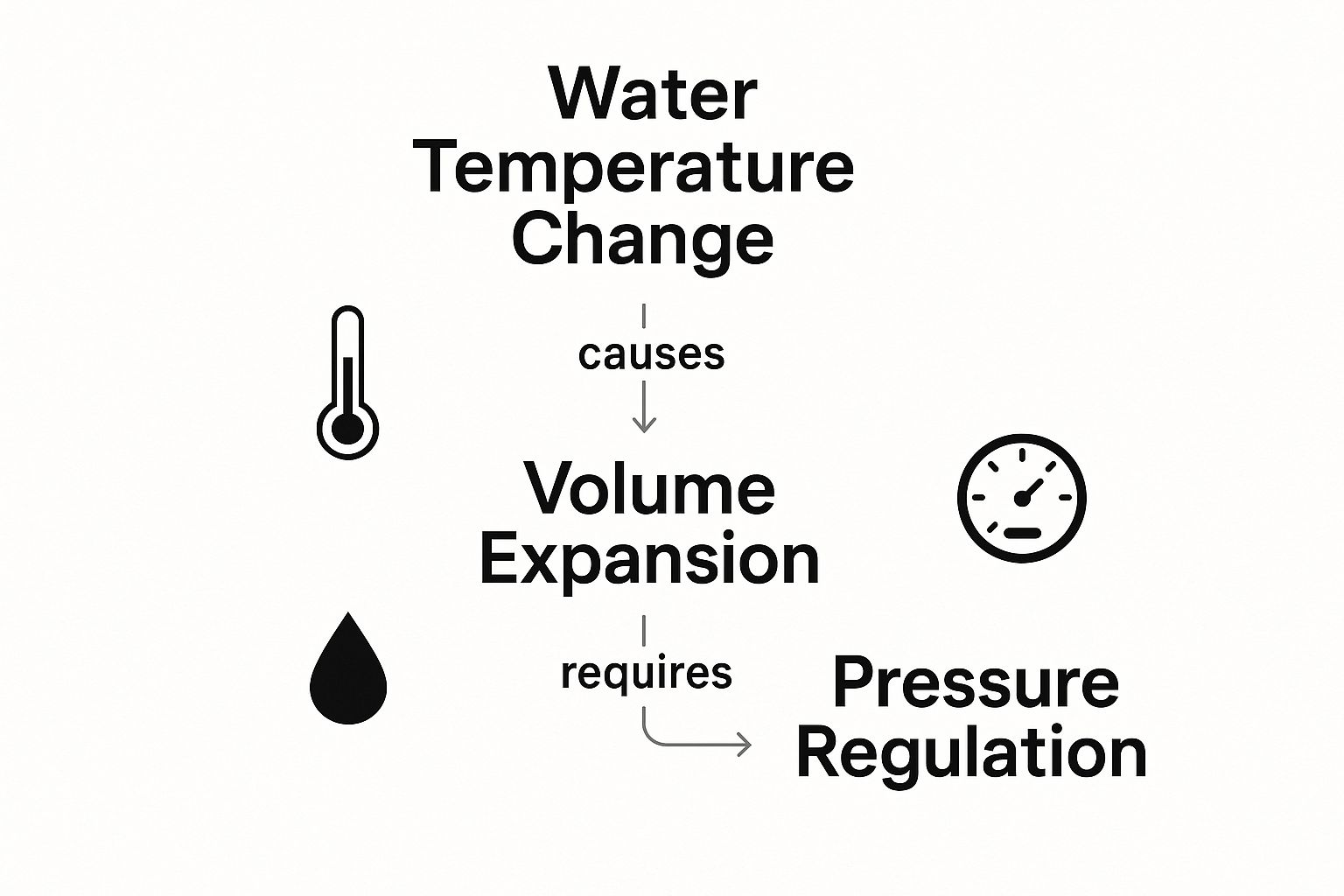
As you can see, the expansion tank steps in to break that chain reaction. It uses its air cushion to handle the expanding water, which keeps the pressure from getting dangerously high.
Why a Small Volume Change Matters
It’s easy to dismiss a small change in volume, but in a closed plumbing system, the effect is massive. When you heat water from a chilly 50°F to a standard 120°F, its volume swells by about 2%. That might not sound like much, but it can cause water pressure to jump from a normal 60 PSI to over 150 PSI—way more than your pipes and appliances are designed to handle.
Without an expansion tank, the only thing protecting your system is the Temperature and Pressure (T&P) relief valve on the water heater. If you see that valve dripping constantly, it’s a major red flag. It means your system is hitting dangerous pressure levels that the tank should be absorbing.
By smoothing out these pressure spikes, an expansion tank keeps your plumbing operating in a safe range. This is especially critical if you have a pressure-reducing valve, which by its nature creates a closed system. For more on that, you can dive into our guide on water pressure regulator adjustment. Ultimately, this small device saves you from expensive repairs and helps your entire plumbing network last longer.
Locating the Expansion Tank in Your Home
Alright, so you know what an expansion tank does, but where is it in your house? Finding this little device is the first step in making sure it’s doing its job correctly. The good news is, they’re almost always installed in a few predictable spots, so you won’t need to go on a huge scavenger hunt.
Your best bet is to start in the utility areas—think basement, garage, or a dedicated utility closet. Basically, wherever you find your water heater or boiler, the expansion tank won’t be far away.
The Two Main Types of Expansion Tanks
Depending on how your home is set up, you’ll likely find one of two kinds of expansion tanks. Here’s what to look for:
- Potable Water System Tank: This is the one most people have. It’s a small, canister-shaped tank installed right on the plumbing near your water heater. You’ll usually find it mounted on the cold water inlet pipe. They are typically gray, white, or blue.
- Hydronic Heating System Tank: If you have a boiler that powers radiators or in-floor heating, you’ll have one of these. They tend to be larger than the potable water tanks and are found near the boiler. Their job is the same—absorb pressure—but for the closed-loop heating system.
It’s important to know that the tank for your drinking water is a completely separate unit from one connected to a boiler. Knowing which system your tank belongs to will help you troubleshoot any issues down the line.
Once you’ve found your water heater or boiler, just look at the pipes connected to it. The expansion tank should be easy to spot. Now that you’ve tracked it down, you’re ready to learn how to tell if it’s working properly or starting to fail.
Recognizing the Signs of a Failing Tank
Your expansion tank is a quiet hero, working 24/7 to protect your plumbing system. But like any mechanical part, it won’t last forever. When it starts to fail, it can no longer do its job, leaving your water heater and pipes at risk.
The good news is that a failing tank usually gives off some pretty clear warning signs before it completely quits. You just have to know what you’re looking (and listening) for. Think of it as your plumbing system trying to tell you something’s wrong.
Common Symptoms of Failure
One of the biggest red flags is a constantly dripping T&P valve (that’s the Temperature and Pressure relief valve on your water heater). This valve is a safety feature, designed to open up and release water when pressure hits a dangerous level. If it’s dripping all the time, it’s a sure sign your expansion tank isn’t absorbing that excess pressure anymore.
You might also notice some wild fluctuations in your water pressure. Maybe you turn on the kitchen sink and get a massive blast of water for a second, which then quickly drops to a weaker flow. This instability happens because the tank has lost its ability to act as a pressure buffer.
A failed expansion tank often has a ruptured internal bladder. This means the air cushion is gone, and the tank becomes completely filled with water, rendering it useless. It can no longer absorb any pressure, putting your entire system at risk.
Another classic symptom is a loud banging or knocking sound coming from your pipes, a fun little phenomenon called water hammer. This happens when you shut off a faucet and the water flowing through the pipes comes to a sudden, jarring halt. A healthy expansion tank cushions that shockwave, but a bad one can’t, leading to those alarming noises that can damage pipe joints and fixtures over time. It’s a constant stress on your system, similar to how other parts wear down. For an in-depth look at another critical part of your water heater’s health, check out our guide on what is an anode rod.
Expansion Tank Health Check Symptoms
To make it even easier, here’s a quick-glance table to help you compare what’s normal versus what’s a problem.
| Symptom | Healthy System | Potential Failing Tank |
|---|---|---|
| T&P Relief Valve | The valve is dry and shows no signs of leaking. | The valve drips water constantly or intermittently. |
| Water Pressure | Pressure is steady and consistent at all faucets. | You experience sudden surges or drops in pressure. |
| Pipe Noises | Your plumbing is quiet when faucets are shut off. | You hear loud banging or hammering sounds in the walls. |
| System Leaks | No visible leaks around the water heater or tank. | Puddles or signs of water damage appear near the tank. |
Paying attention to these simple clues can help you catch a failing expansion tank before it causes a much bigger, more expensive headache. If any of these symptoms sound familiar, it’s definitely time to have your tank inspected.
Simple DIY Maintenance and When to Call a Pro
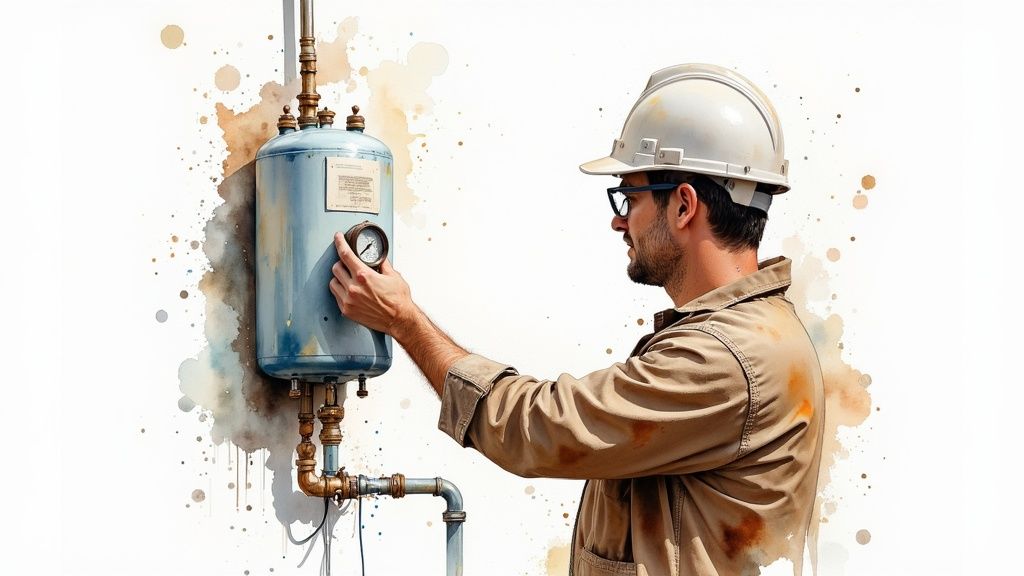
A little preventative maintenance on your expansion tank can go a long way in avoiding expensive repairs down the road. The good news is that the most important task is something most homeowners can handle: checking the air pressure. This simple check-up makes sure the air cushion inside is ready to do its job.
A Quick and Easy Pressure Check
First things first, safety. Before you touch the tank, you need to turn off the water supply to your water heater. Then, head to the nearest sink and open a hot water faucet to drain the pressure out of the system. Just let it run until the water stops completely.
Once the pressure is gone, you can get to work. Find the air valve on the tank—it looks exactly like the one on your car’s tire. Grab a tire pressure gauge and check the reading. The tank’s pressure should match your home’s water pressure, which is usually somewhere between 50 and 70 PSI. If it’s low, a standard bicycle pump is all you need to add air and bring it back up to the right level.
Knowing When to Bring in an Expert
While checking the pressure is a perfectly fine DIY job, it’s crucial to know when to step back and call a licensed plumber. Some problems just aren’t meant for a Saturday afternoon project.
A healthy expansion tank is a key part of your plumbing system’s longevity. While DIY checks are great for routine upkeep, professional servicing ensures everything from pressure settings to tank integrity is handled correctly.
It’s time to pick up the phone if you spot any of these red flags:
- The Tank Won’t Hold Air: If you find yourself constantly adding air because the pressure keeps dropping, the internal bladder has probably given up the ghost.
- Water Squirts from the Air Valve: When you press the pin on the air valve, you should hear a hiss of air. If you get a spray of water instead, the tank is waterlogged and needs to be replaced.
- Obvious Rust or Leaks: Any visible corrosion or water dripping from the tank itself is a clear signal that it’s time for a new one.
For anything more complicated than a simple pressure check, or if you’re just not comfortable tackling it yourself, calling for reliable professional hot water heater services is always the smartest and safest move. And for more great advice on keeping your appliances in top shape, check out our guide to https://professional-plumbers-denver.com/blogs/hot-water-heater-maintenance/.
Frequently Asked Questions About Expansion Tanks
Even after getting the basics down, you probably still have a few questions floating around. That’s perfectly normal. Let’s run through some of the most common things homeowners ask us about expansion tanks. We’ll give you straight, simple answers to clear up any confusion about lifespan, costs, and whether you really need one.
How Long Does an Expansion Tank Typically Last?
You can generally expect an expansion tank to last somewhere between 5 and 10 years. A few things can shorten or lengthen that lifespan, like your local water quality, how stable your home’s water pressure is, and—this is a big one—whether it was installed and pressurized correctly in the first place.
The part that almost always gives out first is the rubber bladder inside. Just like a balloon, it loses its stretchiness over time and can eventually tear. Checking the tank’s air pressure once a year is a great way to catch problems early and get the most life out of it, but think of it as a wear-and-tear item that will need replacing down the road.
Is an Expansion Tank Required by Plumbing Codes?
For most homes, the answer is a definite yes. Modern plumbing codes almost universally require an expansion tank on any “closed-loop” system. What makes a system “closed”? If you have a pressure-reducing valve, check valve, or backflow preventer on your main water line, your system is closed. These devices stop water from flowing back into the city’s supply.
This isn’t just bureaucratic red tape; it’s a critical safety rule. When water heats up, it expands. In a closed system with nowhere for that pressure to go, it can build up to dangerous levels, risking a burst pipe or a damaged water heater.
Simply put, the code ensures that the extra pressure your water heater creates has a safe escape route.
What Does It Cost to Replace an Expansion Tank?
When it’s time for a replacement, homeowners can typically expect to pay between $200 and $450 for a plumber to handle the job. The tank itself is pretty inexpensive, usually running from $40 to $120. The rest of that cost is labor.
Here’s what a professional plumber handles during the replacement:
- Draining the system to safely relieve all the pressure.
- Removing the old, faulty tank without making a mess.
- Installing the new tank with fresh, secure fittings.
- Setting the air pressure in the new tank to perfectly match your home’s water pressure—a crucial step for it to work right.
Can a Failing Tank Damage My Water Heater?
Absolutely. A bad expansion tank is a silent killer for water heaters. While it won’t cause the heater to fail overnight, it creates the perfect conditions for a disaster. Without a functioning tank to absorb the pressure, your water heater gets hammered with a high-pressure spike every single time it heats water.
This constant stress puts a massive strain on the tank’s welds, seals, and connections. Over time, this leads to leaks and can cause the whole unit to fail years before it should. Spending a couple of hundred dollars on a new expansion tank is a wise investment when you consider it protects your much more expensive water heater.
If you’ve spotted any signs of a failing expansion tank or just want an expert to check on your system, don’t wait for a small drip to turn into a major flood. The team at Professional Plumbers Denver has seen it all and can diagnose and fix any plumbing issue, big or small. Contact us today for a professional inspection and peace of mind.

Recent Comments