
Let’s be honest, when you have a clogged drain, you just want it fixed. But not all fixes are created equal. That’s where hydro jetting comes in—think of it as a pressure washer designed specifically for the inside of your pipes. It’s a seriously powerful plumbing technique that uses highly pressurized water to blast away stubborn blockages that other methods just can’t touch.
What Is Hydro Jetting and How Does It Work
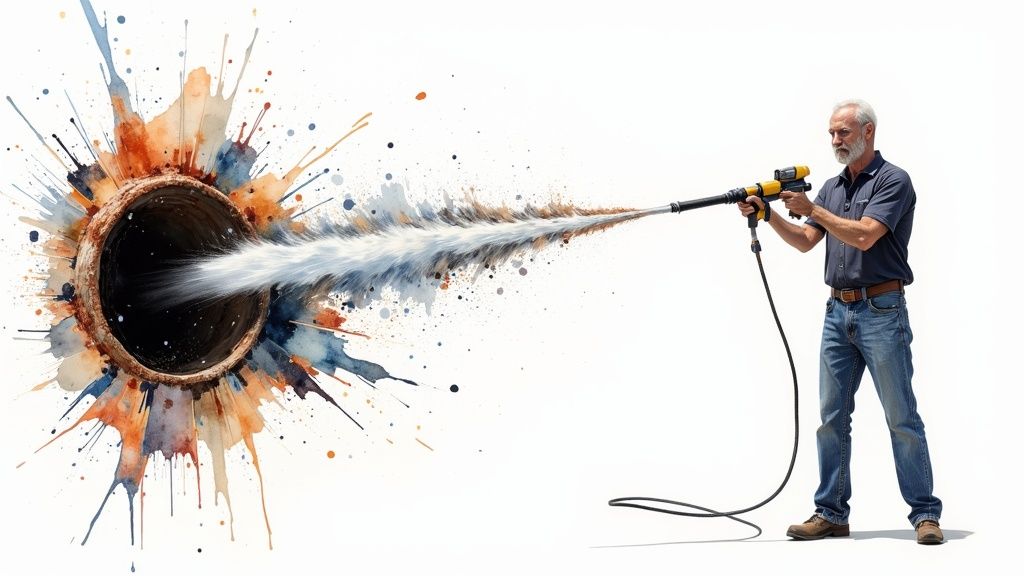
Most of us are familiar with a standard drain snake or auger. Its job is to essentially punch a hole through a clog to get things moving again. It’s a decent temporary fix for simple blockages, but it almost always leaves a lot of gunk stuck to the pipe walls, which is just an invitation for another clog to form.
Hydro jetting is a completely different approach. It doesn’t just poke a hole in the problem; it scours the entire inner surface of the pipe, leaving it spotless.
A Comprehensive Pipe Cleaning Solution
The magic is in the specialized equipment. A high-pressure hose fitted with a unique multi-directional nozzle is fed into the pipe. As it snakes its way through your plumbing, forward-facing jets of water pulverize obstructions, while powerful rear-facing jets propel the hose deeper into the line and blast away any leftover residue.
This systematic approach is incredibly effective at removing years of buildup, including:
- Grease and fat
- Soap scum and mineral scale
- Sludge and sediment
- Invasive tree roots
The results speak for themselves. This isn’t just a residential solution; municipal sewer maintenance programs have seen massive benefits. In fact, data shows that a consistent hydro jetting program can reduce sewer backups by about 40%, saving on emergency costs and protecting public health. It’s fascinating to see how far the technology has come when you explore more about the history of drain cleaning advancements.
Key Takeaway: Hydro jetting isn’t just about clearing a clog—it’s a full-on restorative treatment for your plumbing. It cleans your pipes from the inside out, returning them to a nearly new condition and significantly cutting down the chances of future headaches.
To give you a clearer picture, here’s a quick breakdown of what hydro jetting involves.
Hydro Jetting At A Glance
| Aspect | Description |
|---|---|
| Technology | Employs a high-pressure water pump, a flexible hose, and a specialized nozzle. |
| Pressure Range | Can operate anywhere from 1,500 to 4,000 PSI (pounds per square inch). |
| Primary Goal | To completely clear and clean the interior pipe surfaces, not just poke a hole in a clog. |
| Common Uses | Residential sewer lines, commercial drains, and municipal plumbing systems. |
This table shows how hydro jetting combines powerful equipment with a specific goal: total pipe restoration.
How the Hydro Jetting Process Actually Works
So, you’ve got a plumber coming out to hydro jet your pipes. What does that actually look like? It’s a lot more methodical than just pointing a high-powered hose down a drain. Think of it less like a fire hose and more like a surgical procedure for your plumbing. A real pro follows a precise, multi-step process to get the job done right and, most importantly, safely.
It’s all about applying the right amount of force in a controlled way to get your pipes back to a near-new condition.
Step 1: The Initial Camera Inspection
Before we even think about turning on the water, the first and most critical step is a video camera inspection. A technician will find a “cleanout”—an access point to your sewer line—and feed a small, waterproof camera down into the pipe.
This gives us a live, real-time view of what’s going on in there. We can see exactly what kind of blockage we’re dealing with—is it years of grease buildup, invasive tree roots, or something else entirely? Even more crucial, this inspection lets us check the structural integrity of your pipes. Blasting high-pressure water into a cracked or weak pipe is a recipe for disaster, so this diagnostic step is non-negotiable.
The image below breaks down the key stages of a hydro jetting service, from that first look to the final all-clear.
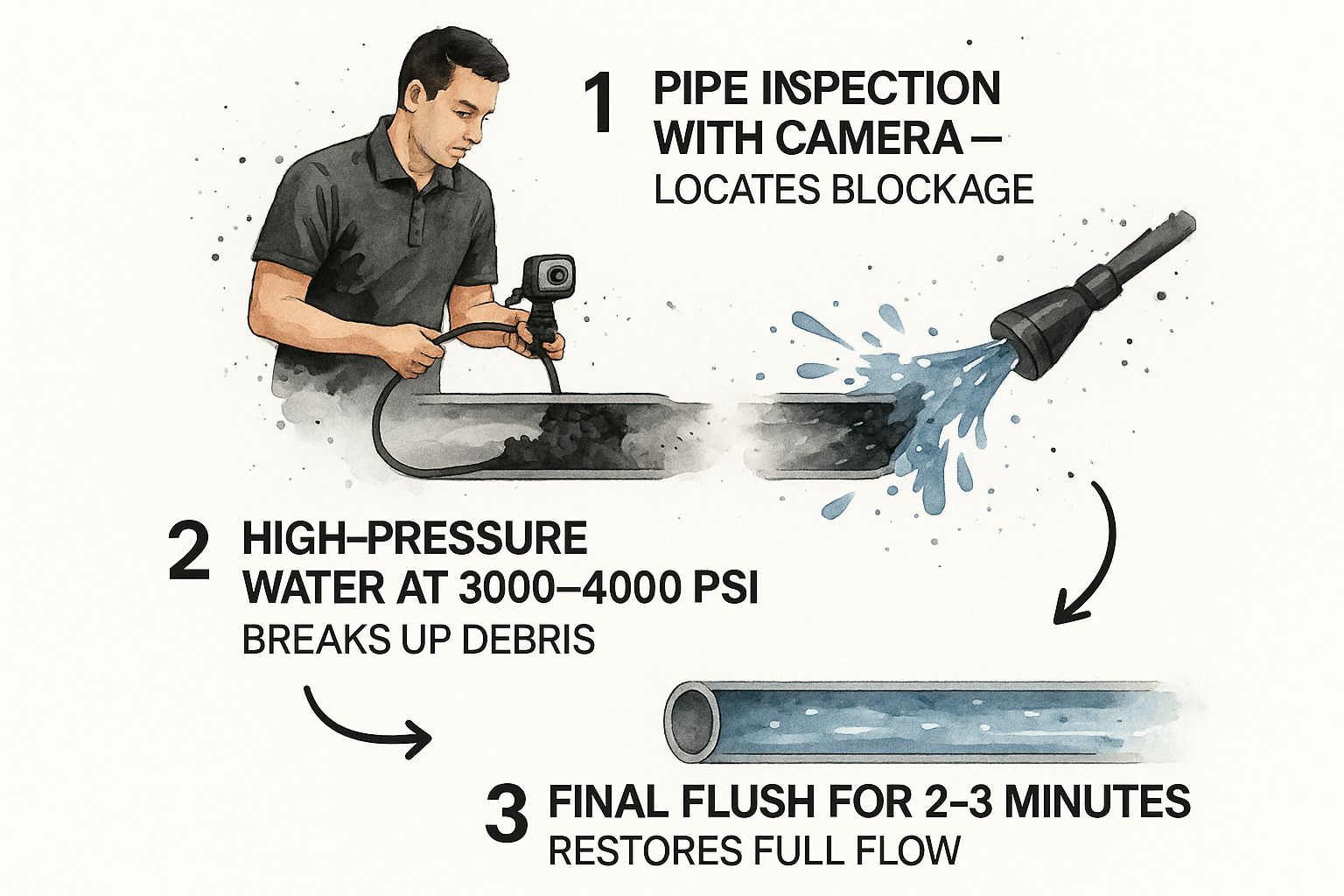
As you can see, each part of the process sets the stage for the next, ensuring we clean your pipes effectively without causing any damage.
Step 2: High-Pressure Cleaning
Once we’ve confirmed the pipe is in good shape, the real work begins. The technician chooses the right nozzle for the job, matching it to the pipe’s diameter and the type of clog we identified. The hose goes into the cleanout and is carefully guided down the line toward the obstruction.
Then, the machine kicks on, pressurizing water up to a powerful 4,000 PSI. That water is then shot through the specialized nozzle, which does two things at once:
- Forward-Facing Jets: At the very tip of the nozzle, one or more jets shoot a concentrated stream of water forward. This is what obliterates the main blockage, punching a hole right through it.
- Rear-Facing Jets: Angled backward are several more powerful jets. These scour the inside walls of the pipe, stripping away every last bit of sludge, scale, and gunk. As a bonus, the force of these jets also propels the hose deeper into the pipe.
This two-pronged attack is the secret to hydro jetting’s success. It doesn’t just poke a hole in the clog like a snake would; it delivers a comprehensive 360-degree clean, flushing all that dislodged debris down the line and completely out of your system.
Step 3: The Final Verification
The job isn’t done just because the water is turned off. A professional always performs a final camera inspection to confirm the results. This post-jetting look verifies that the clog is 100% gone and the pipe walls are free of any residue. It’s peace of mind for both the plumber and the homeowner—you get visual proof that your pipes are flowing freely again.
This last step ensures your plumbing is truly restored to its full capacity. To learn more about what to expect, you can dive deeper into what makes a successful hydro jet drain cleaning service on our blog.
The Real Benefits of Choosing Hydro Jetting
Getting a stubborn clog cleared brings instant relief, but the real question is, for how long? What if you could stop the next clog from happening anytime soon? That’s where the true value of hydro jetting really shines.
Think of a traditional drain snake like punching a small hole through a wall of snow. It creates a temporary path, but the rest of the snow is still there, ready to collapse and block the path again. Hydro jetting, on the other hand, is like a pressure washer that blasts away the entire snowbank, leaving a completely clear passage.
It scours the entire inner surface of the pipe, obliterating years of accumulated grease, soap scum, and mineral scale that clings to the walls. It’s this gunk that grabs onto new debris and causes clogs to keep coming back. By removing it completely, hydro jetting tackles the root of the problem.
A Deeper and More Lasting Clean
The difference in the final result is night and day. A snaked drain might buy you a few months, but since all that sticky residue is left behind, it’s only a matter of time before new debris snags and forms another blockage.
Hydro jetting delivers a truly comprehensive solution with some major advantages for homeowners:
- Total Clog Annihilation: It doesn’t just poke a hole in the clog—it pulverizes everything from hardened grease to invasive tree roots and flushes it all out of your system for good.
- Long-Term Clog Prevention: By scrubbing the pipe walls back to their original condition, there’s nothing for new waste to cling to. This dramatically cuts down on the chances of future backups.
- Extends the Life of Your Pipes: Getting rid of corrosive buildup and preventing the immense pressure of blockages helps protect the integrity of your plumbing, keeping it healthy for years to come.
By investing in a complete clean, you’re not just solving today’s problem—you’re actively preventing tomorrow’s plumbing emergencies. It’s a proactive solution that offers genuine peace of mind.
An Environmentally Sound Choice
Beyond its raw power, one of the best things about hydro jetting is how green it is. It’s tempting to grab a bottle of harsh chemical drain cleaner from the store, but those products can do serious damage, eating away at your pipes and harming the environment.
Hydro jetting avoids all that. It uses nothing but highly pressurized water to get the job done.
This chemical-free approach is a big reason why it’s become a go-to method for maintaining modern plumbing infrastructure. Professionals favor high-pressure water jetting because it’s tough on clogs but gentle on pipes, making it a safer choice for your home and the local ecosystem. As plumbing technology has evolved, the industry has thankfully moved toward smarter, greener solutions, which you can discover more insights about here.
When you choose hydro jetting, you’re opting for a solution that is powerful, effective, and responsible.
Hydro Jetting vs. Drain Snaking: Which Do You Need?
When your drain clogs and water starts backing up, you’re suddenly faced with a decision. The two go-to methods are traditional drain snaking and modern hydro jetting, but they couldn’t be more different. Knowing which one to pick is crucial for getting your plumbing back in order for the long haul.
Think of a drain snake, also known as an auger, as a simple corkscrew for your pipes. A plumber feeds a long, flexible cable down the drain and cranks it to either break apart a solid clog or snag it to be pulled out. It’s a solid choice for simple, one-off problems like a toy your toddler flushed or a wad of hair blocking the shower drain.
But the snake has a major downside: it doesn’t really clean the pipe. It just punches a hole through softer clogs made of grease or sludge. Most of that gunk is left clinging to the pipe walls, creating a sticky surface that’s just waiting to catch new debris. This almost guarantees you’ll be dealing with another clog sooner rather than later.
When a Deeper Clean Is The Only Answer
This is where hydro jetting completely changes the game. It doesn’t just poke a hole in the problem; it provides a comprehensive, 360-degree clean that strips the pipe’s interior back to its original condition.
The powerful streams of water scour away every last bit of grease, mineral scale, and grime. By getting rid of the buildup that causes clogs in the first place, hydro jetting delivers a far more permanent fix. It’s more than just a repair—it’s preventative care for your entire plumbing system.
The right method really boils down to the type of clog you’re facing. For a straightforward, isolated blockage, a drain snake is a fast and cost-effective fix. But for stubborn, recurring problems born from years of buildup, hydro jetting is the only real way to solve the issue for good.
Comparing The Two Methods Head-to-Head
To help you see the difference clearly, let’s put these two approaches side-by-side. The key is to think about what you actually need: a quick patch for a minor headache or a long-term solution for a chronic problem.
This comparison breaks down the strengths and weaknesses of each drain cleaning method, helping you understand which one is the right fit for your home.
Comparison: Hydro Jetting vs. Traditional Snaking
| Feature | Hydro Jetting | Drain Snaking (Auger) |
|---|---|---|
| Effectiveness | Completely scours pipe walls, removing all buildup. | Pokes a hole through the clog, leaving residue behind. |
| Best For | Grease, sludge, scale, tree roots, and recurring clogs. | Simple, solid obstructions like hair or small objects. |
| Long-Term Value | Prevents future clogs, providing a lasting solution. | Often a temporary fix for problems that keep coming back. |
| Pipe Safety | Safe for healthy pipes but requires a camera inspection first. | Can scrape or damage older, fragile pipes if used improperly. |
Ultimately, a professional plumber should perform a camera inspection to see exactly what’s causing the blockage. That allows them to recommend the safest and most effective solution for your specific situation in Denver, ensuring you’re investing in a fix that truly lasts.
Is Hydro Jetting Safe For Your Pipes?
Shooting thousands of pounds of water pressure through your pipes definitely sounds a bit extreme. So, it’s completely fair to ask: is this really safe for my home’s plumbing? The short answer is yes, hydro jetting is incredibly safe… but with one major condition: it has to be done by a trained professional.
For most homes with modern PVC, copper, or even well-maintained cast iron pipes, hydro jetting is no problem at all. The equipment is designed to focus the water jets on scouring away gunk and buildup, not on blasting the pipe walls themselves. But the safety of the whole operation comes down to one crucial first step.
The Critical Role of a Camera Inspection
No legitimate plumber will ever fire up a hydro jetter without first running a video camera through your pipes. This isn’t an optional upsell; it’s a non-negotiable part of the process. We feed a small, high-resolution camera down the line to get a real-time look at what’s going on inside.
Think of it as a scouting mission. This initial look is essential for spotting any red flags that could turn a routine cleaning into a plumbing disaster. We’re specifically on the lookout for:
- Cracks or fractures in the pipe walls.
- Severe corrosion or weak spots, especially in older pipes.
- Collapsed sections or other major structural damage.
If that camera inspection shows us that your pipes are old, fragile, or already damaged, hydro jetting is off the table. Trying to force high-pressure water through a compromised pipe is a recipe for disaster and is exactly why you should never hire an untrained operator. Understanding what causes pipes to burst really drives home why this preliminary check is so vital.
A professional inspection is your primary safeguard. It ensures that hydro jetting will solve your clog problem without creating a much bigger, more expensive one. It’s a clear sign you’re working with a trustworthy expert.
Common Plumbing Problems Hydro Jetting Solves
Hydro jetting isn’t just a fancy plumbing trick; it’s a specific, powerful solution for those truly stubborn drain problems that keep coming back. A simple snake might clear a minor clog, but hydro jetting is what we bring out when you need a problem gone for good. It doesn’t just poke a hole in the blockage—it gets to the root cause of why your pipes are clogging in the first place.
Many of the most common plumbing problems and how to fix them—from sluggish drains to nasty backups—are really just the end result of years of gunk building up inside your pipes. Once you understand what hydro jetting is really good at, you’ll know exactly when to call for a more permanent fix.
Tackling Stubborn Kitchen Grease
Think about everything that goes down your kitchen drain. It’s a tough job. Over time, all that grease, fat, oil, and tiny food scraps form a thick, sticky sludge that coats the inside of your pipes. This gunk narrows the drain and acts like flypaper, grabbing onto everything else that comes down.
A drain snake can punch a hole through the middle of that mess, sure, but it leaves all that greasy buildup on the walls. That’s why the clog comes back so quickly. Hydro jetting, on the other hand, is the perfect tool for the job.
- It completely liquefies and blasts away years of hardened grease.
- It scours the pipe walls clean, leaving a smooth surface that debris can’t easily cling to.
- It restores your kitchen drain to its original, full-flow capacity.
Eliminating Invasive Tree Root Intrusions
Tree roots in your main sewer line are one of the most destructive problems a homeowner can face. Roots are naturally drawn to the moisture inside your pipes, and they’ll force their way through the smallest crack or joint. Before you know it, they’ve grown into a thick, tangled mass that brings your entire plumbing system to a halt.
An auger might chew through some of the roots, but it often leaves the main root ball behind to grow back. The high-pressure water stream from a hydro jet is strong enough to completely shred those roots into tiny, harmless particles and flush them right out of your system. It clears the line entirely.
Hydro jetting really took off because it could clean pipes in a way that mechanical snaking just couldn’t match. Snaking often leaves gunk behind, but jetting scours the pipe clean. To this day, it’s one of the best methods out there for residential and commercial drains. You can discover more insights about its history and how the technology evolved.
Resolving Widespread Slow Drains
If your shower, bathroom sink, and kitchen sink are all draining slowly at the same time, you’ve likely got a system-wide problem. This usually points to years of soap scum, hair, and hard water minerals building up and hardening inside the pipes throughout your house. This accumulation creates friction and seriously restricts water flow.
This is where hydro jetting shines as a whole-system solution. It systematically cleans every inch of the affected pipes, blasting away the scale and scum that are causing those chronic slow drains. Catching this early can save you from a much bigger, messier emergency down the road.
Your Hydro Jetting Questions, Answered
It’s completely normal to have a few questions after learning about a powerful plumbing solution like hydro jetting. After all, it’s a serious tool, and being well-informed is just plain smart. We get a lot of the same queries from homeowners around Denver, so we’ve put together some straight-to-the-point answers to help you out.
Let’s clear up some of the most common questions so you can feel confident about what’s right for your home.
So, What’s This Going to Cost Me?
This is usually the first thing people want to know, and the honest answer is: it really depends. Hydro jetting isn’t like buying something off a shelf with a fixed price tag. The final cost is tied directly to the specific problem you’re facing.
Here’s what typically shapes the price:
- The Clog’s Nasty Factor: A stubborn grease buildup is one thing; a massive, tangled web of tree roots is a completely different beast and will take more work to obliterate.
- Getting to the Problem: Is your sewer line’s cleanout port easy to access, or is it buried behind landscaping? The more labor it takes to get set up, the more it can affect the cost.
- The Length of the Line: Simply put, cleaning out a longer pipe takes more time and effort.
Because of these moving parts, any reputable plumber will insist on doing a camera inspection first. That’s the only way to see exactly what’s going on down there and give you an accurate, fair quote for the job.
How Often Do I Really Need to Do This?
For most folks, hydro jetting is more of a problem-solver than a routine chore. You don’t need it every year. That said, it’s an incredible preventative maintenance tool, especially if you live in an older home with cast iron pipes or you’re constantly battling clogs and tree roots.
If you find yourself calling a plumber for the same slow drain every year, scheduling a hydro jetting service every 18 to 24 months can break that cycle for good. It keeps your pipes clear and helps you sidestep a nasty surprise down the road.
Think of preventative hydro jetting as an investment in your home’s long-term health. You’re not just fixing a clog; you’re stopping the next one from ever happening and giving yourself some serious peace of mind.
Can I Just Rent One and Do It Myself?
I love a good DIY project, but this is one area where you absolutely want to call in a pro. Hydro jetting equipment is no joke—we’re talking about water pressure cranked up to 4,000 PSI. That’s powerful enough to do some serious damage.
Trying this without the right training is a huge gamble. You could easily crack an older pipe that has a weakness you can’t see, or worse, cause a serious injury. A professional plumber knows how to adjust the pressure for your specific pipes and, crucially, always runs a camera through first to make sure they can handle the force safely.
If you’re tired of fighting stubborn clogs in the Denver area, it’s time to stop looking for a temporary fix. Contact Professional Plumber Denver for a complete inspection and a solution that lasts. Schedule your hydro jetting service with us online or give our 24/7 emergency line a call.
Recent Comments