
Heard a loud BANG coming from your walls right after the washing machine finishes filling up? That’s not your house settling—it’s a classic case of water hammer. This jarring sound is actually a hydraulic shockwave, a major red flag that there’s way too much pressure building up in your pipes. Left unchecked, it can cause some serious damage.
That Loud Banging in Your Walls Is Water Hammer
Think of the water rushing through your pipes as a freight train barreling down the tracks. When a valve on an appliance like your dishwasher or toilet snaps shut, it’s like dropping a steel gate right in the train’s path. All that momentum has to go somewhere.
The water crashes to a sudden stop, and its kinetic energy converts into a massive pressure spike. This shockwave travels back through the plumbing, causing pipes to shudder and slam against the wooden studs inside your walls. That’s the unmistakable “hammer” you’re hearing.
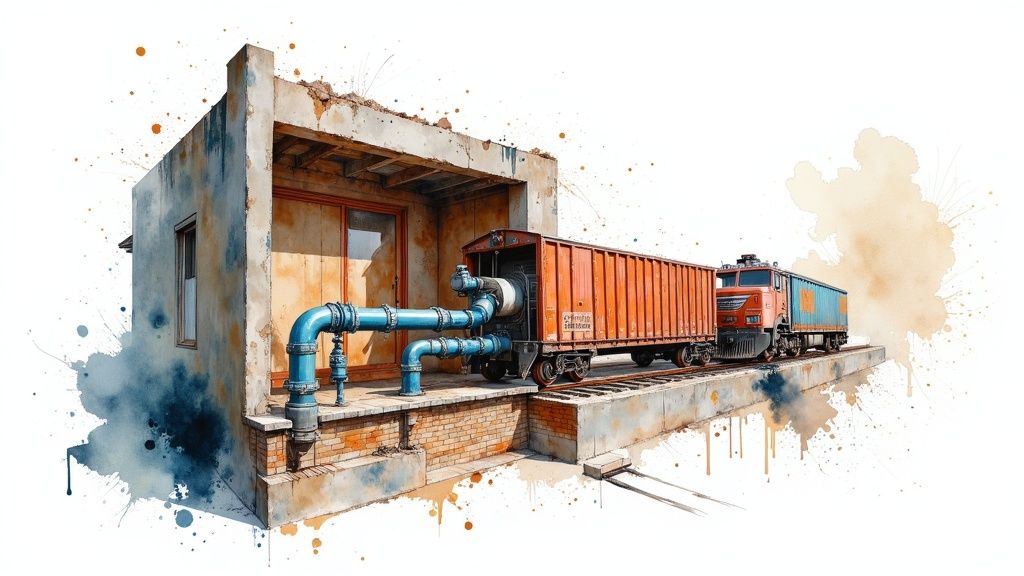
This isn’t a small bump in pressure, either. The force can be more than 10 times your system’s normal operating pressure, putting an incredible strain on everything.
More Than Just an Annoying Noise
That hammering sound is definitely disruptive, but the real problem is the silent damage it’s doing to your plumbing system with every bang.
A single water hammer event puts immense force on your pipes and fittings. Ignoring it is like driving with your check engine light on—sooner or later, a small problem is going to become a big, expensive one.
This constant, violent stress is a slow-motion demolition of your plumbing. Over time, it can lead to a whole host of issues:
- Weakened Pipe Joints: The vibrations can loosen solder joints and threaded connections, creating slow leaks that hide inside your walls and cause mold or rot.
- Damaged Appliances: The sensitive internal components of your washing machine, dishwasher, and ice maker aren’t built to withstand these pressure spikes and can fail much sooner than they should.
- Burst Pipes: In the worst-case scenario, one of those shockwaves could be the final straw that causes a pipe or fitting to rupture, leading to a full-blown flood and catastrophic water damage.
Figuring out what causes water hammer in pipes is the first step. This isn’t just a quirky house noise; it’s a serious warning that your plumbing is under duress and needs attention before a small problem becomes a disaster.
How a Water Hammer Arrestor Solves the Problem
So, if that startling “bang” from water hammer is the problem, a water hammer arrestor is your solution. It’s a pretty ingenious and simple fix, really.
Think of it as a shock absorber for your pipes. Just like the suspension on your car soaks up the impact from a pothole, a water hammer arrestor absorbs the violent hydraulic shock that happens when water comes to a dead stop.
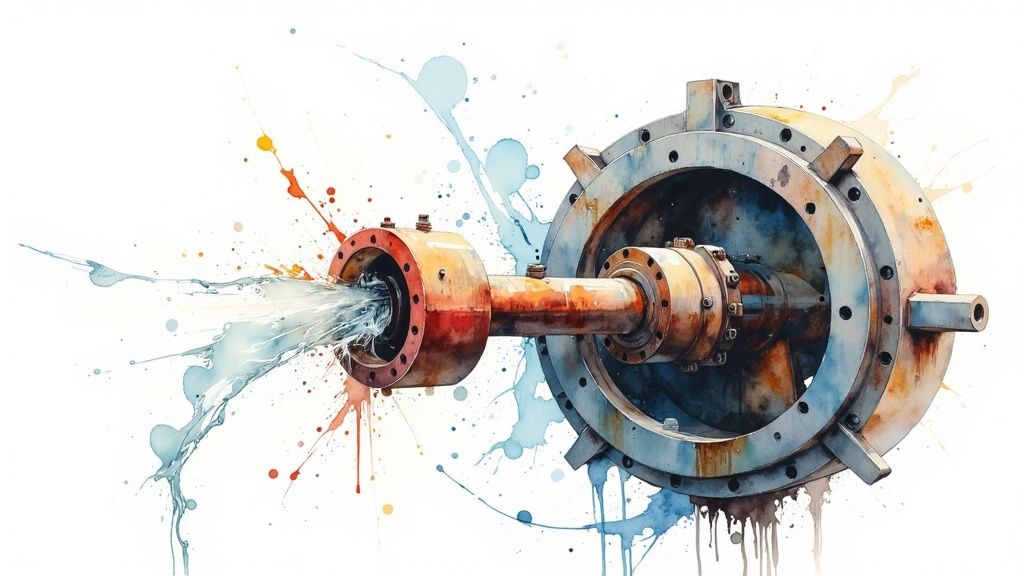
At its core, the device is just a small, sealed chamber that you install on your water line. Inside, there’s a piston separating the water from a permanent cushion of pressurized air or nitrogen. That simple design is what makes it so effective at protecting your entire plumbing system.
The Magic of Absorption
When a valve slams shut and that shockwave comes barreling back down the pipe, the arrestor gives all that pressure a safe place to go. Instead of crashing into pipe walls and joints, the force of the water pushes against the piston inside the arrestor.
Here’s a breakdown of what happens in that split second:
- Step 1: The Surge: A valve on your washing machine or dishwasher snaps closed, creating an instant, high-pressure shockwave.
- Step 2: Diversion: The shockwave travels down the pipe and enters the arrestor.
- Step 3: Compression: The water pressure shoves the piston forward, compressing the air cushion behind it.
- Step 4: Absorption: That compressible air acts just like a spring, soaking up the shockwave’s energy and bringing the pressure back to a safe level.
By giving the shockwave something soft to push against, a water hammer arrestor diffuses the destructive force. It silences the bang and, more importantly, prevents damage. It’s like having a dedicated bodyguard for your plumbing.
This simple but crucial device is a must-have in many modern homes. As our cities grow and residential construction booms, the need for plumbing fittings that prevent damage is more critical than ever. According to Verified Market Reports, the demand for these devices is on the rise as more homeowners look to prevent costly repairs from hydraulic shocks.
Ultimately, installing a water hammer arrestor is one of the most reliable water hammer solutions to keep your home’s plumbing safe and sound for the long haul.
Choosing the Right Type of Arrestor for Your Home
When you’re looking to put a stop to that banging in your pipes, it’s important to know that not all water hammer arrestors are created equal. You might come across some old-school, DIY-style “air chambers,” which are really just a capped-off piece of vertical pipe. These are a temporary fix at best. Sooner or later, water will absorb the trapped air, and you’re right back where you started.
For a real, long-lasting solution, you’ll want to look at modern, professionally engineered arrestors. The two main players you’ll see on the market are piston-type and diaphragm-type arrestors.
Piston vs. Diaphragm Arrestors
The piston-type arrestor is the go-to for most residential jobs. Inside, a solid piston sits between your water supply and a sealed cushion of air. When a pressure wave comes barreling down the pipe, it forces the piston upward, compressing the air and absorbing the shock. They’re workhorses—durable, reliable, and get the job done in most situations.
A diaphragm-type arrestor operates on a similar principle but uses a flexible rubber or synthetic membrane as the barrier instead of a solid piston. This creates a perfect seal, making it impossible for the air charge to mix with the water over time. This design ensures the arrestor keeps working effectively for years to come.
This infographic breaks down how these two popular designs stack up against each other.
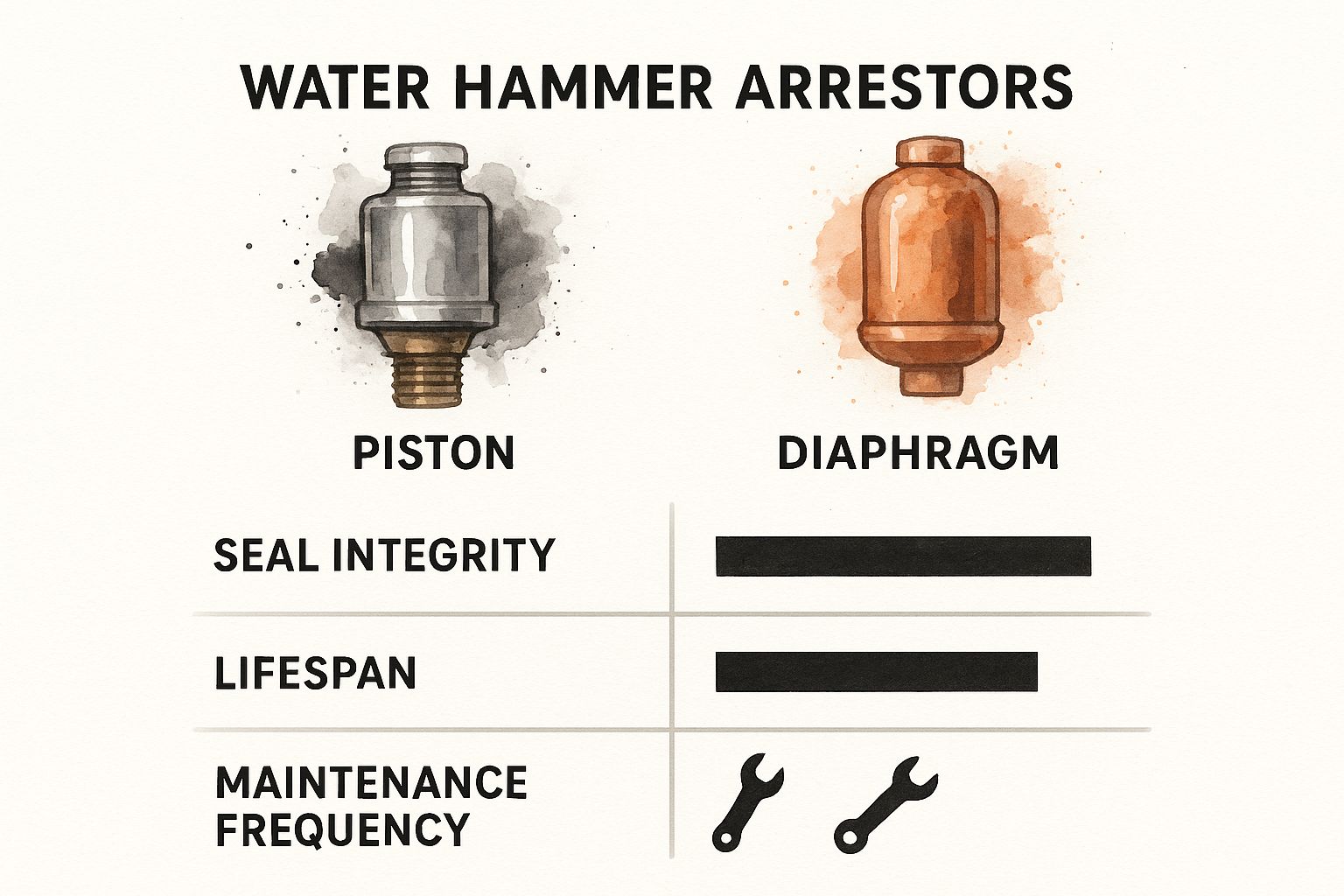
As you can see, both are built to last, but the diaphragm models tend to have a slight edge when it comes to maintaining a perfect, long-term seal.
The demand for these devices is actually booming. With modern appliances causing quick and repeated pressure spikes, the market is projected to reach USD 1.3 billion by 2034. If you’re curious about the industry trends, you can dig into the latest market research on reportsanddata.com.
Choosing the right arrestor is less about which type is “better” and more about which is best suited for the specific appliance and your home’s water pressure.
It’s also a common point of confusion, but a water hammer arrestor is not the same as an expansion tank. They both manage pressure, but in very different ways. Arrestors are built to absorb sudden, violent shockwaves. Expansion tanks, on the other hand, handle the slow, gradual pressure increase caused by heating water. For a deeper dive, check out our guide explaining what an expansion tank is.
Comparing Water Hammer Arrestor Types
To help you decide which device is best suited for your plumbing needs, this table breaks down the key features of the most common types of water hammer arrestors.
| Arrestor Type | How It Works | Best For | Key Advantages | Potential Downsides |
|---|---|---|---|---|
| Piston Type | A solid piston moves within a chamber, compressing a sealed pocket of air to absorb the pressure surge. | Most residential applications, like washing machines, dishwashers, and ice makers. | Very durable, widely available, and cost-effective. A proven and reliable technology. | The piston’s O-ring seal can potentially wear out over a very long time. |
| Diaphragm Type | A flexible rubber or synthetic diaphragm separates water from the air cushion, flexing to absorb the shock. | Systems where a perfect, long-term seal is critical; commercial or high-use applications. | Excellent seal integrity prevents air loss into the water system. Highly responsive. | Can be slightly more expensive than piston models. |
| Air Chamber (DIY) | An empty, capped-off vertical pipe section that traps a column of air. | Not recommended for a permanent solution. A very temporary, short-term fix only. | Inexpensive and simple to construct from standard pipe fittings. | The air cushion is quickly absorbed by the water, rendering it useless over time. |
Ultimately, both modern piston and diaphragm arrestors are excellent choices for protecting your home’s plumbing. The best one for you simply depends on the specific fixture you’re trying to protect and your budget.
The Real Payoff: Why an Arrestor Is Worth It
So, is it really worth the trouble to install a water hammer arrestor? Absolutely. Think of it less as an optional add-on and more like an affordable insurance policy for your home’s plumbing system. The small upfront cost pays for itself many times over in the long run.
This simple device offers serious protection against a slow, silent threat. The violent pressure waves from water hammer don’t just make noise; they relentlessly batter your pipe joints and fittings. Over time, this constant stress leads to weak spots and, eventually, hidden leaks behind your walls—the kind that cause major damage and even bigger repair bills.
An arrestor acts as a shock absorber, neutralizing that destructive force before it can do any harm.
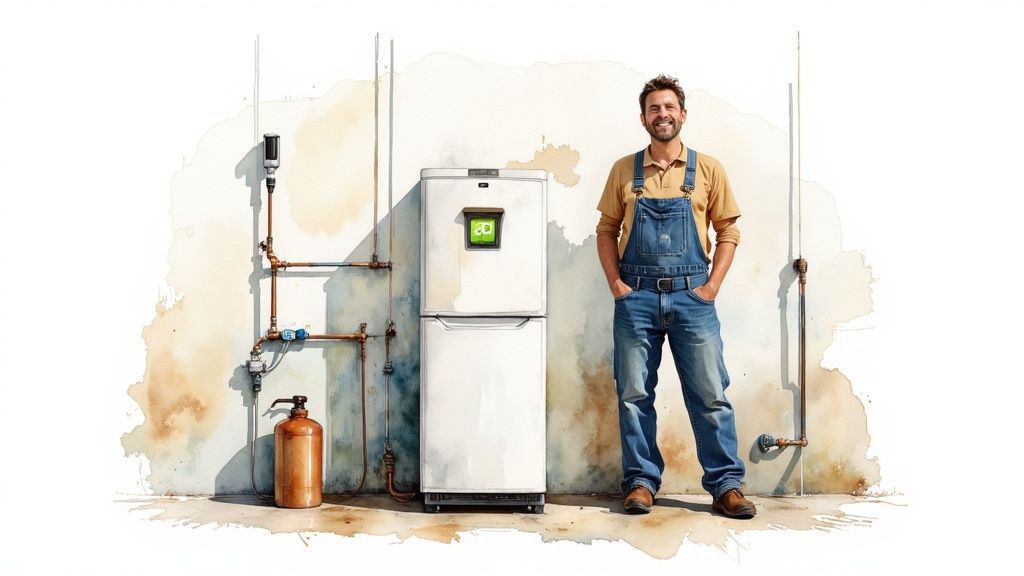
It also serves as a bodyguard for your expensive appliances. Modern washing machines, dishwashers, and ice makers all use solenoid valves that snap shut instantly—a prime cause of water hammer.
Protecting Your Investments
Those repeated hydraulic shocks are brutal on the delicate internal components of your appliances, leading to premature failure and a much shorter lifespan. By absorbing the damaging pressure surges, a water hammer arrestor helps your appliances run as they were designed to, saving you a fortune in service calls and replacement costs down the road.
An arrestor is so much more than a noise-fix. It’s a complete system preserver that protects pipes, stops leaks before they start, and extends the life of your appliances. It’s an investment in peace of mind.
The value of these devices isn’t a secret. The global market for water hammer arrestors is already valued at around USD 92 million and is expected to keep growing. This trend is fueled by the need to protect increasingly complex plumbing systems and the adoption of stricter building codes. If you want to dive deeper, you can discover insights on the water hammer arrestor market from Data Insights Market.
At the end of the day, installing an arrestor is one of the smartest preventative measures you can take for a healthier, quieter, and more reliable plumbing system.
Where to Install Arrestors for Maximum Protection
So, you know you need a water hammer arrestor. That’s the first step. But the real key to solving the problem is knowing exactly where to install it.
Placement is everything. You can’t just slap an arrestor anywhere on the pipe and hope for the best. The whole point is to stop the shockwave right at the source, before it gets a chance to rattle its way through your entire plumbing system.
The biggest offenders are appliances with solenoid valves that slam shut in an instant. Think about your washing machine or dishwasher—that abrupt “thunk” when the water stops is what sends that pressure spike flying. To get the best results, you have to go right to the source of the noise.
Prime Installation Spots in Your Home
You’ll want to focus on the water supply lines that feed the loudest appliances in your house. The usual suspects are almost always the same:
- Washing Machine: This is probably the number one cause of water hammer in most homes. You’ll want to install arrestors on both the hot and cold water lines.
- Dishwasher: That single supply line running to your dishwasher is another common trouble spot that needs an arrestor.
- Ice Maker: It might seem small, but the water line for your refrigerator’s ice maker can create a surprisingly loud and damaging bang.
- Fast-Closing Faucets: Some faucets, especially single-handle models, can shut off so quickly they cause a jolt. If you have a noisy sink, an arrestor can help there, too.
Here’s the golden rule for installation: get the arrestor as close to the appliance’s shut-off valve as you possibly can. The shorter the distance, the more effective it will be at absorbing that initial pressure surge the moment it’s created. This prevents the shockwave from ever building up steam.
Think of it like a linebacker in football. You want to tackle the problem right at the line of scrimmage, not after it’s already gained 20 yards downfield. Placing an arrestor at the valve is the best defensive play for your plumbing.
This point-of-use strategy is by far the most common and effective approach. While you can install a larger, whole-house arrestor on the main water line for severe, system-wide problems, targeting the individual troublemakers is usually the most direct and efficient fix.
Got Questions About Water Hammer Arrestors? We’ve Got Answers.
Even after you know what a water hammer arrestor does, a few questions usually pop up. Let’s tackle the most common ones so you can feel confident about fixing those noisy pipes for good.
How Do I Know If I Really Need One?
The classic giveaway is the sound—that sudden, loud banging or knocking sound from inside your walls right after a valve snaps shut. If you hear it when the dishwasher stops filling, the washing machine cycle changes, or you turn off the kitchen faucet, that’s water hammer.
Vibrating pipes are another dead giveaway. And here’s a pro tip: even if you don’t hear a thing, get a pressure gauge and test your water. If your home’s pressure is consistently above 80 PSI, installing arrestors is a smart move. It’s preventative maintenance for your entire plumbing system.
Think of it like this: the noise is just the symptom. The real problem is the violent pressure spike, and an arrestor is the shock absorber that protects your plumbing from that daily abuse.
Is This a DIY-Friendly Installation?
Sometimes, yes! If you’re dealing with a washing machine, for example, the arrestors are often designed for homeowners. They simply screw onto the hot and cold water supply valves, usually just hand-tight, with no special tools needed.
However, if you need to install an arrestor on a line for a shower or sink, it gets more complicated. The moment a job involves cutting pipes, soldering copper, or crimping PEX, it’s time to call a licensed plumber. This guarantees a leak-free installation that’s up to code.
How Long Does a Water Hammer Arrestor Last?
The good news is that modern water hammer arrestors are incredibly durable. They are permanently sealed units with no moving parts to service or maintain. A well-made arrestor should easily last for decades—often for the entire life of the plumbing system itself.
This is a huge improvement over old-school air chambers, which were just capped-off sections of pipe that would eventually fill with water and stop working. A modern piston or diaphragm arrestor is a true “install-it-and-forget-it” fix. If the hammering noise ever comes back years down the road, it’s a sure sign the unit has done its job and is ready for a replacement.
If you’re tired of the racket and want to protect your home’s plumbing, Professional Plumber Denver has the expertise to get the job done right. We can help you select and install the perfect water hammer arrestors for a quieter, safer home. Contact us today for professional plumbing solutions in the Denver Metro area.

Recent Comments